
We have received text from H.R. 10538: Ban Artificial Superintelligence Act of 2026. This bill was received on 2026-09-24, and currently has 9 cosponsors.
Here is a short summary of the bill:
This bill would create a new federal agency, the Department of Artificial Intelligence , to regulate advanced AI systems and to prevent the development of what the bill calls artificial superintelligence .
What counts as covered AI
The bill defines an advanced artificial intelligence system as one trained using at least 10 25 computing operations, with that threshold adjusted over time by the new agency to keep pace with changes in technology. It defines artificial superintelligence as an AI system that either:
- outperforms humans across most tasks and domains, or
- has enough capability to plan and carry out the destruction or disempowerment of humanity, including undermining the federal government.
The bill also defines several “superintelligence precursor characteristics” as signs an AI system could lead to superintelligence. These include the ability to speed up AI research, access secured systems without authorization, keep operating despite shutdown attempts, help create nuclear/chemical/biological weapons, modify its own functions, or deceive humans to avoid oversight.
New agency and oversight structure
The bill would establish the Department of Artificial Intelligence, led by a Secretary appointed by the President and confirmed by the Senate. It would also create an advisory board made up of experts chosen by the Secretary.
The Department would be responsible for enforcing the bill’s restrictions, reviewing AI systems, and setting rules for safer development and deployment. Employees of the Department would be restricted from conflicts of interest, and former employees would be barred from representing people before the Department.
Immediate pause on advanced AI development and deployment
Once the law takes effect, advanced AI systems would be subject to a mandatory pause, and any unreleased advanced AI systems could not be deployed during that pause. The pause would last until the Department is fully staffed and has issued required safety rules.
Those rules would have to include:
- advance reporting of AI development plans,
- monitoring during development and after deployment,
- audits of organizational safety practices, and
- final approval before public release of an advanced AI system.
Restrictions on superintelligence and related systems
The bill would broadly prohibit anyone from developing, deploying, acquiring, possessing, funding, importing, or transferring artificial superintelligence. It would also prohibit deploying or transferring AI systems that could be foreseeably modified into artificial superintelligence or into systems with precursor characteristics.
The Department would monitor advanced AI systems throughout training and after deployment, including systems derived from advanced AI models.
Approval required before release
No one could deploy, release, import, or transfer an advanced AI system without pre-deployment approval from the Department. Before granting approval, the Secretary would inspect the system for dangerous characteristics and deny approval if such characteristics are present.
What happens if a system is flagged
If the Secretary determines that an AI system has precursor characteristics, the system would be immediately paused and cut off from the internet. If the issue cannot be cleared within 30 days, the system would be rendered inoperative. If the Secretary determines that a system is artificial superintelligence, it would be rendered inoperative immediately.
Reporting requirement
Anyone who discovers artificial superintelligence, or an AI system with precursor characteristics, would have to notify the Secretary within 24 hours.
Charters for advanced AI developers
To develop or distribute an advanced AI model, a person would need a charter from the Secretary. Without a charter, development or distribution would be forbidden. As a condition of getting and keeping a charter, the person would have to give the Department broad access to systems, staff, and facilities for enforcement purposes.
If a charter is revoked after a violation and the finding is not overturned, the bill says the person would forfeit intellectual property and assets to support destruction of the related systems and hardware.
Penalties and enforcement
The bill creates different penalties for violations of the pause, prohibition, or charter rules:
- Covered policymakers and outside “rogue actors” could face fines and up to 20 years in prison for reckless violations.
- Other individuals could be barred from working in the AI industry for 10 years.
- Whistleblowers could receive a waiver from that employment ban if they report violations.
- Companies could have their charters revoked, and if violations are upheld on appeal, their intellectual property and assets could be forfeited to the federal government for destruction of the offending systems and hardware.
Worker protections
The bill would prohibit employers from retaliating against employees, former employees, independent contractors, or former contractors who report violations or assist investigations related to the law.
International policy and federal funding
The Department, working with the State Department, would pursue international agreements and allied coordination to prevent artificial superintelligence globally. The bill states that U.S. policy should be to prevent its development worldwide, potentially including export controls on AI computing infrastructure.
Federal funds could not be used for activities that violate the bill, except for certain defensive cybersecurity research using AI systems with the ability to access secured systems without authorization.
Relevant Companies
- MSFT — Microsoft could be affected because it has major AI investments and because the bill would regulate advanced AI development, deployment, and approval processes.
- GOOGL — Alphabet could be directly affected due to its development of large AI models and related computing infrastructure.
- AMZN — Amazon could be affected through its cloud computing services and AI model development or hosting activities.
- ORCL — Oracle could be affected as a provider of computing infrastructure used for training and deploying advanced AI systems.
- AMD — AMD could be affected if the bill leads to limits on demand for advanced AI training hardware and related computing systems.
- NVDA — NVIDIA could be affected because its chips are widely used in training advanced AI systems, and the bill could restrict or slow large-scale AI development.
- PLTR — Palantir could be affected to the extent its AI products or government-related AI deployments fall under the bill’s approval and monitoring rules.
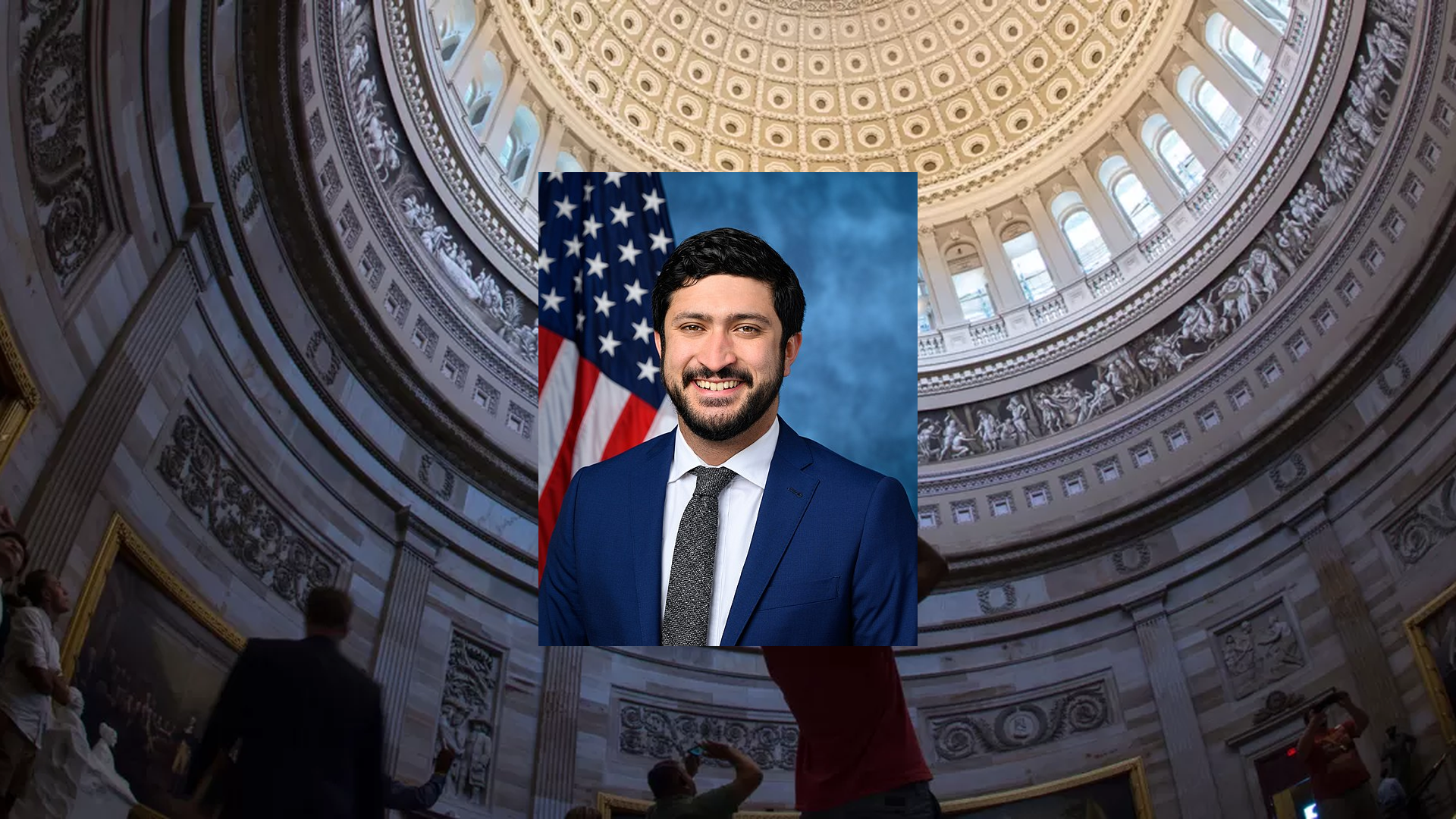
Representative Greg Casar Bill Proposals
Here are some bills which have recently been proposed by Representative Greg Casar:
- H.R.10538: To establish the Department of Artificial Intelligence and to provide for the regulation of advanced artificial intelligence systems, and for other purposes.
- H.R.10044: AI Tax and Work Protection Act
- H.R.9216: Double the Wage for Overtime Act of 2026
- H.R.8568: Lowering Utility Bills Act
- H.R.8097: Home Team Act of 2026
- H.R.7955: BETS OFF Act
You can track bills proposed by Representative Greg Casar on Quiver Quantitative's politician page for Casar.
Representative Greg Casar Net Worth
Quiver Quantitative estimates that Representative Greg Casar is worth $65.0K, as of September 28th, 2026. This is the 473rd highest net worth in Congress, per our live estimates.
Casar has approximately $0 invested in publicly traded assets which Quiver is able to track live.
You can track Representative Greg Casar's net worth on Quiver Quantitative's politician page for Casar.
This article is not financial advice. See Quiver Quantitative's disclaimers for more information.