
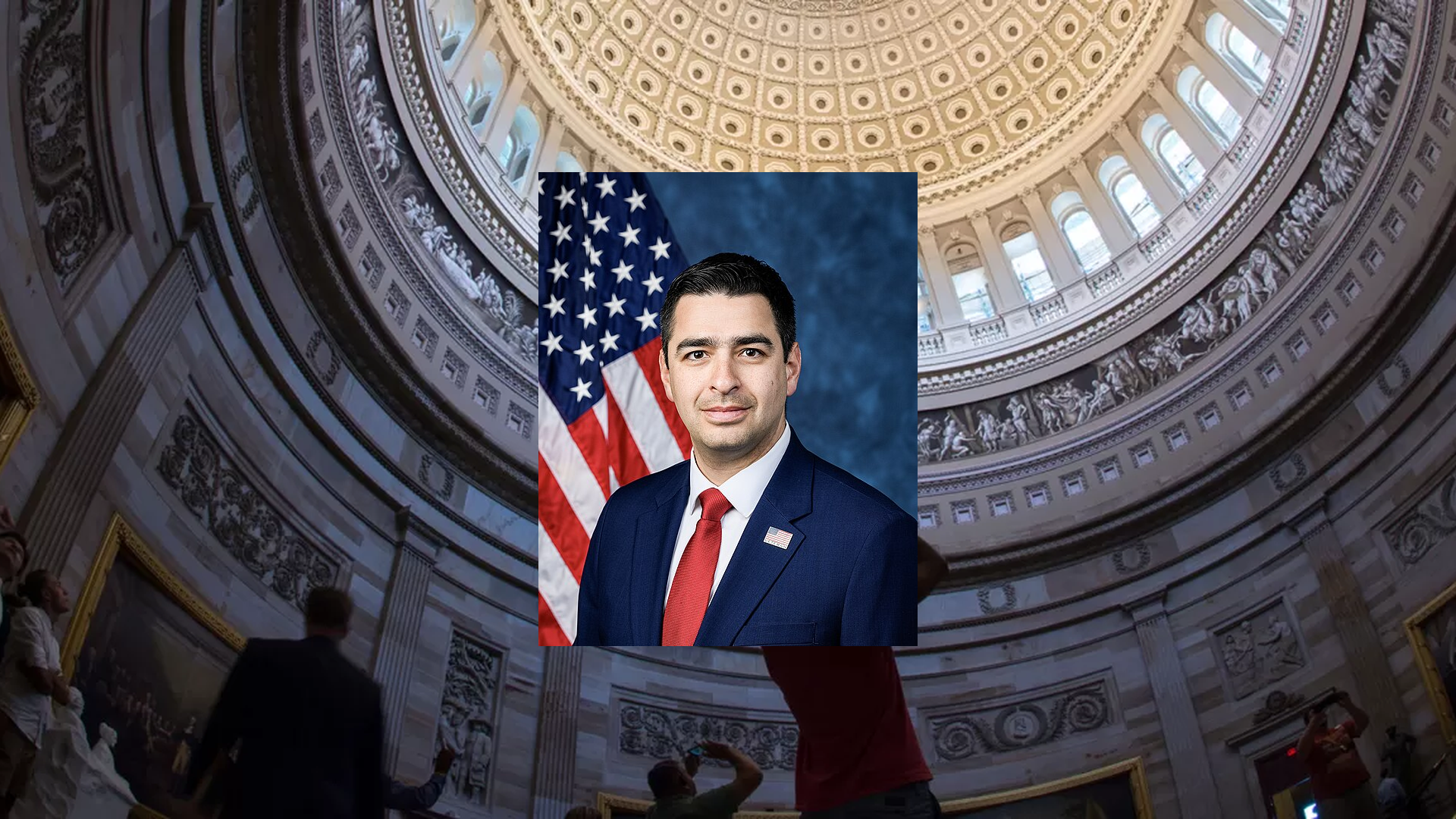
We have received text from H.R. 10152: Open-Source AI Leadership Act. This bill was received on 2026-08-27, and currently has no cosponsors.
Here is a short summary of the bill:
This bill would direct the Secretary of Commerce to help promote the use of qualified open models , which are open artificial intelligence models developed and made available by U.S. persons and not developed or made available by a covered nation or by entities controlled by a covered nation.
What the Commerce Department would do
- Set up a single contact person within the Department of Commerce to coordinate efforts with private companies, agencies, states, and foreign partners on supporting qualified open models.
- Review existing Commerce Department programs and authorities and use them, where appropriate, to encourage adoption of these models.
- Identify barriers that make it harder to adopt or use qualified open models and take action to reduce those barriers where possible.
-
Enter into agreements to support adoption and use of qualified open models with:
- private companies, including startups,
- other federal agencies,
- states, and
- qualified foreign partners.
- Develop policy recommendations to make it easier to adopt and use these models.
- Identify evidence-based methods, best practices, benchmarks, or other tools to track adoption and use of qualified open models, as well as foreign adversary models.
Foreign adversary model review
The bill would also require Commerce to identify and assess risks related to foreign adversary models , which are open AI models developed or made available by covered nations or by entities or individuals controlled by covered nations. The bill says these assessments should cover risks such as:
- how these models are trained, including possible unauthorized use of AI models,
- risks to the confidentiality, integrity, and availability of personal and proprietary information,
- security and resilience risks for organizations that use these models, including supply chain risks,
- the quality and reliability of outputs, including issues like historical accuracy and freedom of expression,
- whether safety or security features meant to prevent misuse are effective, and
- possible uses that could support chemical, biological, radiological, nuclear, or similar national security risks.
Required reports
Within 18 months after the law takes effect, and then once every year after that, Commerce would have to publish a public report on a website describing the assessed risks from foreign adversary models. The report would also include:
- an overview of how leading foreign adversary models are being adopted and used,
- their cost, capability, and performance, and
- a comparison with similar information, when available, for qualified open models.
Commerce would then have to send that report to the House Energy and Commerce Committee and the Senate Commerce, Science, and Transportation Committee within 30 days of publication.
Limits on the bill
The bill says nothing in it can be used to authorize the Secretary of Commerce to ban, restrict, or otherwise make unavailable any open AI model in interstate or foreign commerce.
How long the reporting requirement lasts
The annual public reporting requirement would end 10 years after enactment.
Definitions in the bill
- Open artificial intelligence model: an AI model whose weights are publicly available for download or distribution, or whose source code and model weights are distributed under an open license allowing use, modification, and redistribution.
- Qualified open model: an open AI model developed and made available by a U.S. person, and not by a covered nation or entities controlled by a covered nation.
- Foreign adversary model: an open AI model developed or made available by a covered nation or by entities/individuals controlled by a covered nation.
Relevant Companies
- MSFT — Microsoft could be indirectly affected through its AI ecosystem and partnerships involving open models, including distribution and deployment of AI tools.
- GOOGL — Alphabet could be affected through its AI model development and any Commerce-related efforts that encourage adoption of U.S.-based open models.
- META — Meta could be affected because it develops and releases open AI models, so federal efforts to promote open model adoption could influence usage of its models.
- ORCL — Oracle could be indirectly affected if federal or commercial adoption of open models changes cloud and infrastructure demand for AI workloads.
- AMZN — Amazon could be indirectly affected through cloud services used to host, distribute, or run open AI models.
Representative Gabe Evans Bill Proposals
Here are some bills which have recently been proposed by Representative Gabe Evans:
- H.R.10152: Open-Source AI Leadership Act
- H.R.9340: Ratepayer Protection Act
- H.R.8005: Stop Pills That Kill Act
- H.R.7764: National Threat Evaluation and Reporting Program Reassignment and Funding Reform Act of 2026
- H.R.7574: ELO Realignment and Strategic Engagement Reform Act of 2026
- H.R.6943: Veterans Burial Allowance and Reimbursement Act of 2026
You can track bills proposed by Representative Gabe Evans on Quiver Quantitative's politician page for Evans.
Representative Gabe Evans Net Worth
Quiver Quantitative estimates that Representative Gabe Evans is worth $679.0K, as of August 29th, 2026. This is the 379th highest net worth in Congress, per our live estimates.
Evans has approximately $0 invested in publicly traded assets which Quiver is able to track live.
You can track Representative Gabe Evans's net worth on Quiver Quantitative's politician page for Evans.
2026 Colorado's 8th Congressional District Election
There has been approximately $72,790,165 of spending in Colorado's 8th congressional district elections over the last two years, per our estimates.
Approximately $54,167,745 of this has been from outside spending by PACs and Super PACs. Some of the groups who are spending money in this race include:
- HMP ($12,095,833)
- CONGRESSIONAL LEADERSHIP FUND ($6,644,725)
- NRCC ($5,471,464)
- DCCC ($3,898,198)
- MAINSTREAM COLORADO FUND ($3,147,930)
The rating for this race is currently "Toss Up".
You can track this election on our matchup page for the 2026 Colorado's 8th congressional district election.
This article is not financial advice. See Quiver Quantitative's disclaimers for more information.