We have received text from H.R. 10484: Covered AI Prohibition Act. This bill was received on 2026-09-17, and currently has no cosponsors.
Here is a short summary of the bill:
This bill would direct the Department of Defense to create department-wide rules for identifying certain artificial intelligence companies and for removing their AI products from Defense Department systems and devices.
What it would require
- It amends a section of the 2026 National Defense Authorization Act.
- Within 30 days after the 2027 defense authorization law is enacted, the Secretary of Defense would have to issue guidance across the entire Department of Defense.
-
That guidance would have to explain how to:
- identify “covered” AI companies, and
- exclude and remove AI tools made by those companies from Defense Department systems and devices.
Timing change
The bill also changes a timing provision in the existing law by replacing the word “if” with language that refers to a period starting 90 days after a specified date. In practical terms, this appears to adjust when a related restriction or condition begins to apply, though the bill text provided does not fully spell out the broader context of that clause.
Overall effect
In plain terms, the bill would push the Pentagon to set up a formal process for finding certain AI providers that meet the definition of “covered” companies and then block or remove their AI products from use within the Department of Defense. The bill itself does not list the companies in this text; it directs the Defense Department to create the guidance and process later.
Relevant Companies
- GOOGL — Alphabet could be directly affected if its AI products are classified as covered and then restricted from Defense Department systems.
- MSFT — Microsoft could be affected if any of its AI offerings are covered and removed from Department of Defense use.
- AMZN — Amazon could be affected if AWS AI services are included under the covered-company rules and barred from use in Defense systems.
- META — Meta could be affected if its AI models or tools are identified as covered and restricted from Defense Department devices or systems.
- CRM — Salesforce could be affected if AI products it offers to government customers are subject to removal under the new guidance.
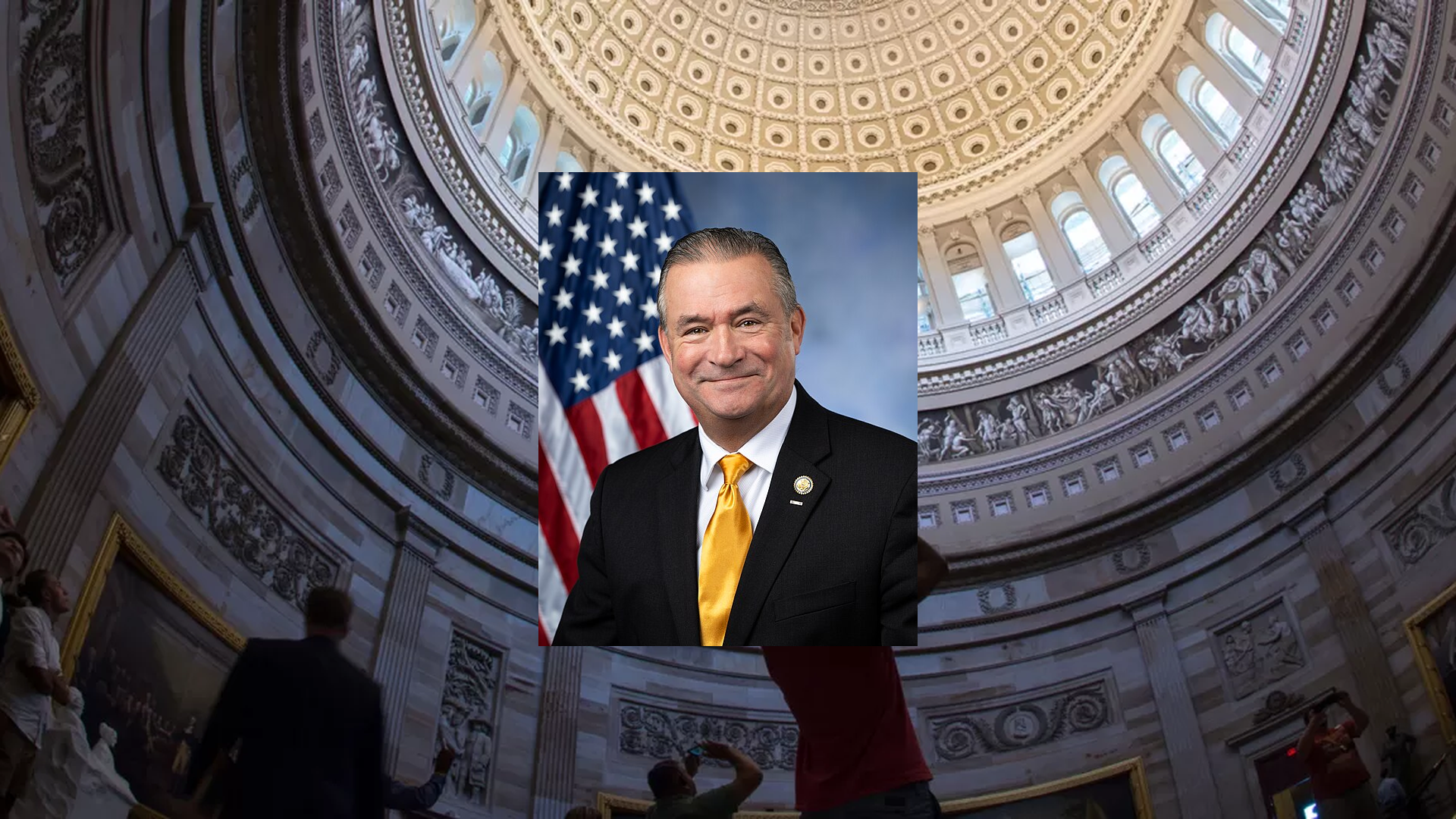
Representative Don Bacon Bill Proposals
Here are some bills which have recently been proposed by Representative Don Bacon:
- H.R.10485: Minuteman III Health and Safety Act
- H.R.10484: Covered AI Prohibition Act
- H.R.10483: Bone Marrow Radiation Shielding Act
- H.R.10482: Dashboard for MILCON Projects Act
- H.R.10481: National Guard Heritage Welfare Society Act
- H.R.10480: Medal of Honor Access and Liaison Act
You can track bills proposed by Representative Don Bacon on Quiver Quantitative's politician page for Bacon.
Representative Don Bacon Net Worth
Quiver Quantitative estimates that Representative Don Bacon is worth $2.1M, as of September 18th, 2026. This is the 263rd highest net worth in Congress, per our live estimates.
Bacon has approximately $324.7K invested in publicly traded assets which Quiver is able to track live.
You can track Representative Don Bacon's net worth on Quiver Quantitative's politician page for Bacon.
2026 Nebraska's 2nd Congressional District Election
There has been approximately $50,460,592 of spending in Nebraska's 2nd congressional district elections over the last two years, per our estimates.
Approximately $35,008,958 of this has been from outside spending by PACs and Super PACs. Some of the groups who are spending money in this race include:
- HMP ($5,743,844)
- BIG RED LEADERSHIP PAC ($4,703,802)
- CONGRESSIONAL LEADERSHIP FUND ($4,344,258)
- DCCC ($3,321,982)
- FIGHT FOR NEBRASKA PAC ($2,602,852)
The rating for this race is currently "Lean D".
You can track this election on our matchup page for the 2026 Nebraska's 2nd congressional district election.
This article is not financial advice. See Quiver Quantitative's disclaimers for more information.