

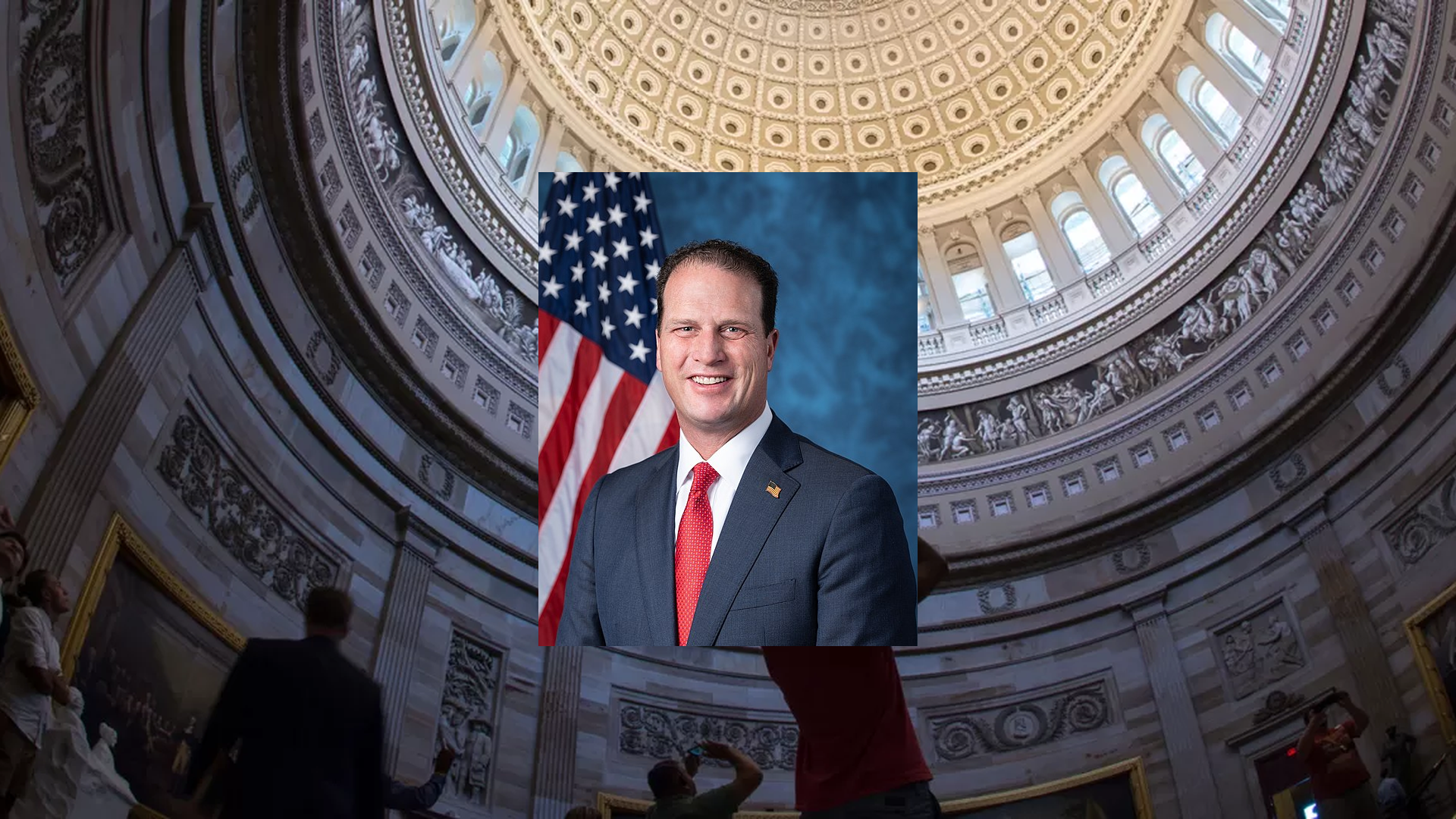
We have received text from H.R. 10594: Reliable Artificial Intelligence Research Act of 2026. This bill was received on 2026-09-24, and currently has 4 cosponsors.
Here is a short summary of the bill:
This bill would direct the Department of Homeland Security to run at least one prize competition focused on making artificial intelligence systems easier for people to understand and harder to manipulate.
What the bill is trying to do
The bill is aimed at two main research areas:
- Interpretability — figuring out how AI systems make decisions, so humans can better understand why an AI produced a certain result.
- Adversarial robustness — making AI systems more resistant to attacks or inputs designed to trick them into giving wrong, harmful, or restricted outputs.
Prize competition on interpretability
Within 270 days after the bill becomes law, the Secretary of Homeland Security would have to start a prize competition to encourage research on AI interpretability in ways relevant to real-world AI products that are already widely used or commercially available.
The competition could be organized in stages. For example, it could include submissions of:
- frameworks for interpretability,
- AI models that are more interpretable, and
- basic research.
When judging entries, the Secretary would have to consider whether the work:
- advances general principles of AI interpretability,
- has practical value for making AI more understandable and reliable in high-risk or high-value uses, and
- could help set standards for interpretability in government or industry.
Prize competition on adversarial robustness
The bill would also require a second prize competition, to begin within 270 days after enactment, focused on building AI models that are more resistant to adversarial attacks in at least one high-impact, high-risk use case in government or industry.
This competition could also be divided into phases, such as:
- submission of robustness frameworks,
- submission of AI models, and
- red-teaming, which means trying to break or exploit the system to find weaknesses.
In evaluating submissions, the Secretary would consider whether they:
- advance broad principles of AI robustness, and
- help reduce the risk of attacks in important, high-risk AI uses.
Who would be involved
For both competitions, the Secretary of Homeland Security would have to consult with officials such as:
- the Secretary of Commerce,
- the National Institute of Standards and Technology,
- the National Cyber Director,
- the National Science Foundation, and
- relevant AI industry experts.
For the robustness competition, the Secretary would also consult with federal agencies that have expertise in the specific high-risk AI application being studied.
The Department of Homeland Security would be allowed to use contracts or agreements with private, nonprofit, state, local, territorial, or Tribal entities to help design and administer the competitions.
Reporting requirement
Within 180 days after the first competition ends, DHS would have to send Congress a report explaining:
- how the competition results affect the fields of interpretability and adversarial robustness,
- what gaps in research or practice were identified, and
- what further actions Congress should consider taking.
Funding
The bill authorizes $10 million in appropriations for fiscal years 2027 through 2031 to carry out the program.
Relevant Companies
None found
Representative August Pfluger Bill Proposals
Here are some bills which have recently been proposed by Representative August Pfluger:
- H.R.10633: To amend title XIX of the Social Security Act to require each State to designate a single agent responsible for certain fiscal duties under the Medicaid program.
- H.R.10594: Reliable Artificial Intelligence Research Act of 2026
- H.R.10197: Biosecurity Modernization and Innovation Act
- H.R.9970: RESCUE Act of 2026
- H.R.9616: EMRTAI Authorization Act of 2026
- H.R.9397: Premium Transparency Act
You can track bills proposed by Representative August Pfluger on Quiver Quantitative's politician page for Pfluger.
Representative August Pfluger Net Worth
Quiver Quantitative estimates that Representative August Pfluger is worth $1.9M, as of September 30th, 2026. This is the 275th highest net worth in Congress, per our live estimates.
Pfluger has approximately $403.3K invested in publicly traded assets which Quiver is able to track live.
You can track Representative August Pfluger's net worth on Quiver Quantitative's politician page for Pfluger.
Representative August Pfluger Stock Trading
We have data on up to $815.0K of trades from Representative August Pfluger, which we parsed from STOCK Act filings. Some of the largest trades include:
- A March 13th, 2026 purchase of up to $50K of $DMLP. The stock has risen 5.86% since then.
- A March 13th, 2026 purchase of up to $50K of $UHALB.
- A March 13th, 2026 purchase of up to $50K of $VNOM. The stock has fallen 9.42% since then.
- A March 13th, 2026 purchase of up to $50K of $BRK.B. The stock has risen 2.51% since then.
- A April 12th, 2022 sale of up to $50K of $MSFT. The stock has risen 80.44% since then.
You can track Representative August Pfluger's stock trading on Quiver Quantitative's politician page for Pfluger.
2026 Texas's 11th Congressional District Election
There has been approximately $3,542,221 of spending in Texas's 11th congressional district elections over the last two years, per our estimates.
The rating for this race is currently "Solid R".
You can track this election on our matchup page for the 2026 Texas's 11th congressional district election.
This article is not financial advice. See Quiver Quantitative's disclaimers for more information.