H.R. 10650: American Glove Act of 2026
This bill would require certain federal agencies to buy nitrile gloves under purchasing arrangements that meet domestic sourcing rules and long-term contracting requirements tied to the Make PPE in America Act.
What gloves are covered
The bill applies to nitrile examination gloves and other non-surgical nitrile gloves that the federal government buys for medical, public health, emergency response, homeland security, laboratory, biodefense, or similar protective uses.
Which agencies and purchasing methods are covered
It would apply to the Department of Homeland Security, the Department of Health and Human Services, the Department of Veterans Affairs, the Department of Defense, and any other executive agency that buys these gloves through shared purchasing methods such as governmentwide contracts, blanket purchase agreements, IDIQ contracts, prime vendor arrangements, or AbilityOne-related arrangements.
Domestic manufacturing requirements
To count under the bill, gloves would have to be manufactured in the United States by a qualified domestic manufacturer. That term generally means a company that:
- manufactures the gloves in the United States,
- is majority-owned and controlled by U.S. persons,
- is not owned or significantly influenced by a foreign entity of concern, and
- has the ability to make the gloves at commercial scale.
The bill also defines manufacturing to mean the actual production steps, such as forming, dipping, curing, finishing, testing, and packaging. It excludes businesses that mainly resell, distribute, warehouse, repackage, or otherwise handle gloves made by someone else.
Long-term supplier agreements
Federal procurement vehicles for these gloves would have to include, or be modified to include, supplier agreements with qualified domestic manufacturers. These agreements would have to:
- last at least two years,
- include a minimum purchase commitment or other enforceable demand commitment,
- set pricing, delivery, quality, and performance terms,
- identify the U.S. manufacturer and facility,
- prevent substitution of another manufacturer unless the agency approves a change, and
- be directly enforceable between the contracting entity and the manufacturer.
How agencies would have to use the contracts
The bill would require agencies to structure these procurement vehicles so they comply with the domestic sourcing and long-term contracting rules in the Make PPE in America Act. It says the gloves furnished under these vehicles must be made exclusively by qualified domestic manufacturers.
It would also prevent agencies from relying on an intermediary structure, such as AbilityOne or a distributor arrangement, as a way to avoid the long-term contracting requirements unless the domestic manufacturer itself receives a qualifying supplier agreement.
Once a supplier agreement is in place, the procurement vehicle would generally have to keep sourcing from that manufacturer for the term of the agreement, unless the manufacturer agrees otherwise, materially fails to perform, another procurement-law exception applies, or the agreement is formally modified and documented.
Ownership and foreign influence limits
The bill would bar manufacturers from qualifying if they are controlled by, or subject to significant influence from, a foreign entity of concern. It specifically mentions influence through parent companies, subsidiaries, joint ventures, contractual arrangements, financing, licensing, or other relationships the agency determines could create supply chain, national security, or domestic manufacturing risk.
Certification and enforcement
Agencies would have to keep written certification in the contract file showing the procurement vehicle complies with the bill, including that the gloves are U.S.-made by qualified domestic manufacturers and that the supplier agreements meet the minimum two-year and purchase-commitment requirements. If a vehicle is found noncompliant, the agency would have to take corrective action under existing federal procurement law.
Effect on AbilityOne and existing arrangements
The bill would not ban use of the AbilityOne Program for buying these gloves, and it would not require agencies to remove gloves from the Procurement List or end an AbilityOne arrangement solely because the gloves are supplied by a qualified domestic manufacturer. At the same time, it says AbilityOne rules or related contracts cannot be used to avoid the bill’s domestic sourcing and contracting requirements.
For existing contracts and procurement vehicles, agencies would have to bring them into compliance using existing procurement authorities where possible, rather than automatically canceling them.
Relevant Companies
- HSIC - Henry Schein is a major medical distributor and could be affected if federal glove procurement shifts toward contracts that require qualifying domestic manufacturers and specific supplier agreement terms.
- CAH - Cardinal Health distributes medical supplies, including exam gloves, and could be affected by changes in how federal agencies source and structure glove purchasing arrangements.
- MCK - McKesson is a large healthcare distributor that could be impacted if federal agencies adjust procurement vehicles for nitrile gloves to meet the bill’s sourcing and contracting requirements.
- LABU - None found (no directly relevant publicly traded glove manufacturer could be identified with confidence from the bill text alone).
This is an AI-generated summary of the bill text. There may be mistakes.
Sponsors
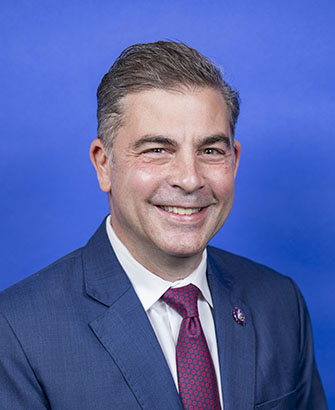
1 sponsor
Actions
2 actions
| Date | Action |
|---|---|
| Oct. 01, 2026 | Introduced in House |
| Oct. 01, 2026 | Referred to the House Committee on Oversight and Government Reform. |
Corporate Lobbying
0 companies lobbying
None found.
* Note that there can be significant delays in lobbying disclosures, and our data may be incomplete.