

Global health insurance costs are projected to rise by over 10% in 2027, driven by new medical technologies and increasing chronic conditions.
Quiver AI Summary
A recent press release from WTW highlights that global health insurance costs are projected to rise by over 10% for the second consecutive year in 2027, reporting an average increase of 10.2%. The survey indicates that Asia Pacific will see the highest increase at 12.6%, while costs in North America and Latin America will remain steady at 10.5% and 10.3%, respectively. Medical advancements, particularly in cancer treatment, are major contributors to rising costs, with insurers noting increased cancer diagnoses among younger patients. Employers are under pressure to manage these costs while maintaining affordable healthcare access for employees, prompting the need for comprehensive strategies to handle pharmacy spending and chronic conditions. The survey involved feedback from 393 insurers and was conducted between June and August 2026, reflecting trends across 92 countries.
Potential Positives
- WTW's 2027 Global Medical Trends survey garnered contributions from 393 insurers and 180 WTW brokers, indicating a robust and broad engagement within the industry.
- The survey highlights a projected increase in global health insurance costs, which suggests a continuing demand for health insurance services, potentially benefiting WTW's business outlook.
- WWT's position as a leading advisory company is reinforced by its ability to provide valuable insights on medical trends, with 76% of insurers citing new medical technologies as a top driver of costs.
- Over the next three years, nearly half of insurers expect higher medical trends to persist, indicating ongoing relevance and influence of WTW's services in helping employers navigate rising healthcare costs.
Potential Negatives
- The projected rise in global health insurance costs by more than 10% for the second consecutive year may signal financial strain on both employees and employers, potentially leading to dissatisfaction with health benefit offerings.
- Nearly half of insurers expect that rising medical and pharmacy trends will persist for over three years, indicating long-term challenges in managing healthcare expenses.
- Continued pressure from employers to reduce plan rates amidst soaring medical costs suggests a potential conflict between employer expectations and insurance company profit margins.
FAQ
What are the projected global health insurance cost increases for 2027?
Global health insurance costs are projected to rise by 10.2% in 2027, following a 10.1% increase in 2026.
Which region anticipates the highest medical cost increases?
The Asia Pacific region is projected to have the highest medical cost increase at 12.6% in 2027.
What factors are driving medical and pharmacy costs?
New medical technologies, provider fee increases, and pharmaceutical advancements are the primary drivers of rising costs.
How is cancer impacting medical costs globally?
Cancer is the leading condition driving total medical costs, with 62% of insurers identifying it as a top cost driver.
What is the focus for employers in managing rising healthcare costs?
Employers are focusing on multiyear strategies to address pharmacy spending and high-cost conditions while maintaining care affordability.
Disclaimer: This is an AI-generated summary of a press release distributed by GlobeNewswire. The model used to summarize this release may make mistakes. See the full release here.
$WTW Insider Trading Activity
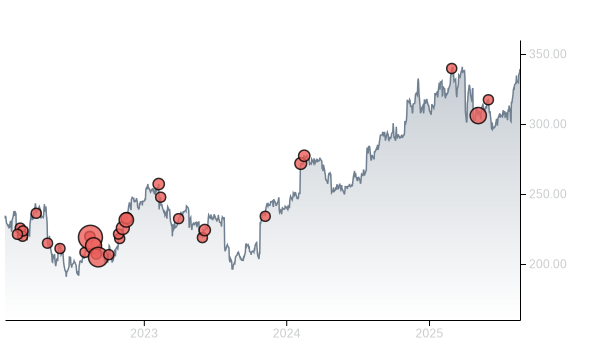
$WTW insiders have traded $WTW stock on the open market 1 times in the past 6 months. Of those trades, 0 have been purchases and 1 have been sales.
Here’s a breakdown of recent trading of $WTW stock by insiders over the last 6 months:
- ALEXIS FABER (Chief Operating Officer) sold 730 shares for an estimated $250,171
To track insider transactions, check out Quiver Quantitative's insider trading dashboard. You can access data on insider stock transactions through the Quiver Quantitative API insider transaction endpoint.
$WTW Revenue
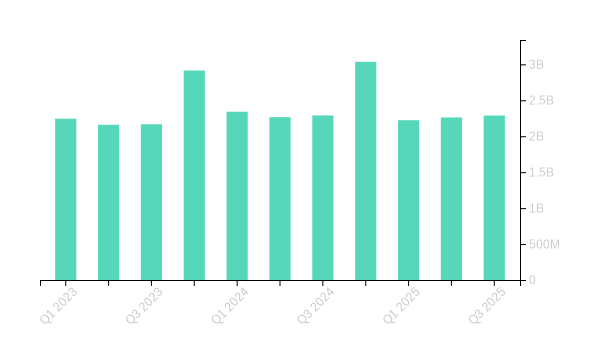
$WTW had revenues of $2.5B in Q3 2026. This is an increase of 7.52% from the same period in the prior year.
You can track WTW financials on Quiver Quantitative's WTW stock page.
You can access data on WTW stock through the Quiver Quantitative API.
$WTW Hedge Fund Activity
We have seen 386 institutional investors add shares of $WTW stock to their portfolio, and 352 decrease their positions in their most recent quarter.
Here are some of the largest recent moves:
- CALIFORNIA STATE TEACHERS RETIREMENT SYSTEM removed 39,507,695 shares (-99.6%) from their portfolio in Q3 2026, for an estimated $11,387,302,929
- MASSACHUSETTS FINANCIAL SERVICES CO /MA/ removed 961,684 shares (-17.5%) from their portfolio in Q3 2026, for an estimated $277,186,179
- BAUPOST GROUP LLC/MA removed 893,126 shares (-100.0%) from their portfolio in Q2 2026, for an estimated $233,436,342
- UBS AM, A DISTINCT BUSINESS UNIT OF UBS ASSET MANAGEMENT AMERICAS LLC added 825,987 shares (+16026.1%) to their portfolio in Q3 2026, for an estimated $238,074,233
- SIXTH STREET PARTNERS MANAGEMENT COMPANY, L.P. removed 629,197 shares (-100.0%) from their portfolio in Q3 2026, for an estimated $181,353,451
- INVESCO LTD. removed 376,494 shares (-17.3%) from their portfolio in Q3 2026, for an estimated $108,516,865
- BLACKROCK, INC. removed 333,460 shares (-4.0%) from their portfolio in Q3 2026, for an estimated $96,113,175
To track hedge funds' stock portfolios, check out Quiver Quantitative's institutional holdings dashboard. You can access data on hedge funds moves and 13F filings through the Quiver Quantitative API 13F endpoint.
$WTW Analyst Ratings
Wall Street analysts have issued reports on $WTW in the last several months. We have seen 9 firms issue buy ratings on the stock, and 0 firms issue sell ratings.
Here are some recent analyst ratings:
- Wells Fargo issued a "Overweight" rating on 11/19/2026
- Mizuho issued a "Outperform" rating on 11/13/2026
- Keefe, Bruyette & Woods issued a "Outperform" rating on 11/05/2026
- UBS issued a "Buy" rating on 11/02/2026
- Evercore ISI Group issued a "Outperform" rating on 10/30/2026
- TD Cowen issued a "Buy" rating on 08/20/2026
- Goldman Sachs issued a "Buy" rating on 08/03/2026
To track analyst ratings and price targets for $WTW, check out Quiver Quantitative's $WTW forecast page.
$WTW Price Targets
Multiple analysts have issued price targets for $WTW recently. We have seen 13 analysts offer price targets for $WTW in the last 6 months, with a median target of $384.0.
Here are some recent targets:
- Elyse Greenspan from Wells Fargo set a target price of $390.0 on 11/19/2026
- Vincent Sinisi from Morgan Stanley set a target price of $350.0 on 11/16/2026
- Yaron Kinar from Mizuho set a target price of $384.0 on 11/13/2026
- Meyer Shields from Keefe, Bruyette & Woods set a target price of $397.0 on 11/05/2026
- Brian Meredith from UBS set a target price of $395.0 on 11/02/2026
- David Motemaden from Evercore ISI Group set a target price of $371.0 on 10/30/2026
- Alex Scott from Barclays set a target price of $332.0 on 10/07/2026
Full Release
NEW YORK, Nov. 23, 2026 (GLOBE NEWSWIRE) -- Global health insurance costs are projected to rise by more than 10% for the second year in a row in 2027, according to leading global advisory, broking and solutions company, WTW (NASDAQ: WTW).
The WTW 2027 Global Medical Trends survey of health insurers found that the average gross cost of medical health benefits is projected to increase by 10.2% globally in 2027, following an expected increase of 10.1% in 2026 and a rise of 9.8% in 2025.
Regionally, the highest cost increases are expected in Asia Pacific at 12.6%, while the Middle East and Africa are anticipating the sharpest acceleration among regions, from 10.1% in 2026 to 11.2% in 2027.
Medical cost increases in North America are projected to remain at 10.5%, while Latin America is also expected to remain unchanged at 10.3%. In Europe, medical cost increases are projected to ease slightly, from 8.4% in 2026 to 8.3% in 2027.
In the US, medical cost increases are projected to stay at 10.3% in 2027, which is the same as 2026 but higher than 2025’s 9.4%. In Canada, costs are expected to increase by 11.5%, after being at 12.0% in 2026.
According to the survey, nearly half (49%) of insurers that expect higher medical and pharmacy trends over the next three years expect those increased trends to persist for longer.
New medical technologies remain the leading factor driving medical and pharmacy costs, with 76% of insurers citing it among their top five drivers. Provider fee increases (65%) and pharmaceutical advancements (45%) follow.
Cancer remains the leading condition driving total medical costs globally, with 62% of insurers identifying it as a top cost condition. Nearly two-thirds (61%) of insurers reported an increase in cancer diagnoses among patients under 40 compared with the past two years.
When looking specifically at the fastest-growing conditions by cost, cardiovascular conditions rank first (54%), followed by cancer (51%) and diabetes (28%). Significantly, it is these fast-growing conditions that often require the costliest ongoing treatment, specialist care and long-term management.
“Globally, insurers are expecting higher cost trends to persist for more than three years, while reporting increasing pressure from employers to reduce plan rates,” said Courtney Stubblefield, Strategy & Specialty Leader, Health & Benefits, WTW. This indicates that cost management measures, such as how and where care is accessed, and cost-sharing design initiatives, will remain a central focus for employers for the foreseeable future.
“In the US, healthcare costs remain under sustained pressure from new medical technologies, specialty pharmaceuticals, and the rising use of GLP-1 therapies, alongside higher provider costs and the ongoing demands of chronic and complex conditions. To manage this, employers need a multiyear, multifaceted strategy that addresses pharmacy spending and high-cost conditions – such as cancer, cardiovascular disease and diabetes- while keeping care affordable and accessible for employees.”
Figure 1. Global medical trends (gross), 2025–2027, globally and by region
|
2025
|
2026
|
2027 (projected) | ||||
| Global † | 9.8 | % | 10.1 | % | 10.2 | % |
| Latin America † | 10.2 | % | 10.3 | % | 10.3 | % |
| North America | 9.4 | % | 10.5 | % | 10.5 | % |
| Asia Pacific | 12.2 | % | 12.8 | % | 12.6 | % |
| Europe † | 8.7 | % | 8.4 | % | 8.3 | % |
| Middle East and Africa † | 9.6 | % | 10.1 | % | 11.2 | % |
† Global, Latin America and Europe trends exclude Argentina, Turkey and Venezuela as outliers due to inflationary pressures.
About the survey
Global Medical Trends Survey
, is a study of leading healthcare insurers around the world. Medical trend refers to insurer reported annual premium cost changes in per employee per year (PEPY) medical and pharmacy benefits costs for locally insured group medical plans.
WTW conducted its 2027 Global Medical Trends Survey between June and August 2026. The survey includes contributions from 393 insurers and 180 WTW brokers, with coverage across 92 countries.
About WTW
At WTW (NASDAQ: WTW), we provide data-driven, insight-led solutions in the areas of people, risk and capital. Leveraging the global view and local expertise of our colleagues serving 140 countries and markets, we help organizations sharpen their strategy, enhance organizational resilience, motivate their workforce and maximize performance. Working shoulder to shoulder with our clients, we uncover opportunities for sustainable success—and provide perspective that moves you. Learn more at wtwco.com.
Media contacts
Ileana Feoli: +1 212 309 5504
[email protected]