We have received text from S. 5382: China AI Power Report Act. This bill was received on 2026-08-07, and currently has 1 cosponsor.
Here is a short summary of the bill:
This bill would direct the Secretary of Commerce and the Secretary of State to produce a detailed report on China’s artificial intelligence capabilities and related supply chains. The report would be due within 180 days after the bill becomes law, and then updated once a year for three years.
What the report would cover
The report would examine a wide range of topics related to China’s AI and semiconductor sectors, including:
- Advanced AI chips: The performance, production, and technical features of Chinese-made chips used for AI training and inference, including chips made by companies such as Huawei and Cambricon.
- Chip manufacturing: The capacity, yields, equipment, and supply chains of Chinese semiconductor fabrication facilities, including those producing advanced logic chips and memory chips.
- Semiconductor equipment makers: The capabilities and supply chains of Chinese companies that make chip manufacturing equipment, including what equipment they produce and what foreign components they rely on.
- EDA software: Chinese electronic design automation software used to design advanced chips, including its features, market share, and how it compares to leading global tools.
- AI models: The most advanced Chinese AI models considered relevant to U.S. national security, including their size, training compute, benchmark performance, deployment, and possible military, surveillance, or cyber uses.
- AI research: China’s AI research activity, including publications, patents, funding, and possible methods used to acquire foreign AI intellectual property.
- Funding and investment: Public funding, subsidies, and foreign capital supporting AI development in China.
- Computing capacity: The total AI computing power available in China, including major data centers and sources of hardware.
- Humanoid robots: Leading Chinese humanoid robot makers, their production levels, components, uses, and possible vulnerabilities.
- AI applications: Chinese AI-powered apps, how they are used, what data they collect, and any possible risks to U.S. security or privacy.
- China’s AI rules and policies: The legal and informal controls China places on AI development and use, and how the government is trying to shape AI development.
- International standards efforts: China’s efforts to influence global AI standards and where such standards may already be spreading.
- Remote access and chip diversion: Whether Chinese entities are getting AI computing resources through cloud services, foreign data centers, or diverted U.S.-controlled chips.
- Effectiveness of U.S. export controls: How well current U.S. export controls limit China’s access to AI-related technology, including loopholes and possible recommendations for changes.
How the report would be prepared
The bill says the report should use existing federal assessments and intelligence products where possible to avoid duplication. The agencies may also consult private industry, research organizations, national laboratories, universities, media outlets, and other experts.
Format and briefing requirements
The report would be submitted in unclassified form, but it could include a classified annex. The unclassified portion must include certain basic findings, such as how many AI-focused chips China produced, projected production numbers, and how widely Chinese AI technologies are used outside China, including in the United States.
Within 90 days after the report is submitted, the Secretaries would also have to provide Congress with a classified and unclassified briefing on its contents.
Relevant Companies
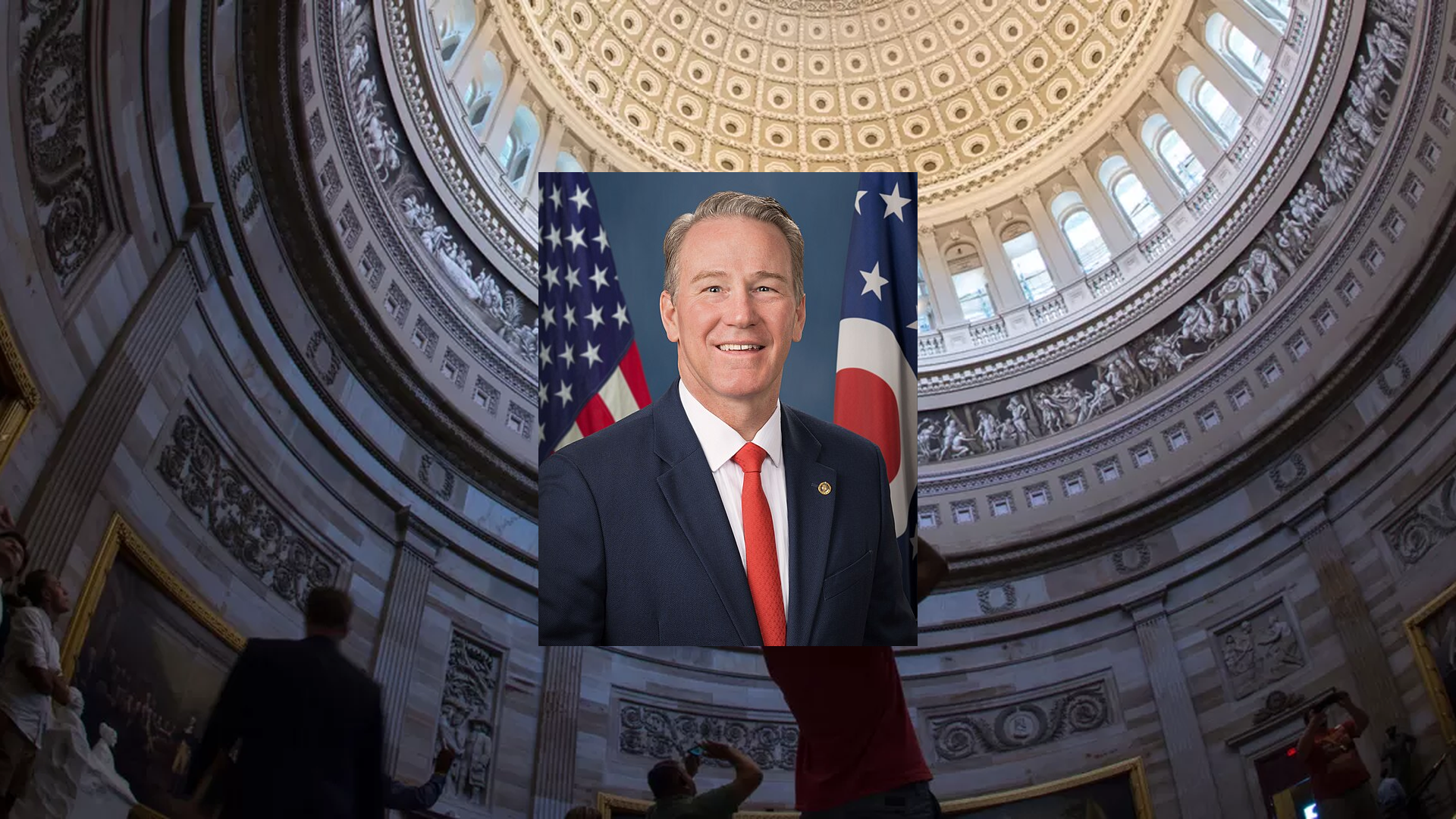
Senator Jon Husted Bill Proposals
Here are some bills which have recently been proposed by Senator Jon Husted:
- S.5382: China AI Power Report Act
- S.5381: ADVERSARIES Act
- S.5380: A bill to provide for a ten-year statute of limitations for export control violations under the Export Control Reform Act of 2018.
- S.5379: BIS STRENGTH Act
- S.5363: New Source Review Permitting Improvement Act
- S.5271: A bill to amend the Help America Vote Act of 2002 to require voters to provide photo identification.
You can track bills proposed by Senator Jon Husted on Quiver Quantitative's politician page for Husted.
Senator Jon Husted Stock Trading
We have data on up to $15.0K of trades from Senator Jon Husted, which we parsed from STOCK Act filings.
You can track Senator Jon Husted's stock trading on Quiver Quantitative's politician page for Husted.
2026 Ohio US Senate Election
There has been approximately $610,406,789 of spending in Ohio US Senate elections over the last two years, per our estimates.
Approximately $529,616,944 of this has been from outside spending by PACs and Super PACs. Some of the groups who are spending money in this race include:
- WINSENATE ($158,347,150)
- SENATE LEADERSHIP FUND ($137,671,942)
- AMERICAN CROSSROADS ($62,181,392)
- DEFEND AMERICAN JOBS ($56,269,859)
- AMERICANS FOR PROSPERITY ACTION, INC. (AFP ACTION) DBA CVA ACTION AND DBA LIBRE ACTION ($39,534,964)
The rating for this race is currently "Toss Up".
You can track this election on our matchup page for the 2026 Ohio US Senate election.
This article is not financial advice. See Quiver Quantitative's disclaimers for more information.