
Regeneron announced favorable LINKER-AL2 trial results, showing Lynozyfic's efficacy in systemic AL amyloidosis with high response rates.
Quiver AI Summary
Regeneron Pharmaceuticals announced promising results from the Phase 1/2 LINKER-AL2 trial of Lynozyfic® (linvoseltamab) for adults with second-line-plus systemic amyloid light chain (AL) amyloidosis, to be presented at the ASCO 2026 Annual Meeting. The trial showed normalization of free light chains by day 15, with a 100% hematologic complete response rate in patients receiving the highest dose. Many participants with organ involvement, particularly renal or cardiac, also reported improved function. Lynozyfic, a bispecific antibody already approved for relapsed or refractory multiple myeloma, is being evaluated in a trial addressing a severe condition with no existing treatments after initial therapies fail. The study is ongoing, with primary endpoints focused on safety and achievement of complete response.
Potential Positives
- Normalization of free light chains occurred by day 15 across all doses, indicating rapid therapeutic effect of Lynozyfic.
- 100% of patients achieved a hematologic complete response (CR) at the highest tested dose, showcasing the potential effectiveness of Lynozyfic in treating systemic AL amyloidosis.
- Majority of patients with renal or cardiac involvement demonstrated improvement in organ function, suggesting that Lynozyfic may offer broader benefits beyond hematologic response.
- The Phase 2 trial of Lynozyfic for systemic AL amyloidosis has registrational intent and is ongoing, indicating the company’s commitment to bringing a new treatment to market for this serious condition.
Potential Negatives
- Despite the promising results, the press release highlights that Lynozyfic is still considered investigational and has not yet received regulatory approval for the treatment of systemic AL amyloidosis, which could limit its immediate commercial viability.
- The release mentions serious side effects associated with Lynozyfic, including Cytokine Release Syndrome and neurological problems, which could raise concerns about its safety profile and affect patient willingness to use the treatment.
- The sudden death of a patient receiving Lynozyfic, although assessed as unrelated to the treatment, may cast a shadow over the trial results and could invoke scrutiny from regulatory bodies and the public.
FAQ
What are the results of the LINKER-AL2 trial for Lynozyfic?
The LINKER-AL2 trial showed 100% of patients achieved hematologic complete response by day 15 at the highest dose.
What is Lynozyfic used for?
Lynozyfic is being investigated for treating adults with second-line-plus systemic AL amyloidosis in the LINKER-AL2 trial.
How does Lynozyfic impact organ function?
The majority of patients with renal or cardiac involvement showed organ function improvement after Lynozyfic treatment.
What were the safety findings of the Lynozyfic trial?
Most patients experienced treatment-emergent adverse events; Grade ≥3 events included neutropenia and infections.
Where will the LINKER-AL2 results be presented?
The results will be detailed in an oral presentation at the ASCO 2026 Annual Meeting on May 29.
Disclaimer: This is an AI-generated summary of a press release distributed by GlobeNewswire. The model used to summarize this release may make mistakes. See the full release here.
$REGN Insider Trading Activity
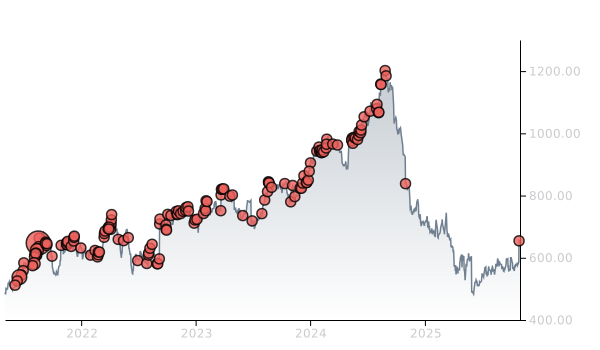
$REGN insiders have traded $REGN stock on the open market 49 times in the past 6 months. Of those trades, 0 have been purchases and 49 have been sales.
Here’s a breakdown of recent trading of $REGN stock by insiders over the last 6 months:
- BONNIE L BASSLER has made 0 purchases and 2 sales selling 2,260 shares for an estimated $1,770,000.
- JASON PITOFSKY (SVP Controller) has made 0 purchases and 11 sales selling 2,036 shares for an estimated $1,585,058.
- HUDA Y ZOGHBI has made 0 purchases and 11 sales selling 1,638 shares for an estimated $1,279,811.
- ARTHUR F RYAN has made 0 purchases and 25 sales selling 200 shares for an estimated $148,376.
To track insider transactions, check out Quiver Quantitative's insider trading dashboard. You can access data on insider stock transactions through the Quiver Quantitative API insider transaction endpoint.
$REGN Revenue
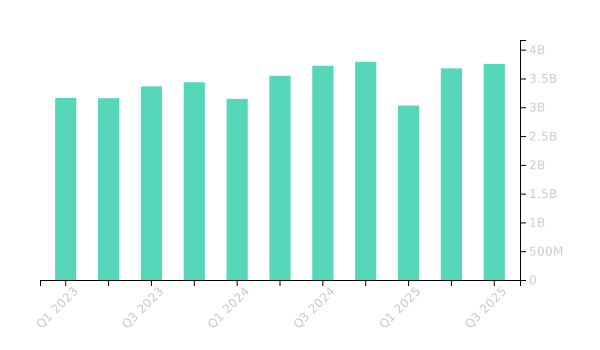
$REGN had revenues of $3.6B in Q1 2026. This is an increase of 19.04% from the same period in the prior year.
You can track REGN financials on Quiver Quantitative's REGN stock page.
You can access data on REGN stock through the Quiver Quantitative API.
$REGN Congressional Stock Trading
Members of Congress have traded $REGN stock 1 times in the past 6 months. Of those trades, 1 have been purchases and 0 have been sales.
Here’s a breakdown of recent trading of $REGN stock by members of Congress over the last 6 months:
- REPRESENTATIVE JULIA LETLOW purchased up to $15,000 on 02/12.
To track congressional stock trading, check out Quiver Quantitative's congressional trading dashboard. You can access data on congressional stock trades through the Quiver Quantitative API Congress trades endpoint.
$REGN Hedge Fund Activity
We have seen 702 institutional investors add shares of $REGN stock to their portfolio, and 641 decrease their positions in their most recent quarter.
Here are some of the largest recent moves:
- WELLINGTON MANAGEMENT GROUP LLP added 1,172,994 shares (+176.5%) to their portfolio in Q1 2026, for an estimated $898,970,871
- CAPITAL INTERNATIONAL INVESTORS removed 876,564 shares (-100.0%) from their portfolio in Q4 2025, for an estimated $676,593,454
- FMR LLC removed 801,374 shares (-34.5%) from their portfolio in Q1 2026, for an estimated $614,165,019
- D. E. SHAW & CO., INC. removed 706,118 shares (-82.0%) from their portfolio in Q4 2025, for an estimated $545,031,300
- TWO SIGMA INVESTMENTS, LP added 531,085 shares (+188.9%) to their portfolio in Q1 2026, for an estimated $407,018,233
- MARSHALL WACE, LLP removed 478,198 shares (-99.9%) from their portfolio in Q1 2026, for an estimated $366,486,165
- HOLOCENE ADVISORS, LP removed 460,723 shares (-100.0%) from their portfolio in Q1 2026, for an estimated $353,093,499
To track hedge funds' stock portfolios, check out Quiver Quantitative's institutional holdings dashboard. You can access data on hedge funds moves and 13F filings through the Quiver Quantitative API 13F endpoint.
$REGN Analyst Ratings
Wall Street analysts have issued reports on $REGN in the last several months. We have seen 6 firms issue buy ratings on the stock, and 0 firms issue sell ratings.
Here are some recent analyst ratings:
- Barclays issued a "Overweight" rating on 04/30/2026
- Truist Securities issued a "Buy" rating on 04/30/2026
- Cantor Fitzgerald issued a "Overweight" rating on 02/02/2026
- B of A Securities issued a "Buy" rating on 01/07/2026
- BMO Capital issued a "Outperform" rating on 12/04/2025
- HSBC issued a "Buy" rating on 11/24/2025
To track analyst ratings and price targets for $REGN, check out Quiver Quantitative's $REGN forecast page.
$REGN Price Targets
Multiple analysts have issued price targets for $REGN recently. We have seen 20 analysts offer price targets for $REGN in the last 6 months, with a median target of $852.5.
Here are some recent targets:
- John Newman from Canaccord Genuity set a target price of $875.0 on 05/19/2026
- Mohit Bansal from Wells Fargo set a target price of $700.0 on 05/18/2026
- Brian Abrahams from RBC Capital set a target price of $707.0 on 05/18/2026
- Geoff Meacham from Citigroup set a target price of $700.0 on 05/18/2026
- Andrew Berens from Leerink Partners set a target price of $641.0 on 05/18/2026
- Gregory Renza from Truist Securities set a target price of $778.0 on 05/18/2026
- Chris Schott from JP Morgan set a target price of $850.0 on 05/18/2026
Full Release
Normalization of free light chains occurred by day 15 across all doses
100% of patients achieved a hematologic complete response (CR) at the highest tested dose
Majority of patients with renal or cardiac involvement demonstrated improvement in organ function, despite short follow-up
First results from the Phase 1/2 LINKER-AL2 trial to be detailed in an ASCO oral presentation; the Phase 2 portion of the trial with registrational intent is ongoing
TARRYTOWN, N.Y., May 21, 2026 (GLOBE NEWSWIRE) -- Regeneron Pharmaceuticals, Inc. (NASDAQ: REGN) today announced positive results from the Phase 1/2 LINKER-AL2 trial evaluating Lynozyfic ® (linvoseltamab) in adults with second-line-plus systemic amyloid light chain (AL) amyloidosis, which will be featured in an oral presentation at the American Society of Clinical Oncology (ASCO) 2026 Annual Meeting on Friday, May 29 at 2:45 p.m. CDT. The Phase 2 portion of the trial with registrational intent is underway, part of a broad clinical development program investigating Lynozyfic. Lynozyfic is a BCMAxCD3 bispecific antibody that is already approved to treat certain adults with relapsed or refractory (R/R) multiple myeloma (MM).
Systemic AL amyloidosis is a rare and potentially fatal hematologic disorder for which there are currently no approved therapies after initial treatment fails. The disorder is characterized by plasma cells that produce abnormal light chain proteins, which clump together to form amyloid deposits in tissues and vital organs (e.g., heart, kidneys, etc.), resulting in life-threatening organ dysfunction. The current standard-of-care for initial treatment is a four-drug combination that includes daratumumab, bortezomib, cyclophosphamide and dexamethasone. In first-line treatment, this daratumumab-and-chemotherapy-containing quadruple combination showed a 53% hematologic complete response (CR), with a median time to response of 59 days per historical clinical data. In LINKER-AL2, the safety and efficacy of Lynozyfic as a monotherapy was evaluated in patients who received at least one prior therapy, and were either relapsed, refractory or had a suboptimal response (“second-line-plus”).
"The nearly 100% hematologic complete response rate in previously treated systemic AL amyloidosis is remarkable given the 53% hematologic complete response rate with the standard-of-care, multi-drug combination in untreated patients with similar median follow up. Coupled with the notable major organ responses seen in those receiving linvoseltamab monotherapy, these data support further investigation as a promising treatment for these patients,” said Hans Lee, M.D., Director of Myeloma Research for Sarah Cannon Research Institute and investigator for the LINKER-AL2 trial. “The stark reality for patients with systemic AL amyloidosis facing relapsed or refractory disease is that there are no approved treatment options for them. They are grappling with life-threatening organ deterioration, which demands urgent therapeutic innovation. We look forward to the data maturing to better understand if these results can be maintained and translate to further organ improvement.”
LINKER-AL2 is an ongoing, open-label, Phase 1/2 trial investigating the safety and efficacy of fixed-duration Lynozyfic monotherapy in adults with second-line-plus systemic AL amyloidosis. The primary endpoint in Phase 1 was the incidence of dose-limiting toxicities through 28 days. In the ongoing Phase 2 portion of the trial, the primary endpoint is the achievement of hematologic CR.
In the preliminary analysis, 20 patients received Lynozyfic 80 mg (n=7) or 240 mg (n=13) subcutaneously, including 60% who previously received a daratumumab-containing regimen. With a median follow-up of 9.5 months (range: 1.6-13.3 months), Lynozyfic had no observed dose-limiting toxicities, with additional results across both doses showing:
- Hematologic responses in all patients: In the lower-dose group (80 mg), 100% (7 of 7) achieved a very good partial response (VGPR) or better, and 71% (5 of 7) achieved a CR; in the higher-dose group (240 mg), 100% achieved a CR (13 of 13). Responses were durable, with no hematologic progression occurring in all 17 patients still in the trial.
- Rapid and deep reductions in involved free light chain (iFLC) that normalized by day 15 , showing that Lynozyfic treatment rapidly destroyed the plasma cells that produce the abnormal light chains in systemic AL amyloidosis. Further, median time to hematologic CR was 47 days (range: 7-240 days).
-
Notable responses associated with improved renal (73%; 8 of 11) and cardiac (50%; 4 of 8 by biochemical response) organ function
, with no patients experiencing major organ deterioration.
Across both dose levels, all patients (n=20) treated with Lynozyfic monotherapy experienced ≥1 treatment-emergent adverse event (TEAE) (Grade ≥3: 65%), with the most common being cytokine release syndrome (50%; no Grade ≥3), neutropenia (40%; Grade 3/4: 35%) and infusion-related reactions (35%; no Grade ≥3). A total of 17 patients (85%) experienced infections (Grade ≥3: 25%), all of which were resolved. Additionally, there was one Grade 1 incidence of immune effector cell-associated neurotoxicity syndrome that was resolved. One patient in the 240 mg cohort discontinued treatment due to AEs (pneumonia) after achieving CR following three cycles of treatment. Additionally, one patient in the 240 mg cohort with a hematologic CR experienced sudden death in the context of cardiac amyloidosis; and one patient in the 80 mg cohort with pre-existing coronary artery disease had fatal ventricular fibrillation within 24 hours of coronary artery stent placement, which was assessed as unrelated to Lynozyfic by the investigator.
The use of Lynozyfic described above is investigational, and its safety and efficacy has not been evaluated by any regulatory authority for this indication.
About Systemic Amyloid Light Chain (AL) Amyloidosis
Systemic AL amyloidosis is a rare and potentially fatal hematologic disorder that is characterized by the abnormal production of immunoglobulin light chains by clonal plasma cells in the bone marrow. These misfolded light chains form insoluble amyloid protein deposits in vital organs and tissues throughout the body, including the heart (>75% of patients) and kidneys (>60% of patients), leading to organ dysfunction or failure. The estimated U.S. incidence rate is approximately 4,400 cases per year. Systemic AL amyloidosis remains largely incurable, and there are currently no approved therapies for this devastating condition in patients who previously received a daratumumab-quadruple combination.
About Lynozyfic
Lynozyfic was invented using Regeneron’s
VelocImmune
®
technology and is a fully human BCMAxCD3 bispecific antibody designed to bridge BCMA on MM cells with CD3-expressing T cells to facilitate T-cell activation and cancer-cell killing. Lynozyfic is approved to treat certain adults with R/R MM: in the
U.S.
after four lines of therapy and in the
European Union
after at least three prior therapies.
In the U.S., the generic name for Lynozyfic in its approved indications is linvoseltamab-gcpt, with gcpt as the suffix designated in accordance with Nonproprietary Naming of Biological Products Guidance for Industry issued by the U.S. FDA. Outside of the U.S., the generic name of Lynozyfic in its approved indications is linvoseltamab.
Lynozyfic is being investigated in a broad clinical development program exploring its use as a monotherapy and in combination regimens across different lines of therapy in MM, including earlier lines of treatment, as well as plasma cell precursor disorders. These potential uses are investigational, and their safety and efficacy have not been evaluated by any regulatory authority.
In addition to LINKER-AL2 , ongoing trials include:
- LINKER-MM1: Phase 1/2 dose-escalation and dose-expansion trial evaluating the safety, tolerability, dose-limiting toxicities and anti-tumor activity of Lynozyfic monotherapy in R/R MM
- LINKER-MM2 : Phase 1b open-label trial evaluating Lynozyfic in combination with other cancer treatments in patients with R/R MM
- LINKER-MM3 : Phase 3 confirmatory trial evaluating Lynozyfic monotherapy compared to the combination of elotuzumab, pomalidomide and dexamethasone in R/R MM
- LINKER-MM4 : Phase 1/2 trial evaluating Lynozyfic monotherapy in newly diagnosed multiple myeloma (NDMM)
- LINKER-MM5: Phase 3 trial evaluating Lynozyfic monotherapy or in combination with carfilzomib compared to standard of care combination regimens in patients with R/R MM
- LINKER-MM6 (EMN39): Phase 3 trial, in collaboration with the European Myeloma Network, evaluating daratumumab, lenalidomide and dexamethasone induction followed by Lynozyfic monotherapy compared to continued daratumumab, lenalidomide, and dexamethasone in NDMM who are transplant-ineligible
- Phase 1 trial : evaluating Lynozyfic in combination with a Regeneron CD38xCD28 costimulatory bispecific monoclonal antibody in R/R MM
- Phase 1 trial : evaluating Lynozyfic in combination with a Regeneron anti-GPRC5D x anti-CD28 costimulatory bispecific monoclonal antibody in R/R MM
- LINKER-SMM1 : Phase 2 trial evaluating Lynozyfic monotherapy in high-risk smoldering MM
- LINKER-MGUS1 : Phase 2 dose-ranging trial evaluating Lynozyfic monotherapy in high-risk monoclonal gammopathy of unknown significance and non-high-risk smoldering MM
For more information on Regeneron’s clinical trials in blood disorders, visit the clinical trials website , or contact via [email protected] or 844-734-6643.
IMPORTANT SAFETY INFORMATION FOR U.S. PATIENTS
What is the most important information I should know about LYNOZYFIC?
LYNOZYFIC may cause serious or life-threatening side effects, including Cytokine Release Syndrome (CRS) and infusion-related reactions (IRR), or neurologic problems.
Cytokine Release Syndrome (CRS) and infusion related reactions (IRR) . CRS is common during treatment with LYNOZYFIC and can also be serious or life-threatening. Tell your healthcare provider or get medical help right away if you develop any signs or symptoms of CRS or IRR, including:
| • fever of 100.4ºF (38ºC) or higher | • fast heartbeat |
| • chills or shaking | • dizziness or light-headedness |
| • trouble breathing |
Neurologic problems.
LYNOZYFIC can cause neurologic problems that can be serious or life-threatening. Tell your healthcare provider or get medical help right away if you develop any signs or symptoms of neurologic problems, including:
- headache
- agitation, trouble staying awake, confusion or disorientation, seeing or hearing things that are not real (hallucinations)
- trouble speaking, writing, thinking, remembering things, paying attention, or understanding things
- problems walking, muscle weakness, shaking (tremors), loss of balance, or muscle spasms
- numbness and tingling (feeling like “pins and needles”)
- burning, throbbing, or stabbing pain
- changes in your handwriting
- seizures
Due to the risk of CRS and neurologic problems, you will receive LYNOZYFIC on a “step-up dosing schedule” and should be hospitalized for 24 hours after the first and second “step-up” doses.
-
During the “step-up dosing schedule”:
- For your first dose, you will receive a smaller “step-up” dose of LYNOZYFIC on Day 1 of your treatment.
- For your second dose, you will receive a larger “step-up” dose of LYNOZYFIC, which is usually given on Day 8 of your treatment.
- For your third dose, you will receive the first treatment dose of LYNOZYFIC, which is usually given on Day 15 of your treatment.
- Your healthcare provider may repeat one or both of the “step-up” doses depending on side effects or if your treatment is delayed.
- Before the “step-up” doses and the first two treatment doses of LYNOZYFIC, you will receive medicines to help reduce your risk of CRS and IRR. Your healthcare provider will decide if you need to receive medicine to help reduce your risk of side effects with future doses.
LYNOZYFIC is available only through the LYNOZYFIC Risk Evaluation and Mitigation Strategy (REMS) due to the risk of side effects of CRS and neurologic problems. You will receive a Patient Wallet Card from your healthcare provider. Carry the LYNOZYFIC Patient Wallet Card with you at all times and show it to all of your healthcare providers. The LYNOZYFIC Patient Wallet Card lists signs and symptoms of CRS and neurologic problems. Get medical help right away if you develop any of the signs and symptoms listed on the LYNOZYFIC Patient Wallet Card . You may need to be treated in a hospital.
Your healthcare provider will monitor you for signs and symptoms of CRS and neurologic problems during treatment with LYNOZYFIC, as well as other side effects, and may treat you in a hospital if needed. Your healthcare provider may temporarily stop or completely stop your treatment with LYNOZYFIC if you develop CRS, neurologic problems, or any other severe side effects.
If you have any questions about LYNOZYFIC, ask your healthcare provider.
Before receiving LYNOZYFIC, tell your healthcare provider about all of your medical conditions, including if you:
- have an infection.
-
are pregnant or plan to become pregnant. LYNOZYFIC may harm your unborn baby. Tell your healthcare provider right away if you become pregnant or think that you may be pregnant during treatment with LYNOZYFIC.
Females who are able to become pregnant:- Your healthcare provider should do a pregnancy test before you start treatment with LYNOZYFIC.
- You should use an effective form of birth control (contraception) during treatment with LYNOZYFIC and for 3 months after your last dose of LYNOZYFIC.
-
are breastfeeding or plan to breastfeed. It is not known whether LYNOZYFIC passes into your breast milk. Do not breastfeed during treatment with LYNOZYFIC and for 3 months after your last dose of LYNOZYFIC.
Tell your healthcare provider about all the medicines you take , including prescription and over-the-counter medicines, vitamins, and herbal supplements.
How will I receive LYNOZYFIC?
- LYNOZYFIC will be given to you by your healthcare provider by infusion through a needle placed in a vein (intravenous infusion).
- After the “step-up dosing schedule”, the treatment dose of LYNOZYFIC is usually given 1 time each week for 11 doses, and then 1 time every other week for 5 doses. After these doses and based on how your disease responds, your healthcare provider will decide if you are able to receive LYNOZYFIC less often (every 4 weeks) or will continue to have every other week treatment.
- Your healthcare provider will decide how long you will receive treatment with LYNOZYFIC.
- If you miss any appointments, call your healthcare provider as soon as possible to reschedule your appointment. It is important for you to be monitored closely for side effects during treatment with LYNOZYFIC.
What should I avoid while receiving LYNOZYFIC?
Do not
drive, or operate heavy or potentially dangerous machinery, or do other dangerous activities for 48 hours after completing each of your “step-up” doses or at any time during treatment with LYNOZYFIC if you develop new neurologic symptoms, until the symptoms go away.
What are the possible side effects of LYNOZYFIC?
LYNOZYFIC may cause serious side effects, including:
-
Infections.
LYNOZYFIC can cause bacterial, viral, or fungal infections that are serious, life-threatening, or that may lead to death. Upper respiratory tract infections and pneumonia are common during treatment with LYNOZYFIC.
- Your healthcare provider will monitor you for signs and symptoms of infection before and during treatment with LYNOZYFIC.
- Your healthcare provider may prescribe medicines for you to help prevent infections and treat you as needed if you develop an infection during treatment with LYNOZYFIC.
-
Tell your healthcare provider right away if you develop any signs or symptoms of infection during treatment with LYNOZYFIC, including:
- fever of 100.4 °F (38 °C) or higher
- chills
- cough
- shortness of breath
- chest pain
- sore throat
- pain during urination
- feeling weak or generally unwell
- Decreased white blood cell counts . Decreased white blood cell counts are common during treatment with LYNOZYFIC and can also be severe. Fever can happen with low white blood cell counts and may be a sign that you have an infection. Your healthcare provider will check your blood cell counts before you start treatment and during treatment with LYNOZYFIC, and will treat you as needed.
-
Liver problems.
LYNOZYFIC can cause increased liver enzymes and bilirubin in your blood. These increases can happen with or without you also having CRS. Your healthcare provider will do blood tests to check your liver before starting and during treatment with LYNOZYFIC. Tell your healthcare provider if you develop any of the following signs or symptoms of liver problems:
- tiredness
- loss of appetite
- pain in your right upper stomach-area (abdomen)
- dark urine yellowing of your skin or the white part of your eyes
The most common side effects of LYNOZYFIC include:
| • muscle and bone pain | • nausea |
| • cough | • headache |
| • diarrhea | • shortness of breath |
| • tiredness or weakness |
The most common severe abnormal blood test results with LYNOZYFIC include:
low white blood cell counts and low red blood cell counts.
These are not all of the possible side effects of LYNOZYFIC.
Call your doctor for medical advice about side effects. You may report side effects to FDA at 1-800-FDA-1088.
Please see full Prescribing Information , including Boxed WARNING, and Medication Guide for LYNOZYFIC.
What is LYNOZYFIC?
LYNOZYFIC is a prescription medicine used to treat adults with multiple myeloma who:
- have already received at least 4 treatment regimens, including a proteasome inhibitor, an immunomodulatory agent and an anti-CD38 monoclonal antibody to treat their multiple myeloma, and
- their cancer has come back or did not respond to prior treatment.
It is not known if LYNOZYFIC is safe and effective in children.
About Regeneron in Hematology
At Regeneron, we’re applying more than three decades of biology expertise with our proprietary
VelociSuite
®
technologies to develop medicines for patients with diverse blood cancers and rare blood disorders.
Our blood cancer research is focused on bispecific antibodies that are being investigated both as monotherapies and in various combinations and emerging therapeutic modalities. Together, they provide us with unique combinatorial flexibility to develop customized and potentially synergistic cancer treatments.
Our research and collaborations to develop potential treatments for rare blood disorders include explorations in antibody medicine, gene editing and gene-knockout technologies, and investigational RNA-approaches focused on depleting abnormal proteins or blocking disease-causing cellular signaling.
About Regeneron's
VelocImmune
Technology
Regeneron's
VelocImmune
technology utilizes a proprietary genetically engineered mouse platform endowed with a genetically humanized immune system to produce optimized fully human antibodies. When Regeneron's co-Founder, President and Chief Scientific Officer George D. Yancopoulos was a graduate student with his mentor Frederick W. Alt in 1985, they were the first to
envision
making such a genetically humanized mouse, and Regeneron has spent decades inventing and developing
VelocImmune
and related
VelociSuite
technologies. Dr. Yancopoulos and his team have used
VelocImmune
technology to create a substantial proportion of all original, FDA-approved or authorized fully human monoclonal antibodies. This includes Dupixent
®
(dupilumab), Libtayo
®
(cemiplimab-rwlc), Praluent
®
(alirocumab), Kevzara
®
(sarilumab), Evkeeza
®
(evinacumab-dgnb), Inmazeb
®
(atoltivimab, maftivimab and odesivimab-ebgn) and Veopoz
®
(pozelimab-bbfg). In addition, REGEN-COV
®
(casirivimab and imdevimab) had been authorized by the FDA during the COVID-19 pandemic until 2024.
About Regeneron
Regeneron (NASDAQ: REGN) is a leading biotechnology company that invents, develops and commercializes life-transforming medicines for people with serious diseases. Founded and led by physician-scientists, our unique ability to repeatedly and consistently translate science into medicine has led to numerous approved treatments and product candidates in development, most of which were homegrown in our laboratories. Our medicines and pipeline are designed to help patients with eye diseases, allergic and inflammatory diseases, cancer, cardiovascular and metabolic diseases, neurological diseases, hematologic conditions, infectious diseases, and rare diseases.
Regeneron pushes the boundaries of scientific discovery and accelerates drug development using our proprietary technologies, such as VelociSuite ® , which produces optimized fully human antibodies and new classes of bispecific antibodies. We are shaping the next frontier of medicine with data-powered insights from the Regeneron Genetics Center ® and pioneering genetic medicine platforms, enabling us to identify innovative targets and complementary approaches to potentially treat or cure diseases.
For more information, please visit
www.Regeneron.com
or follow Regeneron on
LinkedIn
,
Instagram
,
Facebook
or
X
.
Forward-Looking Statements and Use of Digital Media
This press release includes forward-looking statements that involve risks and uncertainties relating to future events and the future performance of Regeneron Pharmaceuticals, Inc. (“Regeneron” or the “Company”), and actual events or results may differ materially from these forward-looking statements. Words such as “anticipate,” “expect,” “intend,” “plan,” “believe,” “seek,” “estimate,” variations of such words, and similar expressions are intended to identify such forward-looking statements, although not all forward-looking statements contain these identifying words. These statements concern, and these risks and uncertainties include, among others, the nature, timing, and possible success and therapeutic applications of products marketed or otherwise commercialized by Regeneron and/or its collaborators or licensees (collectively, “Regeneron’s Products”) and product candidates being developed by Regeneron and/or its collaborators or licensees (collectively, “Regeneron’s Product Candidates”) and research and clinical programs now underway or planned, including without limitation the clinical programs evaluating Lynozyfic
®
(linvoseltamab) as a monotherapy or in various combination regimens discussed or referenced in this press release; the likelihood, timing, and scope of possible regulatory approval and commercial launch of Regeneron’s Product Candidates and new indications for Regeneron’s Products, including Lynozyfic for the treatment of adults with relapsed or refractory systemic light chain amyloidosis as discussed in this press release; uncertainty of the utilization, market acceptance, and commercial success of Regeneron’s Products (such as Lynozyfic) and Regeneron’s Product Candidates and the impact of studies (whether conducted by Regeneron or others and whether mandated or voluntary), including the studies discussed or referenced in this press release, on any of the foregoing or any potential regulatory approval of Regeneron’s Products and Regeneron’s Product Candidates; the ability of Regeneron’s collaborators, licensees, suppliers, or other third parties (as applicable) to perform manufacturing, filling, finishing, packaging, labeling, distribution, and other steps related to Regeneron’s Products and Regeneron’s Product Candidates; the ability of Regeneron to manage supply chains for multiple products and product candidates and risks associated with tariffs and other trade restrictions; safety issues resulting from the administration of Regeneron’s Products (such as Lynozyfic) and Regeneron’s Product Candidates in patients, including serious complications or side effects in connection with the use of Regeneron’s Products and Regeneron’s Product Candidates in clinical trials; determinations by regulatory and administrative governmental authorities which may delay or restrict Regeneron’s ability to continue to develop or commercialize Regeneron’s Products and Regeneron’s Product Candidates; ongoing regulatory obligations and oversight impacting Regeneron’s Products, research and clinical programs, and business, including those relating to patient privacy; the availability and extent of reimbursement or copay assistance for Regeneron’s Products from third-party payors and other third parties, including private payor healthcare and insurance programs, health maintenance organizations, pharmacy benefit management companies, and government programs such as Medicare and Medicaid; coverage and reimbursement determinations by such payors and other third parties and new policies and procedures adopted by such payors and other third parties; changes to drug pricing regulations and requirements and Regeneron’s pricing strategy, including in connection with Regeneron’s April 2026 agreements with the U.S. government; other changes in laws, regulations, and policies affecting the healthcare industry; competing products and product candidates (including biosimilar products) that may be superior to, or more cost effective than, Regeneron’s Products and Regeneron’s Product Candidates; the extent to which the results from the research and development programs conducted by Regeneron and/or its collaborators or licensees may be replicated in other studies and/or lead to advancement of product candidates to clinical trials, therapeutic applications, or regulatory approval; unanticipated expenses; the costs of developing, producing, and selling products; the ability of Regeneron to meet any of its financial projections or guidance and changes to the assumptions underlying those projections or guidance; the potential for any license, collaboration, or supply agreement, including Regeneron’s agreements with Sanofi and Bayer (or their respective affiliated companies, as applicable), to be cancelled or terminated; the impact of public health outbreaks, epidemics, or pandemics on Regeneron's business; and risks associated with litigation and other proceedings and government investigations relating to the Company and/or its operations (including the pending civil proceedings initiated or joined by the U.S. Department of Justice and the U.S. Attorney's Office for the District of Massachusetts), risks associated with intellectual property of other parties and pending or future litigation relating thereto (including without limitation the patent litigation and other related proceedings relating to EYLEA
®
(aflibercept) Injection), the ultimate outcome of any such proceedings and investigations, and the impact any of the foregoing may have on Regeneron’s business, prospects, operating results, and financial condition. A more complete description of these and other material risks can be found in Regeneron’s filings with the U.S. Securities and Exchange Commission, including its Form 10-K for the year ended December 31, 2025 and its Form 10-Q for the quarterly period ended March 31, 2026. Any forward-looking statements are made based on management’s current beliefs and judgment, and the reader is cautioned not to rely on any forward-looking statements made by Regeneron. Regeneron does not undertake any obligation to update (publicly or otherwise) any forward-looking statement, including without limitation any financial projection or guidance, whether as a result of new information, future events, or otherwise.
Regeneron uses its media and investor relations website and social media outlets to publish important information about the Company, including information that may be deemed material to investors. Financial and other information about Regeneron is routinely posted and is accessible on Regeneron's media and investor relations website ( https://investor.regeneron.com ) and its LinkedIn page ( https://www.linkedin.com/company/regeneron-pharmaceuticals ).
|
Contacts:
Media Relations Tammy Allen Tel: +1 914-306-2698 [email protected] |
Investor Relations Mark Hudson Tel: +1 914-847-3482 [email protected] |