


SELVA Phase 3 study shows QTORIN™ rapamycin significantly improves microcystic lymphatic malformations in children, supporting FDA approval plans.
Quiver AI Summary
Palvella Therapeutics announced promising results from its Phase 3 SELVA study and Phase 2 TOIVA study for QTORIN™ rapamycin, aimed at treating microcystic lymphatic malformations and cutaneous venous malformations. In the SELVA study, 100% of participants aged 6-11 significantly improved on the mLM-IGA scale after 24 weeks, with a mean improvement of +2.46 (p<0.001). Additionally, 87% of participants with moderate to severe leaking or bleeding experienced significant improvement. Satisfaction levels were high, with all participants expressing at least some satisfaction with the treatment. The TOIVA study showed significant improvements in appearance and height for cutaneous venous malformations. Palvella plans to file a New Drug Application with the FDA in late 2026, aiming for QTORIN™ rapamycin to become the first approved therapy for these conditions.
Potential Positives
- 100% of participants aged 6–11 years in the SELVA Phase 3 study were rated as “Much Improved” or “Very Much Improved,” indicating high efficacy of QTORIN™ rapamycin for treating microcystic lymphatic malformations.
- QTORIN™ rapamycin has demonstrated statistically significant improvements in multiple efficacy endpoints, supporting its potential as a leading therapy in its category.
- The New Drug Application for QTORIN™ rapamycin is planned for submission in the second half of 2026, setting the stage for potential FDA approval and commercialization.
- QTORIN™ rapamycin has received multiple FDA designations, including Breakthrough Therapy and Orphan Drug designations, highlighting its significance in addressing unmet medical needs for rare diseases.
Potential Negatives
- Results are based on a small participant pool (e.g., 13 children in one cohort), which may limit the generalizability and robustness of the findings.
- The reliance on a single-arm, baseline-controlled trial design may raise concerns about the validity of the results, as there is no comparison group.
- Forward-looking statements indicate potential risks and uncertainties regarding clinical development and regulatory approval, which could impact the company's future performance and stock value.
FAQ
What are the key findings from the SELVA Phase 3 study?
The SELVA Phase 3 study showed 100% of children aged 6–11 improved significantly on the mLM-IGA scale after treatment.
What percentage of participants in the SELVA study were satisfied with QTORIN™ rapamycin?
100% of participants expressed at least some satisfaction with QTORIN™ rapamycin, with 84% reporting being very satisfied.
What is QTORIN™ rapamycin's potential indication?
QTORIN™ rapamycin has the potential to become the first FDA-approved therapy for microcystic lymphatic malformations and cutaneous venous malformations.
How did participants with bleeding improve in the SELVA study?
87% of participants with moderate or worse bleeding at baseline showed significant improvement on the mLM-IGA Leaking/Bleeding measure.
When does Palvella plan to file for FDA approval?
Palvella plans to submit a New Drug Application for QTORIN™ rapamycin in the second half of 2026.
Disclaimer: This is an AI-generated summary of a press release distributed by GlobeNewswire. The model used to summarize this release may make mistakes. See the full release here.
$PVLA Insider Trading Activity
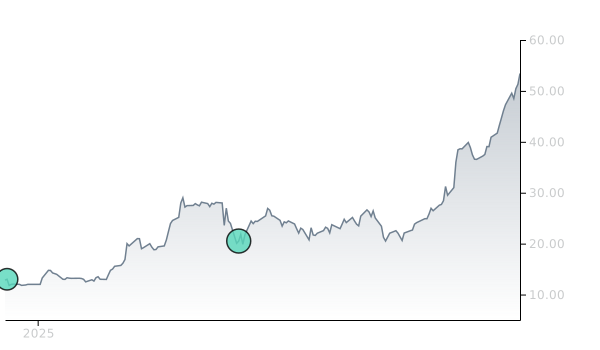
$PVLA insiders have traded $PVLA stock on the open market 18 times in the past 6 months. Of those trades, 3 have been purchases and 15 have been sales.
Here’s a breakdown of recent trading of $PVLA stock by insiders over the last 6 months:
- KATHLEEN GOIN (Chief Operating Officer) has made 0 purchases and 15 sales selling 25,812 shares for an estimated $2,602,545.
- GEORGE M JENKINS has made 2 purchases buying 4,445 shares for an estimated $549,973 and 0 sales.
- ELAINE J HERON purchased 2,400 shares for an estimated $300,000
To track insider transactions, check out Quiver Quantitative's insider trading dashboard. You can access data on insider stock transactions through the Quiver Quantitative API insider transaction endpoint.
$PVLA Hedge Fund Activity
We have seen 131 institutional investors add shares of $PVLA stock to their portfolio, and 53 decrease their positions in their most recent quarter.
Here are some of the largest recent moves:
- PRICE T ROWE ASSOCIATES INC /MD/ added 398,474 shares (+9742.6%) to their portfolio in Q1 2026, for an estimated $49,669,784
- SUMMIT PARTNERS PUBLIC ASSET MANAGEMENT, LLC removed 389,420 shares (-100.0%) from their portfolio in Q1 2026, for an estimated $48,541,203
- FRONTIER CAPITAL MANAGEMENT CO LLC added 374,035 shares (+inf%) to their portfolio in Q1 2026, for an estimated $46,623,462
- FIRST LIGHT ASSET MANAGEMENT, LLC added 271,617 shares (+38.3%) to their portfolio in Q1 2026, for an estimated $33,857,059
- PERCEPTIVE ADVISORS LLC removed 266,287 shares (-100.0%) from their portfolio in Q1 2026, for an estimated $33,192,674
- SUVRETTA CAPITAL MANAGEMENT, LLC added 261,096 shares (+29.3%) to their portfolio in Q1 2026, for an estimated $32,545,616
- JENNISON ASSOCIATES LLC added 253,128 shares (+65.3%) to their portfolio in Q1 2026, for an estimated $31,552,405
To track hedge funds' stock portfolios, check out Quiver Quantitative's institutional holdings dashboard. You can access data on hedge funds moves and 13F filings through the Quiver Quantitative API 13F endpoint.
$PVLA Analyst Ratings
Wall Street analysts have issued reports on $PVLA in the last several months. We have seen 5 firms issue buy ratings on the stock, and 0 firms issue sell ratings.
Here are some recent analyst ratings:
- BTIG issued a "Buy" rating on 02/25/2026
- Truist Securities issued a "Buy" rating on 12/16/2025
- Canaccord Genuity issued a "Buy" rating on 12/16/2025
- Clear Street issued a "Buy" rating on 12/05/2025
- Stifel issued a "Buy" rating on 11/24/2025
To track analyst ratings and price targets for $PVLA, check out Quiver Quantitative's $PVLA forecast page.
$PVLA Price Targets
Multiple analysts have issued price targets for $PVLA recently. We have seen 11 analysts offer price targets for $PVLA in the last 6 months, with a median target of $204.0.
Here are some recent targets:
- Sudan Loganathan from Stephens & Co. set a target price of $220.0 on 05/12/2026
- Geulah Livshits from Chardan Capital set a target price of $240.0 on 03/31/2026
- Andrew S. Fein from HC Wainwright & Co. set a target price of $270.0 on 03/24/2026
- Jeet Mukherjee from BTIG set a target price of $215.0 on 02/25/2026
- Graig Suvannavejh from Mizuho set a target price of $250.0 on 02/25/2026
- Ritu Baral from TD Cowen set a target price of $133.0 on 12/16/2025
- Danielle Brill from Truist Securities set a target price of $190.0 on 12/16/2025
Full Release
In SELVA Phase 3 study, 100% of participants (13/13) aged 6–11 years were rated as “Much Improved” (+2) or “Very Much Improved” (+3) on the Microcystic Lymphatic Malformation Investigator Global Assessment (mLM-IGA) scale at Week 24, with a mean improvement of +2.46 (p<0.001)
87% of participants (20/23) in SELVA with moderate or worse leaking/bleeding at baseline were rated as “Much Improved” (+2) or “Very Much Improved” (+3) on the mLM-IGA Leaking/Bleeding at Week 24, with a mean improvement of +2.48 (p<0.001)
100% of SELVA participants who completed the efficacy evaluation period (43/43) were at least somewhat satisfied with QTORIN™ rapamycin on the TSQM-9 overall satisfaction item at Week 24, with 84% reporting extremely satisfied, very satisfied, or satisfied
Blinded independent review demonstrated pre-treatment stability during the 8-week run-in period, followed by marked improvement on QTORIN™ rapamycin, supporting SELVA’s single-arm, baseline-controlled design
TOIVA Phase 2 study demonstrated statistically significant improvements in both cVM-MCSS Height and cVM-MCSS Appearance at all measured time points, with increasing clinical response observed with longer duration of QTORIN™ rapamycin therapy
QTORIN™ rapamycin has the potential to become the first FDA-approved therapy and standard of care for microcystic lymphatic malformations and cutaneous venous malformations
WAYNE, Pa., May 20, 2026 (GLOBE NEWSWIRE) -- Palvella Therapeutics, Inc. (Palvella or “the Company”) (Nasdaq: PVLA), a clinical-stage biopharmaceutical company focused on developing and commercializing novel therapies to treat patients suffering from serious, rare skin diseases and vascular malformations for which there are no U.S. Food and Drug Administration (FDA)-approved therapies, today announced new clinical data from the Phase 3 SELVA and Phase 2 TOIVA studies were reported at the International Society for the Study of Vascular Anomalies (ISSVA) World Congress 2026 in Philadelphia, PA. The presentation, given by James Treat, MD, Professor of Clinical Pediatrics and Dermatology at the Children’s Hospital of Philadelphia, can be found here .
“Data presented today at ISSVA further strengthen our conviction that QTORIN™ rapamycin has the potential to become the first FDA-approved therapy for microcystic lymphatic malformations and cutaneous venous malformations,” said Wes Kaupinen, Founder and Chief Executive Officer of Palvella. “As understanding of the mTOR pathway biology underlying lymphatic and venous malformations has advanced, this pathway has emerged as a key therapeutic target, yet there remain no FDA-approved therapies for microcystic lymphatic malformations or cutaneous venous malformations. We believe these localized, cutaneous diseases are well-suited to QTORIN™ rapamycin’s targeted topical approach as a potential chronic therapy designed to address the underlying mTOR pathway biology directly in the pathogenic tissue of interest while minimizing systemic exposure. Importantly, data presented in younger patients further support the potential role of early intervention in these serious, progressive diseases. We remain on track to file our NDA in the second half of 2026 for microcystic lymphatic malformations, with potential approval targeted in the first half of 2027.”
QTORIN™ rapamycin for Microcystic Lymphatic Malformations: Additional Data from SELVA study
SELVA is a Phase 3, single-arm, baseline-controlled clinical trial of QTORIN™ rapamycin administered topically once daily for a 24-week efficacy evaluation period followed by an open-label extension period, for microcystic lymphatic malformations (microcystic LMs). Palvella previously announced positive topline results from this study in February 2026, including achieving statistical significance on the primary endpoint, key secondary endpoint, and all pre-specified secondary efficacy endpoints.
Additional data presented today highlight:
-
In participants aged 6–11 years (n=13), QTORIN™ rapamycin demonstrated statistically significant improvement on the Microcystic Lymphatic Malformation Investigator Global Assessment (mLM-IGA) of +2.46 at Week 24 (p<0.001).
- 100% of participants in this cohort were rated “Much Improved” (+2) or “Very Much Improved” (+3) on the mLM-IGA at Week 24.
- At Week 24, 100% of participants elected to continue QTORIN™ rapamycin in the Treatment Extension period, reflecting strong interest in ongoing therapy.
-
In microcystic LMs, bleeding and leaking represent some of the most debilitating and hardest-to-control disease manifestations.
- In participants with moderate or worse leaking/bleeding at baseline (n=23), QTORIN™ rapamycin demonstrated statistically significant improvement on the mLM-IGA Leaking/Bleeding of +2.48 at Week 24 (p<0.001).
- 87% of participants (20/23) with moderate or worse leaking/bleeding at baseline were rated as “Much Improved” (+2) or “Very Much Improved” (+3) on the mLM-IGA Leaking/Bleeding at Week 24.
-
SELVA incorporated multiple structured approaches to capture the patient voice, including both the Treatment Satisfaction Questionnaire for Medication (TSQM), a patient-reported outcome measure that assesses satisfaction with medication, and patient qualitative interviews, providing patient-derived evidence that helps contextualize the clinical meaningfulness of QTORIN™ rapamycin’s treatment effect.
- 100% of SELVA participants who completed the efficacy evaluation period (43/43) were at least somewhat satisfied with QTORIN™ rapamycin on the TSQM-9 overall satisfaction item at Week 24, with 84% reporting extremely satisfied, very satisfied, or satisfied.
- A pre-specified patient qualitative interview sub-study was incorporated to capture the patient experience consistent with FDA’s Patient-Focused Drug Development framework. Interviews captured patient-reported positive changes in quality-of-life following QTORIN™ rapamycin treatment.
-
The blinded independent review demonstrated pre-treatment stability during the 8-week run-in period, followed by marked improvement on QTORIN™ rapamycin, supporting SELVA’s single-arm, baseline-controlled design
- During the 8-week pre-treatment run-in period, the mean change in the blinded Microcystic Lymphatic Malformation Multi-Component Static Scale (mLM-MCSS) score was -0.1.
- After 24 weeks of treatment, the blinded mean mLM-MCSS score improved by -3.4 points, decreasing from 9.9 at Day 1 to 6.6 at Week 24, representing 48% of the maximum potential improvement from Day 1.
Palvella plans to submit a New Drug Application to the U.S. FDA for QTORIN™ rapamycin for Microcystic LMs in the second half of 2026. QTORIN™ rapamycin has received Breakthrough Therapy, Orphan Drug, and Fast Track designations from the FDA for the treatment of microcystic LMs, as well as an FDA Orphan Products Development grant.
QTORIN™ rapamycin for Cutaneous Venous Malformations: Additional Data from TOIVA study
TOIVA is a Phase 2, single-arm, open-label, baseline-controlled clinical trial of QTORIN™ rapamycin administered topically once daily for a 12-week efficacy evaluation period followed by a 12-week treatment extension period, for cutaneous venous malformations (cutaneous VMs). Palvella announced positive topline results from this study in December 2025. TOIVA achieved statistical significance on multiple pre-specified clinician-reported and patient-reported efficacy endpoints.
Additional data presented today highlight:
-
TOIVA Phase 2 study demonstrated statistically significant improvements in both cVM-MCSS Height and cVM-MCSS Appearance at all measured time points, with increasing clinical response observed with longer duration of QTORIN™ rapamycin therapy
- At Week 24, treatment with QTORIN™ rapamycin demonstrated a mean reduction of 1.50 points in cVM-MCSS Height score (n=14; p<0.001).
-
At Week 24, treatment with QTORIN™ rapamycin demonstrated a mean reduction of 1.43 points in cVM-MCSS Appearance score (n=14; p<0.001).
Palvella plans to initiate a Phase 3 trial of QTORIN™ rapamycin for the treatment of cutaneous venous malformations in the second half of 2026. QTORIN™ rapamycin has received FDA Fast Track Designation for cutaneous venous malformations, and Palvella has submitted an application to FDA for Breakthrough Therapy Designation in this indication.
About Palvella Therapeutics
Founded and led by rare disease biotech veterans, Palvella Therapeutics, Inc. (Nasdaq: PVLA) is a clinical-stage biopharmaceutical company focused on developing and commercializing novel therapies to treat patients suffering from serious, rare skin diseases and vascular malformations for which there are no FDA-approved therapies. Palvella is developing a broad pipeline of product candidates based on its patented QTORIN™ platform, with an initial focus on serious, rare skin diseases and vascular malformations, many of which are lifelong in nature. Palvella’s lead product candidate, QTORIN™ 3.9% rapamycin anhydrous gel (QTORIN™ rapamycin), is currently being developed for the treatment of microcystic lymphatic malformations, cutaneous venous malformations, and clinically significant angiokeratomas. Palvella’s second product candidate, QTORIN™ pitavastatin, is currently being developed for the treatment of disseminated superficial actinic porokeratosis. For more information, please visit www.palvellatx.com or follow Palvella on LinkedIn or X (formerly known as Twitter).
QTORIN™ rapamycin and QTORIN™ pitavastatin are for investigational use only and neither has been approved by the FDA or by any other regulatory agency for any indication.
James Treat, MD, is a paid consultant to Palvella Therapeutics, Inc., and has participated as a site investigator at Children’s Hospital of Philadelphia for portions of the Phase 3 SELVA study.
Forward-Looking Statements
This press release contains forward-looking statements (including within the meaning of Section 21E of the Securities Exchange Act of 1934, as amended, and Section 27A of the Securities Act of 1933, as amended (Securities Act)). These statements may discuss goals, intentions, and expectations as to future plans, trends, events, results of operations or financial condition, or otherwise, based on current beliefs of the management of Palvella, as well as assumptions made by, and information currently available to, the management of Palvella. Forward-looking statements generally include statements that are predictive in nature and depend upon or refer to future events or conditions, and include words such as “may,” “will,” “should,” “would,” “expect,” “anticipate,” “plan,” “likely,” “believe,” “estimate,” “project,” “intend,” and other similar expressions or the negative or plural of these words, or other similar expressions that are predictions or indicate future events or prospects, although not all forward-looking statements contain these words. Statements that are not historical facts are forward-looking statements. Forward-looking statements include, but are not limited to, statements regarding the expected timing of the presentation of data from clinical trials, Palvella’s clinical development plans and related anticipated development milestones, Palvella’s plans to pursue Breakthrough Therapy Designation, Palvella’s plans to meet with regulatory authorities, Palvella’s expectations regarding the benefits of orphan drug designation and potential benefit of orphan drug exclusivity for QTORIN™ rapamycin for the treatment of microcystic lymphatic malformations, Palvella’s cash, financial resources and expected runway, Palvella’s expectations regarding its programs, including QTORIN™ rapamycin and QTORIN™ pitavastatin, and its research-stage opportunities, including its expected therapeutic potential and market opportunity. Forward-looking statements are based on current beliefs and assumptions that are subject to risks and uncertainties and are not guarantees of future performance. Actual results could differ materially from those contained in any forward-looking statement as a result of various factors, including, without limitation: the ability to raise additional capital to finance operations; the ability to advance product candidates through preclinical and clinical development; the ability to obtain regulatory approval for, and ultimately commercialize, Palvella’s product candidates, including QTORIN™ rapamycin and QTORIN™ pitavastatin; the outcome of early clinical trials for Palvella’s product candidates, including the ability of those trials to satisfy relevant governmental or regulatory requirements; the fact that data and results from clinical studies may not necessarily be indicative of future results; Palvella’s limited experience in designing clinical trials and lack of experience in conducting clinical trials; Palvella’s limited experience in commercial manufacturing; the ability to identify and pivot to other programs, product candidates, or indications that may be more profitable or successful than Palvella’s current product candidates; the substantial competition Palvella faces in discovering, developing, or commercializing products; the negative impacts of global events on operations, including ongoing and planned clinical trials and ongoing and planned preclinical studies; the ability to attract, hire, and retain skilled executive officers and employees; the ability of Palvella to protect its intellectual property and proprietary technologies; reliance on third parties, contract manufacturers, and contract research organizations; and the risks and uncertainties described in the filings made by Palvella with the Securities and Exchange Commission (SEC), including the annual report on Form 10-K, quarterly reports on Form 10-Q and current reports on Form 8-K, filed with or furnished to the SEC and available at www.sec.gov . The events and circumstances reflected in our forward-looking statements may not be achieved or occur, and actual results could differ materially from those projected in the forward-looking statements. New risk factors and uncertainties may emerge from time to time, and it is not possible for management to predict all risk factors and uncertainties that Palvella may face. Except as required by applicable law, Palvella does not plan to publicly update or revise any forward-looking statements contained herein, whether as a result of any new information, future events, changed circumstances or otherwise. This press release contains hyperlinks to information that is not deemed to be incorporated by reference into this press release.
Contact Information
Investors
Wesley H. Kaupinen
Founder and CEO, Palvella Therapeutics
[email protected]
Media
Marcy Nanus
Managing Partner, Trilon Advisors LLC
[email protected]