


The FDA granted Breakthrough Therapy Designation for litifilimab to treat cutaneous lupus erythematosus, expediting its development.
Quiver AI Summary
Biogen Inc. announced that the FDA has granted Breakthrough Therapy Designation for litifilimab (BIIB059), a first-in-class treatment for cutaneous lupus erythematosus (CLE), a chronic autoimmune skin disease affecting many patients. This designation, sought to accelerate the development and review processes for drugs targeting serious diseases, is based on promising results from the Phase 2 LILAC study, which demonstrated improvements in skin disease activity among CLE patients. With current treatments being insufficient to manage the disease effectively, the designation emphasizes the urgent need for new, targeted therapies like litifilimab, which acts by targeting blood dendritic cell antigen 2 (BDCA2). As Biogen progresses to the ongoing Phase 3 AMETHYST study, they aim to provide a new therapeutic option that could significantly enhance the quality of life for those impacted by CLE.
Potential Positives
- Litifilimab received FDA Breakthrough Therapy Designation, indicating its potential to significantly improve treatment for patients with cutaneous lupus erythematosus (CLE), a condition with currently no targeted therapies.
- The Phase 2 LILAC study demonstrated that litifilimab effectively reduced skin disease activity in CLE patients, reinforcing the drug's promise as a first-in-class therapy.
- The designation expedites the development and review process, suggesting a faster path to market for litifilimab, which could meet an urgent medical need.
- This progress may enhance Biogen's reputation in the biopharmaceutical industry as a leader in developing innovative treatments for serious autoimmune diseases.
Potential Negatives
- The FDA Breakthrough Therapy Designation was granted based on preliminary Phase 2 data, indicating that litifilimab is still in the early stages of development and has not yet proven efficacy or safety in larger clinical trials.
- There is no currently approved targeted therapy for CLE, highlighting the high unmet need in this area; the uncertainty surrounding the success of litifilimab could suggest significant risks for patients needing effective treatments.
- The company has acknowledged the need to manage expectations regarding the drug's eventual approval, which could lead to investor skepticism about the product's future success based on the high risks associated with drug development.
FAQ
What is litifilimab's FDA designation?
Litifilimab has received Breakthrough Therapy Designation from the FDA for treating cutaneous lupus erythematosus (CLE).
What is cutaneous lupus erythematosus (CLE)?
CLE is a chronic autoimmune skin disease causing symptoms like rashes, pain, and skin damage that significantly impact quality of life.
How does litifilimab work?
Litifilimab is a monoclonal antibody targeting BDCA2, potentially altering the progression of CLE by reducing inflammatory responses.
What are the current treatments for CLE?
Current treatments for CLE include topical steroids, antimalarials, and immunosuppressants, but there are no targeted therapies approved specifically for CLE.
What are the next steps for litifilimab?
Biogen is advancing litifilimab through the AMETHYST Phase 3 study, with data expected in 2027 to evaluate its efficacy and safety.
Disclaimer: This is an AI-generated summary of a press release distributed by GlobeNewswire. The model used to summarize this release may make mistakes. See the full release here.
$BIIB Insider Trading Activity
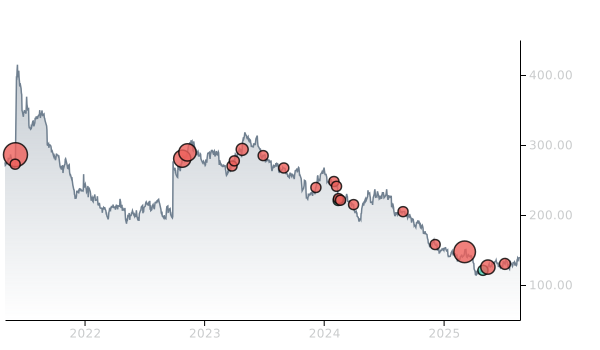
$BIIB insiders have traded $BIIB stock on the open market 1 times in the past 6 months. Of those trades, 0 have been purchases and 1 have been sales.
Here’s a breakdown of recent trading of $BIIB stock by insiders over the last 6 months:
- PRIYA SINGHAL (Head of Development) sold 517 shares for an estimated $69,045
To track insider transactions, check out Quiver Quantitative's insider trading dashboard.
$BIIB Revenue
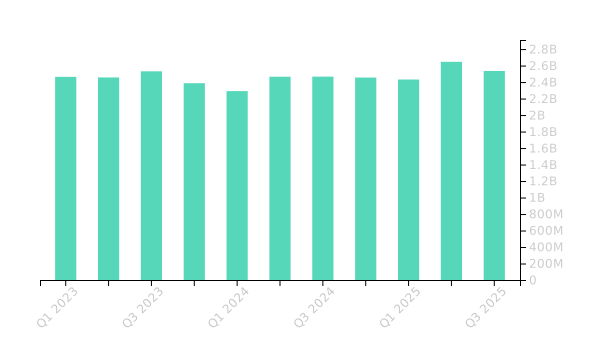
$BIIB had revenues of $2.5B in Q3 2025. This is an increase of 2.79% from the same period in the prior year.
You can track BIIB financials on Quiver Quantitative's BIIB stock page.
$BIIB Hedge Fund Activity
We have seen 435 institutional investors add shares of $BIIB stock to their portfolio, and 375 decrease their positions in their most recent quarter.
Here are some of the largest recent moves:
- BLACKROCK, INC. added 1,208,486 shares (+8.9%) to their portfolio in Q3 2025, for an estimated $169,284,718
- UBS AM, A DISTINCT BUSINESS UNIT OF UBS ASSET MANAGEMENT AMERICAS LLC added 1,135,207 shares (+65.1%) to their portfolio in Q3 2025, for an estimated $159,019,796
- D. E. SHAW & CO., INC. removed 888,283 shares (-65.0%) from their portfolio in Q3 2025, for an estimated $124,430,682
- PRIMECAP MANAGEMENT CO/CA/ removed 847,425 shares (-5.4%) from their portfolio in Q3 2025, for an estimated $118,707,294
- MARSHALL WACE, LLP added 721,706 shares (+434.9%) to their portfolio in Q3 2025, for an estimated $101,096,576
- QUBE RESEARCH & TECHNOLOGIES LTD removed 621,702 shares (-83.6%) from their portfolio in Q3 2025, for an estimated $87,088,016
- BARCLAYS PLC added 561,769 shares (+70.4%) to their portfolio in Q3 2025, for an estimated $78,692,601
To track hedge funds' stock portfolios, check out Quiver Quantitative's institutional holdings dashboard.
$BIIB Analyst Ratings
Wall Street analysts have issued reports on $BIIB in the last several months. We have seen 3 firms issue buy ratings on the stock, and 1 firms issue sell ratings.
Here are some recent analyst ratings:
- HSBC issued a "Reduce" rating on 12/10/2025
- Stifel issued a "Buy" rating on 11/06/2025
- RBC Capital issued a "Outperform" rating on 10/31/2025
- Jefferies issued a "Buy" rating on 09/25/2025
To track analyst ratings and price targets for $BIIB, check out Quiver Quantitative's $BIIB forecast page.
$BIIB Price Targets
Multiple analysts have issued price targets for $BIIB recently. We have seen 11 analysts offer price targets for $BIIB in the last 6 months, with a median target of $185.0.
Here are some recent targets:
- Geoff Meacham from Citigroup set a target price of $185.0 on 01/27/2026
- Srikripa Devarakonda from Truist Securities set a target price of $190.0 on 01/08/2026
- Michael Yee from UBS set a target price of $185.0 on 01/07/2026
- Matthew Harrison from Morgan Stanley set a target price of $156.0 on 12/12/2025
- Mohit Bansal from Wells Fargo set a target price of $190.0 on 12/10/2025
- Rajesh Kumar from HSBC set a target price of $143.0 on 12/10/2025
- David Amsellem from Piper Sandler set a target price of $157.0 on 11/21/2025
Full Release
- Designation is based on the breadth of available litifilimab data, including the Phase 2 LILAC study result that showed improvements in cutaneous lupus erythematosus (CLE) skin disease activity
- Litifilimab has the potential to be a first-in-class therapy targeting blood dendritic cell antigen 2 (BDCA2) in CLE, a chronic autoimmune skin disease that has a substantial impact on the daily life of patients, and may result in permanent scarring and disfigurement
- FDA Breakthrough Therapy Designation is granted to expedite the development and review of drugs for serious diseases
CAMBRIDGE, Mass., Jan. 28, 2026 (GLOBE NEWSWIRE) -- Biogen Inc. (Nasdaq: BIIB) – announced today that the U.S. Food and Drug Administration (FDA) has granted Breakthrough Therapy Designation for litifilimab (BIIB059) for the treatment of cutaneous lupus erythematosus (CLE). Litifilimab is a first in-class, humanized IgG1 monoclonal antibody (mAb) targeting blood dendritic cell antigen 2 (BDCA2). CLE is a chronic autoimmune disease affecting the skin that currently has no targeted treatments.
"The breakthrough therapy designation for litifilimab illustrates the FDA’s recognition of cutaneous lupus as a serious disease that urgently requires new therapies," said Victoria Werth, MD, MS, a professor of Dermatology at the Perelman School of Medicine at the University of Pennsylvania, and one of the researchers who is conducting the phase 3 trial. "With topical steroids and antimalarials as the initial therapies for managing CLE and no alternatives specifically approved for CLE, there is a need for effective, targeted treatments, and that could be a drug like litifilimab.”
The designation is intended to expedite the development and review of drugs for serious conditions, and is based on the totality of litifilimab data, including the results from the Phase 2 LILAC study. The LILAC data were previously published in The New England Journal of Medicine and demonstrated that litifilimab reduced skin disease activity in people with CLE compared to placebo. The current standard of care for CLE includes topical steroids, antimalarials and immunosuppressants. While current treatments help manage symptoms, they do not alter the progression of the disease.
“The FDA grants breakthrough therapy designation to programs based on the seriousness of the condition and the potential of the therapeutic candidate to provide substantial improvements over available therapies. The FDA's designation reinforces Biogen’s belief that litifilimab could be a first-in-class therapy targeting BDCA2 for cutaneous lupus erythematosus,” said Priya Singhal, M.D., M.P.H., Executive Vice President and Head of Development at Biogen. “This designation is a significant milestone for litifilimab as we advance the ongoing AMETHYST Phase 3 study, with the goal of bringing a new potential therapeutic option to the millions of people living with CLE.”
Biogen is continuing to evaluate the efficacy and safety of litifilimab in the AMETHYST Phase 3 study, with a data readout expected in 2027. More information on the AMETHYST study (NCT05531565) is available at clinicaltrials.gov and BiogenTrialLink .
“The Lupus Research Alliance is dedicated to advancing lupus research, and today’s FDA Breakthrough Therapy designation for litifilimab reinforces our shared understanding of cutaneous lupus as a serious, debilitating condition that urgently needs therapies that can alter the course of the disease," said Albert T. Roy, President & CEO of the Lupus Research Alliance. "Incorporating the voices of people living with cutaneous lupus is vital to advancing drug development, and through our clinical affiliate, Lupus Therapeutics, we are proud to collaborate with Biogen on the cutaneous lupus erythematosus clinical trials for litifilimab. As a convenor bringing together leading industry partners, clinicians, patients, and FDA experts, the Lupus Research Alliance is encouraged by this progress to accelerate a potential new treatment that may improve the quality of life for those affected by CLE."
About Litifilimab (BIIB059)
Litifilimab (known as BIIB059), discovered and developed in-house by Biogen scientists, is a humanized IgG1 monoclonal antibody (mAb) targeting BDCA2 and is being investigated for the potential treatment of systemic lupus erythematosus (SLE) and cutaneous lupus erythematosus (CLE). BDCA2 is a receptor that is predominantly expressed on a subset of human immune cells called Plasmacytoid Dendritic Cells (pDCs). Binding of litifilimab to BDCA2 has been shown to reduce production of pro-inflammatory molecules by pDCs, including type-I interferon (IFN-I) as well as other cytokines and chemokines.
1,2
These pro-inflammatory mediators are thought to play a major role in the pathogenesis of systemic and cutaneous lupus.
Litifilimab is an investigational therapeutic candidate that has not yet been approved by any regulatory authority and its safety and effectiveness have not been established.
About Cutaneous Lupus Erythematosus (CLE)
CLE, a type of lupus, is a chronic autoimmune skin disease that can occur with or without systemic manifestations; people with CLE frequently experience symptoms including rash, pain, itch and photosensitivity as well as skin damage that may worsen over time and can include irreversible scarring, alopecia and dyspigmentation that can be disfiguring and substantially impact quality of life.
3-6
Although anyone can develop lupus, an estimated 90 percent of people living with lupus are women; most begin to see symptoms between the ages of 15-40. 7 The disease disproportionately impacts diverse ethno-racial groups, including African American, Asian, American Indian/Alaskan Native and Hispanic/Latino communities. 8-10 There is currently no cure for lupus.
About Biogen
Founded in 1978, Biogen is a leading biotechnology company that pioneers innovative science to deliver new medicines to transform patients’ lives and to create value for shareholders and our communities. We apply deep understanding of human biology and leverage different modalities to advance first-in-class treatments or therapies that deliver superior outcomes. Our approach is to take bold risks, balanced with return on investment to deliver long-term growth.
We routinely post information that may be important to investors on our website at
www.biogen.com
. Follow us on social media -
Facebook
,
LinkedIn
,
X
,
YouTube
.
Biogen Safe Harbor
This news release contains forward-looking statements, including: the potential clinical effects of litifilimab; the potential of litifilimab to improve the health, wellbeing and outcomes for patients with CLE; the potential benefits, safety and efficacy of litifilimab; potential regulatory discussions, submissions and approvals and the timing thereof; potential therapeutic options for the treatment of CLE; the potential of Biogen's commercial business and pipeline programs, including litifilimab; and risks and uncertainties associated with drug development and commercialization. These forward-looking statements may be accompanied by such words as “aim,” “anticipate,” “assume,” “believe,” “contemplate,” “continue,” “could,” “estimate,” “expect,” “forecast,” “goal,” “guidance,” “hope,” “intend,” “may,” “objective,” “outlook,” “plan,” “possible,” “potential,” “predict,” “project,” “prospect,” “should,” “target,” “will,” “would” or the negative of these words or other words and terms of similar meaning. Drug development and commercialization involve a high degree of risk, and only a small number of research and development programs result in commercialization of a product. Results in early-stage clinical trials may not be indicative of full results or results from later stage or larger scale clinical trials and do not ensure regulatory approval. You should not place undue reliance on these statements. Given their forward-looking nature, these statements involve substantial risks and uncertainties that may be based on inaccurate assumptions and could cause actual results to differ materially from those reflected in such statements.
These forward-looking statements are based on management’s current beliefs and assumptions and on information currently available to management. Given their nature, we cannot assure that any outcome expressed in these forward-looking statements will be realized in whole or in part. We caution that these statements are subject to risks and uncertainties, many of which are outside of our control and could cause future events or results to differ materially from those stated or implied in this document, including, among others, uncertainty of our long-term success in developing, licensing, or acquiring other product candidates or additional indications for existing products; expectations, plans, prospects and timing of actions relating to product approvals, approvals of additional indications for our existing products, sales, pricing, growth, reimbursement and launch of our marketed and pipeline products; the potential impact of increased product competition in the biopharmaceutical and healthcare industry, as well as any other markets in which we compete, including increased competition from new originator therapies, generics, prodrugs and biosimilars of existing products and products approved under abbreviated regulatory pathways; our ability to effectively implement our corporate strategy; difficulties in obtaining and maintaining adequate coverage, pricing, and reimbursement for our products; the drivers for growing our business, including our dependence on collaborators and other third parties for the development, regulatory approval, and commercialization of products and other aspects of our business, which are outside of our full control; risks related to commercialization of biosimilars, which is subject to such risks related to our reliance on third-parties, intellectual property, competitive and market challenges and regulatory compliance; the risk that positive results in a clinical trial may not be replicated in subsequent or confirmatory trials or success in early stage clinical trials may not be predictive of results in later stage or large scale clinical trials or trials in other potential indications; risks associated with clinical trials, including our ability to adequately manage clinical activities, unexpected concerns that may arise from additional data or analysis obtained during clinical trials, regulatory authorities may require additional information or further studies, or may fail to approve or may delay approval of our drug candidates; and the occurrence of adverse safety events, restrictions on use with our products, or product liability claims; and any other risks and uncertainties that are described in other reports we have filed with the U.S. Securities and Exchange Commission, which are available on the SEC’s website at www.sec.gov.
These statements speak only as of the date of this press release and are based on information and estimates available to us at this time. Should known or unknown risks or uncertainties materialize or should underlying assumptions prove inaccurate, actual results could vary materially from past results and those anticipated, estimated or projected. Investors are cautioned not to put undue reliance on forward-looking statements. A further list and description of risks, uncertainties and other matters can be found in our Annual Report on Form 10-K for the fiscal year ended December 31, 2024 and in our subsequent reports on Form 10-Q. Except as required by law, we do not undertake any obligation to publicly update any forward-looking statements whether as a result of any new information, future events, changed circumstances or otherwise.
Digital Media Disclosure
From time to time, we have used, or expect in the future to use, our investor relations website (investors.biogen.com), the Biogen LinkedIn account (
linkedin.com/company/biogen-
) and the Biogen X account (
https://x.com/biogen
) as a means of disclosing information to the public in a broad, non-exclusionary manner, including for purposes of the SEC’s Regulation Fair Disclosure (Reg FD). Accordingly, investors should monitor our investor relations website and these social media channels in addition to our press releases, SEC filings, public conference calls and websites, as the information posted on them could be material to investors.
References:
- Furie R, Werth VP, Merola JF, et al. Monoclonal antibody targeting BDCA2 ameliorates skin lesions in systemic lupus erythematosus. J Clin Invest. 2019;129(3):1359-1371. doi:10.1172/JCI124466
- Pellerin A, Otero K, Czerkowicz JM, et al. Anti-BDCA2 monoclonal antibody inhibits plasmacytoid dendritic cell activation through Fc-dependent and Fc-independent mechanisms. EMBO Mol Med. 2015;7(4):464-476. doi:10.15252/emmm.201404719
- Drenkard C, Barbour KE, Greenlund KJ, Lim SS. The Burden of Living With Cutaneous Lupus Erythematosus. Front Med (Lausanne). 2022 Aug 8;9:897987. doi: 10.3389/fmed.2022.897987. PMID: 36017007; PMCID: PMC9395260.
- Ogunsanya ME, Brown CM, Lin D, et al (2018). Understanding the disease burden and unmet needs among patients with cutaneous lupus erythematosus: A qualitative study. Int J Womens Dermatol. 4(3):152-158.
- Ogunsanya ME, Cho SK, Hudson A, Chong, BF (2019). Validation and reliability of a disease-specific quality of life measure in patients with cutaneous lupus erythematosus. Br J Dermatol. 180(6):1430-1437.
- Drenkard C, Parker S, Aspey LD, Gordon C, Helmick CG, Bao G, Lim SS. Racial Disparities in the Incidence of Primary Chronic Cutaneous Lupus Erythematosus in the Southeastern US: The Georgia Lupus Registry. Arthritis Care Res (Hoboken). 2019 Jan;71(1):95-103. doi: 10.1002/acr.23578. PMID: 29669194; PMCID: PMC6193862.
- Petri M. Epidemiology of systemic lupus erythematosus. Best Pract Res Clin Rheumatol. 2002;16(5):847-58. Epub 2002/12/11. doi: 10.1053/berh.2002.0259. PubMed PMID: 12473278..
- Carter EE, Barr SG, Clarke AE. The global burden of SLE: prevalence, health disparities and socioeconomic impact. Nat Rev Rheumatol. 2016;12(10):605-20. Epub 2016/08/26. doi: 10.1038/nrrheum.2016.137. PubMed PMID: 27558659.
- Kheir JM, Guthridge CJ, Johnston JR, Adams LJ, Rasmussen A, Gross TF, et al. Unique clinical characteristics, autoantibodies and medication use in Native American patients with systemic lupus erythematosus. Lupus Sci Med. 2018;5(1):e000247. Epub 2018/03/14. doi: 10.1136/lupus-2017-000247. PubMed PMID: 29531773; PubMed Central PMCID: PMCPMC5844376.
- Drenkard C, Lim S. Update on lupus epidemiology: advancing health disparities research through the study of minority populations. Current Opinion in Rheumatology 31(6):p 689-696, November 2019. | doi: 10.1097/BOR.0000000000000646
|
MEDIA CONTACT:
Biogen Madeleine Shin + 1 781 464 3260 [email protected] |
INVESTOR CONTACT:
Biogen Tim Power +1 781 464 2442 [email protected] |