
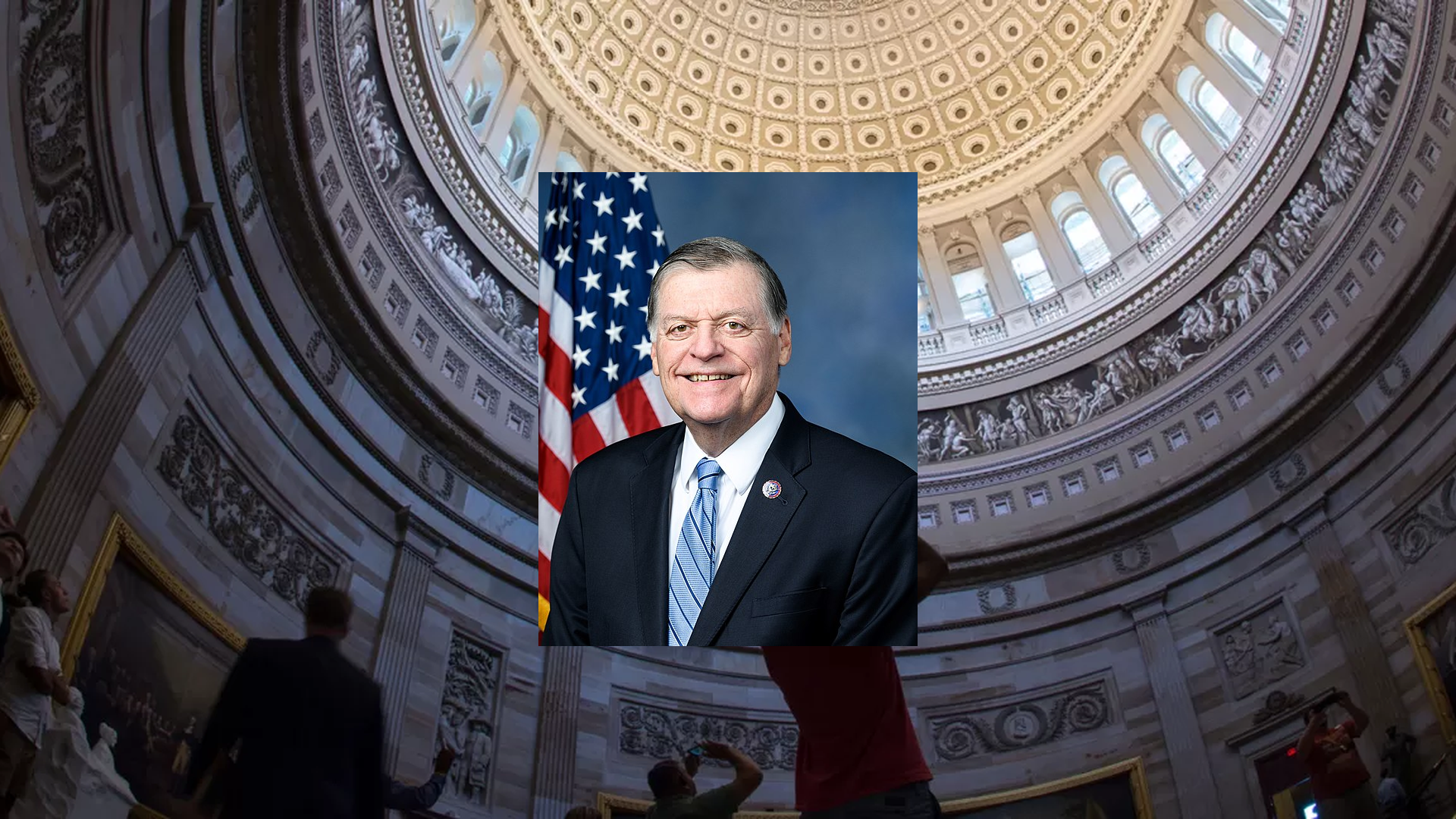
The House has passed H.R. 7006. This bill was introduced by Representative Tom Cole.
The vote was 341-79.
You can track corporate lobbying on this bill and relevant congressional stock trades on Quiver Quantitative's H.R. 7006 bill page.
Here is a short summary of a January 12, 2026 version of the bill.
H.R. 7006 Summary
The "Financial Services and General Government and National Security Appropriations Act, 2026" outlines budgetary appropriations for various U.S. government departments and programs for the fiscal year ending September 30, 2026. Below are the key provisions of the bill:
Budget and Reporting Requirements
The bill mandates the Executive Residence to provide reports on its operating expenses, including classifications of events and reimbursement procedures. It emphasizes accountability by requiring tracking systems for reimbursable events and clarifies that the Executive Residence is still subject to existing legal standards. Budget allocations for various governmental offices are specified.
Consumer Product Safety Commission
An allocation of $150,975,000 is designated for the Consumer Product Safety Commission to cover salaries, inspector general expenses, and specific safety initiatives. Additionally, the bill prohibits the use of funds to enforce a previously proposed safety standard for recreational off-highway vehicles until a related study has been completed.
Operational Expenses and Fund Usage
The legislation outlines appropriations for different government entities, detailing allocations for staff salaries, travel expenses, and operational costs. It allows federal agencies to use prior unobligated funds for certain designated purposes and establishes requirements for accountability, including reporting on fund usage and specific expenditure restrictions.
Space and Renovation Funding
Federal agencies are permitted to allocate funds for space and service payments, including renovations of government buildings. There are also provisions allowing agencies to use proceeds from sales of materials for environmental programs and employee initiatives, alongside restrictions regarding compensation and transparency in contracts.
Impoundment Control and Fund Notification
The bill requires the President to quickly report to Congress in cases of violations related to the Impoundment Control Act. Agencies must notify Congress about any delays in fund apportionments or restrictions affecting appropriations, governing how funds are to be utilized across various federal programs.
U.S. Programs and International Funding
This legislation includes funding provisions for several U.S. programs, such as improvements in broadcasting, international assistance, and democracy promotion. Funds are allocated with specific oversight requirements and limitations on their use, prioritizing operational transparency and preventing misuse in contexts like coercive abortion.
Export Assistance Programs
Certain export assistance programs will remain effective until September 30, 2026. The Export-Import Bank will impose fees related to loan collections and assessments, and there will be direct appropriations for various funding programs, including loans and guarantees, regulated under this Act.
Foreign Aid Restrictions
The bill emphasizes funding restrictions for U.S. foreign aid programs, requiring prior consultation with Congress for significant expenditures, particularly those related to military exports and governments linked to international terrorism. It details conditions under which funds cannot be utilized, particularly regarding Russian actions and support for countries acknowledging territorial encroachments by Russia.
Financial Transparency and National Security
The Secretary of the Treasury is obligated to report within 120 days of enactment on any funding directed towards China or sanctioned regions by Treasury-managed intermediaries from the prior year, which aims to ensure transparency in financial transactions that may affect national security interests.
Countering Drug Trafficking
This bill allocates $150 million to combat fentanyl and synthetic drug trafficking, enhancing law enforcement collaboration and ensuring accountability in aid distributions to regions including Palestine, Egypt, and the broader Middle East.
International Aid Allocations
Funding is also outlined for various international aid initiatives, including $121 million for assistance to Burma, $1.8 billion for the Indo-Pacific Strategy, and $400 million aimed at countering Chinese influence globally. Assistance to the Russian government is prohibited, and funds for certain Latin American countries are restricted based on human rights and governance criteria.
Restrictions on Russian Sovereignty Acknowledgment
The bill restricts U.S. funding for actions that might acknowledge Russian sovereignty over Crimea and mandates U.S. opposition to financial support for these territories at international financial institutions. It sets conditions for funding related to U.N. entities and human rights organizations to ensure compliance with U.S. policies.
Water and Sanitation Projects
At least $338.25 million is allocated for water and sanitation projects, with a minimum of $169.125 million dedicated specifically to sub-Saharan Africa. The Secretary of State has some leeway in deviating from these allocations under certain circumstances.
Relevant Companies
- EXIM - The Export-Import Bank's initiatives may directly affect companies involved in exports and trade financing.
- BYDDF - Companies in the electric vehicle sector may be impacted by funding for safety inspections and consumer product safety regulations.
This article is not financial advice. Bill summaries may be unreliable. Consult Congress.gov for full bill text. See Quiver Quantitative's disclaimers for more information.
Representative Tom Cole Bill Proposals
Here are some bills which have recently been proposed by Representative Tom Cole:
- H.R.7006: Financial Services and General Government and National Security, Department of State, and Related Programs Appropriations Act, 2026
- H.R.6938: Commerce, Justice, Science; Energy and Water Development; and Interior and Environment Appropriations Act, 2026
- H.R.5428: Medical Student Education Authorization Act of 2025
- H.R.5371: Continuing Appropriations, Agriculture, Legislative Branch, Military Construction and Veterans Affairs, and Extensions Act, 2026
- H.R.5257: To reaffirm the trust status of land taken into trust by the United States pursuant to the Act of June 18, 1934, for the benefit of an Indian Tribe that was federally recognized on the date that the land was taken into trust.
- H.R.2827: To provide for the equitable settlement of certain Indian land disputes regarding land in Illinois, and for other purposes.
You can track bills proposed by Representative Tom Cole on Quiver Quantitative's politician page for Cole.
Representative Tom Cole Net Worth
Quiver Quantitative estimates that Representative Tom Cole is worth $8.4M, as of January 14th, 2026. This is the 120th highest net worth in Congress, per our live estimates.
Cole has approximately $814.1K invested in publicly traded assets which Quiver is able to track live.
You can track Representative Tom Cole's net worth on Quiver Quantitative's politician page for Cole.