

Litifilimab shows significant efficacy in reducing disease activity in cutaneous lupus erythematosus in Phase 2 AMETHYST study results.
Quiver AI Summary
Biogen Inc. announced positive results from the Phase 2 part of the AMETHYST study, which evaluated the investigational treatment litifilimab for cutaneous lupus erythematosus (CLE). The study met its primary endpoint, showing significant reductions in disease activity at Week 16, with a higher percentage of participants achieving clear or almost clear skin compared to placebo. Litifilimab is a humanized monoclonal antibody targeting BDCA2 and represents a potential advancement in the treatment of CLE, which currently has no approved targeted therapies. The results align with earlier findings from the Phase 2 LILAC study and have led to the recent granting of Breakthrough Therapy Designation by the FDA. This promising data was presented at the American Academy of Dermatology Annual Meeting and reflects Biogen's commitment to addressing unmet medical needs in this patient population.
Potential Positives
- Litifilimab met its primary endpoint in the Phase 2 AMETHYST study for cutaneous lupus erythematosus (CLE), showing a statistically significant reduction in disease activity, which highlights the drug's potential efficacy.
- The positive results from both the AMETHYST and LILAC studies suggest that litifilimab is on track to be the first targeted therapy approved for CLE in over 70 years, addressing a significant unmet medical need.
- The FDA has granted litifilimab Breakthrough Therapy Designation, which may expedite its development and approval process, signaling strong regulatory support for the therapy.
- The study demonstrated a favorable safety profile for litifilimab, consistent with previous studies, reflecting its potential for safe use in patients with this challenging autoimmune disease.
Potential Negatives
- Serious adverse events were reported in 6.8% of participants receiving litifilimab, which may raise concerns about the safety of the treatment.
- Results for secondary endpoints were not statistically significant due to a lack of adjustment for multiplicity, which could weaken the overall claims of efficacy.
- The ongoing Phase 3 part of the study remains blinded, leading to uncertainty regarding the long-term effectiveness and safety profile of litifilimab.
FAQ
What are the results of the AMETHYST study for litifilimab?
The AMETHYST study showed that litifilimab significantly reduced disease activity in patients with cutaneous lupus erythematosus (CLE).
What is litifilimab used to treat?
Litifilimab is being investigated as a potential treatment for cutaneous lupus erythematosus (CLE) and systemic lupus erythematosus (SLE).
How does litifilimab work?
Litifilimab targets blood dendritic cell antigen 2 (BDCA2), reducing inflammation in immune cells associated with lupus.
Is litifilimab the first targeted therapy for CLE?
If approved, litifilimab could be the first targeted therapy for CLE in 70 years, addressing a significant unmet medical need.
What does the Phase 2/3 AMETHYST study involve?
The AMETHYST study evaluates the efficacy and safety of litifilimab compared to placebo in patients with various severities of CLE.
Disclaimer: This is an AI-generated summary of a press release distributed by GlobeNewswire. The model used to summarize this release may make mistakes. See the full release here.
$BIIB Insider Trading Activity
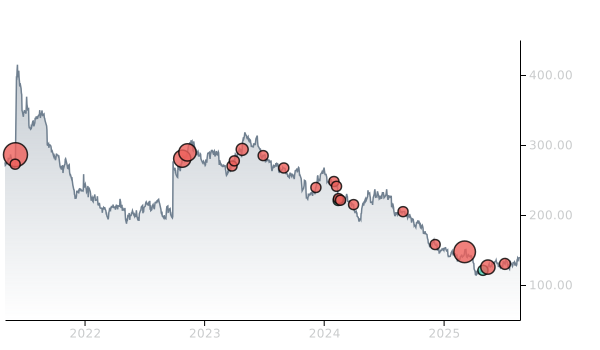
$BIIB insiders have traded $BIIB stock on the open market 3 times in the past 6 months. Of those trades, 1 have been purchases and 2 have been sales.
Here’s a breakdown of recent trading of $BIIB stock by insiders over the last 6 months:
- PRIYA SINGHAL (Head of Development) has made 0 purchases and 2 sales selling 3,408 shares for an estimated $665,664.
- NICOLE MURPHY (Head of Pharm Ops and Tech) purchased 3 shares for an estimated $585
To track insider transactions, check out Quiver Quantitative's insider trading dashboard.
$BIIB Revenue
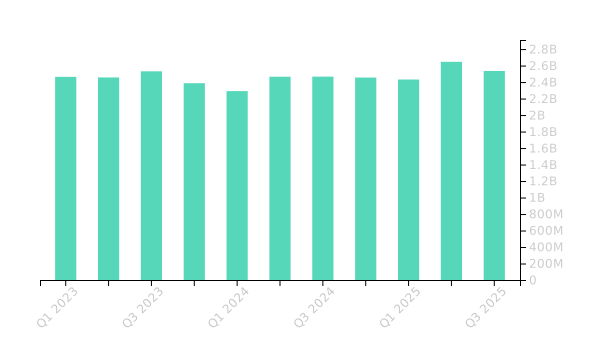
$BIIB had revenues of $2.3B in Q4 2025. This is a decrease of -7.14% from the same period in the prior year.
You can track BIIB financials on Quiver Quantitative's BIIB stock page.
$BIIB Congressional Stock Trading
Members of Congress have traded $BIIB stock 1 times in the past 6 months. Of those trades, 1 have been purchases and 0 have been sales.
Here’s a breakdown of recent trading of $BIIB stock by members of Congress over the last 6 months:
- REPRESENTATIVE GILBERT RAY CISNEROS, JR. purchased up to $15,000 on 01/30.
To track congressional stock trading, check out Quiver Quantitative's congressional trading dashboard.
$BIIB Hedge Fund Activity
We have seen 456 institutional investors add shares of $BIIB stock to their portfolio, and 453 decrease their positions in their most recent quarter.
Here are some of the largest recent moves:
- FMR LLC added 8,138,103 shares (+632.0%) to their portfolio in Q4 2025, for an estimated $1,432,224,746
- UBS AM, A DISTINCT BUSINESS UNIT OF UBS ASSET MANAGEMENT AMERICAS LLC removed 4,365,462 shares (-75.8%) from their portfolio in Q4 2025, for an estimated $768,277,657
- BOSTON PARTNERS added 1,720,595 shares (+inf%) to their portfolio in Q4 2025, for an estimated $302,807,514
- PACER ADVISORS, INC. removed 1,451,249 shares (-100.0%) from their portfolio in Q4 2025, for an estimated $255,405,311
- POINT72 ASSET MANAGEMENT, L.P. removed 1,059,709 shares (-27.4%) from their portfolio in Q4 2025, for an estimated $186,498,186
- FRED ALGER MANAGEMENT, LLC added 796,735 shares (+39074.8%) to their portfolio in Q4 2025, for an estimated $140,217,392
- INVESCO LTD. removed 762,686 shares (-31.5%) from their portfolio in Q4 2025, for an estimated $134,225,109
To track hedge funds' stock portfolios, check out Quiver Quantitative's institutional holdings dashboard.
$BIIB Analyst Ratings
Wall Street analysts have issued reports on $BIIB in the last several months. We have seen 3 firms issue buy ratings on the stock, and 1 firms issue sell ratings.
Here are some recent analyst ratings:
- Oppenheimer issued a "Outperform" rating on 01/30/2026
- HSBC issued a "Reduce" rating on 12/10/2025
- Stifel issued a "Buy" rating on 11/06/2025
- RBC Capital issued a "Outperform" rating on 10/31/2025
To track analyst ratings and price targets for $BIIB, check out Quiver Quantitative's $BIIB forecast page.
$BIIB Price Targets
Multiple analysts have issued price targets for $BIIB recently. We have seen 19 analysts offer price targets for $BIIB in the last 6 months, with a median target of $200.0.
Here are some recent targets:
- Rajesh Kumar from HSBC set a target price of $150.0 on 03/17/2026
- Emily Field from Barclays set a target price of $185.0 on 02/20/2026
- Laura Chico from Wedbush set a target price of $187.0 on 02/10/2026
- Brian Abrahams from RBC Capital set a target price of $233.0 on 02/09/2026
- Yatin Suneja from Guggenheim set a target price of $246.0 on 02/09/2026
- Geoff Meacham from Citigroup set a target price of $215.0 on 02/09/2026
- Andrew S. Fein from HC Wainwright & Co. set a target price of $228.0 on 02/09/2026
Full Release
- In the Phase 2 part of the AMETHYST study, litifilimab met the primary endpoint of reduction of disease activity in people living with CLE at Week 16, with more litifilimab participants achieving clear / almost clear skin
- Following positive Phase 2 LILAC results, litifilimab is the only investigational program with consistent, positive efficacy results in multiple CLE studies; if approved litifilimab could be the first targeted therapy for this disease
-
CLE is a serious autoimmune disease that impacts the daily lives of patients and can lead to permanent scarring and disfigurement
CAMBRIDGE, Mass., March 28, 2026 (GLOBE NEWSWIRE) -- Biogen Inc. (Nasdaq: BIIB) announced positive results from the Phase 2 part of the AMETHYST Phase 2/3 study (Part A) of litifilimab in people living with cutaneous lupus erythematosus (CLE). Litifilimab is the first humanized IgG1 monoclonal antibody (mAb) targeting blood dendritic cell antigen 2 (BDCA2), which has the potential to become the first innovative therapy approved for CLE in 70 years. Part A of AMETHYST evaluated the efficacy and safety of litifilimab through week 24, with reductions in skin disease activity reported across several measures. Results are consistent with the earlier positive Phase 2 LILAC study reported in The New England Journal of Medicine . Phase 2 results from LILAC and AMETHYST supported litifilimab’s recently granted U.S. Food and Drug Administration (FDA) Breakthrough Therapy Designation. Results are being presented today at the American Academy of Dermatology (AAD) Annual Meeting.
“We now have consistent results from two Phase 2 studies of litifilimab showing notable reductions in CLE skin disease activity, representing a significant moment for this program. I am encouraged by these results, which support the potential to bring litifilimab to patients with cutaneous lupus erythematosus, a condition where no targeted therapies are currently approved and where there are significant unmet needs,” said Joseph F. Merola, M.D., Professor and Chair, Department of Dermatology and Professor of Internal Medicine in the Division of Rheumatic Diseases, UT Southwestern Medical Center. “These findings, alongside the FDA Breakthrough Therapy Designation, underscore the potential, if approved, of litifilimab for patients living with this challenging disease. In addition to the efficacy results, litifilimab demonstrated a safety profile consistent with prior studies. Importantly, this trial intentionally enrolled a globally representative population reflective of the heterogeneity of CLE, including many participants with moderate to severe disease at baseline.”
CLE is a complex, heterogenous disease that affects millions of people around the world. Today there are no targeted therapies approved to treat CLE.
AMETHYST is an ongoing seamless two-part, multicenter, double-blind, placebo controlled, randomized study to evaluate the efficacy and safety of litifilimab compared to placebo in participants with a variety of CLE severities. Participants are randomized to receive subcutaneous treatment with litifilimab with standard of care (SoC) or placebo every four weeks in addition to SoC. All participants will receive litifilimab during the 28-week extended treatment period from Weeks 24 to 48. Results reported here are from the double-blind, placebo-controlled Phase 2 (Part A) portion of AMETHYST, Week 0 to 24. In the study, 74% of participants are women and 33% are non-white. This demographic distribution is consistent with the epidemiology of CLE which disproportionately affects women and diverse ethno-racial groups. The Phase 3 part of the study is ongoing and results remain blinded.
AMETHYST Part A met its primary endpoint with litifilimab demonstrating a statistically significant 11.8% higher reduction in disease activity in people living with CLE (95% confidence interval [CI]: 1.39, 22.27; p < 0.05) as measured by the Cutaneous Lupus Activity Investigators’ Global Assessment Revised (CLA-IGA-R) erythema score of 0-1 (clear/almost clear) at Week 16, compared to placebo (14.7% vs. 2.9%). Secondary endpoints, including the following, were not adjusted for multiplicity in Part A and therefore statistical significance cannot be demonstrated. Litifilimab was associated with rapid and continued improvement in skin disease activity with separation from placebo observed as early as Week 4 (19.3% vs. 5.5%; Δ= 13.8; CI: 1.19, 26.46), as measured by Cutaneous Lupus Erythematosus Disease Area and Severity Index Activity-50 (CLASI-50) response through Week 24 (40.8% vs. 21%; Δ= 19.8; CI: 1.46, 38.15). More participants receiving litifilimab achieved a response compared to placebo (21.7% vs 5.8%), as measured by CLASI-70 at Week 24. CLASI-50 and CLASI-70 responses are defined as 50 percent and 70 percent improvements from baseline in CLASI-A score, respectively. Additionally, 1 in 6 participants receiving litifilimab achieved a CLASI 0-3 score, defined as no or minimal disease activity, compared to placebo at Week 24 (16.3% vs 0%; Δ= 16.3; CI: 7.07, 25.62).
Litifilimab was generally well tolerated in Part A of the AMETHYST study and tolerability was consistent with the safety profile established in completed studies, including the Phase 2 LILAC study. Adverse events (AEs) were reported in 74.6% (44/59) and 64.7% (22/34) of participants receiving litifilimab and placebo, respectively, in the 24-week period. Most AEs were mild to moderate in severity. Serious adverse events occurred in 6.8% (4/59) and 2.9% (1/34) of participants receiving litifilimab and placebo, respectively.
“Cutaneous lupus erythematosus not only leaves scars but can also have a profound emotional and social impact on those living with the disease. With no approved targeted disease-modifying treatments, options for people living with CLE are very limited,” said Daniel Quirk, MD, Chief Medical Officer at Biogen. “We are excited to see results from two studies in which litifilimab was generally well tolerated and was associated with improvement in skin disease in a representative population, giving us encouraging momentum as we advance the Phase 3 program. The work Biogen has done in lupus and in CLE in particular demonstrates Biogen’s commitment to tackling diseases where options are limited or nonexistent.”
About AMETHYST
AMETHYST is a two-part, Phase 2/3 multicenter, double-blind, placebo controlled, randomized study to evaluate the efficacy and safety of litifilimab compared to placebo. The study aims to assess the efficacy of litifilimab in participants with active subacute cutaneous lupus erythematosus (SCLE) and/or chronic cutaneous lupus erythematosus (CCLE) who are refractory or intolerant to antimalarial therapy. The Phase 2 and Phase 3 parts of the study will each be 52 weeks in duration. Participants will be randomized to receive subcutaneous treatment with litifilimab or placebo every four weeks for 20 weeks with an additional dose at Week 2. All participants will receive litifilimab during the 28-week extended treatment period from Weeks 24 to 48. More information on the AMETHYST study (NCT05531565) is available at
clinicaltrials.gov
.
About Litifilimab (BIIB059)
Litifilimab (known as BIIB059), discovered and developed in-house by Biogen scientists, is a humanized IgG1 monoclonal antibody (mAb) targeting BDCA2 and is being investigated for the potential treatment of systemic lupus erythematosus (SLE) and cutaneous lupus erythematosus (CLE). BDCA2 is a receptor that is predominantly expressed on a subset of human immune cells called Plasmacytoid Dendritic Cells (pDCs). Binding of litifilimab to BDCA2 has been shown to reduce production of pro-inflammatory molecules by pDCs, including type-I interferon (IFN-I) as well as other cytokines and chemokines.
1,2
These pro-inflammatory mediators are thought to play a major role in the pathogenesis of systemic and cutaneous lupus.
Litifilimab is an investigational therapeutic candidate that has not yet been approved by any regulatory authority and its safety and effectiveness have not been established.
About Cutaneous Lupus Erythematosus (CLE)
CLE, a type of lupus, is a serious chronic autoimmune skin disease that can occur with or without systemic manifestations; people with CLE frequently experience symptoms including rash, pain, itch and photosensitivity as well as skin damage that may worsen over time and can include irreversible scarring, alopecia and dyspigmentation that can be disfiguring and substantially impact quality of life.
3-6
Currently, there are no approved targeted therapies for CLE and the last drug was approved in the 1950s.
About Biogen
Founded in 1978, Biogen is a leading biotechnology company that pioneers innovative science to deliver new medicines to transform patients’ lives and to create value for shareholders and our communities. We apply deep understanding of human biology and leverage different modalities to advance first-in-class treatments or therapies that deliver superior outcomes. Our approach is to take bold risks, balanced with return on investment to deliver long-term growth.
We routinely post information that may be important to investors on our website at
www.biogen.com
. Follow us on social media -
Facebook
,
LinkedIn
,
X
,
YouTube
.
Biogen Safe Harbor
This news release contains forward-looking statements, including: the potential clinical effects of litifilimab; the potential of litifilimab to improve the health, wellbeing and outcomes for patients with CLE; the potential benefits, safety and efficacy of litifilimab; potential regulatory discussions, submissions and approvals and the timing thereof; potential therapeutic options for the treatment of CLE; the potential of Biogen's commercial business and pipeline programs, including litifilimab; and risks and uncertainties associated with drug development and commercialization. These forward-looking statements may be accompanied by such words as “aim,” “anticipate,” “assume,” “believe,” “contemplate,” “continue,” “could,” “estimate,” “expect,” “forecast,” “goal,” “guidance,” “hope,” “intend,” “may,” “objective,” “outlook,” “plan,” “possible,” “potential,” “predict,” “project,” “prospect,” “should,” “target,” “will,” “would” or the negative of these words or other words and terms of similar meaning. Drug development and commercialization involve a high degree of risk, and only a small number of research and development programs result in commercialization of a product. Results in early-stage clinical trials may not be indicative of full results or results from later stage or larger scale clinical trials and do not ensure regulatory approval. You should not place undue reliance on these statements. Given their forward-looking nature, these statements involve substantial risks and uncertainties that may be based on inaccurate assumptions and could cause actual results to differ materially from those reflected in such statements.
These forward-looking statements are based on management’s current beliefs and assumptions and on information currently available to management. Given their nature, we cannot assure that any outcome expressed in these forward-looking statements will be realized in whole or in part. We caution that these statements are subject to risks and uncertainties, many of which are outside of our control and could cause future events or results to differ materially from those stated or implied in this document, including, among others, uncertainty of our long-term success in developing, licensing, or acquiring other product candidates or additional indications for existing products; expectations, plans, prospects and timing of actions relating to product approvals, approvals of additional indications for our existing products, sales, pricing, growth, reimbursement and launch of our marketed and pipeline products; the potential impact of increased product competition in the biopharmaceutical and healthcare industry, as well as any other markets in which we compete, including increased competition from new originator therapies, generics, prodrugs and biosimilars of existing products and products approved under abbreviated regulatory pathways; our ability to effectively implement our corporate strategy; difficulties in obtaining and maintaining adequate coverage, pricing, and reimbursement for our products; the drivers for growing our business, including our dependence on collaborators and other third parties for the development, regulatory approval, and commercialization of products and other aspects of our business, which are outside of our full control; risks related to commercialization of biosimilars, which is subject to such risks related to our reliance on third-parties, intellectual property, competitive and market challenges and regulatory compliance; the risk that positive results in a clinical trial may not be replicated in subsequent or confirmatory trials or success in early stage clinical trials may not be predictive of results in later stage or large scale clinical trials or trials in other potential indications; risks associated with clinical trials, including our ability to adequately manage clinical activities, unexpected concerns that may arise from additional data or analysis obtained during clinical trials, regulatory authorities may require additional information or further studies, or may fail to approve or may delay approval of our drug candidates; and the occurrence of adverse safety events, restrictions on use with our products, or product liability claims; and any other risks and uncertainties that are described in other reports we have filed with the U.S. Securities and Exchange Commission, which are available on the SEC’s website at www.sec.gov .
These statements speak only as of the date of this press release and are based on information and estimates available to us at this time. Should known or unknown risks or uncertainties materialize or should underlying assumptions prove inaccurate, actual results could vary materially from past results and those anticipated, estimated or projected. Investors are cautioned not to put undue reliance on forward-looking statements. A further list and description of risks, uncertainties and other matters can be found in our Annual Report on Form 10-K for the fiscal year ended December 31, 2025and in our subsequent reports on Form 10-Q. Except as required by law, we do not undertake any obligation to publicly update any forward-looking statements whether as a result of any new information, future events, changed circumstances or otherwise.
Digital Media Disclosure
From time to time, we have used, or expect in the future to use, our investor relations website (investors.biogen.com), the Biogen LinkedIn account (
linkedin.com/company/biogen-
) and the Biogen X account (
https://x.com/biogen
) as a means of disclosing information to the public in a broad, non-exclusionary manner, including for purposes of the SEC’s Regulation Fair Disclosure (Reg FD). Accordingly, investors should monitor our investor relations website and these social media channels in addition to our press releases, SEC filings, public conference calls and websites, as the information posted on them could be material to investors.
References:
- Furie R, Werth VP, Merola JF, et al. Monoclonal antibody targeting BDCA2 ameliorates skin lesions in systemic lupus erythematosus. J Clin Invest. 2019;129(3):1359-1371. doi:10.1172/JCI124466
- Pellerin A, Otero K, Czerkowicz JM, et al. Anti-BDCA2 monoclonal antibody inhibits plasmacytoid dendritic cell activation through Fc-dependent and Fc-independent mechanisms. EMBO Mol Med. 2015;7(4):464-476. doi:10.15252/emmm.201404719
- Drenkard C, Barbour KE, Greenlund KJ, Lim SS. The Burden of Living With Cutaneous Lupus Erythematosus. Front Med (Lausanne). 2022 Aug 8;9:897987. doi: 10.3389/fmed.2022.897987. PMID: 36017007; PMCID: PMC9395260.
- Ogunsanya ME, Brown CM, Lin D, et al (2018). Understanding the disease burden and unmet needs among patients with cutaneous lupus erythematosus: A qualitative study. Int J Womens Dermatol. 4(3):152-158.
- Ogunsanya ME, Cho SK, Hudson A, Chong, BF (2019). Validation and reliability of a disease-specific quality of life measure in patients with cutaneous lupus erythematosus. Br J Dermatol. 180(6):1430-1437.
- Drenkard C, Parker S, Aspey LD, Gordon C, Helmick CG, Bao G, Lim SS. Racial Disparities in the Incidence of Primary Chronic Cutaneous Lupus Erythematosus in the Southeastern US: The Georgia Lupus Registry. Arthritis Care Res (Hoboken). 2019 Jan;71(1):95-103. doi: 10.1002/acr.23578. PMID: 29669194; PMCID: PMC6193862.
|
MEDIA CONTACT:
Biogen Madeleine Shin + 1 781 464 3260 [email protected] |
INVESTOR CONTACT:
Biogen Tim Power +1 781 464 2442 [email protected] |