
H.R. 9975: Carbon Dioxide Removal Leadership Act of 2026
This bill would direct the Department of Energy to buy or contract for large amounts of carbon dioxide removal over time. In plain terms, it would create a federal program that pays for technologies that pull carbon dioxide out of the air or seawater and store it permanently.
What the bill requires
The Secretary of Energy would have to ensure that specified amounts of carbon dioxide are removed each year, if doing so is economically feasible under the bill’s price limits:
50,000 net metric tons per year for fiscal years 2026 and 2027
500,000 net metric tons per year for fiscal years 2028 through 2030
5,000,000 net metric tons per year for fiscal years 2031 through 2035
10,000,000 net metric tons per year for fiscal year 2036 and after
The bill says these amounts must be removed no later than three years after the start of the fiscal year they are required for.
How the government could meet the target
The Department of Energy could enter into competitive contracts with companies or other entities to do the removal work. Each contract could last up to 15 years. The bill also says no single entity should be responsible for more than 25% of the required removals in a given fiscal year, if there are enough qualified providers available.
The bill gives priority to projects that:
- create fewer emissions while operating
- help commercialize new removal technologies
- increase the number of available technologies
- support U.S. jobs and use domestic suppliers
- benefit regions that have depended heavily on fossil fuel industries
- reduce risks to nearby communities and provide community benefits
- use low- or zero-emission energy where practical
- include public engagement and enforceable community benefit agreements
What counts as eligible carbon removal
The bill defines eligible technology as equipment or methods placed into service after January 1, 2022 that remove carbon dioxide directly from ambient air or seawater.
It generally excludes:
- methods that capture carbon dioxide released from natural underground springs
- methods based on natural photosynthesis, except for some waste-to-carbon approaches described below
- using captured carbon dioxide for enhanced oil recovery
The bill allows some additional technologies, such as gasification, pyrolysis, or sequestration of solid nonhazardous cellulosic waste, if the Secretary determines they can be accurately measured and monitored and that their environmental impacts can be adequately managed.
Storage and verification requirements
Captured carbon dioxide would have to be stored durably, on a timescale similar to geologic storage. The bill allows storage through permitted injection wells, in building materials or mineralized carbon materials, or through other durable methods approved by the Secretary.
All removals would have to be measured, monitored, reported, and verified by independent third parties. The Secretary would also have to create standards within one year for evaluating these methods, using best practices and scientific standards. The bill requires that removals be additional, durable, and truly net-negative when lifecycle emissions are counted.
The bill also prohibits double counting: carbon removed for another emissions program could not also be counted toward this program.
Cost limits
The law would only treat removals as “economically feasible” if the cost is at or below set limits, including measurement and verification costs:
$750 per metric ton for fiscal years 2026-2027
$500 per metric ton for fiscal years 2028-2030
$300 per metric ton for fiscal years 2031-2033
$200 per metric ton for fiscal years 2034-2036
$150 per metric ton for fiscal year 2037 and later
For multi-year contracts, the project would be considered feasible if it can stay within the first-year price limit for the whole contract term.
Small project set-aside
For fiscal years 2026 through 2035, the bill says that, where practicable, at least 20% of the required carbon dioxide removals should come from small removal projects. A small removal project is one that removes no more than 5% of the annual total required under the bill.
Reporting to Congress
Beginning by January 1, 2029, and every two years after that, the Secretary would have to send Congress and publish a public report on the program. The report would include:
- how much carbon dioxide was verified as removed
- the prices paid - the technologies, energy use, and storage methods used
- where the removal took place
- the verification methods and third parties involved
- estimated effects on nearby communities, agriculture, the environment, and public health
- labor impacts and job creation
- how projects were prioritized
Other provisions
The bill would authorize whatever appropriations are needed to carry out the program. It also says money received under these contracts would not count as federal assistance and would not affect eligibility for other federal assistance or tax incentives.
Finally, the bill directs the Secretary of Energy to study and recommend a possible future federal carbon dioxide removal offtake program that could be scaled up to remove carbon from the atmosphere and oceans at a gigaton scale annually by 2050. That report would consider different possible structures, including a government-sponsored enterprise, a government corporation, a DOE program office, or a contracted service provider.
Relevant Companies
None found
This is an AI-generated summary of the bill text. There may be mistakes.
Sponsors
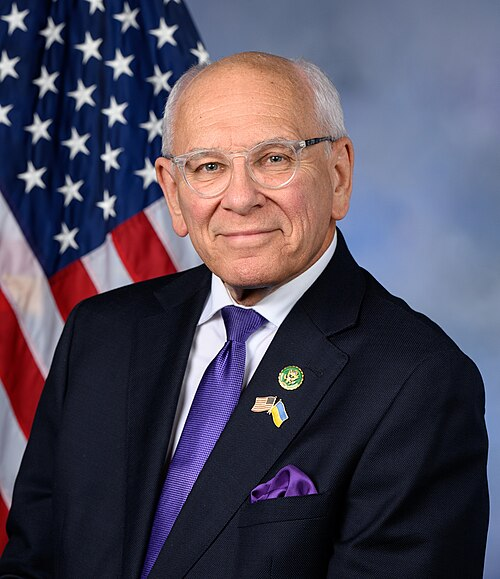
2 bill sponsors

Actions
2 actions
| Date | Action |
|---|---|
| Jul. 27, 2026 | Introduced in House |
| Jul. 27, 2026 | Referred to the House Committee on Energy and Commerce. |
Corporate Lobbying
0 companies lobbying
None found.
* Note that there can be significant delays in lobbying disclosures, and our data may be incomplete.
Potentially Relevant Congressional Stock Trades
No relevant congressional stock trades found.