H.R. 9855: Certainty and Uniform Reviews for Reliable Energy and Transmission Act
This bill would change the rules for a type of water quality approval under Section 401 of the Clean Water Act, which states and certain interstate agencies use when reviewing federal permits and licenses that could affect water pollution. In plain terms, it would make that review process more specific, more time-limited, and more standardized.
What the bill changes
The bill says a state, interstate agency, or the federal EPA may only base its decision on whether a proposed project complies with certain listed Clean Water Act provisions. It narrows the review to whether the discharge would directly violate those provisions, rather than allowing a broader review of the activity generally.
It also requires agencies to publish their certification requirements within 30 days of enactment, and to explain in writing any decision to approve, deny, or condition a request.
Time limits and completeness rules
The bill would require agencies to identify, within 90 days of receiving a request, any specific additional materials needed for the request to be considered complete. It also states that the one-year deadline for acting on a certification request is firm and cannot be paused, extended, or tolled for reasons such as requests for more information, public comment, or environmental review, unless the applicant asks for more time.
The bill also says that “receipt” of a request is determined by when the agency gets it, even if the agency later says the request was incomplete.
Limits on what agencies can require
If an agency does impose conditions on a certification, those conditions must be tied to meeting the specified Clean Water Act requirements. The bill says denials and conditions must be supported by clear and convincing evidence that:
- no reasonable condition could make the project comply, or
- the condition is the least burdensome option, considering technical feasibility, cost, the project’s purpose, schedule impacts, and commercial viability.
For hydroelectric projects, the bill would prohibit certification conditions related to the quantity, timing, or rate of water flow over, through, or around the project.
Finality of certifications
Once a certification is issued, the bill would generally prevent it from being reopened, modified, supplemented, or withdrawn, except if the applicant asks for changes or a court specifically orders it.
Request contents and general permits
The bill sets out detailed information that must be included in a certification request, including identifying the applicant, describing the project, identifying the discharge location, listing monitoring or control methods, and noting other required permits or approvals. It also includes requirements for requests related to general permits or licenses.
Judicial review
For certain energy- and carbon-dioxide-related projects, and for Federal Energy Regulatory Commission permits, the bill would place legal challenges to certification actions in a federal court of appeals chosen by the applicant’s location, the state involved, or the D.C. Circuit. Those cases would have to be handled on an expedited basis, with a final decision generally due within 120 days, or up to 180 days in extraordinary circumstances.
In those cases, a court would be required to overturn a denial if the state or agency fails to prove, by clear and convincing evidence, that no reasonable condition exists that would allow compliance.
Relevant Companies
- NEE — NextEra Energy could be affected if the bill changes timing or conditions for permits tied to transmission, generation, or related infrastructure.
- DUK — Duke Energy may be affected by revised water-quality certification rules for power and transmission projects.
- SO — Southern Company could be impacted by permitting changes for energy infrastructure projects.
- EXC — Exelon may be affected where state water-quality certification affects electric transmission or generation projects.
- ETR — Entergy could be affected by faster or more constrained state review of energy-related permits.
- WMB — Williams Companies could be directly affected by permitting and judicial-review changes for energy-fuel transportation projects, including pipelines.
- KMI — Kinder Morgan could be impacted by changes to certification review for pipeline and energy infrastructure projects.
- EPD — Enterprise Products Partners could be affected by permit review changes for energy transportation infrastructure.
- OKE — ONEOK could be affected by the bill’s provisions for interstate energy-fuel transportation projects.
- TRGP — Targa Resources could be impacted by certification and litigation changes affecting midstream infrastructure.
- PWR — Quanta Services could be indirectly affected through demand for transmission and infrastructure construction tied to permit timing.
This is an AI-generated summary of the bill text. There may be mistakes.
Sponsors
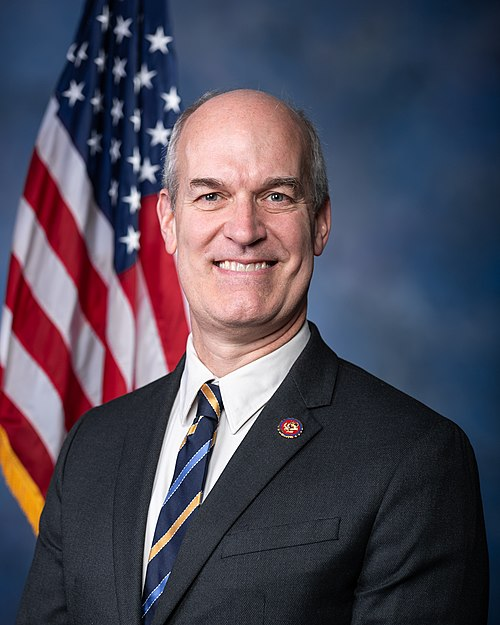
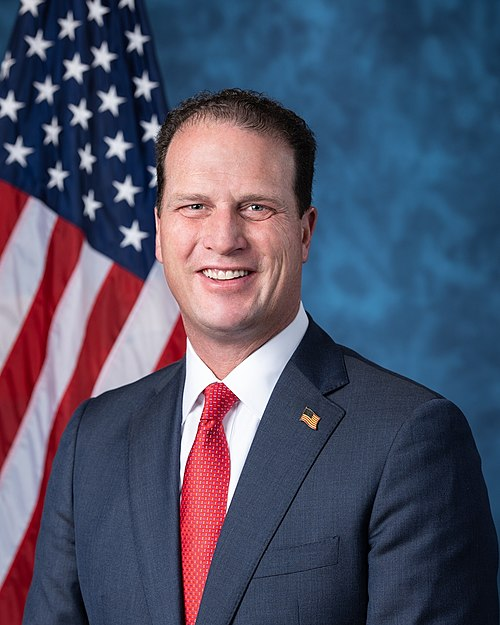
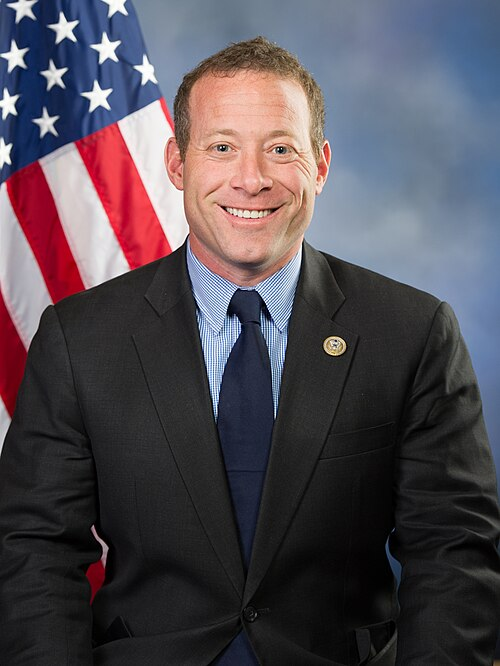
2 bill sponsors


Actions
2 actions
| Date | Action |
|---|---|
| Jul. 22, 2026 | Introduced in House |
| Jul. 22, 2026 | Referred to the House Committee on Transportation and Infrastructure. |
Corporate Lobbying
0 companies lobbying
None found.
* Note that there can be significant delays in lobbying disclosures, and our data may be incomplete.