
H.R. 9821: Shared Values Act
This bill would make a wide range of changes across agriculture, health care, transportation, homeland security, taxes, and House rules. In general, it combines new spending, reauthorizations, reporting requirements, policy statements, and several targeted program changes.
Agriculture and local food
The bill would update and extend the federal Farmers’ Markets and Local Food Promotion Program. It would:
- Require most grant recipients to provide matching funds equal to 25% of the federal grant amount, unless they are receiving certain priority grants.
- Increase authorized funding from $50 million to $100 million.
- Extend annual funding levels through 2026 and set $50 million annually starting in 2027.
- Reserve 30% of available funding each year for certain priority grants for organizations that have not received a grant in the past 3 years and plan to establish a new farmers’ market, with unused reserved funds allowed to be used for other grants.
- Require USDA and the USDA Inspector General to publish reports within 3 years on grant applications, award patterns, fraud or abuse, and the effects of the funding changes.
Nursing workforce
The bill would appropriate $610 million for fiscal year 2026 for Nursing Workforce Development programs under the Public Health Service Act.
Midwifery and maternal health
The bill includes a congressional statement supporting “Black Midwives Day” and encouraging governments to take steps related to maternal health equity. These statements would urge:
- More funding for education, training, and access to Black preceptors.
- Removing barriers to Black preceptors.
- Financial support for students and preceptors.
- Mentorship programs supporting Black midwifery.
- Reducing accreditation barriers by recognizing midwives across different training pathways.
- Allowing midwives to practice to the full extent of their training.
- Supporting TRICARE and Medicaid coverage for midwife-provided maternity care.
These provisions are framed as congressional findings and encouragements rather than direct legal mandates.
Student loan terms
The bill would rename certain federal student loan paperwork used for Direct Loans as a “student loan contract” instead of a master promissory note, and make a related conforming change in the student loan disclosure rules. This appears to be a terminology and usage change for federal student loan documents.
Climate and health
The bill would continue the CDC’s Climate and Health program and authorize $110 million per year starting in fiscal year 2026. The program’s stated purposes are to:
- Translate climate science into guidance for governments and communities.
- Create tools to help prepare for climate impacts.
- Support public health planning around climate change.
It would also require written notice to Congress if the program is replaced or restructured, and would prevent these funds from being moved to other programs.
House ethics rule
The bill would change House rules to prohibit a Member, Delegate, or Resident Commissioner from having a sexual relationship with a House employee who is:
- Under that official’s supervision,
- On a committee where the official serves, or
- In a leadership office held by the official.
The rule would not apply to married couples.
Commemorative coin
The bill would direct the Treasury Department to mint up to 400,000 one-dollar silver coins in 2026 to commemorate the 1969 establishment of the bison herd at Fermilab. The coins would be sold at a price covering their face value and production costs, with bulk and prepaid discounts allowed, and the program must be designed to avoid any net cost to the government.
International LGBTQI+ assistance
The Secretary of State would be authorized to provide assistance abroad to prevent and respond to criminalization, discrimination, and violence against LGBTQI+ people internationally.
Critical infrastructure security
The bill would create a one-year pilot program for state, local, tribal, and territorial officials to receive training from the Cybersecurity and Infrastructure Security Agency (CISA) on security vulnerability and terrorism risk assessments for critical infrastructure facilities. It would also require CISA to:
- Maintain one or more clearinghouses for critical infrastructure owners and operators to access security guidance and best practices.
- Publish annual reports on outreach efforts to infrastructure owners and operators.
It would exempt these requirements from the Paperwork Reduction Act and clarify that they do not create or change civil rights obligations.
Congressional employee leave
The bill would shorten the eligibility requirement for family and medical leave under the Congressional Accountability Act from 12 months and 1,250 hours to 90 days of employment.
Election-threat reporting
The Director of National Intelligence would have to submit an annual report, starting with fiscal year 2027, on foreign threats to U.S. elections, including both physical and cybersecurity threats.
Crime grant conditions
States receiving Edward Byrne Memorial Justice Grants would lose 25% of their grant amount if they do not have statewide laws restricting the use of restraints on pregnant people in prison that meet standards similar to those in existing federal law. Money not given to noncompliant states would be redistributed to states that do comply.
National parks and plastic products
The National Park Service would have to create a program to reduce disposable plastic products in the National Park System and, where applicable, eliminate their sale and distribution.
Financial disclosures
The bill would require certain special government employees who are owners, controlling shareholders, or CEOs of companies that contract with the federal government to file financial disclosures under federal ethics rules.
House oversight
Each standing House committee would have to hold a hearing on implementation of the act within one year after enactment.
National laboratories
The Secretary of Energy would be directed to fund projects needed to address deferred maintenance, critical infrastructure, and modernization needs at National Laboratories.
Small business technology program
The bill would extend the Federal and State Technology Partnership Program through September 30, 2030.
Amtrak baby-changing tables
The bill would require certain new Amtrak passenger trains to have at least one restroom in each car with a baby changing table, including in an ADA-compliant restroom, and require signage showing where the tables are located.
Veterans’ contraception coverage
The Department of Veterans Affairs would have to allow enrolled veterans to receive a full-year supply of prescribed contraceptive pills, patches, vaginal rings, or other contraceptive products, and providers would have to notify veterans of that option.
SALT deduction cap
The bill would raise the federal income tax deduction limit for state and local taxes from $10,000 to $15,000 for individuals, and from $5,000 to $30,000 for married people filing separately. The change would apply to taxable years beginning after December 31, 2024.
Relevant Companies
None found
This is an AI-generated summary of the bill text. There may be mistakes.
Sponsors
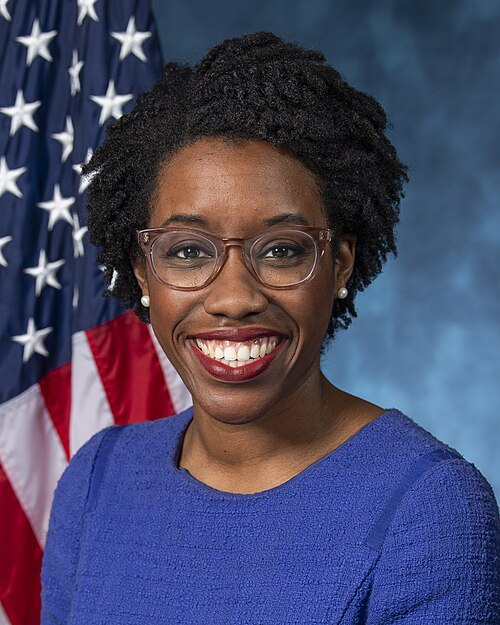
1 sponsor
Actions
3 actions
| Date | Action |
|---|---|
| Jul. 28, 2026 | Referred to the Subcommittee on Health. |
| Jul. 21, 2026 | Introduced in House |
| Jul. 21, 2026 | Referred to the Committee on Energy and Commerce, and in addition to the Committees on Appropriations, Ethics, Agriculture, Ways and Means, Armed Services, the Budget, Education and Workforce, Rules, Financial Services, Foreign Affairs, Homeland Security, House Administration, Intelligence (Permanent Select), the Judiciary, Natural Resources, Oversight and Government Reform, Science, Space, and Technology, Small Business, Transportation and Infrastructure, and Veterans' Affairs, for a period to be subsequently determined by the Speaker, in each case for consideration of such provisions as fall within the jurisdiction of the committee concerned. |
Corporate Lobbying
0 companies lobbying
None found.
* Note that there can be significant delays in lobbying disclosures, and our data may be incomplete.
Potentially Relevant Congressional Stock Trades
No relevant congressional stock trades found.