
H.R. 10806: Medicare Home Health Payment Integrity and Protection Act of 2026
This bill would change how Medicare oversees and pays
home health agencies
in an effort to reduce fraud and improve the accuracy of payment data.Stronger screening when agencies enroll in Medicare
The bill would require extra screening for home health agencies that the government considers to be at extreme risk of fraud. For those agencies, Medicare would add steps such as:
- fingerprinting the agency administrator, if fingerprinting is already part of the screening process;
- verifying that the agency has comprehensive liability insurance.
The bill says the government would identify “extreme risk” agencies based partly on whether the number of agencies in a state or county suddenly rises a lot from one year to the next, along with other factors set by the Secretary of Health and Human Services.
More frequent inspections and oversight
The bill would increase how often some home health agencies are surveyed. In general:
- newly enrolled agencies, agencies with a change in ownership, and agencies that reactivate billing privileges would face monthly standard surveys for 36 months;
- agencies that do not submit required quality data could be surveyed sooner;
- agencies with unusually high admission rates compared with similar agencies, or other signs of possible fraud or abnormal behavior, could also face surveys at least every 18 months, with limits on how often those surveys can happen.
Stricter standards for accreditation organizations
The bill would require accreditation bodies that certify home health agencies to meet stronger survey standards and to use surveyors who have completed CMS training. It would also create a system for the Secretary to review how these accreditation bodies are performing over time, with possible corrective action, closer monitoring, or removal of approval if performance is found to be deficient.
Changes to Medicare payment calculations
The bill would change how Medicare calculates payment rates for home health services starting in 2027. It would require the government to reset the standard payment amount using more reliable data and to exclude claims that appear fraudulent, wasteful, abusive, or otherwise unreliable. It would also direct the Secretary to account for the effects of COVID-19 and other unusual circumstances that affected home health use and spending.
In addition, the bill would stop certain payment adjustments that were intended to correct for differences between assumed and actual behavior under the Patient-Driven Groupings Model, beginning in 2027.
Protection of quality and value-based programs
The bill would require Medicare to leave out, or adjust for, “suspect claims” when calculating benchmarks, quality measures, or value-based payment adjustments for home health agencies. In practice, this means claims believed to be unreliable or connected to fraud would not be allowed to distort payment calculations for other providers.
Reporting and rulemaking
Within 180 days, the Secretary of Health and Human Services would have to report to Congress on how suspect claims and cost reports affected home health payments after 2020, how excluding those claims might change payment calculations, and what additional safeguards may be needed.
The bill would also require HHS to implement the new rules through the normal notice-and-comment rulemaking process.
Funding for enforcement and oversight
The bill would provide new federal funding for implementation and enforcement:
- $300 million for CMS to carry out the new program integrity, enrollment, survey, and accreditation provisions;
- $150 million for the Department of Justice and HHS Inspector General to investigate and prosecute organized home health fraud;
- $100 million for state survey agencies to conduct faster surveys, enrollment checks, unannounced visits, and operational verification.
Existing fraud powers preserved
The bill says it would not limit existing government powers to suspend payments, revoke enrollment, impose enrollment moratoriums, conduct site visits, audit agencies, or deny payment for suspect claims.
Relevant Companies
None found
This is an AI-generated summary of the bill text. There may be mistakes.
Sponsors
1 sponsor
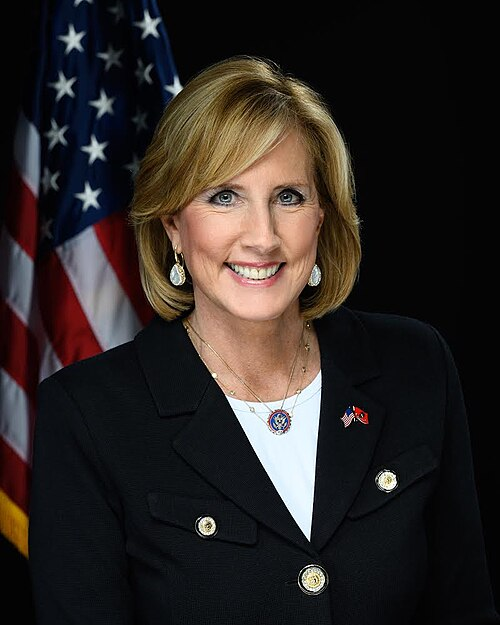
Actions
2 actions
| Date | Action |
|---|---|
| Oct. 13, 2026 | Introduced in House |
| Oct. 13, 2026 | Referred to the Committee on Ways and Means, and in addition to the Committees on Energy and Commerce, and the Judiciary, for a period to be subsequently determined by the Speaker, in each case for consideration of such provisions as fall within the jurisdiction of the committee concerned. |
Corporate Lobbying
0 companies lobbying
None found.
* Note that there can be significant delays in lobbying disclosures, and our data may be incomplete.
Potentially Relevant Congressional Stock Trades
No relevant congressional stock trades found.