
H.R. 10695: United States Submarine Cable Security Policy Act of 2026
This bill would change how the U.S. handles permits for submarine cables—undersea communications lines that connect the United States to other countries.
What it would require the government to do
Within 180 days, a U.S. committee that reviews foreign involvement in telecom matters would have to create a United States Submarine Cable Security Policy. That policy would identify security concerns involving:
- Licenses to land or operate submarine cables connecting the U.S. with foreign countries;
- Licenses for cables connecting the U.S. with certain “covered nations” defined in federal law;
- Joint cable projects involving companies that make or provide communications equipment or services that are on a federal list of barred or restricted communications companies.
The policy would also recommend both standard and enhanced security measures for cable landing and operation.
New FCC rules and security requirements
The bill would require the Federal Communications Commission (FCC) to adopt rules based on that policy. Those rules would create:
- Standard security measures that most cable licenses would have to follow;
- Enhanced security measures for cases where the FCC thinks a license could create national security risks that the standard measures do not address.
The standard measures would have to address physical security, supply chain security, and cybersecurity/physical security risk management plans. The rules would also have to address involvement by companies on the federal restricted communications list.
Limits on extra conditions
The bill would generally prevent the FCC from adding extra security conditions beyond the new standard or enhanced measures unless the foreign-participation review committee specifically asks for them and the FCC finds that additional measures are needed for national security.
It would also prevent the FCC from requiring applicants to sign separate security agreements with the committee or from requiring committee approval or “non-objection” as a condition of the license for matters already covered by the FCC’s adopted security measures.
Streamlined review process
The bill would create deadlines and automatic approvals in the licensing process:
- The FCC would have 20 days to tell applicants whether their application is accepted for filing and, if not, how to fix it.
- After acceptance, the FCC would generally have 45 days to approve or deny an application.
- If the FCC refers an application for foreign-participation review, the deadline would extend to 1 year.
- If the FCC misses these deadlines, the application would generally be deemed approved.
Even if an application is deemed approved, the resulting license would still be subject to the applicable security measures.
When applications can be sent for foreign review
The FCC could refer an application to the foreign-participation committee only in limited situations, such as when the applicant is trying to overcome a preset foreign-adversary restriction in FCC rules, or when the applicant cannot make certain ownership-related self-certifications.
Self-certification options
The bill would let applicants self-certify certain facts to avoid more review, including:
- That their ownership has not materially changed since a recent prior license;
- That at least 40% of the cable is owned by entities eligible for that type of self-certification;
- That they meet other ownership rules the FCC may set.
Applicants could also self-certify whether the standard or enhanced security measures apply to their cable project.
Starting work before final approval
If an applicant meets certain self-certification conditions and is not subject to a foreign-adversary presumptive restriction, the bill would allow the cable to be landed after 20 days while the application is still pending, unless the committee objects and the FCC agrees with that objection.
This would not allow full operation before the license is issued, except as needed to construct and test the cable. It would also not prevent an applicant from asking for temporary authority under existing FCC rules.
Changes to existing law
The bill would revise the old Cable Landing License Act to shift more of the licensing authority from the President to the FCC and to add the new application, review, and security rules described above.
Who it would apply to
The bill would apply to pending and future submarine cable license applications once the required FCC rules take effect. Some parts would not apply to applications already submitted before that effective date.
Relevant Companies
- None found
This is an AI-generated summary of the bill text. There may be mistakes.
Sponsors
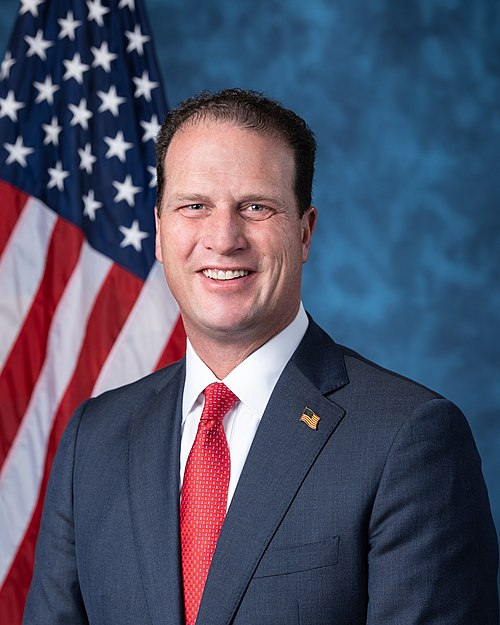
2 bill sponsors

Actions
2 actions
| Date | Action |
|---|---|
| Oct. 01, 2026 | Introduced in House |
| Oct. 01, 2026 | Referred to the House Committee on Energy and Commerce. |
Corporate Lobbying
0 companies lobbying
None found.
* Note that there can be significant delays in lobbying disclosures, and our data may be incomplete.
Potentially Relevant Congressional Stock Trades
No relevant congressional stock trades found.