
H.R. 10454: Textile Waste Reduction Act
This bill would direct the Environmental Protection Agency (EPA) to lead a new federal effort focused on reducing textile waste and keeping clothing and other textiles in use longer.
What “textile circularity” means here
The bill uses the term “textile circularity” to describe a system where textiles are designed, used, collected, and processed in ways that reduce waste and maximize reuse of materials. In practical terms, that includes:
- repairing textiles,
- reusing pre-owned textiles, and
- recycling textiles into materials for new textiles.
EPA responsibilities
The EPA Administrator would be required to take actions needed to advance textile circularity. That could include writing regulations if the EPA decides they are necessary to carry out the law.
The EPA would also have to work with relevant stakeholders and consider the work of a new interagency working group and advisory board.
National Textile Circularity Strategy
The bill would require the EPA to create and carry out a national strategy on textile circularity. In developing that strategy, the EPA would have to:
- allow at least 60 days for public comment,
- seek input from industry, researchers, governments, Tribal representatives, and other stakeholders, and
- prepare a needs assessment identifying what data, funding, and other actions are needed.
That needs assessment would have to cover, among other things:
- how many textiles are landfilled, burned for energy, recovered, recycled, or exported;
- data from the last five years on textile disposal and recovery;
- the current state of textile repair, reuse, recovery, recycling, and hauling in the U.S.;
- which entities are involved in those activities;
- federal laws and funding sources related to textile recovery and recycling;
- market conditions for pre-owned and recycled textiles; and
- barriers to expanding textile recycling, including infrastructure, workforce, and funding challenges.
The EPA would have to submit the initial strategy to Congress within 2 years of enactment, then update it annually and report lessons learned.
The EPA would also have to publish the relevant textile data and waste estimation methods on its website and update them at least once a year.
Interagency Working Group
The bill would create an Interagency Working Group on Textile Circularity to coordinate federal actions. Members would come from agencies including the Departments of Energy and State, EPA, FTC, NIST, NSF, Customs and Border Protection, and the White House Office of Science and Technology Policy, plus any other agencies the EPA Administrator thinks are appropriate.
This group would help develop and implement the national strategy, share information across the federal government, create a common framework for definitions and data, and make recommendations to the participating agencies. It would have to report to Congress within 1 year of being established and at least every 2 years after that.
Advisory Board
The bill would also create an Advisory Board to provide ongoing advice to the working group. The board would include representatives of textile producers, retailers, recyclers, repair and reuse organizations, recovery organizations, academia, nongovernmental organizations, local governments, and State or Tribal governments. Members would serve 2-year terms, with limits on consecutive service.
The board would meet at least twice a year and would be scheduled to end 10 years after enactment.
Public information on funding
The EPA would have to identify and publish information about federal grants, loans, subsidies, and other financial support that could help States, local governments, Tribal governments, and nongovernmental organizations advance textile circularity. This information would have to be kept updated at least twice a year.
Key definitions
The bill defines “textile” broadly to include items made in whole or in part from textile material such as leather, cotton, silk, jute, hemp, wool, viscose, nylon, and polyester, but excludes mattresses, furniture, and reusable products designed to collect or absorb urine or feces.
It defines “textile waste” as discarded textiles, including those discarded by industry or consumers, but not textiles that have been recovered.
It also defines “textile producer” as the person who manufactures a textile and owns or licenses the brand or trademark under which it is sold.
Relevant Companies
None found
This is an AI-generated summary of the bill text. There may be mistakes.
Sponsors
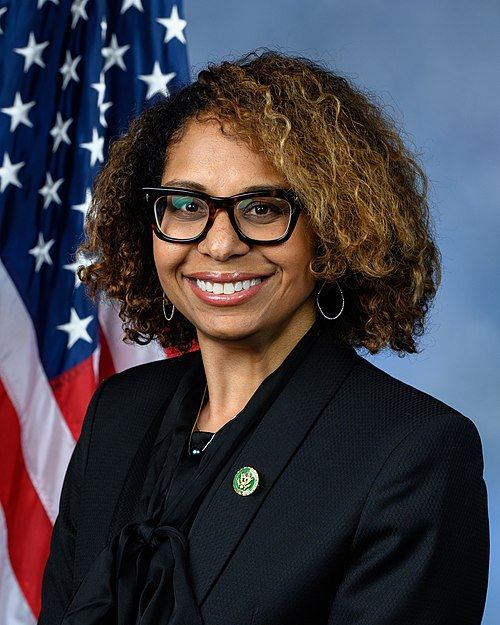
2 bill sponsors

Actions
2 actions
| Date | Action |
|---|---|
| Sep. 16, 2026 | Introduced in House |
| Sep. 16, 2026 | Referred to the House Committee on Energy and Commerce. |
Corporate Lobbying
0 companies lobbying
None found.
* Note that there can be significant delays in lobbying disclosures, and our data may be incomplete.
Potentially Relevant Congressional Stock Trades
No relevant congressional stock trades found.