
H.R. 10156: Better Jobs through Evidence and Innovation Act
This bill would create a new federal grant program focused on testing, improving, and expanding workforce training and job-placement programs that have evidence they can help people get and keep jobs.
What the bill does
- It amends the Workforce Innovation and Opportunity Act to add a “workforce development innovation fund.”
- The U.S. Secretary of Labor could award competitive grants to eligible groups to:
- start new evidence-based workforce programs,
- replicate successful programs in new places,
- expand programs that have already shown strong results, and
- evaluate whether these programs actually improve earnings, employment, and related outcomes.
- The programs must be designed to improve job services and training in ways that are shown, or likely, to raise participants’ earnings and employment.
What kinds of programs could be funded
The bill says grants could support “field-initiated” workforce models, including things like:
- sector-based employment programs,
- employment social enterprises or other revenue-generating workforce programs,
- registered apprenticeships,
- re-entry programs for people returning from incarceration,
- career pathway programs,
- industry or sector partnerships, and
- on-the-job or incumbent worker training.
How grants would be awarded
- Grants would be awarded competitively, with preference given to programs backed by evidence of effectiveness.
- The Secretary would consider:
- past evidence that the program helps people’s earnings or employment,
- the expected cost relative to results,
- whether the evaluation will add useful evidence for future policymaking, and
- whether the program is being used in different geographic areas, including rural areas.
- Grants could be awarded as:
- early-phase grants for developing and testing new ideas,
- mid-phase grants for refining and scaling programs at one site, and
- expansion grants for programs with strong evidence that are ready to grow to more sites.
- At least 60% of each grant would have to go toward direct program implementation.
Evaluation and research requirements
- Most funded programs would have to go through a rigorous third-party evaluation.
- Early-phase grants would need a smaller, preliminary evaluation such as a pilot or feasibility study.
- The bill also allows the Department of Labor to waive some evaluation requirements for certain expansion grants if there are already multiple strong examples of high-level evidence.
- Up to 10% of program funds could be reserved for technical assistance, research support, dissemination of evidence-based practices, and evaluation activities.
How funds would be used
- For each fiscal year, the Department of Labor would generally have to use:
- at least 50% of funds for expansion grants, and
- no more than 25% for early-phase grants.
- Funding would run on an authorization basis for fiscal years 2027 through 2031, with “such sums as may be necessary” authorized for appropriation.
Who could apply
Eligible applicants would include state and local workforce boards, tribes and tribal organizations, higher education institutions, state workforce agencies, certain nonprofit or community-based organizations serving underserved populations, national or regional organizations that would pass funds through to such groups, and consortia of these entities.
Relevant Companies
None found
This is an AI-generated summary of the bill text. There may be mistakes.
Sponsors
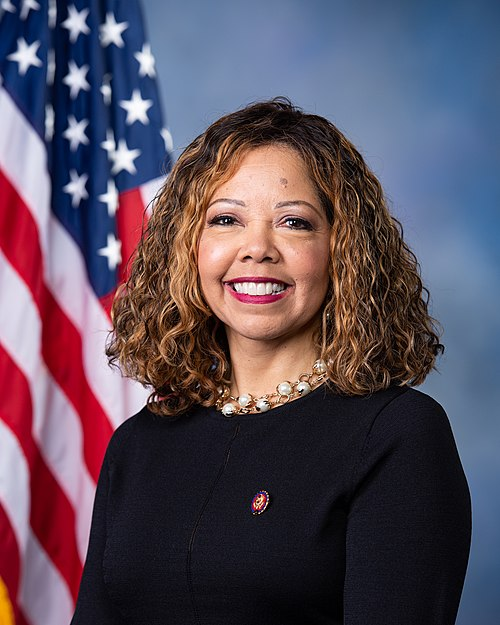
2 bill sponsors

Actions
2 actions
| Date | Action |
|---|---|
| Aug. 27, 2026 | Introduced in House |
| Aug. 27, 2026 | Referred to the House Committee on Education and Workforce. |
Corporate Lobbying
0 companies lobbying
None found.
* Note that there can be significant delays in lobbying disclosures, and our data may be incomplete.
Potentially Relevant Congressional Stock Trades
No relevant congressional stock trades found.