
H.R. 10081: No Utility Junk Fees Act
This bill would set federal conditions on certain state energy funding to discourage regulated electric utilities from charging residential customers extra fees for paying their electric bills.
What counts as a prohibited or limited fee
The bill defines a “spurious charge” as a fee charged to a residential customer for using a payment method, such as mail, phone, internet, automatic bank draft, or paying in person, if the fee:
- is more than the greater of 150% of the utility’s documented payment-processing cost or $3;
- is charged for a payment method where the utility has no documented processing cost, such as some in-person payments at utility offices, automatic recurring payments, direct ACH transfers, and mail payments; or
- is charged without advance, clear disclosure of the fee amount, the reason for the fee, the total amount due, and an alternative payment method that does not include the fee.
What states would have to do
Beginning with the first full fiscal year after enactment, the Secretary of Energy would withhold 10% of State Energy Program financial assistance from any state unless the Secretary determines that the state has rules requiring regulated electric utilities to do all of the following:
- prohibit spurious charges on residential customers;
- disclose any payment-related fee, the reason for it, the total amount due, and a fee-free way to pay;
- provide at least one fee-free payment option that does not require internet access;
- ban fees on automatic recurring payments and electronic fund transfers; and
- enforce these rules by investigating complaints, imposing penalties, and allowing consumers to recover unlawfully charged fees.
How compliance would work
States would have to submit documentation showing compliance within 18 months after enactment and every year after that. The Secretary of Energy would review the documentation within 60 days. If a state is found noncompliant, it would get a 90-day period to fix the problem before funds are withheld. If the state later comes back into compliance, the withheld money would be restored the following fiscal year.
Federal administration
The Department of Energy would have to create the rules and procedures for compliance, publish a public database showing each state’s compliance status, provide technical help to states, issue guidance, create an appeals process, and report annually to Congress. Initial regulations would be due within 9 months of enactment.
Relevant Companies
None found
This is an AI-generated summary of the bill text. There may be mistakes.
Sponsors
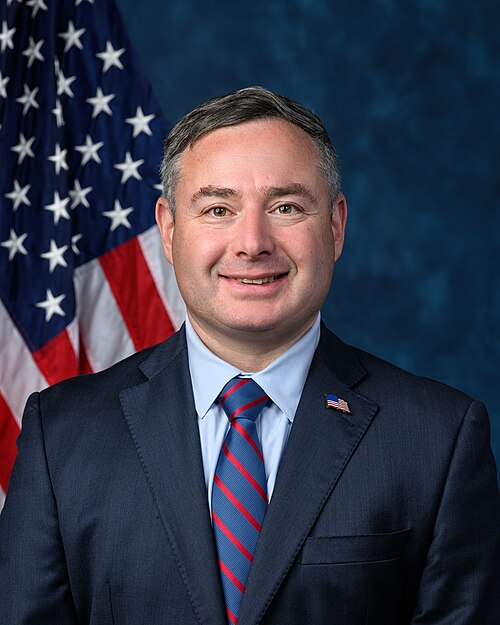
1 sponsor
Actions
2 actions
| Date | Action |
|---|---|
| Aug. 10, 2026 | Introduced in House |
| Aug. 10, 2026 | Referred to the House Committee on Energy and Commerce. |
Corporate Lobbying
0 companies lobbying
None found.
* Note that there can be significant delays in lobbying disclosures, and our data may be incomplete.
Potentially Relevant Congressional Stock Trades
No relevant congressional stock trades found.