
H.R. 10080: Energy Utility Lobbying Ban Act
This bill would require states to put limits on what former employees and officers of state utility regulators can do after leaving public service, if they later work for an electric utility.
What the lobbying restrictions would be
To avoid losing part of their federal energy funding, states would have to ban certain post-employment lobbying or advocacy by former staff of state regulatory authorities. The restrictions would apply when a former regulator tries to:
- appear before their former state regulatory authority, or
- advocate to that authority on behalf of an electric utility that falls under the authority’s rate-setting power,
in connection with a specific matter that the person worked on personally and substantially while employed by the regulator.
The bill also adds a broader two-year restriction in certain cases. For two years after leaving the state regulatory authority, the former employee would be barred from appearing or advocating before that authority on behalf of such an electric utility about a matter that was actually pending under their official responsibility in the year before they left.
Effect on state energy funding
Starting with the first full fiscal year after enactment, the Secretary of Energy would withhold 10 percent of a state’s energy program financial assistance unless the state is found to have these restrictions in place and to enforce them.
If a state is later brought into compliance, the withheld money would be restored in the following fiscal year.
Compliance review and enforcement
The Department of Energy would have to review each state’s laws within one year after enactment, and then every year after that, to determine whether the state has the required restrictions.
If a state is found noncompliant, it would have 90 days to fix the problem before the money is withheld. The bill says states can comply through any legally binding method under state law, such as:
- passing a law,
- issuing administrative rules, or
- issuing binding orders.
States would also be required to enforce the restrictions by investigating complaints, imposing penalties for violations, and allowing affected parties to seek damages.
Department of Energy responsibilities
The Secretary of Energy would have to:
- create procedures for the annual compliance review,
- keep a public database showing each state’s compliance status,
- provide technical assistance to states,
- issue guidance on the law,
- create an appeals process for states that disagree with a noncompliance finding, and
- report annually to Congress on compliance rates.
The bill would also require initial regulations within 9 months of enactment.
Relevant Companies
- None found
This is an AI-generated summary of the bill text. There may be mistakes.
Sponsors
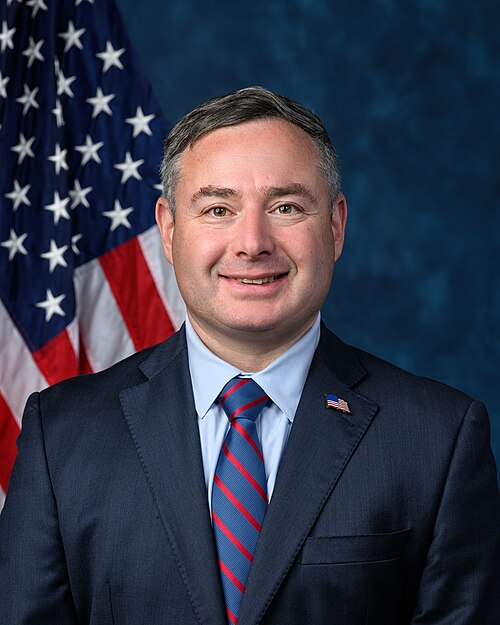
1 sponsor
Actions
2 actions
| Date | Action |
|---|---|
| Aug. 10, 2026 | Introduced in House |
| Aug. 10, 2026 | Referred to the House Committee on Energy and Commerce. |
Corporate Lobbying
0 companies lobbying
None found.
* Note that there can be significant delays in lobbying disclosures, and our data may be incomplete.
Potentially Relevant Congressional Stock Trades
No relevant congressional stock trades found.