
H.R. 10059: Building Safer Streets Act
The bill would change several federal transportation rules and programs to push highway and transit planning more explicitly toward all modes of travel—not just cars and trucks—including walking, biking, transit, and freight. It also adds reporting, studies, and some new requirements for states and federal agencies.
What it changes overall
The bill is aimed at making federal transportation projects consider the needs of pedestrians, cyclists, transit users, drivers, and freight together. It would require federal agencies to provide clearer guidance about when and why certain street designs are allowed or prohibited, and it would create more structure around design decisions that affect safety and access.
Traffic-control rules and design standards
The bill would require the Secretary of Transportation to publish explanations of the rules in the Manual on Uniform Traffic Control Devices that prohibit certain devices or street designs. Those explanations would need to cover:
- whether local flexibility was considered;
- the research supporting the prohibition; and
- how the prohibition complies with federal law.
It would also require the Department of Transportation to ask the National Committee on Uniform Traffic Control Devices to document its decisions when it helps update the manual.
Federal highway guidance for multimodal streets
The bill would direct the Federal Highway Administration to update regulations so “consideration of all modes” is more clearly defined. The updated rules would need to:
- spell out accepted ways to evaluate pedestrian, bicycle, and other transportation needs;
- distinguish between urban, suburban, rural, and natural-area design approaches;
- take surrounding land use into account; and
- affirm the need for connected networks that serve multiple modes.
It would also require the agency to create a list of certain multimodal design features and project types that would automatically qualify for a categorical design exception, rather than needing case-by-case approval. That list would be updated at least every five years.
Review of projects that do not include walking or biking facilities
For certain federal grant programs, the bill would require applicants in urbanized areas to explain when they considered multimodal infrastructure but decided not to include facilities for people walking or biking. The review would have to consider issues like right-of-way availability, nearby parallel routes, future demand, and other factors set by the agency.
This applies to three programs: the SMART grants program, the PROTECT program, and the ATTAIN program.
Guidance on connected street networks
The Federal Highway Administration would have to publish guidance on connected networks that work for all users. That guidance would include:
- street design for transit and freight;
- context-sensitive approaches for urban, suburban, and rural roads; and
- ways to handle situations where there is not enough space for separate facilities for everyone, such as lower design speeds or better visibility for vulnerable road users.
Transit stop and street design guidance
The Federal Highway Administration and Federal Transit Administration would have to jointly issue guidelines on where to place bus stops and how to design the surrounding roadway. Those guidelines would need to address convenience, safety, disability access, proximity to destinations, road conditions, coordination among local agencies, and existing design resources. The guidance would also be shared with recipients of certain transit capital funds.
The agencies would also need to report to Congress on what guidance they have adopted for on-road transit vehicle accommodation, such as lane widths, bus lanes, turning radii, bus stop placement, and transit signal priority.
Project evaluation and safety rules
For some federal grant decisions, the bill would prohibit the Secretary from treating higher speed limits on non-freeway roads as increasing the “value of travel time” benefits. In other words, the bill would not allow faster car speeds on ordinary roads to be counted as a benefit in those analyses.
The bill would also require a study of the design factors that contributed to fatal crashes on a sample of federal-aid highways, including crashes involving pedestrians and cyclists, with a report to Congress.
Requirements for states
Within two years, each state would have to notify the Secretary of Transportation whether it has updated its highway design manuals to match federal guidance for lower-speed non-freeway roads.
The bill would also change a federal highway safety target rule so that a state’s target for vulnerable road user fatalities cannot be higher than its number from the previous target period.
Changes to the Safe Streets for All program
The bill would modify the Safe Streets for All program to create a new category for small communities, defined by reference to an existing small-and-rural-community standard.
It would reserve at least 10 percent of that program’s annual funding for projects benefiting small communities if the projects:
- cost less than $1 million;
- can be completed within five years; and
- are small enough that the applicant can show they are ineligible for, or unable to get, state funding.
The bill would allow a simplified application process for those projects and could raise the federal share of cost up to 90 percent if there is also state or local funding commitment. It would also require the Secretary to help grant recipients collect and use data on nonmotorized travelers, especially data on walking and biking volumes.
Relevant Companies
None found
This is an AI-generated summary of the bill text. There may be mistakes.
Sponsors
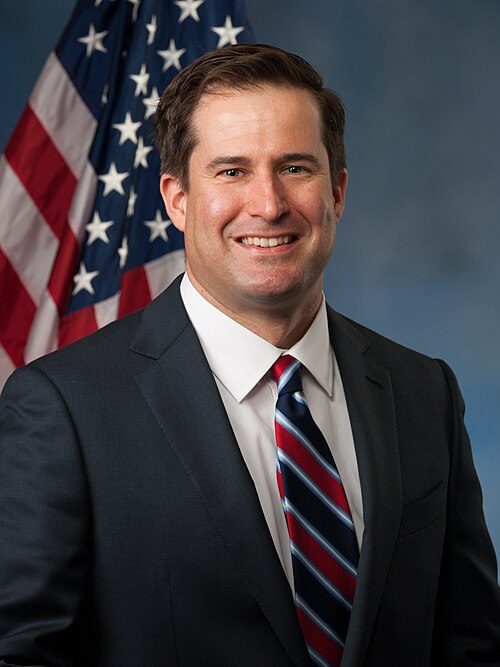
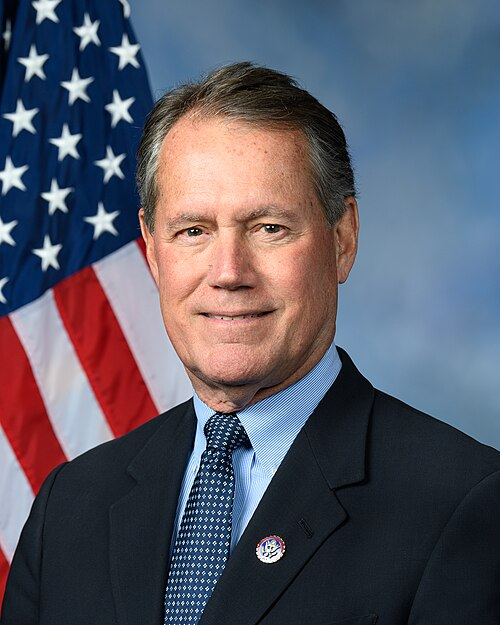
2 bill sponsors
Actions
2 actions
| Date | Action |
|---|---|
| Aug. 06, 2026 | Introduced in House |
| Aug. 06, 2026 | Referred to the House Committee on Transportation and Infrastructure. |
Corporate Lobbying
0 companies lobbying
None found.
* Note that there can be significant delays in lobbying disclosures, and our data may be incomplete.
Potentially Relevant Congressional Stock Trades
No relevant congressional stock trades found.