H.R. 10033: AV Emergency Response Coordination Act
This bill would create federal rules for how autonomous vehicles and their operators must coordinate with emergency responders.
What it requires from autonomous vehicle companies
The bill applies to covered vehicles, meaning vehicles with automated driving systems at Levels 3, 4, or 5, and to the manufacturers or operators of those vehicles. It would require these companies to prepare and submit two kinds of documents to the National Highway Traffic Safety Administration (NHTSA):
- An emergency response guide with detailed information for first responders and emergency managers.
- A rescue sheet with shorter, practical information for use at the scene of an emergency.
These documents would need to explain things like how the vehicle interacts with emergency responders, how responders can stop, move, tow, or disable the vehicle, how to tell whether the automated system is active, how to access and remove occupants, how to communicate with the company or remote human staff, how to handle geofence notices, and how to preserve data and video after an incident.
Sharing information with emergency agencies
Before operating a covered vehicle on public roads, or before selling or importing one for use on public roads, the company would have to provide emergency responders, emergency management agencies, and transportation authorities in the operating area with:
- notice that it plans to operate there,
- a contact person for emergency and non-emergency communication, and
- the emergency response guide and rescue sheet.
If the documents are updated later, the company would have to send the updates within 5 days.
Public availability
NHTSA would have to keep a searchable, mobile-friendly public website with these guides and rescue sheets, and make each one public within 10 days after receiving it.
Federal standards and deadlines
Within 2 years, NHTSA would have to issue a final rule setting a minimum national standard for how covered entities must enable emergency responders to handle these vehicles. In doing so, the agency would have to consult state and local agencies, emergency managers, covered entities, safety organizations, disability groups, bicycle and pedestrian groups, and standards organizations, and consider existing private-sector standards.
Within 180 days, NHTSA would also have to create a process for government agencies to send geofence notices to autonomous vehicle companies and for those companies to respond to them.
Once that final rule is issued, companies would generally have 1 year to comply, with a possible 1-year exemption for vehicles already on the road.
Emergency hotline requirement
Starting no later than 90 days after enactment, each covered entity would have to maintain a 24/7 phone hotline for emergency responders. The hotline would have to be answered within 30 seconds and allow coordination with remote human personnel.
Geofence notices and emergency orders
Starting no later than 180 days after enactment, a covered vehicle could not operate on public roads unless it complies with geofence notices and emergency orders. A geofence notice is a request from a first responder or government agency asking the vehicle to avoid a specific geographic area for up to 72 hours because of an emergency, disaster, or other safety hazard, unless the notice is rescinded or extended.
Enforcement
The bill would make violations of certain provisions enforceable under existing federal motor vehicle safety enforcement authority. It also says that if multiple covered entities would otherwise have duplicative duties, only one may need to perform the duplicated activity, but each covered entity remains responsible for overall compliance.
Relevant Companies
- GOOGL / GOOG — Alphabet’s Waymo operates autonomous vehicles and would likely need to meet the guide, hotline, geofence, and emergency-response requirements.
- TSLA — Tesla develops and operates advanced driver-assistance and autonomous-driving systems, and could be affected if its vehicles are treated as covered vehicles under the bill’s definitions and standards.
- MBLY — Mobileye supplies autonomous-driving technology and systems that could be affected if vehicles using its technology must comply with new emergency-response standards.
- GM — General Motors has worked on autonomous-vehicle systems and could be affected through its autonomous vehicle operations or vehicle platforms if they fall under the bill.
- F — Ford has partnered on autonomous-driving efforts and could be affected if any covered vehicles it manufactures or operates must follow the new requirements.
This is an AI-generated summary of the bill text. There may be mistakes.
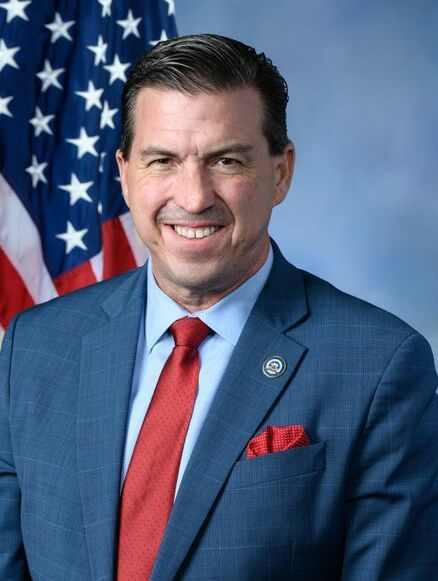
Sponsors
1 sponsor
Actions
2 actions
| Date | Action |
|---|---|
| Aug. 03, 2026 | Introduced in House |
| Aug. 03, 2026 | Referred to the Committee on Transportation and Infrastructure, and in addition to the Committee on Energy and Commerce, for a period to be subsequently determined by the Speaker, in each case for consideration of such provisions as fall within the jurisdiction of the committee concerned. |
Corporate Lobbying
0 companies lobbying
None found.
* Note that there can be significant delays in lobbying disclosures, and our data may be incomplete.