


Obexelimab significantly reduced brain lesions in multiple sclerosis patients, displaying strong efficacy and safety in recent clinical trial results.
Quiver AI Summary
Zenas BioPharma, Inc. announced positive results from the Phase 2 MoonStone trial of obexelimab in patients with Relapsing Multiple Sclerosis (RMS), highlighting a 95% relative reduction in new gadolinium-enhancing T1 lesions compared to placebo at weeks 8 and 12 (p=0.0009). The findings were presented at the ACTRIMS Forum 2026, where it was shown that obexelimab's efficacy was sustained through a 24-week period, demonstrating significant reductions in lesions and neurofilament light (NfL) levels, which are indicative of neurodegeneration. The treatment was well tolerated, with no new safety signals reported. Lonnie Moulder, CEO of Zenas, expressed enthusiasm about the trial's outcomes, emphasizing obexelimab's potential in treating autoimmune diseases. The company plans to submit marketing applications for related conditions and continue its development of other candidates, including orelabrutinib.
Potential Positives
- Obexelimab met the primary endpoint with a statistically significant 95% relative reduction in new Gd-enhancing T1 lesions compared to placebo, indicating strong efficacy in treating Relapsing Multiple Sclerosis.
- The 24-week data supports the robustness and durability of obexelimab's activity, suggesting it may provide long-term benefits for patients.
- Obexelimab demonstrated a favorable safety profile with no new safety signals reported, reinforcing its potential as a safe treatment option for autoimmune diseases.
- The press release highlights Zenas BioPharma's commitment to advancing innovative therapies for autoimmune diseases, potentially positioning the company as a leader in this sector.
Potential Negatives
- While obexelimab showed significant efficacy in the trial, its success is not guaranteed in larger populations, and previous trials have indicated that outcomes can vary significantly based on broader patient demographics.
- The reliance on successful regulatory approval for commercialization introduces substantial uncertainty; there could be unexpected challenges that hinder or delay market entry.
- The financial situation of Zenas BioPharma, characterized by substantial losses and ongoing need for additional financing, raises concerns about the company’s long-term viability and capacity to support its development pipeline.
FAQ
What were the primary results of the Phase 2 MoonStone trial for obexelimab?
Obexelimab demonstrated a 95% reduction in new gadolinium (Gd)-enhancing lesions compared to placebo over weeks 8 and 12.
How well was obexelimab tolerated in the trial?
Obexelimab was well tolerated, with no new safety signals observed during the trial.
What are the implications of the 24-week data for obexelimab?
The 24-week data confirm the durable activity of obexelimab, showing sustained lesion reduction and stable disability scores.
What is the mechanism of action for obexelimab?
Obexelimab inhibits B cell activity without depleting them, targeting cells implicated in autoimmune diseases.
What is Zenas BioPharma's commitment regarding autoimmune disease treatments?
Zenas BioPharma aims to lead in developing transformative therapies for patients with autoimmune diseases, including obexelimab.
Disclaimer: This is an AI-generated summary of a press release distributed by GlobeNewswire. The model used to summarize this release may make mistakes. See the full release here.
$ZBIO Insider Trading Activity
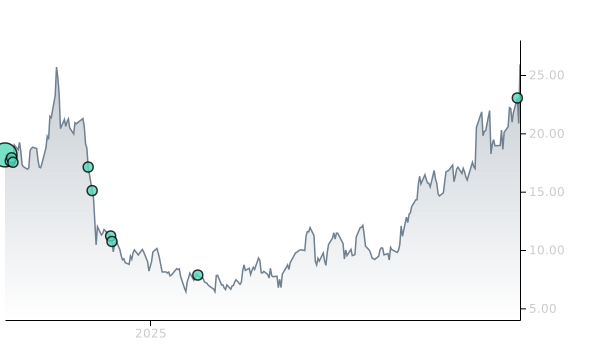
$ZBIO insiders have traded $ZBIO stock on the open market 11 times in the past 6 months. Of those trades, 11 have been purchases and 0 have been sales.
Here’s a breakdown of recent trading of $ZBIO stock by insiders over the last 6 months:
- FUNDS MANAGEMENT LLC FAIRMOUNT purchased 316,219 shares for an estimated $6,008,161
- HONGBO LU purchased 263,160 shares for an estimated $5,000,040
- LEON O JR MOULDER (Chief Executive Officer) has made 4 purchases buying 136,928 shares for an estimated $2,408,948 and 0 sales.
- ONE CAPITAL MANAGEMENT, LLC SR has made 2 purchases buying 126,315 shares for an estimated $2,399,985 and 0 sales.
- PATRICK G ENRIGHT has made 2 purchases buying 117,255 shares for an estimated $2,250,026 and 0 sales.
- JASON RALEIGH NUNN purchased 63,158 shares for an estimated $1,200,002
To track insider transactions, check out Quiver Quantitative's insider trading dashboard.
$ZBIO Hedge Fund Activity
We have seen 45 institutional investors add shares of $ZBIO stock to their portfolio, and 31 decrease their positions in their most recent quarter.
Here are some of the largest recent moves:
- FMR LLC added 1,496,836 shares (+45.0%) to their portfolio in Q3 2025, for an estimated $33,229,759
- CITADEL ADVISORS LLC removed 293,785 shares (-100.0%) from their portfolio in Q3 2025, for an estimated $6,522,027
- VANGUARD GROUP INC added 290,307 shares (+25.0%) to their portfolio in Q4 2025, for an estimated $10,541,047
- ARROWMARK COLORADO HOLDINGS LLC removed 269,670 shares (-24.6%) from their portfolio in Q3 2025, for an estimated $5,986,674
- NOVO HOLDINGS A/S removed 250,000 shares (-11.1%) from their portfolio in Q3 2025, for an estimated $5,550,000
- CATALIO CAPITAL MANAGEMENT, LP removed 215,314 shares (-100.0%) from their portfolio in Q3 2025, for an estimated $4,779,970
- EVERSEPT PARTNERS, LP removed 166,737 shares (-51.2%) from their portfolio in Q3 2025, for an estimated $3,701,561
To track hedge funds' stock portfolios, check out Quiver Quantitative's institutional holdings dashboard.
$ZBIO Analyst Ratings
Wall Street analysts have issued reports on $ZBIO in the last several months. We have seen 3 firms issue buy ratings on the stock, and 0 firms issue sell ratings.
Here are some recent analyst ratings:
- Wedbush issued a "Outperform" rating on 12/22/2025
- Evercore ISI Group issued a "Outperform" rating on 11/26/2025
- HC Wainwright & Co. issued a "Buy" rating on 10/28/2025
To track analyst ratings and price targets for $ZBIO, check out Quiver Quantitative's $ZBIO forecast page.
$ZBIO Price Targets
Multiple analysts have issued price targets for $ZBIO recently. We have seen 6 analysts offer price targets for $ZBIO in the last 6 months, with a median target of $44.5.
Here are some recent targets:
- Judah Frommer from Morgan Stanley set a target price of $19.0 on 01/06/2026
- Martin Fan from Wedbush set a target price of $45.0 on 12/22/2025
- Cory Kasimov from Evercore ISI Group set a target price of $55.0 on 11/26/2025
- Matthew Caufield from HC Wainwright & Co. set a target price of $44.0 on 10/28/2025
- Yigal Nochomovitz from Citigroup set a target price of $46.0 on 10/28/2025
Full Release
- Obexelimab met the primary endpoint with a 95% relative reduction in new gadolinium (Gd)-enhancing T1 lesions compared with placebo over weeks 8 and 12 (p=0.0009) -
- Separately announced 24-week data support the robust and durable activity of obexelimab and further validate its unique inhibitory mechanism of action -
- Obexelimab was well tolerated, and no new safety signals were observed -
WALTHAM, Mass., Feb. 09, 2026 (GLOBE NEWSWIRE) -- Zenas BioPharma, Inc. (“Zenas,” “Zenas BioPharma” or the “Company”) (Nasdaq: ZBIO), a clinical-stage global biopharmaceutical company committed to being a leader in the development and commercialization of transformative therapies for patients living with autoimmune diseases, today announced that results from the Phase 2 MoonStone trial of obexelimab in Relapsing Multiple Sclerosis (RMS) were presented in a late-breaking oral presentation at the Americas Committee for Treatment and Research in Multiple Sclerosis (ACTRIMS) Forum 2026, which took place from February 5-7, 2026 in San Diego, California.
Obexelimab met the primary endpoint, demonstrating a highly statistically significant 95% relative reduction in the cumulative number of new gadolinium (Gd)-enhancing (GdE) T1 hyperintense lesions over week 8 and week 12 compared with placebo (p=0.0009). Near-complete suppression of new GdE T1 hyperintense lesions, markers of active inflammation, was observed with obexelimab by 8 weeks of treatment and was sustained through week 12. The adjusted mean number of new GdE T1 hyperintense lesions per scan was 0.01 (95% CI: 0.00, 0.06) in the obexelimab group compared to 0.23 (95% CI: 0.11, 0.51) with placebo. Over weeks 8 and 12, only two new GdE T1 lesions were observed in obexelimab-treated patients compared to 19 in placebo-treated patients, with 97.2% of obexelimab treated patients free from T1 lesions over this period. Consistent with the inhibitory mechanism of obexelimab, mean B cell values remained within the normal range for obexelimab-treated patients. The safety profile of obexelimab was consistent with that observed in prior completed trials, including cases of infections and hypersensitivity, most commonly mild injection site reactions.
Separately announced 24-week data further confirm the robust and durable activity of obexelimab. The highly statistically significant reductions in total GdE T1 lesions observed with obexelimab over weeks 8 and 12 were maintained through week 24; unadjusted means were 0.87 at baseline, 0.08 at week 12 and 0.04 at week 24 for obexelimab indicating a 95% reduction. Obexelimab meaningfully reduced serum Neurofilament Light (NfL) by 40% through week 24; 15.28 pg/mL at baseline declining to 12.7 pg/mL at week 12 and 9.2 pg/mL at week 24. New and/or enlarging T2 lesions were also lower in the obexelimab arm and the Expanded Disability Status Scale (EDSS) scores were stable, indicating a lack of progression in physical disability. No new safety signals were observed at week 24.
“We are very pleased that the MoonStone study was selected as a late-breaker oral presentation at ACTRIMS Forum 2026. Further, we are excited to share today that through week 24 of the MoonStone trial, obexelimab demonstrated robust and durable activity, including near complete elimination of gadolinium-enhancing T1 hyperintense lesions. The MoonStone 12-week primary endpoint results and 24-week data provide additional strong validation of obexelimab and the potential of B cell inhibition to offer meaningful clinical activity in a wide range of autoimmune diseases,” said Lonnie Moulder, Founder and Chief Executive Officer of Zenas. “With its unique mechanism of action, compelling safety and tolerability profile, and at-home subcutaneous self-administration, obexelimab has the potential to become a franchise molecule and meaningfully impact the lives of patients living with autoimmune diseases. We look forward to reporting on additional progress this year, including the submission of marketing applications for Immunoglobulin G4-Related Disease to the U.S. FDA and the European Medicines Agency and topline results from our Phase 2 SunStone trial for Systemic Lupus Erythematosus.”
The ongoing open-label expansion portion of the Phase 2 MoonStone trial continues to follow patients for longer-term outcomes. Within Multiple Sclerosis, Zenas is currently advancing orelabrutinib, a potentially best-in-class, highly selective central nervous system (CNS)-penetrant, oral, small molecule Bruton’s Tyrosine Kinase (BTK) inhibitor. Orelabrutinib is being studied in a global Phase 3 clinical trial in patients with Primary Progressive Multiple Sclerosis (PPMS). Zenas also expects to initiate a global Phase 3 trial of orelabrutinib in patients with non-active Secondary Progressive Multiple Sclerosis (naSPMS) in this quarter.
About Multiple Sclerosis
Multiple Sclerosis (MS) is a chronic, autoimmune-mediated disorder of the Central Nervous System (CNS). According to the Multiple Sclerosis International Federation, approximately 2.9 million people worldwide are currently living with MS. The disease disproportionately affects females, and its highest prevalence is observed in North America, Europe and Australia. MS develops when the immune system aberrantly targets the myelin sheath – the protective insulation surrounding axons in the brain, spinal cord and optic nerves – leading to inflammation, demyelination and axonal injury. This pathological cascade disrupts neuronal signal transmission and results in a heterogeneous range of clinical manifestations, including motor weakness, fatigue, and cognitive and visual disturbances. Over time, progressive neurodegeneration contributes to irreversible disability progression.
MS onset typically occurs between 20 and 40 years of age, making MS the leading cause of non-traumatic neurological disability in young adults. MS is categorized into three main subtypes, Relapsing Multiple Sclerosis (RMS), Secondary Progressive Multiple Sclerosis (SPMS) and Primary Progressive Multiple Sclerosis (PPMS); all three subtypes are associated with ongoing neuroaxonal loss from the earliest stages of the disease, even in the absence of overt clinical progression. Delays in diagnosis and treatment accelerate disability accumulation, reduce quality of life and increase socioeconomic burden. Consequently, early intervention with highly effective therapies is a key objective in disease management to slow or halt inflammatory and neurodegenerative processes and stop disability progression.
RMS is characterized by distinct episodes of new or worsening neurological symptoms (relapses), followed by partial or complete remission. Approximately 85% of patients are initially diagnosed with RMS. Approximately 20-30% of treated RMS patients transition to SPMS, defined by continuous disability progression with or without relapses. Currently, there are no approved therapies for non-relapsing SPMS. PPMS represents 10-15% of all MS diagnoses and is characterized by a steady increase in disability without relapses from disease onset. Currently there is only one approved therapy for PPMS.
About the Phase 2 MoonStone Trial
The Phase 2 MoonStone trial, which enrolled 116 patients, is a randomized, double-blind, placebo-controlled trial, to evaluate the efficacy and safety of obexelimab in patients with Relapsing Multiple Sclerosis (RMS). The trial followed a standard design using magnetic resonance imaging (MRI) endpoints that have historically been highly predictive of successful outcome in large, randomized trials using an endpoint of annualized relapse rate in an RMS study population. After an initial screening period, patients were randomized 2:1 to receive either 250 mg of obexelimab or placebo via subcutaneous injection once weekly over a 12-week double-blinded treatment period. The primary endpoint is the cumulative number of new Gd-enhancing T1 hyperintense lesions over week 8 and week 12 as measured by brain MRI. Secondary and exploratory endpoints include using standardized assessments, imaging, and biomarkers to evaluate the impact on disease progression. Upon completion of the double-blinded phase, all patients enter a 12-week open-label period in which those previously on placebo transition to obexelimab treatment, while those originally assigned to obexelimab continue therapy. During this open-label period, secondary and exploratory endpoints will assess obexelimab’s clinical activity through week 24. Upon completion of the open-label period, all trial participants had the option to enroll in a 52-week open label extension for continued obexelimab treatment and the assessment of long-term outcomes.
About Obexelimab
Obexelimab is a bifunctional monoclonal antibody designed to bind both CD19 and FcγRIIb, which are broadly present across B cell lineage, to inhibit the activity of cells that are implicated in many autoimmune diseases without depleting them. This unique inhibitory mechanism of action and self-administered, subcutaneous injection regimen may broadly and effectively address the pathogenic role of the B cell lineage in chronic autoimmune disease.
Obexelimab has been evaluated in eight clinical trials in a total of 383 subjects. Obexelimab was well tolerated and demonstrated clinical activity across these clinical trials. The registrational Phase 3 INDIGO trial for Immunoglobulin G4-Related Disease (IgG4-RD) met its primary endpoint and all four key secondary endpoints with high statistical significance. Zenas remains on track to submit a Biologics License Application (BLA) to the U.S. Food and Drug Administration (FDA) in the second quarter of 2026 and a Marketing Authorization Application (MAA) to the European Medicines Agency (EMA) in the second half of 2026. The trial continues to evaluate patients in the 3-year open label extension period which will further build upon the largest body of clinical data reported for IgG4-RD patients to date. A randomized Phase 2 trial for Systemic Lupus Erythematosus is ongoing and Zenas expects to report topline results, including biomarker data from this trial in the fourth quarter of 2026.
About Zenas BioPharma, Inc.
Zenas is a clinical-stage global biopharmaceutical company committed to becoming a leader in the development and commercialization of transformative therapies for patients living with autoimmune diseases. Our core business strategy combines our experienced leadership team with a disciplined product candidate acquisition approach to identify, acquire and develop product candidates globally that we believe can provide meaningful clinical benefits to patients living with autoimmune diseases. Zenas is advancing two late-stage, potential franchise molecules, obexelimab and orelabrutinib. Obexelimab, Zenas’ lead product candidate, is a bifunctional monoclonal antibody designed to bind both CD19 and FcγRIIb, which are broadly present across B cell lineage, to inhibit the activity of cells that are implicated in many autoimmune diseases without depleting them. We believe that obexelimab’s unique inhibitory mechanism of action and self-administered, subcutaneous injection regimen may broadly and effectively address the pathogenic role of B cell lineage in chronic autoimmune disease. Orelabrutinib is a potentially best-in-class, highly selective central nervous system (CNS)-penetrant, oral, small molecule BTK inhibitor. Orelabrutinib’s mechanism of action targets pathogenic B cells not only in the periphery but also within the CNS. Additionally, it directly modulates macrophages and microglial cells in the CNS, with the potential to address compartmentalized inflammation and disease progression in Multiple Sclerosis (MS). Zenas’ earlier stage programs include ZB021, a preclinical, potentially best-in-class, oral, IL-17AA/AF inhibitor, and ZB022, a preclinical, potentially best-in-class, oral, brain-penetrant, TYK2 inhibitor. Zenas expects to initiate Phase 1 clinical development for ZB021 in 2026. Pending Phase 1 data, Zenas expects to advance development of ZB021 for rheumatic and/or dermatologic diseases. In addition, Zenas expects to initiate Phase 1 clinical development for ZB022 in 2026. Pending Phase 1 data, Zenas expects to advance development of ZB022 for neurologic diseases. For more information about Zenas BioPharma, please visit
https://zenasbio.com/
and follow us on
LinkedIn
.
Zenas BioPharma Forward-Looking Statements
This press release contains “forward-looking statements” which involve risks, uncertainties and contingencies, many of which are beyond the control of the Company, which may cause actual results, performance, or achievements to differ materially from anticipated results, performance, or achievements. All statements other than statements of historical facts contained in this press release are forward-looking statements. In some cases, forward-looking statements can be identified by terms such as “may,” “will,” “should,” “expect,” “plan,” “anticipate,” “could,” “intend,” “target,” “project,” “contemplate,” “believe,” “estimate,” “predict,” “potential” or “continue” or the negative of these terms or other similar expressions, although not all forward-looking statements contain these words. Forward-looking statements include, but are not limited to, statements concerning Zenas’s milestones, expectations and intentions, including the potential for obexelimab to become a franchise molecule and a meaningful therapy across multiple autoimmune diseases and to address the pathogenic role of B cells in autoimmune diseases, the timing of the initiation of, results and data from clinical trials, including the timing of reporting the topline results from the SunStone trial and the timing of initiation of the Phase 3 clinical trial of orelabrutinib in patients with naSPMS; the timing of regulatory submissions, including timing of our submission of a BLA to FDA for obexelimab in IgG4-RD, our plans to submit a marketing application to the EMA for obexelimab in IgG4-RD; subject to IND clearance, the initiation of Phase 1 clinical studies and indications selections of ZB021 and ZB022; the potential of obexelimab to address underlying disease activity; and the potential benefits, development and commercialization of orelabrutinib and obexelimab. The forward-looking statements in this press release speak only as of the date of this press release and are subject to a number of known and unknown risks, uncertainties and assumptions that could cause the Company’s actual results to differ materially from those anticipated in the forward-looking statements, including, but not limited to: the Company’s limited operating history, incurrence of substantial losses since the Company’s inception and anticipation of incurring substantial and increasing losses for the foreseeable future; the Company’s need for substantial additional financing to achieve the Company’s goals; the uncertainty of clinical development, which is lengthy and expensive, and characterized by uncertain outcomes, and risks related to additional costs or delays in completing, or failing to complete, the development and commercialization of the Company’s current product candidates or any future product candidates; delays or difficulties in the enrollment and dosing of patients in clinical trials; the impact of any significant adverse events or undesirable side effects caused by the Company’s product candidates; potential competition, including from large and specialty pharmaceutical and biotechnology companies, many of which already have approved therapies in the Company’s current indications; the Company’s ability to realize the benefits of the Company’s current or future collaborations or licensing arrangements and ability to successfully consummate future partnerships; the Company’s ability to obtain regulatory approval to commercialize any product candidate in the United States or any other jurisdiction, the risk that the data from our clinical trials is not sufficient to the satisfaction of the FDA or comparable foreign regulatory authorities to support the submission of a biologics license application or other comparable submission or to obtain regulatory approval for our product candidates for which we seek approval in the U.S. or elsewhere, and the risk that any such approval may be for a more narrow indication than the Company seeks; the Company’s dependence on the services of the Company’s senior management and other clinical and scientific personnel, and the Company’s ability to retain these individuals or recruit additional management or clinical and scientific personnel; the Company’s ability to grow the Company’s organization, and manage the Company’s growth and expansion of the Company’s operations; risks related to the manufacturing of the Company’s product candidates, which is complex, and the risk that the Company’s third-party manufacturers may encounter difficulties in production; the Company’s ability to obtain and maintain sufficient intellectual property protection for the Company’s product candidates or any future product candidates the Company may develop; the Company’s reliance on third parties to conduct the Company’s preclinical studies and clinical trials; the Company’s compliance with the Company’s obligations under the licenses granted to the Company by others, for the rights to develop and commercialize the Company’s product candidates; significant political, trade, regulatory developments, including changes in relations between the U.S. and China; risks related to the operations of the Company’s suppliers, many of which are located outside of the United States, including the Company’s current sole contract manufacturing organization for obexelimab drug substance and drug product, WuXi Biologics (Hong Kong) Limited, and our partner, InnoCare, both of which are located in China; and other risks and uncertainties described in the section “Risk Factors” in the Company’s Quarterly Report on Form 10-Q for the quarter ended September 30, 2025, as well as other information we file with the Securities and Exchange Commission. The forward-looking statements in this press release are inherently uncertain, speak only as of the date of this press release and may prove incorrect. These statements are based upon information available to the Company as of the date of this press release and while the Company believes such information forms a reasonable basis for such statements, such information may be limited or incomplete, and our statements should not be read to indicate that the Company has conducted an exhaustive inquiry into, or review of, all potentially available relevant information. Because forward-looking statements are inherently subject to risks and uncertainties, some of which cannot be predicted or quantified and some of which are beyond the Company’s control, these forward-looking statements should not be relied upon as guarantees of future events. The events and circumstances reflected in the forward-looking statements may not be achieved or occur and actual future results, levels of activity, performance and events and circumstances could differ materially from those projected in the forward-looking statements. Moreover, the Company operates in an evolving environment. New risks and uncertainties may emerge from time to time, and management cannot predict all risks and uncertainties. Except as required by applicable law, the Company does not undertake to publicly update or revise any forward-looking statements contained herein, whether as a result of any new information, future events, changed circumstances or otherwise.
The Zenas BioPharma word mark, logo mark, and the “lightning bolt” design are trademarks of Zenas BioPharma, Inc. or its affiliated companies.
Investor and Media Contact:
Argot Partners
[email protected]