


Survey data highlight Huntington's disease chorea's impact on patients and caregivers, with AUSTEDO treatment improving quality of life.
Quiver AI Summary
Teva Pharmaceuticals announced findings from a new real-world survey highlighting the significant impact of Huntington's disease (HD) chorea on patients and their caregivers. The survey revealed that over 68% of patients experienced disruptions to their social lives and emotional wellbeing, while up to 83% of caregivers reported adverse effects on their own daily lives. Treatment with AUSTEDO or AUSTEDO XR led to symptom improvement in 60-71% of patients, correlating with enhanced quality of life and reduced burden on caregivers. These results emphasize Teva's focus on patient-centered innovations that aim to improve lives affected by HD chorea. The data was presented at the Advanced Therapeutics in Movement & Related Disorders Congress in June 2026 and highlights the importance of managing chorea to alleviate the strain on both patients and caregivers.
Potential Positives
- New real-world survey data showed that over 60-71% of patients treated with AUSTEDO or AUSTEDO XR reported improvements in multiple quality of life domains due to symptom management of HD chorea.
- The press release highlights Teva's commitment to advancing innovative treatment options, which can enhance the company’s reputation in the biopharmaceutical industry.
- The data's presentation at the Advanced Therapeutics in Movement & Related Disorders® Congress underscores the significance of the findings within the medical community and promotes further discourse on effective treatments for HD chorea.
- With over 85% of patients reporting improvements in daily activities and social life following treatment, this reinforces the potential market success and positive impact of AUSTEDO and AUSTEDO XR.
Potential Negatives
- High percentage of patients (68-84%) and caregivers (71-84%) report significant interference with social life and emotional wellbeing due to Huntington's disease chorea, highlighting the burdens faced by those affected and suggesting limitations in current treatment effectiveness prior to AUSTEDO or AUSTEDO XR.
- Warnings regarding increased risk of depression and suicidality associated with AUSTEDO and AUSTEDO XR could raise concerns among patients and caregivers about the safety of these treatments, potentially affecting market perception and uptake.
- Significant side effects noted, including the risk of worsening mood, cognition, and risk of akathisia, which could deter potential patients and healthcare providers from adopting AUSTEDO and AUSTEDO XR as preferred treatment options.
FAQ
What is the impact of Huntington's disease chorea on daily life?
Over 68% of patients report interference with social life and emotional wellbeing, with significant effects on caregivers as well.
How does AUSTEDO affect quality of life for Huntington's disease patients?
Patients reported 60-71% improvement in quality of life domains after treatment with AUSTEDO or AUSTEDO XR, particularly in movement control.
What are the findings from the new real-world study on Huntington's disease?
The study shows significant improvements in patients' and caregivers' quality of life due to reduced chorea symptoms after treatment.
What are the key features of AUSTEDO and AUSTEDO XR?
AUSTEDO and AUSTEDO XR are approved treatments for chorea associated with Huntington’s disease, aiming to improve movements and reduce caregiver burden.
Why is effective management of chorea important for caregivers?
Effective chorea management helps alleviate the daily strain on caregivers, enhancing their emotional wellbeing and daily functioning.
Disclaimer: This is an AI-generated summary of a press release distributed by GlobeNewswire. The model used to summarize this release may make mistakes. See the full release here.
$TEVA Insider Trading Activity
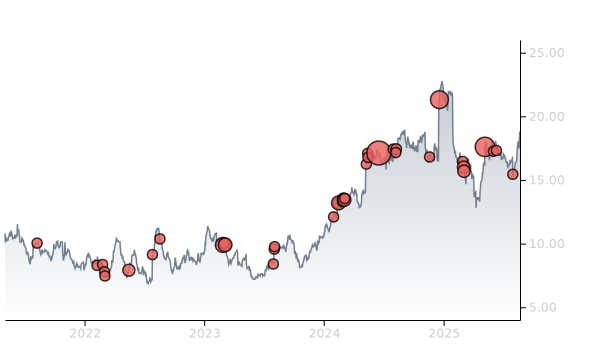
$TEVA insiders have traded $TEVA stock on the open market 30 times in the past 6 months. Of those trades, 0 have been purchases and 30 have been sales.
Here’s a breakdown of recent trading of $TEVA stock by insiders over the last 6 months:
- RICHARD D FRANCIS (President and CEO) has made 0 purchases and 4 sales selling 486,353 shares for an estimated $15,726,934.
- ELIYAHU SHARON KALIF (EVP, Chief Financial Officer) sold 345,810 shares for an estimated $11,634,708
- RICHARD DANIELL (EVP, Europe Commercial) has made 0 purchases and 7 sales selling 353,093 shares for an estimated $11,016,289.
- MARK SABAG (See "Remarks") has made 0 purchases and 3 sales selling 278,994 shares for an estimated $8,102,570.
- ERIC A HUGHES (See "Remarks") has made 0 purchases and 4 sales selling 101,572 shares for an estimated $3,281,447.
- ROBERTO MIGNONE sold 77,400 shares for an estimated $2,340,645
- EVAN LIPPMAN (EVP, Business Development) has made 0 purchases and 2 sales selling 41,658 shares for an estimated $1,482,366.
- MATTHEW SHIELDS (EVP, Global Operations) has made 0 purchases and 2 sales selling 33,490 shares for an estimated $1,080,034.
- CHRISTINE FOX (EVP, U.S. Commercial) has made 0 purchases and 2 sales selling 17,022 shares for an estimated $546,302.
- PLACID JOVER (See "Remarks") sold 14,150 shares for an estimated $448,107
- AMIR WEISS (Chief Accounting Officer) sold 12,300 shares for an estimated $371,504
- BRIAN SAVAGE (Interim Chief Legal Officer) has made 0 purchases and 2 sales selling 2,401 shares for an estimated $76,916.
To track insider transactions, check out Quiver Quantitative's insider trading dashboard. You can access data on insider stock transactions through the Quiver Quantitative API insider transaction endpoint.
$TEVA Hedge Fund Activity
We have seen 322 institutional investors add shares of $TEVA stock to their portfolio, and 291 decrease their positions in their most recent quarter.
Here are some of the largest recent moves:
- NORGES BANK added 33,318,265 shares (+1786.8%) to their portfolio in Q4 2025, for an estimated $1,039,863,050
- WCM INVESTMENT MANAGEMENT, LLC added 26,813,522 shares (+191.4%) to their portfolio in Q1 2026, for an estimated $807,623,282
- GLENVIEW CAPITAL MANAGEMENT, LLC removed 10,032,460 shares (-60.1%) from their portfolio in Q1 2026, for an estimated $302,177,695
- SLATE PATH CAPITAL LP removed 7,927,998 shares (-100.0%) from their portfolio in Q4 2025, for an estimated $247,432,817
- BLACKROCK, INC. added 6,833,776 shares (+11.7%) to their portfolio in Q1 2026, for an estimated $205,833,333
- CAPITAL WORLD INVESTORS added 6,472,554 shares (+274.1%) to their portfolio in Q1 2026, for an estimated $194,953,326
- RUBRIC CAPITAL MANAGEMENT LP removed 6,105,510 shares (-28.6%) from their portfolio in Q1 2026, for an estimated $183,897,961
To track hedge funds' stock portfolios, check out Quiver Quantitative's institutional holdings dashboard. You can access data on hedge funds moves and 13F filings through the Quiver Quantitative API 13F endpoint.
$TEVA Analyst Ratings
Wall Street analysts have issued reports on $TEVA in the last several months. We have seen 6 firms issue buy ratings on the stock, and 0 firms issue sell ratings.
Here are some recent analyst ratings:
- Truist Securities issued a "Buy" rating on 04/30/2026
- Barclays issued a "Overweight" rating on 01/30/2026
- Jefferies issued a "Buy" rating on 01/06/2026
- Piper Sandler issued a "Overweight" rating on 12/22/2025
- Goldman Sachs issued a "Buy" rating on 12/19/2025
- JP Morgan issued a "Overweight" rating on 12/16/2025
To track analyst ratings and price targets for $TEVA, check out Quiver Quantitative's $TEVA forecast page.
$TEVA Price Targets
Multiple analysts have issued price targets for $TEVA recently. We have seen 9 analysts offer price targets for $TEVA in the last 6 months, with a median target of $42.0.
Here are some recent targets:
- Glen Santangelo from Barclays set a target price of $40.0 on 05/06/2026
- Les Sulewski from Truist Securities set a target price of $45.0 on 04/30/2026
- David Amsellem from Piper Sandler set a target price of $42.0 on 04/30/2026
- Ashwani Verma from UBS set a target price of $42.0 on 04/30/2026
- Chris Schott from JP Morgan set a target price of $40.0 on 04/30/2026
- Jason Gerberry from B of A Securities set a target price of $42.0 on 04/09/2026
- Matt Dellatorre from Goldman Sachs set a target price of $45.0 on 02/09/2026
Full Release
- New real-world survey data reveal the daily impact of Huntington’s disease (HD) chorea, with over 68% of patients reporting interference with social life or emotional wellbeing 1 and up to 83% of caregivers noting impact on their own daily lives. 2
- Following treatment with AUSTEDO or AUSTEDO XR, most patients (60-71%) reported improvement across multiple quality of life domains as a result of their improved movements. 1 As a result of the patient’s reduced chorea impact, most caregivers reported less impact to their daily lives. 2
-
These real-world findings reinforce Teva's commitment to advancing innovative treatment options that improve the lives of individuals living with HD chorea and their caregivers.
PARSIPPANY, N.J. and TEL AVIV, Israel, June 05, 2026 (GLOBE NEWSWIRE) -- Teva Pharmaceuticals, a U.S. affiliate of Teva Pharmaceutical Industries Ltd. (NYSE and TASE: TEVA), today announced new data from the first and only real-world, decentralized study evaluating the patient- and caregiver-reported quality of life impacts of Huntington’s disease (HD) chorea 3 and the effect of AUSTEDO ® or AUSTEDO XR ® on symptom management. The findings demonstrate that treating chorea with AUSTEDO or AUSTEDO XR led to symptom improvement and, as a result, showed improvements across multiple quality of life measures. 1 , 2 The data were presented at the Advanced Therapeutics in Movement & Related Disorders ® Congress, held June 4 – 8, 2026, in Washington, DC.
“What we are seeing reinforced from these real-world data is how deeply Huntington’s disease chorea affects patients – physically, emotionally and in their ability to function day-to-day – and the strain it can place on their care partners,” said Eric Hughes, MD, PhD, Executive Vice President, Global R&D and Chief Medical Officer at Teva. “That’s why our patient-centric approach is fundamental to our work at Teva, and why we are proud to see AUSTEDO and AUSTEDO XR delivering such meaningful improvement for patients and making a real difference in the lives of those impacted.”
Self-reported HD chorea patient participants (≥18 years) in the United States completed a non-interventional, online survey through the myHDstory ® platform, which included questions regarding chorea impact on quality of life, severity, current treatment and self-defined goals for management. Participants taking AUSTEDO or AUSTEDO XR completed additional questions evaluating perceived changes in burden since treatment initiation, including the Patient Global Impression of Change (PGIC) scale. Caregivers (≥18 years) of individuals with HD chorea also completed an online survey, reporting on how their care recipient’s chorea affected their own daily functioning across multiple quality of life domains.
Prior to treatment survey findings revealed:
- Patients reported self-defined aspirational goals that they would like to improve with HD chorea treatment focused on their daily activities and social life. Caregivers also reported goals focused on their own wellbeing.
-
Across the real-world survey population, patients reported HD chorea often interfered with social life (71-84%), emotional wellbeing (68-77%), daily activities (70-78%) and vocational/recreational life (67-82%).
1
Caregivers also reported substantial impact across their own social functioning (73–84%), emotional wellbeing (71–84%), daily activities (81–83%) and vocational/recreational life (76-83%) due to their caregiving responsibilities.
2
As a result of reduced HD chorea movements in patients treated with AUSTEDO or AUSTEDO XR, the survey findings revealed:
- 74% of patients reported improvements in their chorea movements since initiating treatment, measured by the PGIC scale. 1
- As a result of movement reduction, over 85% of surveyed patients reported improvements in goals related to daily activities, such as dressing, walking and eating, and goals related to their social lives, such as going out with friends and family. 1
-
77% of caregivers of patients reported improvements in goals related to their social life, such as going out on their own and emotional wellbeing, including reduced guilt, stress and emotional burden.
2
“Huntington’s disease chorea extends beyond its physical symptoms, disrupting patients’ emotional wellbeing, social functioning and sense of self, while also placing immense strain on caregivers,” said Daniel Claassen, MD, MS, Professor of Neurology at Vanderbilt University Medical Center, principal investigator of the study and CEO, Huntington’s Study Group. “These real-world findings demonstrate the importance of effective chorea management to aid in preserving independence longer and alleviating those impacts for both patients and caregivers.”
The study presented, executed in collaboration with the Huntington Study Group, is the only real-world study assessing the impact of HD chorea on patients’ and caregivers’ quality of life to date. 3
About Chorea Associated with Huntington’s Disease (HD)
Huntington’s disease (HD) is a fatal neurodegenerative disease characterized by uncoordinated and uncontrollable movements, cognitive deterioration and behavioral and/or psychological problems. Chorea – involuntary, random and sudden, twisting and/or writhing movements – is one of the most striking physical manifestations of Huntington’s disease and occurs in approximately 90% of patients. Chorea can have a significant impact on daily activities and progressively limit peoples’ lives.
4
,
5
About AUSTEDO XR Extended-Release Tablets and AUSTEDO Tablets
AUSTEDO XR and AUSTEDO are the first vesicular monoamine transporter 2 (VMAT2) inhibitors approved by the U.S. Food and Drug Administration in adults for the treatment of tardive dyskinesia and for the treatment of chorea associated with Huntington’s disease. Safety and effectiveness in pediatric patients have not been established. AUSTEDO XR is the once-daily formulation of AUSTEDO.
INDICATIONS AND USAGE
AUSTEDO XR (deutetrabenazine) extended-release tablets and AUSTEDO (deutetrabenazine) tablets are indicated in adults for the treatment of chorea associated with Huntington’s disease and for the treatment of tardive dyskinesia.
IMPORTANT SAFETY INFORMATION
Depression and Suicidality in Patients with Huntington’s Disease: AUSTEDO XR and AUSTEDO can increase the risk of depression and suicidal thoughts and behavior (suicidality) in patients with Huntington’s disease. Balance the risks of depression and suicidality with the clinical need for treatment of chorea . Closely monitor patients for the emergence or worsening of depression, suicidality, or unusual changes in behavior. Inform patients, their caregivers, and families of the risk of depression and suicidality and instruct them to report behaviors of concern promptly to the treating physician. Exercise caution when treating patients with a history of depression or prior suicide attempts or ideation. AUSTEDO XR and AUSTEDO are contraindicated in patients who are suicidal, and in patients with untreated or inadequately treated depression.
Contraindications: AUSTEDO XR and AUSTEDO are contraindicated in patients with Huntington’s disease who are suicidal, or have untreated or inadequately treated depression. AUSTEDO XR and AUSTEDO are also contraindicated in: patients with hepatic impairment; patients taking reserpine or within 20 days of discontinuing reserpine; patients taking monoamine oxidase inhibitors (MAOIs), or within 14 days of discontinuing MAOI therapy; and patients taking tetrabenazine or valbenazine.
Clinical Worsening and Adverse Events in Patients with Huntington’s Disease: AUSTEDO XR and AUSTEDO may cause a worsening in mood, cognition, rigidity, and functional capacity . Prescribers should periodically re-evaluate the need for AUSTEDO XR or AUSTEDO in their patients by assessing the effect on chorea and possible adverse effects.
QTc Prolongation: AUSTEDO XR and AUSTEDO may prolong the QT interval, but the degree of QT prolongation is not clinically significant when AUSTEDO XR or AUSTEDO is administered within the recommended dosage range. AUSTEDO XR and AUSTEDO should be avoided in patients with congenital long QT syndrome and in patients with a history of cardiac arrhythmias.
Neuroleptic Malignant Syndrome (NMS), a potentially fatal symptom complex reported in association with drugs that reduce dopaminergic transmission, has been observed in patients receiving tetrabenazine. The risk may be increased by concomitant use of dopamine antagonists or antipsychotics. The management of NMS should include immediate discontinuation of AUSTEDO XR and AUSTEDO; intensive symptomatic treatment and medical monitoring; and treatment of any concomitant serious medical problems.
Akathisia, Agitation, and Restlessness: AUSTEDO XR and AUSTEDO may increase the risk of akathisia, agitation, and restlessness. The risk of akathisia may be increased by concomitant use of dopamine antagonists or antipsychotics. If a patient develops akathisia, the AUSTEDO XR or AUSTEDO dose should be reduced; some patients may require discontinuation of therapy.
Parkinsonism: AUSTEDO XR and AUSTEDO may cause parkinsonism in patients with Huntington’s disease or tardive dyskinesia. Parkinsonism has also been observed with other VMAT2 inhibitors. The risk of parkinsonism may be increased by concomitant use of dopamine antagonists or antipsychotics. If a patient develops parkinsonism, the AUSTEDO XR or AUSTEDO dose should be reduced; some patients may require discontinuation of therapy.
Sedation and Somnolence: Sedation is a common dose-limiting adverse reaction of AUSTEDO XR and AUSTEDO. Patients should not perform activities requiring mental alertness, such as operating a motor vehicle or hazardous machinery, until they are on a maintenance dose of AUSTEDO XR or AUSTEDO and know how the drug affects them. Concomitant use of alcohol or other sedating drugs may have additive effects and worsen sedation and somnolence.
Hyperprolactinemia: Tetrabenazine elevates serum prolactin concentrations in humans. If there is a clinical suspicion of symptomatic hyperprolactinemia, appropriate laboratory testing should be done and consideration should be given to discontinuation of AUSTEDO XR and AUSTEDO.
Binding to Melanin-Containing Tissues: Deutetrabenazine or its metabolites bind to melanin-containing tissues and could accumulate in these tissues over time. Prescribers should be aware of the possibility of long-term ophthalmologic effects .
Common Adverse Reactions : The most common adverse reactions for AUSTEDO (>8% and greater than placebo) in a controlled clinical study in patients with Huntington’s disease were somnolence, diarrhea, dry mouth, and fatigue. The most common adverse reactions for AUSTEDO (4% and greater than placebo) in controlled clinical studies in patients with tardive dyskinesia were nasopharyngitis and insomnia. Adverse reactions with AUSTEDO XR extended-release tablets are expected to be similar to AUSTEDO tablets.
Please see accompanying full Prescribing Information , including Boxed Warning .
About Teva
Teva Pharmaceutical Industries Ltd. (NYSE and TASE: TEVA) is transforming into a leading innovative biopharmaceutical company, enabled by a world-class generics business. For over 120 years, Teva’s commitment to bettering health has never wavered. From innovating in the fields of neuroscience and immunology to providing complex generic medicines, biosimilars and pharmacy brands worldwide, Teva is dedicated to addressing patients’ needs, now and in the future. At Teva, We Are All In For Better Health. To learn more about how, visit
www.tevapharm.com
.
Teva Cautionary Note Regarding Forward Looking Statements
This press release contains forward-looking statements within the meaning of the Private Securities Litigation Reform Act of 1995, which are based on management’s current beliefs and expectations and are subject to substantial risks and uncertainties, both known and unknown, that could cause our future results, performance or achievements to differ significantly from that expressed or implied by such forward-looking statements. You can identify these forward-looking statements by the use of words such as “should,” “expect,” “anticipate,” “estimate,” “target,” “may,” “intend,” “plan,” “believe” and other words and terms of similar meaning and expression in connection with any discussion of future operating or financial performance. Important factors that could cause or contribute to such differences include risks relating to: our ability to successfully develop and commercialize AUSTEDO and AUSTEDO XR for the treatment of chorea associated with Huntington’s disease; our ability to successfully compete in the marketplace, including our ability to develop and commercialize additional pharmaceutical products; our ability to successfully execute our Pivot to Growth strategy, including to expand our innovative and biosimilar medicines pipeline and profitably commercialize the innovative medicines and biosimilar portfolio, whether organically or through business development; and other factors discussed in our Quarterly Report on Form 10-Q for the first quarter of 2026 and in our Annual Report on Form 10-K for the year ended December 31, 2025, including in the sections captioned “Risk Factors” and “Forward-Looking Statements.” Forward-looking statements speak only as of the date on which they are made, and we assume no obligation to update or revise any forward-looking statements or other information contained herein, whether as a result of new information, future events or otherwise. You are cautioned not to put undue reliance on these forward-looking statements.
References:
- Claassen D, Dalrymple WA, Finkbeiner S, Klakotskaia D, Konings M, & Gandhi P, (2026, June 4–8). Patient-reported burden of Huntington disease chorea and effect of deutetrabenazine on symptom management and quality of life: Results from a real-world, decentralized study [Poster presentation]. Advanced Therapeutics in Movement & Related Disorders ® Congress, Washington, DC, United States.
- Anderson KE, Moore HP, Finkbeiner S, Klakotskaia D, Konings M, & Gandhi P, (2026, June 4–8). A real-world, decentralized study of caregiver-reported burden of Huntington disease chorea and effect of deutetrabenazine on symptom management and quality of life [Poster presentation]. Advanced Therapeutics in Movement & Related Disorders ® Congress, Washington, DC, United States.
- Data on file. Parsippany, NJ: Teva Neuroscience, Inc.
- Huntington’s Disease. National Institute of Neurological Disorders and Stroke. https://www.ninds.nih.gov/health-information/disorders/huntingtons-disease#toc-what-is-huntington-s-disease-.
-
Thorley EM, Iyer RG, Wicks P, Curran C, Gandhi SK, Abler V, Anderson KE, Carlozzi NE. Understanding How Chorea Affects Health-Related Quality of Life in Huntington Disease: An Online Survey of Patients and Caregivers in the United States. Patient. 2018;11(5):547-559. doi: 10.1007/s40271-018-0312-x.
|
Teva Media
Inquiries |
[email protected] |
|
Teva Investor
Relations Inquiries |
[email protected] |