

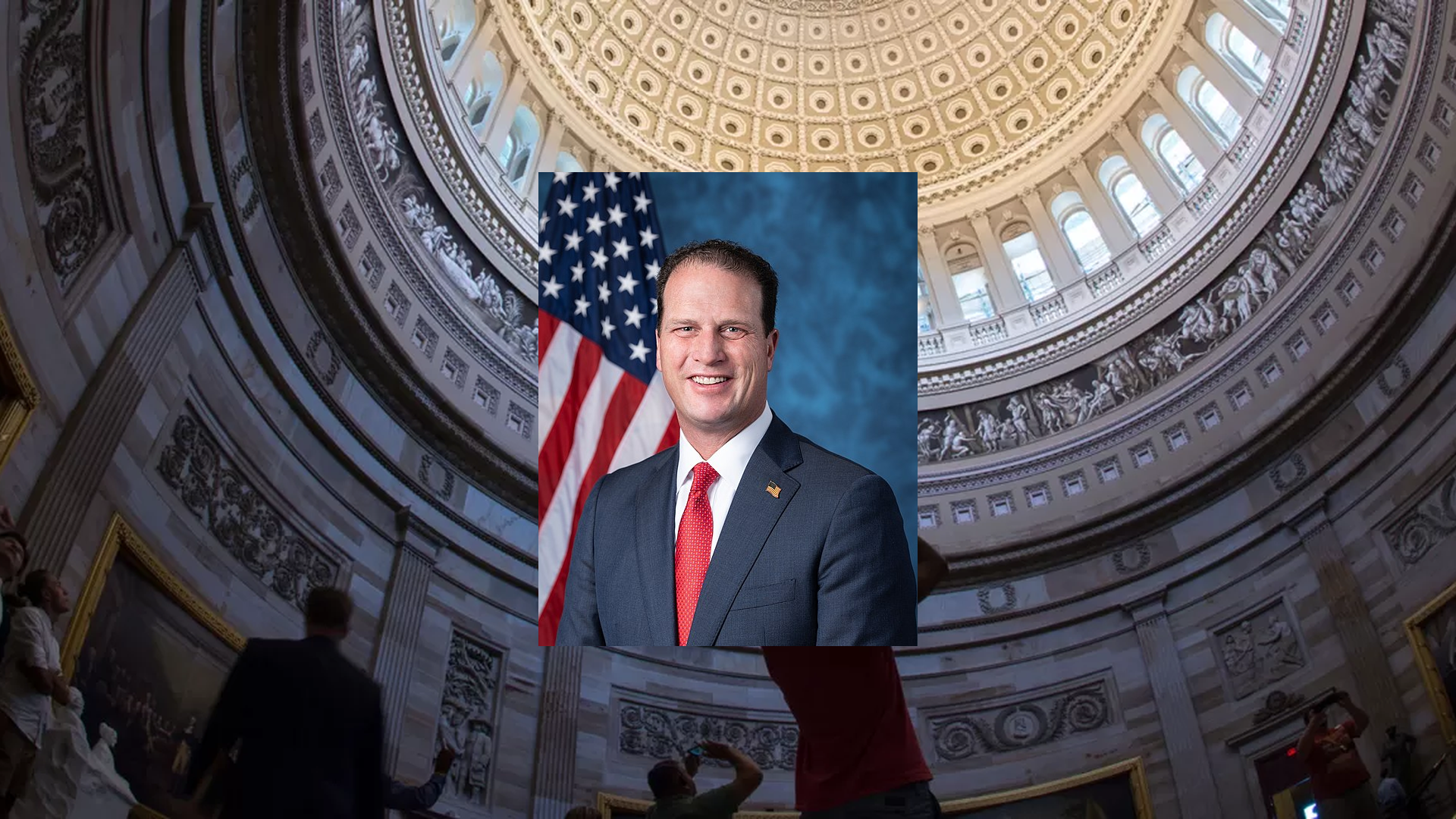
We have received text from H.R. 10197: Biosecurity Modernization and Innovation Act. This bill was received on 2026-08-31, and currently has 1 cosponsor.
Here is a short summary of the bill:
This bill would create a federal system for screening sales of synthetic DNA and related nucleic-acid-making equipment in interstate and foreign commerce. Its goal is to make it harder for people to obtain DNA sequences that could be used in dangerous ways, while still allowing legitimate research and commercial activity.
What covered businesses would have to do
The bill applies to “covered entities,” which include companies that synthesize and sell nucleic acids, and companies that make, sell, distribute, or resell equipment for synthesizing nucleic acids, including benchtop DNA synthesizers. It would not apply to products used only inside a commercial company for that company’s own internal use.
These covered entities would need to set up reasonable administrative and technical controls to do the following for nucleic acid sequences sold in commerce:
- verify the identity of buyers or prospective buyers;
- determine why the buyer wants the sequence;
- check whether the sequence is on a federal list of “covered sequences” that raise security concerns;
- use risk-based rules to refuse sales when appropriate and keep records of refusals;
- notify the Secretary of Commerce if they reasonably believe a buyer may use a sequence in a way that poses a high risk to U.S. national security or the safety of people in the United States;
- have their compliance checked regularly by an independent review process, such as audits or testing;
- keep records showing compliance for at least five years, when practicable.
Federal guidance and oversight
The Secretary of Commerce would have to issue guidance within 180 days explaining how covered entities can meet these requirements, how independent compliance checks can work, and what counts as timely reporting of suspicious activity. Within one year, the Secretary would also have to issue enforcement guidance describing enforcement priorities.
The bill would set up a process for the Commerce Department to receive reports from covered entities, coordinate with them to identify buyers who try to split orders across multiple companies, and provide direct examination at a company’s request for compliance reviews.
How “covered sequences” would be identified
The Secretary would have to determine which nucleic acid sequences count as “covered sequences,” publish a list for covered entities, and provide explanations for those determinations. The list could be updated over time, including when new sequences are identified.
The bill also allows members of the public and covered entities to recommend adding, removing, or changing sequences on the list. Submitted information would generally be treated as confidential commercial information, and people submitting information could request that their identity not be disclosed.
Before making or changing the list available, the Secretary would have to notify the relevant congressional committees at least five days in advance.
Enforcement
The Commerce Secretary would have authority to inspect records, compel information, issue subpoenas, and conduct investigations inside and outside the United States. The Secretary could also bring civil actions against covered entities that violate the screening requirements. The maximum penalty would be up to $750,000 per violation, subject to annual inflation adjustments. Before suing, the Secretary would have to give written notice and allow 30 days to cure the alleged violation.
The Secretary could not sue solely because a company followed the requirements in a way that differed from the department’s guidance.
Federal and state law
The bill would replace any earlier federal voluntary screening guidance with these new mandatory requirements. It would also broadly block states and local governments from enforcing their own rules covering the same subject matter, though it would preserve state laws involving contract, tort, product liability, consumer protection, data privacy, data security, generally applicable public health rules, and state procurement or use of nucleic acids.
Other reporting and review requirements
The Secretary would have to publish periodic reports assessing:
- the competitiveness of the U.S. biotechnology sector, including nucleic acid manufacturing;
- the ability of the government and covered entities to reduce national security risks from covered sequences.
Those reports would also include possible legislative recommendations. The bill requires consultation with stakeholders, including academia and private industry, and includes public comment procedures.
Timing
The main screening requirement would take effect one year after enactment. Several guidance, list-making, and reporting deadlines would begin earlier, generally within 180 days to two years after enactment.
Relevant Companies
- TMO — Thermo Fisher Scientific: could be affected through its businesses involving DNA synthesis, life sciences tools, and related equipment.
- ILMN — Illumina: may be affected indirectly through the broader genomics and nucleic-acid ecosystem, including customers and partners subject to new screening requirements.
- DHR — Danaher: could be affected through life sciences and biotechnology businesses that sell tools used in nucleic acid workflows.
- SSYS — Stratasys: may be affected only if any of its relevant bio-related or lab-adjacent technologies were implicated, though direct impact appears less likely than for DNA synthesis companies.
Representative August Pfluger Bill Proposals
Here are some bills which have recently been proposed by Representative August Pfluger:
- H.R.10197: To improve the security of nucleic acid synthesis in interstate and foreign commerce, and for other purposes.
- H.R.9970: RESCUE Act of 2026
- H.R.9616: EMRTAI Authorization Act of 2026
- H.R.9397: Premium Transparency Act
- H.R.9106: Robert Lodge Medal of Honor Act
- H.R.8990: Protect Domestic Oil and Gas Small Business Act of 2026
You can track bills proposed by Representative August Pfluger on Quiver Quantitative's politician page for Pfluger.
Representative August Pfluger Net Worth
Quiver Quantitative estimates that Representative August Pfluger is worth $1.9M, as of September 1st, 2026. This is the 272nd highest net worth in Congress, per our live estimates.
Pfluger has approximately $410.2K invested in publicly traded assets which Quiver is able to track live.
You can track Representative August Pfluger's net worth on Quiver Quantitative's politician page for Pfluger.
Representative August Pfluger Stock Trading
We have data on up to $755.0K of trades from Representative August Pfluger, which we parsed from STOCK Act filings. Some of the largest trades include:
- A March 13th, 2026 purchase of up to $50K of $KRP. The stock has risen 1.49% since then.
- A March 13th, 2026 purchase of up to $50K of $EPD. The stock has risen 4.95% since then.
- A March 13th, 2026 purchase of up to $50K of $VNOM. The stock has risen 1.22% since then.
- A March 13th, 2026 purchase of up to $50K of $BRK.B. The stock has risen 2.86% since then.
- A April 12th, 2022 sale of up to $50K of $MSFT. The stock has risen 79.85% since then.
You can track Representative August Pfluger's stock trading on Quiver Quantitative's politician page for Pfluger.
2026 Texas's 11th Congressional District Election
There has been approximately $3,933,899 of spending in Texas's 11th congressional district elections over the last two years, per our estimates.
The rating for this race is currently "Solid R".
You can track this election on our matchup page for the 2026 Texas's 11th congressional district election.
This article is not financial advice. See Quiver Quantitative's disclaimers for more information.