We have received text from S. 4742: Artificial Intelligence Data Authorization and Transparency Act. This bill was received on 2026-06-10, and currently has 2 cosponsors.
Here is a short summary of the bill:
This bill would require the federal government to collect and publish more detailed data on how artificial intelligence is affecting jobs, hiring, wages, and work patterns.
What it would do
- It would direct the Secretary of Labor to add a monthly survey of employers covering job openings, hiring, layoffs, quits, and other labor market turnover.
- This employer survey would be organized by industry, occupation, and geographic area , and it would be designed to help measure changes in labor demand tied to technology, including AI and automation.
- It would also require a recurring household survey to track how people spend their time across work, caregiving, household tasks, education, and other activities.
- That household survey would include questions to help evaluate how digital tools and new technologies are used at work.
- The bill would create a long-term survey that follows individuals over time to study employment, earnings, job changes, education, training, and related outcomes.
- Every 10 years, new groups of survey participants would be added so the data stays current.
- The Census Bureau would be required to add AI-related questions and analysis to the Business Trends and Outlook Survey , including questions about AI adoption and effects on hiring, separations, job openings, demand for workers, and business operations.
- The Labor Department and Commerce Department would have to publish an annual report on AI’s impact on the workforce, using Census and Labor Department data along with other federal data where needed.
- That report would examine effects on hiring, job openings, occupations, earnings, job mobility, training, and skill needs.
- The AI-related reporting authority in the bill would expire after 10 years .
- The bill would also authorize whatever federal funding is needed to carry out these activities.
In plain terms
The bill does not directly regulate AI use by companies or restrict specific AI systems. Instead, it בעיקר focuses on better measuring how AI is affecting workers and employers, so policymakers and the public can see changes in the labor market more clearly over time.
Relevant Companies
None found.
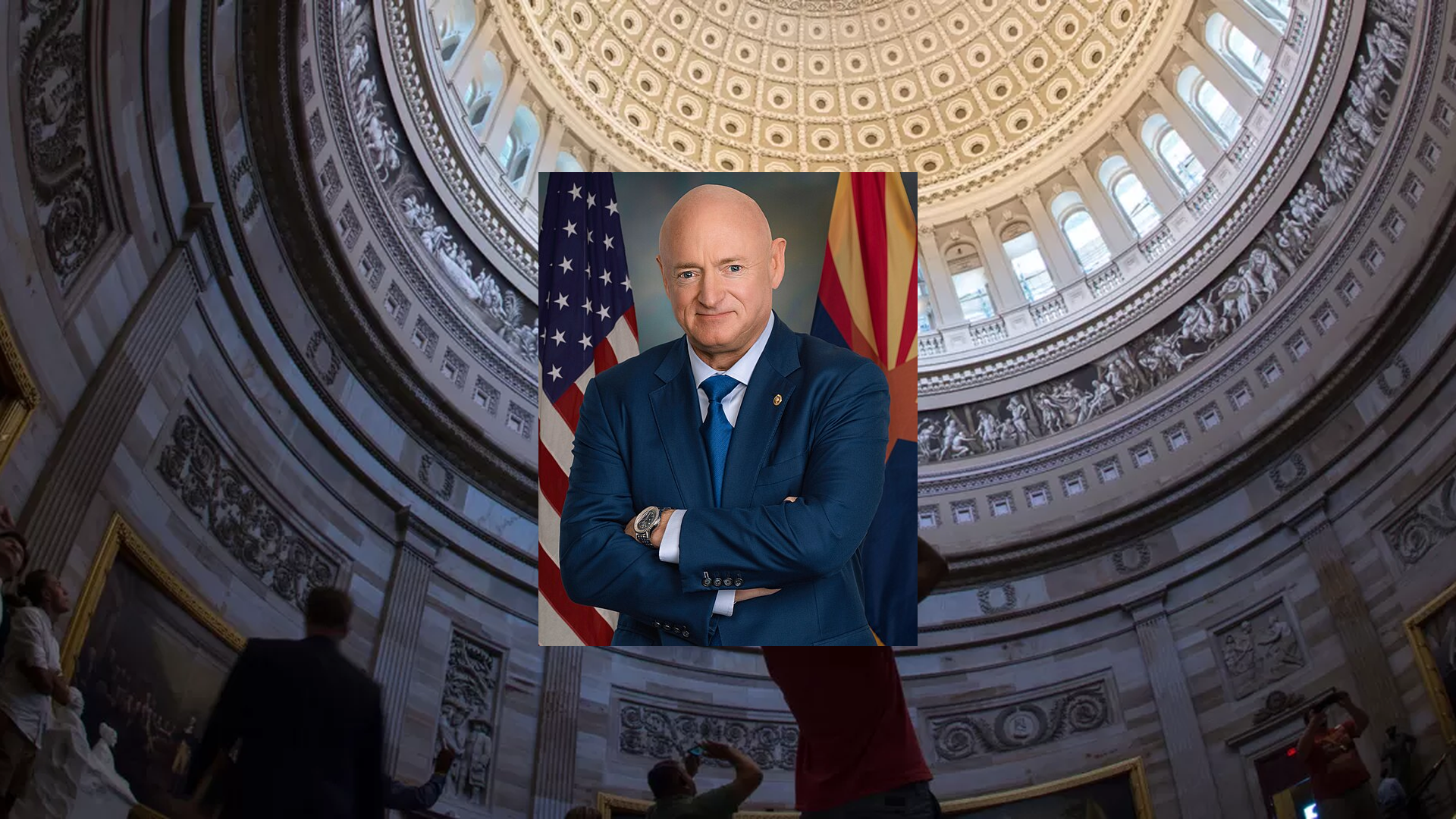
Senator Mark Kelly Bill Proposals
Here are some bills which have recently been proposed by Senator Mark Kelly:
- S.4810: A bill to establish a grant program for education related to semiconductor manufacturing and related industries.
- S.4742: AI DATA Act
- S.4683: WARP Act of 2026
- S.4682: Ultimate Human Responsibility in Defense Systems Act of 2026
- S.4478: Federal Worker Credit Protection Act of 2026
- S.4297: Keep Public Funds in Public Schools Act
You can track bills proposed by Senator Mark Kelly on Quiver Quantitative's politician page for Kelly.
Senator Mark Kelly Net Worth
Quiver Quantitative estimates that Senator Mark Kelly is worth $20.4M, as of June 19th, 2026. This is the 63rd highest net worth in Congress, per our live estimates.
Kelly has approximately $0 invested in publicly traded assets which Quiver is able to track live.
You can track Senator Mark Kelly's net worth on Quiver Quantitative's politician page for Kelly.
Senator Mark Kelly Stock Trading
We have data on up to $15.0K of trades from Senator Mark Kelly, which we parsed from STOCK Act filings.
You can track Senator Mark Kelly's stock trading on Quiver Quantitative's politician page for Kelly.
2028 Arizona US Senate Election
There has been approximately $257,552,418 of spending in Arizona US Senate elections over the last two years, per our estimates.
Approximately $147,112,686 of this has been from outside spending by PACs and Super PACs. Some of the groups who are spending money in this race include:
- WINSENATE ($52,307,901)
- WIN IT BACK PAC ($30,967,260)
- PROTECT PROGRESS ($20,079,310)
- DSCC ($10,152,804)
- ESAFUND ($5,643,031)
You can track this election on our matchup page for the 2028 Arizona US Senate election.
This article is not financial advice. See Quiver Quantitative's disclaimers for more information.