


MannKind announces new data on Afrezza and FUROSCIX at ADA 2026, emphasizing pediatric safety and treatment satisfaction in diabetes management.
Quiver AI Summary
MannKind Corporation announced new clinical data on its inhaled insulin product, Afrezza, which was recently approved by the FDA for use in children and adolescents aged 6 and older with type 1 and type 2 diabetes. This data, presented at the American Diabetes Association’s 2026 Scientific Sessions, highlights Afrezza's pediatric safety, glycemic control, and treatment satisfaction, showing that children using inhaled insulin reported higher satisfaction compared to those using rapid-acting analogs while achieving similar glycemic outcomes. Additional studies explored the use of Afrezza with automated insulin delivery systems and its efficacy in gestational diabetes, supporting its potential as a new treatment option. MannKind emphasized its commitment to advancing diabetes care and expanding personalized treatment options through ongoing research and innovation.
Potential Positives
- Builds on recent FDA approval of Afrezza for use in children and adolescents aged 6 and older, expanding the market for the product.
- New data presented reinforces the safety, efficacy, and treatment satisfaction of inhaled insulin compared to rapid-acting insulin analogs in pediatric patients.
- Findings suggest potential benefits for the use of inhaled insulin in gestational diabetes, opening opportunities for additional market use.
- The press release highlights the company’s commitment to advancing patient-centric treatment options, aligning with health care trends towards individualized care.
Potential Negatives
- Although Afrezza has received FDA approval for use in children and adolescents, the company faces ongoing scrutiny regarding the potential serious side effects of the drug, particularly lung-related issues such as bronchospasms.
- Data from trials indicate a higher incidence of lung cancer observed in patients using Afrezza compared to other diabetes medications, raising concerns about long-term safety.
- The press release highlights that Afrezza must be used with basal insulin in type 1 diabetes, which may limit its appeal and complicate treatment plans for patients.
FAQ
What is Afrezza and its recent FDA approval?
Afrezza is an inhaled insulin product recently approved by the FDA for children aged 6 and older to manage diabetes.
What were key findings presented at the ADA 2026 conference?
New data highlighted pediatric safety, glycemic control, and treatment satisfaction for Afrezza among children and adolescents.
How does inhaled insulin compare to rapid-acting analogs?
Inhaled insulin demonstrated similar glycemic outcomes and improved treatment satisfaction compared to rapid-acting analogs in youth.
What are the benefits of inhaled insulin for gestational diabetes?
Inhaled insulin showed comparable efficacy to rapid-acting analogs and fewer hypoglycemic events in individuals with gestational diabetes.
How does Afrezza's pharmacodynamic effect differ from insulin lispro?
Afrezza provides a quicker pharmacodynamic effect, achieving over 50% within 60 minutes compared to 10% for insulin lispro.
Disclaimer: This is an AI-generated summary of a press release distributed by GlobeNewswire. The model used to summarize this release may make mistakes. See the full release here.
$MNKD Insider Trading Activity
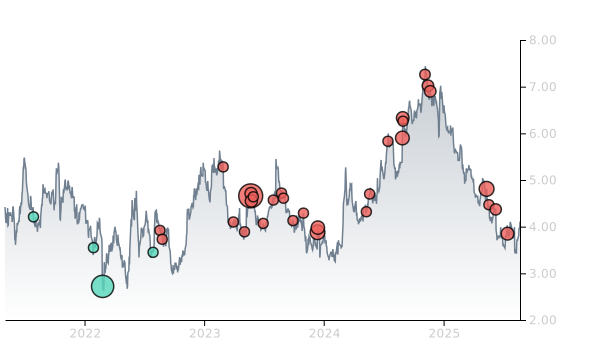
$MNKD insiders have traded $MNKD stock on the open market 7 times in the past 6 months. Of those trades, 1 have been purchases and 6 have been sales.
Here’s a breakdown of recent trading of $MNKD stock by insiders over the last 6 months:
- MICHAEL CASTAGNA (Chief Executive Officer) has made 1 purchase buying 100,000 shares for an estimated $259,000 and 3 sales selling 107,920 shares for an estimated $648,178.
- STUART A TROSS (Chief People & Workpl Officer) sold 47,006 shares for an estimated $297,547
- STEVEN B. BINDER sold 16,940 shares for an estimated $55,732
- DAVID THOMSON (EVP Genl Counsel & Secretary) sold 3,033 shares for an estimated $9,978
To track insider transactions, check out Quiver Quantitative's insider trading dashboard. You can access data on insider stock transactions through the Quiver Quantitative API insider transaction endpoint.
$MNKD Revenue
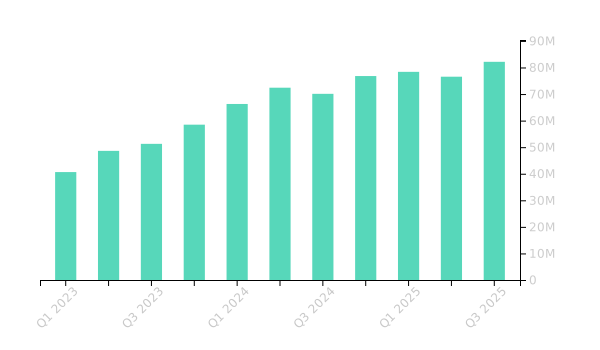
$MNKD had revenues of $90.2M in Q1 2026. This is an increase of 15.08% from the same period in the prior year.
You can track MNKD financials on Quiver Quantitative's MNKD stock page.
You can access data on MNKD stock through the Quiver Quantitative API.
$MNKD Hedge Fund Activity
We have seen 127 institutional investors add shares of $MNKD stock to their portfolio, and 131 decrease their positions in their most recent quarter.
Here are some of the largest recent moves:
- MILLENNIUM MANAGEMENT LLC added 5,878,182 shares (+1146.4%) to their portfolio in Q1 2026, for an estimated $14,401,545
- NITORUM CAPITAL, L.P. removed 5,325,823 shares (-100.0%) from their portfolio in Q1 2026, for an estimated $13,048,266
- STATE STREET CORP added 4,060,214 shares (+27.8%) to their portfolio in Q1 2026, for an estimated $9,947,524
- RUBRIC CAPITAL MANAGEMENT LP removed 3,856,082 shares (-51.6%) from their portfolio in Q1 2026, for an estimated $9,447,400
- UBS GROUP AG added 3,152,333 shares (+61.8%) to their portfolio in Q1 2026, for an estimated $7,723,215
- CITADEL ADVISORS LLC removed 2,381,524 shares (-66.7%) from their portfolio in Q1 2026, for an estimated $5,834,733
- AVORO CAPITAL ADVISORS LLC removed 2,244,444 shares (-50.5%) from their portfolio in Q1 2026, for an estimated $5,498,887
To track hedge funds' stock portfolios, check out Quiver Quantitative's institutional holdings dashboard. You can access data on hedge funds moves and 13F filings through the Quiver Quantitative API 13F endpoint.
$MNKD Price Targets
Multiple analysts have issued price targets for $MNKD recently. We have seen 5 analysts offer price targets for $MNKD in the last 6 months, with a median target of $8.0.
Here are some recent targets:
- Brandon Folkes from HC Wainwright & Co. set a target price of $10.0 on 05/07/2026
- Anthony Petrone from Mizuho set a target price of $7.0 on 05/07/2026
- Benjamin Burnett from Wells Fargo set a target price of $10.0 on 05/07/2026
- Douglas Miehm from RBC Capital set a target price of $4.75 on 05/07/2026
- Yun Zhong from Wedbush set a target price of $8.0 on 03/05/2026
Full Release
- Builds on recent FDA approval (May 29, 2026) of Afrezza for use in children and adolescents aged 6 and older living with type 1 and type 2 diabetes
- New data and real-world findings further emphasize pediatric safety, glycemic control and treatment satisfaction
- Exploratory analysis of inhaled insulin used with AID systems provides insight on the impact of total daily d ose algorithms
- Data from randomized cross-over trial supports safety and efficacy of inhaled insulin as an alternative to RAA in gestational diabetes
DANBURY, Conn. and WESTLAKE VILLAGE, Calif., June 05, 2026 (GLOBE NEWSWIRE) -- MannKind Corporation (Nasdaq: MNKD), a biopharmaceutical company dedicated to transforming chronic disease care through innovative, patient-centric solutions for cardiometabolic and orphan lung diseases, today announced new clinical and real‑world data related to Afrezza ® (insulin human) Inhalation Powder and FUROSCIX ® (furosemide injection) that will be presented at the American Diabetes Association’s (ADA) 2026 Scientific Sessions, taking place June 5-8, 2026, in New Orleans, Louisiana.
“As we continue to advance care for people living with diabetes, and on the heels of the recent approval of Afrezza in children and adolescents aged 6 and older, the data presented at this year’s ADA meeting further reinforce its established safety and efficacy, while also highlighting benefits that extend beyond glycemic control and into patients’ daily lives,” said Dr. Kevin Kaiserman, Senior Vice President and Therapeutic Area Head-Diabetes for MannKind Corporation. “We are committed to expanding meaningful treatment options that can help people better manage their diabetes in a way that works for them, and the growing body of evidence for Afrezza supports a more individualized and patient-centered approach to care.”
Key presentations :
Participants Achieving HbA1c <8% in Youth Report Greater Treatment Satisfaction with Inhaled Technosphere Insulin vs. Rapid‑Acting Analogs
A post hoc analysis from the INHALE-1 study assessed treatment satisfaction among pediatric participants achieving HbA1c <8% at 26 weeks. Those treated with inhaled insulin reported statistically greater improvements in treatment satisfaction compared to RAA across both teens and parents, while achieving similar overall glycemic outcomes.
Efficacy and Safety of Inhaled Technosphere Insulin (TI) vs. Rapid-Acting Analog in Youth with HbA1c ≤9.5%: Subgroup Analysis from INHALE-1
A subgroup analysis from the INHALE-1 study evaluated efficacy and safety of inhaled insulin compared to rapid‑acting insulin analogs (RAA) in children and adolescents with diabetes with baseline HbA1c ≤9.5%. After 26 weeks, inhaled insulin achieved non-inferior mean HbA1c compared with RAA. Time in range (TIR) was comparable between treatment groups, and rates of adverse events were similar compared to adult data.
Inhaled Technosphere Insulin (TI) Compared with Rapid-Acting Analog Insulin (RAA) in Gestational Diabetes (GDM)
An interim analysis of standardized meal challenges compared safety and efficacy of inhaled insulin and RAA in individuals with GDM. Inhaled insulin demonstrated comparable efficacy, with nominally reduced postprandial glucose excursions and fewer hypoglycemic events compared to RAA. These early findings support further investigation of inhaled insulin as a potential alternative in this patient population.
Exploratory Evaluation of Technosphere Insulin with Automated Insulin Delivery: Impact of Total Daily Dose Algorithms
An exploratory analysis evaluated the use of inhaled insulin in combination with AID systems for prandial and correction dosing. Findings suggest that glycemic outcomes may vary depending on whether AID algorithms are dependent on total daily dose (TDD), with numerically greater A1C reductions observed in systems not reliant on TDD.
Inhaled Insulin Demonstrates Earlier Completion of Total Pharmacodynamic Effect Compared to Lispro
A new analysis of euglycemic clamp data comparing inhaled insulin to insulin lispro showed that inhaled insulin delivers a substantially greater proportion of its pharmacodynamic effect earlier with over 50% within 60 minutes versus 10% for lispro. These findings highlight that inhaled insulin’s activity occurs within the first two hours, due to its rapid onset and earlier completion of action, and supports the potential for earlier post-meal dosing decisions with reduced risk of insulin stacking.
Additional presentations
In addition to the above presentations, MannKind presented several analyses further characterizing inhaled insulin and FUROSCIX across clinical and real-world settings. These included:
- Dosing strategies and postprandial glucose control in adults with type 1 diabetes, suggested that inhaled insulin resulted in improved glucose excursions with higher doses when adjusted for body weight compared to RAA.
- The impact of the Inflation Reduction Act on access to Afrezza, with increased Medicare Part D utilization, was observed following implementation of the insulin cost cap.
- A real-world evidence study evaluated incident lung cancer risk among adults with type 2 diabetes, which demonstrated no increased incidence among inhaled insulin users compared with other insulin treatment cohorts.
- Research findings evaluated FUROSCIX in populations with comorbid conditions, specifically patients with diabetes who experience fluid overload due to heart failure, which found that treatment with FUROSCIX demonstrated lower rates of hospitalization as well as longer time to hospitalizations compared to the standard of care.
Together, these data underscore MannKind’s ongoing commitment to advancing the clinical understanding of inhaled insulin and strategies for supporting individualized diabetes management across pediatric and adult patient populations.
“These new data reflect the continued momentum of our innovation in diabetes care and the strength of our commitment to expanding treatment options for people aged 6 and older living with this condition,” said Michael Castagna, Chief Executive Officer of MannKind Corporation. “As we look ahead, we remain focused on advancing our pipeline, broadening access, and delivering therapies that better align with the real-world needs of patients.”
About Afrezza
Afrezza
®
(pronounced uh-frezz-uh) Inhalation Powder is the only ultra rapid-acting inhaled insulin approved by the U.S. Food and Drug Administration to improve glycemic control in children, adolescent, and adult patients with diabetes mellitus. Administered at the beginning of meals using a small, portable inhaler, Afrezza delivers insulin via MannKind’s proprietary Technosphere
®
technology, enabling ultra-rapid absorption through the lungs. Afrezza has a fast onset of action and a short duration, more closely mirroring the body’s natural insulin response to meals. Afrezza was first approved by the FDA in June 2014 to improve glycemic control in adult patients (age 18+) with diabetes mellitus, followed by an additional FDA approval for use in pediatric patients (age 6 and older) in May 2026.
Important Safety Information
What is the most important information I should know about AFREZZA?
AFREZZA can cause serious side effects, including:
-
Sudden lung problems (bronchospasms). In a study, some AFREZZA-treated patients with asthma, whose asthma medication was temporarily withheld, experienced sudden lung problems. Do not use AFREZZA if you have long-term (chronic) lung problems such as asthma or chronic obstructive pulmonary disease (COPD). Before starting AFREZZA, your healthcare provider will give you a breathing test to check how your lungs are working.
What is AFREZZA?
- AFREZZA is a man-made insulin that is breathed-in through your lungs (inhaled) and is used to control high blood sugar in adults and children 6 years of age and older, with diabetes mellitus.
- AFREZZA is not for use to treat diabetic ketoacidosis. AFREZZA must be used with basal insulin in people who have type 1 diabetes mellitus.
- It is not known if AFREZZA is safe and effective for use in people who smoke. AFREZZA is not for use in people who smoke or have recently stopped smoking (less than 6 months).
- It is not known if AFREZZA is safe and effective in children under 6 years of age.
Who should not use AFREZZA?
Do not use AFREZZA if you:
- Are having an episode of low blood sugar (hypoglycemia).
- Have chronic lung problems such as asthma or COPD.
-
Are allergic to regular human insulin or any of the ingredients in AFREZZA.
What should I tell my healthcare provider before using AFREZZA?
Before using AFREZZA, tell your healthcare provider about all your medical conditions, including if you:
- Have lung problems such as asthma or COPD
- Have or have had lung cancer
- Are using any inhaled medications
- Smoke or have recently stopped smoking
- Have kidney or liver problems
- Are pregnant, planning to become pregnant, or are breastfeeding. AFREZZA may harm your unborn or breastfeeding baby.
Tell your healthcare provider about all the medicines you take, including prescription and over-the-counter medicines, vitamins or herbal supplements.
Before you start using AFREZZA, talk to your healthcare provider about low blood sugar and how to manage it.
What should I avoid while using AFREZZA?
While using AFREZZA do not:
- Drive or operate heavy machinery, until you know how AFREZZA affects you
- Drink alcohol or use over-the-counter medicines that contain alcohol
-
Smoke
What are the possible side effects of AFREZZA?
AFREZZA may cause serious side effects that can lead to death, including:
See “What is the most important information I should know about AFREZZA?”
Low blood sugar (hypoglycemia). Signs and symptoms that may indicate low blood sugar include:
-
Dizziness or light-headedness, sweating, confusion, headache, blurred vision, slurred speech, shakiness, fast heartbeat, anxiety, irritability or mood change, hunger.
Decreased lung function. Your healthcare provider should check how your lungs are working before you start using AFREZZA, 6 months after you start using it, and yearly after that.
Lung cancer. In studies of AFREZZA in people with diabetes, lung cancer occurred in a few more people who were taking AFREZZA than in people who were taking other diabetes medications. There were too few cases to know if lung cancer was related to AFREZZA. If you have lung cancer, you and your healthcare provider should decide if you should use AFREZZA.
Diabetic ketoacidosis. Talk to your healthcare provider if you have an illness. Your AFREZZA dose or how often you check your blood sugar may need to be changed.
Severe allergic reaction (whole body reaction). Get medical help right away if you have any of these signs or symptoms of a severe allergic reaction:
-
A rash over your whole body, trouble breathing, a fast heartbeat, or sweating.
Low potassium in your blood (hypokalemia).
Heart failure. Taking certain diabetes pills called thiazolidinediones or “TZDs” with AFREZZA may cause heart failure in some people. This can happen even if you have never had heart failure or heart problems before. If you already have heart failure it may get worse while you take TZDs with AFREZZA. Your healthcare provider should monitor you closely while you are taking TZDs with AFREZZA. Tell your healthcare provider if you have any new or worse symptoms of heart failure including:
-
Shortness of breath, swelling of your ankles or feet, sudden weight gain.
Treatment with TZDs and AFREZZA may need to be changed or stopped by your healthcare provider if you have new or worse heart failure.
Get emergency medical help if you have:
-
Trouble breathing, shortness of breath, fast heartbeat, swelling of your face, tongue, or throat, sweating, extreme drowsiness, dizziness, confusion.
The most common side effects of AFREZZA include:
-
Low blood sugar (hypoglycemia), cough, sore throat.
These are not all the possible side effects of AFREZZA. Call your doctor for medical advice about side effects.
You are encouraged to report negative side effects of prescription drugs to the FDA. Visit www.fda.gov/medwatch , or call 1-800-FDA-1088 (1-800-332-1088).
Please See Full Prescribing Information, including BOXED WARNING, Medication Guide and Instructions for Use at Afrezza.com/safety .
About FUROSCIX
®
FUROSCIX
®
(furosemide injection), 80 mg/10 mL for subcutaneous use is indicated for the treatment of edema (i.e., congestion, fluid overload, or hypervolemia) in pediatric patients who weigh at least 43 kg and adult patients with chronic heart failure or chronic kidney disease, including the nephrotic syndrome.
IMPORTANT SAFETY INFORMATION
FUROSCIX is contraindicated in patients with anuria and in patients with a history of hypersensitivity to furosemide, any component of the FUROSCIX formulation, or medical adhesives.
Furosemide may cause fluid, electrolyte, and metabolic abnormalities, particularly in patients receiving higher doses, patients with inadequate oral electrolyte intake, and in elderly patients. Serum electrolytes, CO2, BUN, creatinine, glucose, and uric acid should be monitored frequently during furosemide therapy.
Excessive diuresis may cause dehydration and blood volume reduction with circulatory collapse and possibly vascular thrombosis and embolism, particularly in elderly patients.
Furosemide can cause dehydration and azotemia. If increasing azotemia and oliguria occur during treatment of severe progressive renal disease, discontinue furosemide.
Cases of tinnitus and reversible or irreversible hearing impairment and deafness have been reported with furosemide. Reports usually indicate that furosemide ototoxicity is associated with rapid injection, severe renal impairment, the use of higher than recommended doses, hypoproteinemia or concomitant therapy with aminoglycoside antibiotics, ethacrynic acid, or other ototoxic drugs.
In patients with severe symptoms of urinary retention (because of bladder emptying disorders, prostatic hyperplasia, urethral narrowing), the administration of furosemide can cause acute urinary retention related to increased production and retention of urine. These patients require careful monitoring, especially during the initial stages of treatment.
Contact with water or other fluids and certain patient movements during treatment may cause the On-body Infusor to prematurely terminate infusion. Ensure patients can detect and respond to alarms.
The most common adverse reactions with FUROSCIX administration in clinical trials were site and skin reactions including erythema, bruising, edema, and injection site pain.
Please see the full Prescribing Information ( https://www.furoscix.com/wp-content/uploads/prescribing-information.pdf ) and Instructions for Use ( https://www.furoscix.com/wp-content/uploads/instructions-for-use.pdf ).
About MannKind
MannKind Corporation (Nasdaq: MNKD) is a biopharmaceutical company dedicated to transforming chronic disease care through innovative, patient-centric solutions. Focused on cardiometabolic and orphan lung diseases, we develop and commercialize treatments that address serious unmet medical needs, including diabetes, pulmonary hypertension, and fluid overload in heart failure and chronic kidney disease.
With deep expertise in drug-device combinations, MannKind aims to deliver therapies designed to fit seamlessly into daily life.
Learn more at mannkindcorp.com .
Forward-Looking Statements
Statements in this press release that are not statements of historical fact are forward-looking statements that involve risks and uncertainties. These statements include, without limitation, statements regarding the anticipated presentation of new clinical data, expanding treatment options, advancing MannKind’s pipeline, and broadening access. Words such as “believes”, “anticipates”, “plans”, “expects”, “intends”, “will”, “goal”, “potential” and similar expressions are intended to identify forward-looking statements. These forward-looking statements are based upon MannKind’s current expectations. Actual results and the timing of events could differ materially from those anticipated in such forward-looking statements as a result of various risks and uncertainties, which include, without limitation, the risk that our products and product candidates may not be able to compete effectively or may be rendered obsolete, and other risks detailed in MannKind’s filings with the Securities and Exchange Commission, including its Annual Report on Form 10-K for the year ended December 31, 2025 and subsequent periodic reports on Form 10-Q and current reports on Form 8-K. You are cautioned not to place undue reliance on these forward-looking statements, which speak only as of the date of this press release. All forward-looking statements are qualified in their entirety by this cautionary statement, and MannKind undertakes no obligation to revise or update any forward-looking statements to reflect events or circumstances after the date of this press release.
AFREZZA, FUROSCIX, MANNKIND and TECHNOSPHERE are registered trademarks of MannKind Corporation.
MannKind Contacts :
Media Relations:
Christie Iacangelo
(818) 292-3500
[email protected]
Investor Relations:
Kate Miranda
(617) 921-5461
[email protected]