


KT-621 demonstrates significant efficacy in reducing Type 2 inflammation in atopic dermatitis with a favorable safety profile.
Quiver AI Summary
Kymera Therapeutics announced successful results from the Phase 1b trial of KT-621, an oral STAT6 degrader for atopic dermatitis (AD), showing significant STAT6 degradation (94% in skin and 98% in blood) and robust reductions in Type 2 inflammatory biomarkers. The treatment led to a 63% average reduction in the Eczema Area and Severity Index (EASI) and improvements in itch severity, with well-tolerated profiles and no serious adverse events reported. Patients with comorbid asthma experienced a 56% reduction in first exhaled nitric oxide (FeNO) levels, benefiting from improved asthma control and quality-of-life outcomes. With ongoing Phase 2b studies in AD and asthma set to start in 2026, these findings highlight KT-621's potential to transform treatment options for patients with Type 2 inflammatory diseases.
Potential Positives
- KT-621 demonstrated deep STAT6 degradation in both blood and skin, achieving median reductions of 94% and 98%, respectively, indicating its strong efficacy in treating atopic dermatitis.
- The treatment resulted in significant reductions in disease-relevant Type 2 biomarkers, such as TARC and IL-31, reflecting its potential effectiveness compared to established therapies like dupilumab.
- KT-621 showed robust clinical activity with an average 63% reduction in the Eczema Area and Severity Index (EASI) and a 40% reduction in peak pruritus, with early onset of action observable by Day 8.
- The safety profile of KT-621 was favorable, with no serious adverse events reported, which could enhance its acceptance and use in clinical settings.
Potential Negatives
- Phase 2b clinical trials for KT-621 are ongoing, and data is not expected until mid-2027, which could mean a prolonged wait for potential commercialization and market feedback.
- Cross-trial comparisons between KT-621 and dupilumab may not be reliable due to lack of head-to-head trials, raising questions about the validity of claims regarding KT-621’s efficacy.
- There is inherent uncertainty regarding the predictive value of Phase 1/1b data for future clinical trials, meaning results may not sustain in later stages.
FAQ
What are the key findings of the KT-621 clinical trial?
KT-621 demonstrated deep STAT6 degradation and significant reductions in Type 2 biomarkers, along with robust clinical activity in atopic dermatitis patients.
How does KT-621 compare to dupilumab?
KT-621's results are comparable to dupilumab, showing promising reductions in inflammation and clinical endpoints within the same timeframe.
What were the safety results for KT-621?
KT-621 was well-tolerated, showing no serious adverse events and a favorable safety profile in the trial participants.
When will the next phases of the KT-621 trials occur?
The BROADEN2 Phase 2b trial for AD patients is ongoing, with data expected by mid-2027; the BREADTH trial in asthma starts in early 2026.
What conditions could KT-621 potentially treat?
KT-621 has the potential to treat various Type 2 diseases, including atopic dermatitis, asthma, and chronic rhinosinusitis.
Disclaimer: This is an AI-generated summary of a press release distributed by GlobeNewswire. The model used to summarize this release may make mistakes. See the full release here.
$KYMR Insider Trading Activity
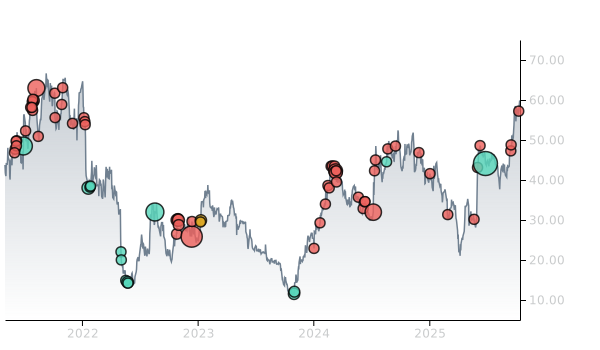
$KYMR insiders have traded $KYMR stock on the open market 17 times in the past 6 months. Of those trades, 5 have been purchases and 12 have been sales.
Here’s a breakdown of recent trading of $KYMR stock by insiders over the last 6 months:
- BROS. ADVISORS LP BAKER has made 2 purchases buying 655,500 shares for an estimated $28,842,000 and 0 sales.
- PARTNERS L P/IL BVF has made 3 purchases buying 317,167 shares for an estimated $13,955,348 and 0 sales.
- BRUCE N. JACOBS (Chief Financial Officer) sold 79,220 shares for an estimated $3,961,380
- JARED GOLLOB (Chief Medical Officer) has made 0 purchases and 5 sales selling 62,690 shares for an estimated $3,846,093.
- NELLO MAINOLFI (Chief Executive Officer) has made 0 purchases and 4 sales selling 60,000 shares for an estimated $3,299,736.
- JEFFREY W. ALBERS sold 5,000 shares for an estimated $295,949
- ELENA RIDLOFF sold 4,500 shares for an estimated $225,000
To track insider transactions, check out Quiver Quantitative's insider trading dashboard.
$KYMR Hedge Fund Activity
We have seen 121 institutional investors add shares of $KYMR stock to their portfolio, and 114 decrease their positions in their most recent quarter.
Here are some of the largest recent moves:
- PRICE T ROWE ASSOCIATES INC /MD/ removed 1,761,824 shares (-25.7%) from their portfolio in Q3 2025, for an estimated $99,719,238
- UBS AM, A DISTINCT BUSINESS UNIT OF UBS ASSET MANAGEMENT AMERICAS LLC added 908,597 shares (+110.9%) to their portfolio in Q3 2025, for an estimated $51,426,590
- HOLOCENE ADVISORS, LP added 840,333 shares (+inf%) to their portfolio in Q3 2025, for an estimated $47,562,847
- REDMILE GROUP, LLC removed 803,289 shares (-100.0%) from their portfolio in Q3 2025, for an estimated $45,466,157
- ALYESKA INVESTMENT GROUP, L.P. added 565,091 shares (+1130.2%) to their portfolio in Q3 2025, for an estimated $31,984,150
- FEDERATED HERMES, INC. added 558,700 shares (+inf%) to their portfolio in Q3 2025, for an estimated $31,622,420
- T. ROWE PRICE INVESTMENT MANAGEMENT, INC. added 520,593 shares (+574.4%) to their portfolio in Q3 2025, for an estimated $29,465,563
To track hedge funds' stock portfolios, check out Quiver Quantitative's institutional holdings dashboard.
$KYMR Analyst Ratings
Wall Street analysts have issued reports on $KYMR in the last several months. We have seen 8 firms issue buy ratings on the stock, and 0 firms issue sell ratings.
Here are some recent analyst ratings:
- Truist Securities issued a "Buy" rating on 11/26/2025
- Guggenheim issued a "Buy" rating on 11/03/2025
- BTIG issued a "Buy" rating on 10/22/2025
- Mizuho issued a "Outperform" rating on 10/21/2025
- Oppenheimer issued a "Outperform" rating on 10/01/2025
- HC Wainwright & Co. issued a "Buy" rating on 09/18/2025
- RBC Capital issued a "Outperform" rating on 09/16/2025
To track analyst ratings and price targets for $KYMR, check out Quiver Quantitative's $KYMR forecast page.
$KYMR Price Targets
Multiple analysts have issued price targets for $KYMR recently. We have seen 11 analysts offer price targets for $KYMR in the last 6 months, with a median target of $75.0.
Here are some recent targets:
- Srikripa Devarakonda from Truist Securities set a target price of $80.0 on 11/26/2025
- Andrew S. Fein from HC Wainwright & Co. set a target price of $84.0 on 11/05/2025
- Etzer Darout from Barclays set a target price of $70.0 on 11/05/2025
- Derek Archila from Wells Fargo set a target price of $69.0 on 11/05/2025
- Brad Canino from Guggenheim set a target price of $90.0 on 11/03/2025
- Jeet Mukherjee from BTIG set a target price of $75.0 on 10/22/2025
- Joseph Catanzaro from Mizuho set a target price of $81.0 on 10/21/2025
Full Release
KT-621 achieved deep STAT6 degradation across both the 100 mg and 200 mg dose groups tested, with median reductions of 94% and 98% in skin and blood, respectively, demonstrating strong translation from healthy volunteers to atopic dermatitis (AD) patients
KT-621 achieved strong reductions in disease-relevant Type 2 biomarkers in blood, including TARC (median reduction of 74% in patients with baseline TARC levels comparable to dupilumab AD studies), Eotaxin-3, IL-31, IgE, and in core Type 2 inflammation and AD disease-relevant gene sets in skin lesions
Robust clinical activity was observed across all disease endpoints measured including mean 63% EASI reduction and mean 40% peak pruritus NRS reduction for all patients
Patients with comorbid asthma showed a median 56% reduction in FeNO and meaningful improvements in asthma control, and those with comorbid allergic rhinitis experienced significant symptom and quality-of-life benefits
KT-621 was well-tolerated with no serious adverse events, no treatment related adverse events, no reported cases of conjunctivitis and no clinically relevant changes in vital signs, lab tests or ECGs
KT-621 BROADEN2 Phase 2b trial in moderate to severe AD is ongoing, with data expected by mid-2027; Phase 2b BREADTH trial in moderate to severe asthma patients is on track to start 1Q26
Company to hold video conference call and webcast today at 8:00 a.m. ET
WATERTOWN, Mass., Dec. 08, 2025 (GLOBE NEWSWIRE) -- Kymera Therapeutics, Inc. (NASDAQ: KYMR), a clinical-stage biopharmaceutical company advancing a new class of oral small molecule degrader medicines for immunological diseases, today announced positive clinical results from the BroADen Phase 1b atopic dermatitis (AD) clinical trial of KT-621, its first-in-class, oral STAT6 degrader medicine.
“The BroADen study results exceeded our highest expectations and provide a powerful additional validation of our industry-leading STAT6 degrader program,” said Nello Mainolfi, PhD, Founder, President and CEO, Kymera Therapeutics. “KT-621 demonstrated its potential to deliver a first-in-class once-a-day oral treatment for Type 2 inflammatory diseases across every measure we evaluated, including STAT6 degradation, biomarker modulation, clinical activity, impact on other comorbid Type 2 diseases and safety. The results were in line with, or in some cases numerically exceeded, published data for dupilumab at week 4 and we believe further reinforce Kymera’s pioneering expertise in developing transformative oral small molecules with the potential for the activity and safety of injectable biologics.”
“The most impressive outcome of our BroADen study is the consistency that KT-621 demonstrated in all measured endpoints: STAT6 degradation, reduction of blood Type 2 biomarkers, including the first known demonstration of impact of IL-4/13 pathway blockade on IL-31 and FeNO in AD patients, and reduction of core Type 2 inflammation and AD disease-relevant gene sets in skin lesions. These results were further reinforced by activity across a broad range of clinical endpoints that included objective measures as well as patient reported outcomes in patients with AD and those with comorbid asthma and allergic rhinitis,” said Jared Gollob, MD, Chief Medical Officer, Kymera Therapeutics. “KT-621 achieved these results at doses that were well-tolerated, exhibiting a safety profile consistent with what we observed in the Phase 1a healthy volunteer study. We are excited to advance this innovative program through the ongoing BROADEN2 Phase 2b study in AD patients and remain on track to initiate our BREADTH Phase 2b trial in asthma early next year. We are deeply grateful to the patients, investigators, and clinical teams whose collaboration and commitment made this milestone possible.”
“These results represent an innovative step forward in the treatment of atopic dermatitis,” said Eric Simpson, MD, MCR, Frances J. Storrs Medical Dermatology Professor and Director of CLEAR Eczema Center, Oregon Health & Science University. “There remains a clear need for new oral therapies that can address the underlying biology of the disease while potentially offering patients greater convenience. KT-621’s novel mechanism and encouraging early data showing impact on clinical endpoints and biomarkers of Type 2 inflammation highlight the potential for this program to expand the options for people living with AD as well as other Type 2 allergic diseases.”
Study Design
The KT-621 BroADen Phase 1b trial was an open-label, single-arm study that enrolled 22 patients with moderate to severe AD across two dose levels (enrolled in two sequential cohorts) selected based on results from the KT-621 Phase 1a healthy volunteer study. Ten participants received 100 mg and twelve participants received 200 mg of KT-621 once daily for 28 days, followed by a 14-day follow-up period. Key objectives of the study were to evaluate KT-621 safety and tolerability and to demonstrate that KT-621 could achieve robust STAT6 degradation in both blood and skin, resulting in dupilumab-like reductions in multiple Type 2 inflammatory biomarkers in circulation and in the transcriptome of active AD lesions after 4-weeks of dosing. The study also explored effects on clinical activity and disease burden endpoints.
Baseline Characteristics
The two dose groups were generally well-balanced for gender, age, race, and measures of disease severity including vIGA-AD, EASI and peak pruritus NRS. The mean baseline EASI score across the two groups was approximately 25. Approximately 46% of patients had comorbid asthma or allergic rhinitis and approximately 23% had prior biologics treatment with either dupilumab and/or tralokinumab.
Pharmacokinetics and STAT6 Degradation
KT-621 exhibited a plasma PK profile across the 100 mg and 200 mg dose groups consistent with the Phase 1a healthy volunteer trial results. KT-621 demonstrated deep and consistent STAT6 degradation in both blood and skin across the 100 mg and 200 mg dose groups, translating strongly from the Phase 1a healthy volunteer study. At Day 29, median STAT6 degradation in blood as measured by flow cytometry was 98% at both the 100 mg and 200 mg doses. In skin lesions, where STAT6 levels were 2-fold higher compared to healthy volunteers, KT-621 achieved median STAT6 degradation of 94% by mass spectrometry at both the 100 mg and 200 mg doses with multiple subjects’ STAT6 level dropping below the lower limit of quantification (LLOQ).
Type 2 Biomarkers:
Thymus and Activation-Regulated Chemokine (TARC): A validated biomarker of Type 2 inflammation, TARC reductions with KT-621 were robust and highly associated with baseline levels of TARC in treated patients, consistent with reported dupilumab studies across multiple diseases. In patients with baseline TARC in line with dupilumab AD studies, defined as ≥1,600 pg/mL (which is the lower bound of the 95% confidence interval for median baseline TARC levels from the dupilumab SOLO1-2 AD studies), the median TARC reduction at Day 29 was 74%, in line with published dupilumab results at week 4. Across all patients, TARC was reduced by a median 48% and 55% for the 100 mg and 200 mg dose groups, respectively.
Eotaxin-3: At Day 29, KT-621 achieved a median reduction in Eotaxin-3 of 62% and 73% for the 100 mg and 200 mg dose groups, respectively. Eotaxin-3 is a highly specific downstream cytokine of the IL-4/IL-13 pathway. These results numerically exceeded what has been reported with dupilumab in asthma and chronic rhinosinusitis with nasal polyps (CRSwNP) patients even at 52 weeks.
Immunoglobulin E (IgE): At Day 29, KT-621 achieved a median IgE reduction of 5% and 14% for the 100 mg and 200 mg dose groups, respectively, which were comparable to the reported dupilumab data at week 4. As expected for a Type 2 biomarker with a long half-life, reductions emerged gradually and aligned with kinetics observed in studies for representative biologics.
IL-31: KT-621 achieved robust reductions in serum IL-31, a validated Type 2 biomarker linked to pruritus in AD. At Day 29, median IL-31 levels were reduced by 56% and 54% in the 100 mg and 200 mg dose groups, respectively, demonstrating potent suppression of this pruritogenic cytokine through STAT6 degradation. This is the first known demonstration in AD patients of reduction in blood levels of IL-31 with IL-4/13 pathway blockade.
Fractional Exhaled Nitric Oxide (FeNO): A validated biomarker of Type 2 lung inflammation shown to be modulated by biologics like dupilumab targeting the IL-4/13 pathway in asthma, KT-621 achieved median FeNO reductions at Day 29 of 25% and 33% among all patients within the 100 mg and 200 mg dose groups, respectively. This is the first known demonstration of FeNO reduction in AD patients, providing initial proof of concept for KT-621 inhibition of Type 2 inflammation in lungs.
Skin Transcriptomics: Across all patients and doses, KT-621 led to decreases in core Type 2 inflammation and AD disease-relevant gene sets in skin lesions after 4-weeks of dosing, including genes such as TARC, PARC, Eotaxin-3, periostin, keratin 16 and TSLP, with results comparable to dupilumab at week 4.
Clinical Endpoints
Eczema Area and Severity Index (EASI): Mean EASI score reductions at Day 29 were 62% and 63% in the 100 mg and 200 mg dose groups, respectively, and 63% across all patients. KT-621 demonstrated rapid onset of action with measurable EASI impact by Day 8, the earliest timepoint reported. Comparable reductions were observed in patients with low or high baseline TARC levels and patients with low or high baseline EASI. EASI-50 (≥50% improvement from baseline) was 67% and 83% in the 100 mg and 200 mg dose groups, respectively, and 76% across all patients. EASI-75 (≥75% improvement from baseline) was 33% and 25% in the 100 mg and 200 mg dose groups, respectively, and 29% across all patients.
For EASI and all other clinical endpoints measured, KT-621 achieved improvements that were in line with or in some cases numerically exceeded published data for dupilumab at week 4. In addition, results were generally comparable across patients with or without prior biologics use.
Validated Investigator Global Assessment for Atopic Dermatitis (vIGA-AD): At Day 29, the proportion of vIGA-AD responders (patients achieving a score of 0 or 1 with at least a 2-point improvement) was 22% and 17% in the 100 mg and 200 mg dose groups, respectively, and 19% across all patients.
Peak Pruritus (Itch): Mean Peak Pruritus Numerical Rating Scale (NRS) reductions at Day 29 were 47% and 35% in the 100 mg and 200 mg dose groups, respectively, and 40% across all patients. KT-621 demonstrated rapid onset of action with measurable impact on pruritus as soon as Day 8, the earliest timepoint reported.
SCORing Atopic Dermatitis Index (SCORAD): KT-621 demonstrated improvements across all SCORAD domains, including itch and sleeplessness, reflecting both lesion improvement and symptom relief. At Day 29, total SCORAD scores decreased substantially with 52% and 46% mean reductions in the 100 mg and 200 mg dose groups, respectively, and 48% across all patients. For sleeplessness, at Day 29 mean reductions were 72% and 78% in the 100 mg and 200 mg dose groups, respectively, and 76% across all patients. For itch, at Day 29 the mean reductions were 40% and 47% in the 100 mg and 200 mg dose groups, respectively, and 44% across all patients.
DLQI and POEM: KT-621 produced meaningful improvements in patient-reported quality of life, as measured by the Dermatology Life Quality Index (DLQI) and Patient-Oriented Eczema Measure (POEM). Both scores declined steadily over the 4-week treatment period across both dose levels. These outcomes underscore KT-621’s rapid, patient-perceived impact on daily functioning and well-being, complementing the objective clinical improvements observed across other endpoints.
Impact on Comorbid Type 2 Diseases
Asthma: In those AD patients with comorbid asthma (n=4), at Day 29, KT-621 achieved a median FeNO reduction of 56%, which numerically exceeded published data for dupilumab at week 4 in asthma patients, and clinically meaningful ACQ-5 mean change of -1.2 points which corresponded to a 100% responder rate (≥0.5-point improvement). These results support systemic STAT6 degradation and modulation of Type 2 inflammation in the lungs and validate KT-621’s mechanistic breadth and potential to benefit patients across Type 2–driven diseases, including asthma, where FeNO serves as a key biomarker of disease activity and therapeutic response.
Allergic Rhinitis: In evaluable patients with comorbid allergic rhinitis, KT-621 demonstrated activity with meaningful improvements in both Total Nasal Symptom Score (TNSS, n=7) and Rhinoconjunctivitis Quality of Life Questionnaire (RQLQ, n=6) measures, with notable responder rates (≥0.5-point improvement) in both endpoints. These findings demonstrate KT-621’s broader potential across immuno-inflammatory diseases, reflecting systemic Type 2 pathway engagement.
Safety and Tolerability
KT-621 was well-tolerated with a favorable safety profile consistent with the Phase 1a healthy volunteer trial results. There were no serious adverse events (SAEs), no severe AEs, no related treatment-emergent-adverse events (TEAEs) or TEAEs leading to discontinuation, no AEs of conjunctivitis, herpes infections or arthralgias, and no clinically relevant changes in vital signs, laboratory tests or electrocardiograms.
Next Steps
The Company’s KT-621 BROADEN2 Phase 2b trial in moderate to severe AD patients is ongoing, and patient dosing has commenced. Data is expected to be reported by mid-2027. The BREADTH Phase 2b trial in asthma is planned to start in the first quarter of 2026. These studies are intended to accelerate KT-621 development and enable dose selection for subsequent parallel Phase 3 registration studies across multiple Type 2 dermatology, gastroenterology and respiratory indications.
Event Details
Kymera will host a video conference call today, December 8, 2025, at 8:00 a.m. ET. To join the video call or view the livestreamed webcast, please register via this link or visit “ News and Events ” in the Investors section of Kymera’s website at www.kymeratx.com . A replay of the webcast and the presentation will be available following the event.
About KT-621
KT-621 is an investigational, first-in-class, once daily, oral degrader of STAT6, the specific transcription factor responsible for IL-4/IL-13 signaling and the central driver of Type 2 inflammation, and currently in Phase 2 clinical testing. In the Phase 1 clinical study in atopic dermatitis patients, KT-621 demonstrated deep STAT6 degradation in blood and skin, robust reductions in disease-relevant Type 2 inflammatory biomarkers, meaningful improvements on clinical endpoints and patient-reported outcomes in AD and comorbid asthma and allergic rhinitis, and was well tolerated with a favorable safety profile. KT-621, the first STAT6-directed drug to enter clinical evaluation, has the potential to transform treatment paradigms for more than 140 million patients around the world, including children and adults, suffering from Type 2 diseases such as atopic dermatitis (AD), asthma, bullous pemphigoid (BP), chronic obstructive pulmonary disease (COPD), chronic rhinosinusitis with nasal polyps (CRSwNP), eosinophilic esophagitis (EoE), chronic spontaneous urticaria (CSU), and prurigo nodularis (PN), among others.
About Kymera Therapeutics
Kymera is a clinical-stage biotechnology company pioneering the field of targeted protein degradation (TPD) to develop medicines that address critical health problems and have the potential to dramatically improve patients’ lives. Kymera is deploying TPD to address disease targets and pathways inaccessible with conventional therapeutics. Having advanced the first degrader into the clinic for immunological diseases, Kymera is focused on building an industry-leading pipeline of oral small molecule degraders to provide a new generation of convenient, highly effective therapies for patients with these conditions. Founded in 2016, Kymera has been recognized as one of Boston’s top workplaces for the past several years. For more information about our science, pipeline and people, please visit
www.kymeratx.com
or follow us on
X
or
LinkedIn
.
Cautionary Note Regarding Forward-Looking Statements
This press release contains forward-looking statements within the meaning of the Private Securities Litigation Reform Act of 1995, as amended, including, without limitation, implied and express statements about our expectations regarding strategy, business plans and objectives on the development of KT-621, including the therapeutic potential, clinical benefits and safety thereof, the Phase 1b results providing further validation of KT-621 in AD and the potential clinical benefits of KT-621 in dermatology, gastroenterology and respiratory indications, the initiation of Phase 2b study of KT-621 in patients with asthma in the first quarter of 2026, the effect of initial parallel development of Phase 2b studies in AD and asthma patients on acceleration of late parallel development and dose selection across multiple indications, Phase 2b data readout of KT-621 in patients with moderate to severe AD expected by mid-2027; and the preliminary cross-study assessments comparing non-head-to-head clinical data of KT-621 to published data for dupilumab. The words "may," "might," "will," "could," "would," "should," "expect," "plan," "anticipate," "intend," "believe," "expect," "estimate," "seek," "predict," "future," "project," "potential," "continue," "target," “upcoming” and similar words or expressions are intended to identify forward-looking statements, although not all forward-looking statements contain these identifying words. Any forward-looking statements in this press release are based on management's current expectations and beliefs and are subject to a number of risks, uncertainties and important factors that may cause actual events or results to differ materially from any forward-looking statements contained in this press release, including, without limitation, risks associated with: the risk that cross-trial comparisons may not be reliable as no head-to-head trials have been conducted comparing KT-621 to dupilumab, and Phase 1/1b clinical data for KT-621 may not be directly comparable to dupilumab’s clinical data due to differences in molecule composition, trial protocols, dosing regimens, and patient populations and characteristics, that the results from the Phase 2b KT-621 trial may differ from the Phase 1/1b KT-621 data, that preclinical and clinical data, including the results from the Phase 1/1b trial of KT-621, is not predictive of, may be inconsistent with, or more favorable than, data generated from future or ongoing clinical trials of the same product candidate, uncertainties inherent in the initiation, timing and design of future clinical trials, the availability and timing of data from ongoing and future clinical trials and the results of such trials, the ability to successfully demonstrate the safety and efficacy of drug candidates, the timing and outcome of planned interactions with and submissions to regulatory authorities, the availability of funding sufficient for our operating expenses and capital expenditure requirements and other factors. These risks and uncertainties are described in greater detail in the section entitled "Risk Factors" in the most recent Quarterly Report on Form 10-Q and in subsequent filings with the SEC. In addition, any forward-looking statements represent our views only as of today and should not be relied upon as representing our views as of any subsequent date. We explicitly disclaim any obligation to update any forward-looking statements. No representations or warranties (expressed or implied) are made about the accuracy of any such forward-looking statements.
Investor and Media Contact:
Justine Koenigsberg
Vice President, Investor Relations
[email protected]
[email protected]
857-285-5300