


Edesa Biotech presents positive exploratory data for paridiprubart in AKI patients with respiratory distress at the ERA Congress.
Quiver AI Summary
Edesa Biotech, Inc. announced favorable exploratory data for paridiprubart, a first-in-class anti-TLR4 monoclonal antibody, in patients with acute kidney injury (AKI) and respiratory distress, during a presentation at the 63rd European Renal Association Congress. The analysis included 101 hospitalized patients, revealing a 32% relative reduction in 28-day mortality among those treated with paridiprubart in addition to standard of care, compared to placebo. The findings also demonstrated improvements in kidney-specific outcomes. Given that AKI often occurs alongside acute respiratory distress syndrome (ARDS) and is associated with high mortality rates, these results support further investigation of paridiprubart in this high-risk population. Edesa emphasizes that these findings, while promising, should be interpreted with caution and underscore the need for confirmatory studies to establish efficacy in AKI.
Potential Positives
- Favorable exploratory data for paridiprubart shows a 32% relative reduction in 28-day mortality in AKI patients compared to placebo, highlighting its potential efficacy.
- The presentation of new findings at a significant scientific congress (63rd European Renal Association Congress) enhances the company's visibility and credibility within the medical community.
- Data suggests that paridiprubart addresses a critical gap in treatment for AKI, which currently has no approved pharmacological therapies, positioning Edesa Biotech as a potential leader in this market.
- The safety profile of paridiprubart was consistent and well-tolerated in the AKI subpopulation, reinforcing its viability as a candidate for further development.
Potential Negatives
- The exploratory nature of the findings, while indicating potential benefits, suggests that the data may not be robust enough to establish definitive efficacy for paridiprubart in AKI patients, requiring further confirmatory studies.
- The high mortality associated with AKI patients indicates a pressing unmet medical need, which may reflect on the urgency and potential limitations of Edesa's current interventions in this critical area.
- The reliance on exploratory analyses raises concerns about the strength and reliability of the conclusions drawn regarding paridiprubart's effectiveness, as these results were not prespecified and require cautious interpretation.
FAQ
What are the key findings regarding paridiprubart in AKI patients?
The key findings highlight a 32% relative reduction in 28-day mortality for AKI patients receiving paridiprubart plus standard care.
What is paridiprubart used for?
Paridiprubart is an anti-TLR4 monoclonal antibody designed to modulate the immune response in diseases like acute kidney injury and ARDS.
How does paridiprubart impact kidney-specific outcomes?
Paridiprubart combined with standard care resulted in a 23% relative reduction in Major Adverse Kidney Events at 30 days.
What is acute kidney injury (AKI)?
AKI is a sudden decline in kidney function, often occurring in critically ill patients and associated with high mortality rates.
Where can I find more information about Edesa Biotech's research?
Additional information can be found in the Events section of the Edesa Biotech website, including presentation details from the ERA Congress.
Disclaimer: This is an AI-generated summary of a press release distributed by GlobeNewswire. The model used to summarize this release may make mistakes. See the full release here.
$EDSA Insider Trading Activity
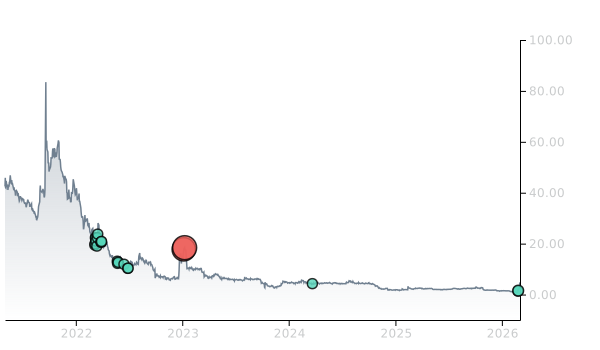
$EDSA insiders have traded $EDSA stock on the open market 5 times in the past 6 months. Of those trades, 5 have been purchases and 0 have been sales.
Here’s a breakdown of recent trading of $EDSA stock by insiders over the last 6 months:
- PARDEEP NIJHAWAN (Chief Executive Officer) has made 5 purchases buying 80,571 shares for an estimated $217,035 and 0 sales.
To track insider transactions, check out Quiver Quantitative's insider trading dashboard. You can access data on insider stock transactions through the Quiver Quantitative API insider transaction endpoint.
$EDSA Hedge Fund Activity
We have seen 18 institutional investors add shares of $EDSA stock to their portfolio, and 12 decrease their positions in their most recent quarter.
Here are some of the largest recent moves:
- STONEPINE CAPITAL MANAGEMENT, LLC removed 657,500 shares (-95.6%) from their portfolio in Q1 2026, for an estimated $3,438,725
- NANTAHALA CAPITAL MANAGEMENT, LLC removed 625,000 shares (-100.0%) from their portfolio in Q1 2026, for an estimated $3,268,750
- VELAN CAPITAL INVESTMENT MANAGEMENT LP added 140,000 shares (+20.4%) to their portfolio in Q1 2026, for an estimated $732,200
- DRW SECURITIES, LLC removed 134,222 shares (-100.0%) from their portfolio in Q1 2026, for an estimated $701,981
- JANE STREET GROUP, LLC added 115,721 shares (+inf%) to their portfolio in Q1 2026, for an estimated $605,220
- DIADEMA PARTNERS LP added 54,025 shares (+inf%) to their portfolio in Q4 2025, for an estimated $76,715
- CITADEL ADVISORS LLC removed 53,630 shares (-100.0%) from their portfolio in Q1 2026, for an estimated $280,484
To track hedge funds' stock portfolios, check out Quiver Quantitative's institutional holdings dashboard. You can access data on hedge funds moves and 13F filings through the Quiver Quantitative API 13F endpoint.
Full Release
- Analyses demonstrate consistent positive signals across endpoints in AKI patients
- Findings derived from post hoc analysis of 101 patients also experiencing respiratory distress
-
New data and analysis to be presented today at the 63rd European Renal Association Congress
TORONTO, June 05, 2026 (GLOBE NEWSWIRE) -- Edesa Biotech, Inc. (Nasdaq: EDSA), a clinical-stage biopharmaceutical company developing host-directed therapeutics for immuno-inflammatory diseases, today reported favorable exploratory data for paridiprubart, its first-in-class anti-TLR4 monoclonal antibody, in patients with acute kidney injury (AKI) and respiratory distress.
The data, which expand upon previously reported Phase 3 clinical results through new exploratory analyses, will be presented today in a scientific oral presentation at the 63rd European Renal Association (ERA) Congress in Glasgow, Scotland. These new analyses are based on exploratory evaluations from the company’s completed clinical studies in hospitalized patients with acute respiratory distress syndrome (ARDS).
Because TLR4-mediated inflammation plays a central role in both lung and kidney injury, Edesa conducted additional analyses to evaluate paridiprubart’s effect in patients with concurrent AKI, a high-mortality complication that currently lacks approved, targeted pharmacological therapies. Patients with AKI and ARDS represent a high-risk population, with substantially elevated mortality relative to patients without renal dysfunction. Among the findings, paridiprubart plus standard of care treatments (SOC) was associated with a 32% relative reduction in mortality in these AKI patients at 28 days. The observed reductions in mortality were supported by concordant improvements in kidney-specific outcomes, including the MAKE30 composite endpoint.
“These exploratory findings in a high-risk subgroup provide an important clinical perspective on how paridiprubart’s mechanism of action may translate beyond the lungs. Acute kidney injury shares many of the same inflammatory pathways seen in severe respiratory illness, and the consistency we’re observing across these larger analyses helps reinforce the biological rationale for further evaluation in AKI patients,” said Par Nijhawan, MD, Chief Executive Officer of Edesa Biotech.
Key Findings*
The AKI findings reported here expand on previously reported exploratory results in 48 AKI patients from the Phase 3 ITT population by incorporating additional patients from the Phase 2 study and the broader 278-patient treatment population, for a combined AKI cohort of 101 patients. The AKI subgroup included all patients with AKI present at baseline, and outcomes were analyzed using the same multivariate methodology prespecified in the Phase 3 statistical analysis plan for ARDS.
Patients in this AKI cohort were severely ill, with approximately 90% having moderate-to-severe ARDS at baseline and approximately 50% requiring invasive mechanical ventilation or ECMO, consistent with a population at high risk of mortality. Mean age was 58 years.
28-Day Mortality
Paridiprubart + SOC reduced adjusted 28-day mortality to 33% (95% CI: 28%–39%) from 49% (95% CI: 41%–57%) with placebo + SOC, a 32% relative reduction in the risk of death (nominal p<0.005).
MAKE30 (Major Adverse Kidney Events at 30 days)
Using the same multivariate logistic regression methodology, paridiprubart + SOC reduced the adjusted incidence of MAKE30 at Day 30 to 41% (95% CI: 36%–46%) from 53% (95% CI: 47%–60%) with placebo + SOC, a 23% relative reduction in MAKE30 incidence (nominal p<0.005). MAKE30 is a composite endpoint comprising all-cause mortality, initiation of renal replacement therapy, or persistent renal dysfunction through Day 30.
Safety and Tolerability
Paridiprubart was well tolerated in the AKI subpopulation. Overall rates of adverse events, serious adverse events, and infections were low and showed no significant differences between the paridiprubart and placebo groups. The safety profile was consistent with more than 400 patients treated across clinical studies to date.
These exploratory findings are consistent with the hypothesis that modulation of TLR4-mediated inflammation may influence multi-organ dysfunction in critically ill patients, and are directionally consistent with the previously reported Phase 3 results . Since AKI represents a high-mortality subgroup within ARDS, the company believes the consistency of benefit observed here reinforces the rationale for paridiprubart’s ongoing development in ARDS. In addition, the company believes these data support further evaluation of paridiprubart in prospective studies specifically targeting patients with AKI and may inform the design of future clinical trials in this high-unmet need population.
* Estimated using multivariate logistic regression-derived risk differences (95% confidence intervals). Nominal p-values, not adjusted for multiplicity. These analyses are exploratory in nature and were not prespecified. Results should be interpreted with caution and are intended to generate hypotheses for further clinical evaluation. Confirmatory studies would be required to establish efficacy in AKI.
Presentation
Edesa’s abstract was selected for oral presentation at the ERA Congress. The presentation, titled “Exploratory Analysis of Paridiprubart, an Anti-TLR4 Antibody, in Patients with Acute Kidney Injury and Respiratory Distress,” is scheduled today at approximately 4:30 pm BST. The presentation will be available in the Events section of the Edesa Biotech website.
About Paridiprubart
Paridiprubart is a first-in-class anti-TLR4 (Toll-like Receptor 4) monoclonal antibody designed to modulate the body's immune response. By selectively inhibiting TLR4, paridiprubart is designed to dampen the hyperinflammatory cascade implicated in Acute Respiratory Distress Syndrome (ARDS), AKI, sepsis, pneumonia, and other critical inflammatory conditions. As a host-directed therapeutic, its mechanism is agnostic to the causal agent, offering potential utility across a range of acute conditions and biodefense applications. More than 400 patients have received paridiprubart in clinical studies to date, with a consistent and favorable safety profile.
About Acute Kidney Injury
Acute kidney injury (AKI) is a sudden, often severe decline in kidney function, most commonly occurring in critically ill or hospitalized patients. AKI affects an estimated 13 million people worldwide each year and is associated with high short-term mortality, prolonged hospitalization, and an elevated risk of progression to chronic kidney disease. In AKI, renal ischemia and cellular injury release endogenous TLR4 ligands, triggering a destructive inflammatory cascade that amplifies kidney damage and drives mortality. Despite its prevalence and clinical severity, there are currently no approved pharmacological therapies specifically targeting AKI. Treatment remains largely supportive.
About Edesa Biotech, Inc.
Edesa Biotech, Inc. (Nasdaq: EDSA) is a clinical-stage biopharmaceutical company developing innovative ways to treat inflammatory and immune-related diseases. Its clinical pipeline is focused on two therapeutic areas: Medical Dermatology and Respiratory. In Medical Dermatology, Edesa is developing EB06, an anti-CXCL10 monoclonal antibody candidate, as a therapy for vitiligo, a common autoimmune disorder that causes skin to lose its color in patches. Its medical dermatology assets also include EB01 (1.0% daniluromer cream), a Phase 3-ready asset developed for use as a potential therapy for moderate-to-severe chronic Allergic Contact Dermatitis (ACD), a common occupational skin condition. The company’s most advanced Respiratory drug candidate is EB05 (paridiprubart), which is being evaluated in a U.S. government-funded platform study as a treatment for ARDS, a life-threatening form of respiratory failure. The EB05 program has been the recipient of two funding awards from the Government of Canada to support the further development of this asset. Edesa is also pursuing additional uses for paridiprubart. Sign up for news alerts . Connect with us on X and LinkedIn .
Edesa Forward-Looking Statements
This press release may contain forward-looking statements within the meaning of Section 27A of the Securities Act of 1933, as amended, and Section 21E of the Securities Exchange Act of 1934, as amended. Forward-looking statements may be identified by the use of words such as "anticipate," "believe," "plan," "estimate," "expect," "intend," "may," "will," "would," "could," "should," "might," "potential," or "continue" and variations or similar expressions, including statements related to: the company’s belief that the exploratory findings presented here provide an important clinical perspective on how paridiprubart’s mechanism of action may translate beyond the lungs; the company’s belief that the consistency observed across these analyses helps reinforce the biological rationale for expanded utility and for ongoing development in ARDS; and the company's timing and plans regarding its clinical studies in general. Readers should not unduly rely on these forward-looking statements, which are not a guarantee of future performance. There can be no assurance that forward-looking statements will prove to be accurate, as all such forward-looking statements involve known and unknown risks, uncertainties and other factors which may cause actual results or future events to differ materially from the forward-looking statements. Such risks include: the ability of Edesa to obtain regulatory approval for or successfully commercialize any of its product candidates, the risk that access to sufficient capital to fund Edesa's operations may not be available or may be available on terms that are not commercially favorable to Edesa, the risk that Edesa's product candidates may not be effective against the diseases tested in its clinical trials, the risk that Edesa fails to comply with the terms of license agreements with third parties and as a result loses the right to use key intellectual property in its business, Edesa's ability to protect its intellectual property, the timing and success of submission, acceptance and approval of regulatory filings, and the impacts of public health crises. Many of these factors that will determine actual results are beyond the company's ability to control or predict. For a discussion of further risks and uncertainties related to Edesa's business, please refer to Edesa's public company reports filed with the U.S. Securities and Exchange Commission and the British Columbia Securities Commission. All forward-looking statements are made as of the date hereof and are subject to change. Except as required by law, Edesa assumes no obligation to update such statements.
Contact:
Gary Koppenjan
Edesa Biotech, Inc.
[email protected]