


Cytokinetics presents MAPLE-HCM findings showing aficamten's superiority over metoprolol in treating hypertrophic cardiomyopathy.
Quiver AI Summary
Cytokinetics, Incorporated announced new findings from the MAPLE-HCM trial comparing aficamten and metoprolol in treating patients with obstructive hypertrophic cardiomyopathy (HCM). Three Late Breaking Science presentations were made at the Scientific Sessions of the Hypertrophic Cardiomyopathy Medical Society and the American Heart Association, with results published in the Journal of the American College of Cardiology. The data revealed that aficamten significantly surpassed metoprolol in improving exercise capacity, patient-reported symptoms, and cardiac biomarkers after 24 weeks of treatment. The responder analysis showed that 78% of patients on aficamten experienced positive responses across five clinical parameters, compared to just 3% with metoprolol. Additionally, aficamten was linked to a 73% reduction in NT-proBNP, a key cardiac biomarker, presenting promising implications for patient outcomes. The trial results support the potential of aficamten as a superior treatment option for HCM, which is still under regulatory review.
Potential Positives
- Presentation of additional data from the MAPLE-HCM trial at prominent scientific sessions enhances the visibility and credibility of Cytokinetics' research efforts.
- Aficamten demonstrated superior treatment outcomes compared to metoprolol in multiple clinically relevant measures, indicating its potential as a preferred therapy for patients with HCM.
- The simultaneous publication of two study presentations in the Journal of the American College of Cardiology underscores the significance of the results and can attract further attention from the medical community.
- Aficamten's success in improving patient-reported outcomes and cardiac biomarkers positions it favorably in the treatment landscape for hypertrophic cardiomyopathy, potentially leading to regulatory approvals and market success.
Potential Negatives
- Despite positive findings for aficamten, the press release highlights a significant concern regarding adverse events, specifically noting that 73.9% of patients reported treatment-emergent adverse events with aficamten, which could raise questions about the safety profile of the drug.
- The press release reveals that hypertension was the most common adverse event associated with aficamten, reported by 10.2% of patients, raising potential safety concerns that may affect patient compliance or acceptance.
FAQ
What is the MAPLE-HCM study about?
The MAPLE-HCM study compares the effects of aficamten and metoprolol on exercise capacity in patients with hypertrophic cardiomyopathy (HCM).
What were the key findings from the Late Breaking Science presentations?
The presentations showed aficamten's superiority over metoprolol in improving exercise capacity, symptoms, and cardiac biomarkers.
How did patients respond to aficamten compared to metoprolol?
Aficamten demonstrated a significantly higher clinical response rate, with 78% of patients experiencing positive or complete responses versus 3% for metoprolol.
What impact did aficamten have on patient-reported outcomes?
Patients on aficamten showed significant improvements in the Kansas City Cardiomyopathy Questionnaire scores compared to those treated with metoprolol.
Is aficamten approved for use?
Aficamten is currently an investigational drug and is under review by regulatory agencies, including the FDA and EMA.
Disclaimer: This is an AI-generated summary of a press release distributed by GlobeNewswire. The model used to summarize this release may make mistakes. See the full release here.
$CYTK Congressional Stock Trading
Members of Congress have traded $CYTK stock 2 times in the past 6 months. Of those trades, 1 have been purchases and 1 have been sales.
Here’s a breakdown of recent trading of $CYTK stock by members of Congress over the last 6 months:
- REPRESENTATIVE LISA C. MCCLAIN has traded it 2 times. They made 1 purchase worth up to $15,000 on 06/11 and 1 sale worth up to $15,000 on 06/17.
To track congressional stock trading, check out Quiver Quantitative's congressional trading dashboard.
$CYTK Insider Trading Activity
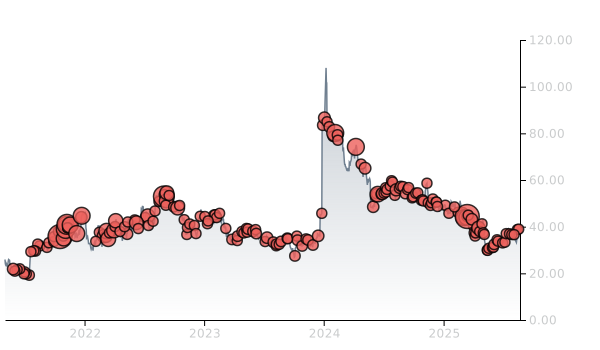
$CYTK insiders have traded $CYTK stock on the open market 32 times in the past 6 months. Of those trades, 0 have been purchases and 32 have been sales.
Here’s a breakdown of recent trading of $CYTK stock by insiders over the last 6 months:
- ROBERT I BLUM (President & CEO) has made 0 purchases and 12 sales selling 60,000 shares for an estimated $2,594,950.
- EDWARD M. MD KAYE has made 0 purchases and 4 sales selling 23,844 shares for an estimated $1,228,696.
- FADY IBRAHAM MALIK (EVP Research & Development) has made 0 purchases and 12 sales selling 24,400 shares for an estimated $1,066,780.
- ANDREW CALLOS (EVP, Chief Commercial Officer) sold 8,659 shares for an estimated $277,434
- WENDELL WIERENGA sold 4,375 shares for an estimated $256,725
- ROBERT ARTHUR HARRINGTON sold 2,150 shares for an estimated $104,640
- MUNA BHANJI sold 1,454 shares for an estimated $43,227
To track insider transactions, check out Quiver Quantitative's insider trading dashboard.
$CYTK Hedge Fund Activity
We have seen 175 institutional investors add shares of $CYTK stock to their portfolio, and 171 decrease their positions in their most recent quarter.
Here are some of the largest recent moves:
- T. ROWE PRICE INVESTMENT MANAGEMENT, INC. added 7,647,189 shares (+76.8%) to their portfolio in Q2 2025, for an estimated $252,663,124
- MARSHALL WACE, LLP removed 2,007,567 shares (-99.0%) from their portfolio in Q2 2025, for an estimated $66,330,013
- POINT72 ASSET MANAGEMENT, L.P. removed 1,722,984 shares (-100.0%) from their portfolio in Q2 2025, for an estimated $56,927,391
- WESTFIELD CAPITAL MANAGEMENT CO LP removed 1,310,336 shares (-100.0%) from their portfolio in Q2 2025, for an estimated $43,293,501
- HOOD RIVER CAPITAL MANAGEMENT LLC removed 1,256,580 shares (-100.0%) from their portfolio in Q2 2025, for an estimated $41,517,403
- DEERFIELD MANAGEMENT COMPANY, L.P. removed 1,160,315 shares (-100.0%) from their portfolio in Q2 2025, for an estimated $38,336,807
- JANUS HENDERSON GROUP PLC removed 1,007,582 shares (-95.3%) from their portfolio in Q2 2025, for an estimated $33,290,509
To track hedge funds' stock portfolios, check out Quiver Quantitative's institutional holdings dashboard.
$CYTK Analyst Ratings
Wall Street analysts have issued reports on $CYTK in the last several months. We have seen 8 firms issue buy ratings on the stock, and 0 firms issue sell ratings.
Here are some recent analyst ratings:
- Barclays issued a "Overweight" rating on 10/06/2025
- HC Wainwright & Co. issued a "Buy" rating on 09/29/2025
- JMP Securities issued a "Market Outperform" rating on 09/02/2025
- Citigroup issued a "Buy" rating on 09/02/2025
- Stifel issued a "Buy" rating on 09/02/2025
- Needham issued a "Buy" rating on 09/02/2025
- JP Morgan issued a "Overweight" rating on 06/09/2025
To track analyst ratings and price targets for $CYTK, check out Quiver Quantitative's $CYTK forecast page.
$CYTK Price Targets
Multiple analysts have issued price targets for $CYTK recently. We have seen 11 analysts offer price targets for $CYTK in the last 6 months, with a median target of $80.0.
Here are some recent targets:
- Gena Wang from Barclays set a target price of $82.0 on 10/06/2025
- Jason Zemansky from B of A Securities set a target price of $56.0 on 10/02/2025
- Joseph Pantginis from HC Wainwright & Co. set a target price of $120.0 on 09/29/2025
- Mayank Mamtani from B. Riley Securities set a target price of $80.0 on 09/22/2025
- Cory Kasimov from Evercore ISI Group set a target price of $80.0 on 09/03/2025
- Jason N. Butler from JMP Securities set a target price of $78.0 on 09/02/2025
- David Lebowitz from Citigroup set a target price of $84.0 on 09/02/2025
Full Release
Three Late Breaking Science Presentations from MAPLE-HCM Provide Additional Data Including Responder Analyses, Patient Reported Outcomes, and Cardiac Biomarkers
SOUTH SAN FRANCISCO, Calif., Nov. 10, 2025 (GLOBE NEWSWIRE) -- Cytokinetics, Incorporated (Nasdaq: CYTK) today announced that additional data from MAPLE-HCM ( M etoprolol vs A ficamten in P atients with L VOT Obstruction on E xercise Capacity in HCM ) were presented in three Late Breaking Science sessions at the Hypertrophic Cardiomyopathy Medical Society Scientific Sessions and the American Heart Association Scientific Sessions 2025 in New Orleans, LA. Two of the presentations were simultaneously published in the Journal of the American College of Cardiology. 1,2
“These additional analyses from MAPLE-HCM expand on the primary finding that aficamten is superior to metoprolol on exercise capacity, with new insights into the overall treatment effect of aficamten as well as its effect on symptoms and biomarkers in comparison to metoprolol ,” said Fady I. Malik, M.D., Ph.D., Cytokinetics’ Executive Vice President of Research & Development. “What’s notable is patients treated with aficamten achieved a significantly greater number of clinical response categories compared with metoprolol, and that nearly 40% achieved significant improvements in patient reported symptoms.”
Responder Analysis Shows Significantly More Patients on Aficamten Achieved Positive or Complete Response Compared to Metoprolol
Andrew Wang, M.D., Cardiologist and Professor of Medicine, Duke University School of Medicine presented a pre-specified responder analysis from MAPLE-HCM evaluating five clinically relevant measures of disease burden: complete hemodynamic response, symptom improvement, cardiac biomarker response, enhanced exercise capacity and favorable cardiac remodeling. These results were also simultaneously published in the Journal of the American College of Cardiology. 1
After 24 weeks of treatment, aficamten was associated with greater improvements than metoprolol in all outcome measures (all p<0.001) (Figure 1). Additionally, the proportion of patients who had a positive response (improvement in three or four clinical parameters) or a complete response (improvement in all five clinical parameters) was 78% in those receiving aficamten vs. 3% for those receiving metoprolol (p<0.001).
KCCQ, Kansas City Cardiomyopathy Questionnaire; LAVI, left atrial volume index; LVOT-G, left ventricular outflow tract gradient; NNT, number needed to treat; NT-proBNP, N-terminal pro–B-type natriuretic peptide; NYHA, New York Heart Association
As previously disclosed, in MAPLE-HCM the rate of adverse events (AEs) was similar between groups. At least one treatment-emergent AE was reported by 65 (73.9%) and 66 (75.9%) patients treated with aficamten and metoprolol , respectively. The most common AE reported in the aficamten group in excess of the comparator (>5%) was hypertension (9 [10.2%] patients on aficamten compared to 2 [2.3%] patients on metoprolol ) and the most common AE reported in the metoprolol group in excess of the comparator was dizziness (15 [17.2%] patients on metoprolol compared to 5 [5.7%] patients on aficamten ).
Analysis of Patient Reported Outcomes Expands on Effect of Aficamten on Patient Symptom Burden
Michael E. Nassif, M.D., Cardiologist, Saint Luke’s Mid America Heart Institute, Associate Professor of Medicine, University of Missouri Kansas City presented results from a pre-specified sub-study of two patient reported outcome instruments in MAPLE-HCM: the Kansas City Cardiomyopathy Questionnaire (KCCQ) and Seattle Angina Questionnaire Summary Score (SAQ). The results from this analysis were also simultaneously published in the Journal of the American College of Cardiology. 2
At 24 weeks, treatment with aficamten resulted in significantly greater improvements than metoprolol in both KCCQ Overall Summary Score (KCCQ-OSS) (16.6 points vs. 8.9 points, respectively; between-group difference = 7.8 points [95% CI: 3.3 to 12.3; p=0.001]) and KCCQ Clinical Summary Score (KCCQ-CSS) (15.8 points vs. 8.7 points, respectively; between-group difference = 6.9 points [95% CI: 2.6 to 11.2; p=0.002]).
Aficamten was also associated with statistically significant improvements across all KCCQ domains (p<0.05). Patients on aficamten more frequently reported very large improvements in KCCQ-OSS, defined as ≥20-point improvement (38.6% vs. 18.4%; number needed to treat (NNT)=4.9), and were significantly less likely to experience a worsening in KCCQ-OSS than those treated with metoprolol (6.8% vs 18.4%; number needed to harm (NNH)=8.6).
A non-statistically significant trend for greater improvement in SAQ-SS was observed with aficamten (13.9 vs. 8.4 [adjusted between-group difference = 4.6 points; 95% CI: -0.3 to 9.5; p=0.063]), driven by a large and statistically significant improvement in the SAQ Physical Limitation Domain, where patients on aficamten improved by a mean of 18.7 points compared with 6.9 points for those on metoprolol (between-group difference = 10.1 points; 95% CI: 3.9 to 16.2; p=0.001). Changes in the SAQ Angina Frequency and Quality of Life Domains were similar between treatment groups.
Aficamten Associated with Statistically Significant Improvement in Cardiac Biomarkers Compared to Metoprolol
Neal K. Lakdawala, M.D., Cardiovascular Medicine, Brigham and Women’s Hospital, Harvard Medical School presented a pre-specified supplemental analysis from MAPLE-HCM of the impact of treatment with aficamten compared to metoprolol on the cardiac biomarkers NT-proBNP and high sensitivity cardiac troponin I (hs-cTnI). At baseline, high NT-proBNP and high hs-cTnI, indicative of cardiac wall stress and myocardial injury, respectively, were strongly correlated and generally associated with worse diastolic dysfunction. After treatment for 24 weeks, aficamten was associated with a 73% reduction (p<0.001) from baseline in NT-proBNP compared to an increase of 42% observed in patients receiving metoprolol (-81% treatment effect, p<0.001). Similarly, aficamten was associated with a 43% reduction in hs-cTnI, compared to a 17% decrease for metoprolol (-28% treatment effect, p=0.001). Patients with the greatest reductions in NT-proBNP experienced greater improvements in peak oxygen uptake (pVO 2 ) and ventilatory efficiency (VE/VCO 2 ). Additionally, changes in NT-proBNP were correlated with reductions of left ventricular outflow tract gradients (LVOT-G) and improved health status (KCCQ-OSS).
About Aficamten
Aficamten is an investigational selective, small molecule cardiac myosin inhibitor discovered following an extensive chemical optimization program that was conducted with careful attention to therapeutic index and pharmacokinetic properties. 3 Aficamten was designed to reduce the number of active actin-myosin cross bridges during each cardiac cycle and consequently suppress the myocardial hypercontractility that is associated with HCM. In preclinical models, aficamten reduced myocardial contractility by binding directly to cardiac myosin at a distinct and selective allosteric binding site, thereby preventing myosin from entering a force producing state.
The development program for aficamten is assessing its potential as a treatment that improves exercise capacity as measured by peak oxygen uptake (pVO 2 ) and relieves symptoms in patients with HCM. Aficamten was evaluated in SEQUOIA-HCM, a positive pivotal Phase 3 clinical trial in patients with symptomatic obstructive hypertrophic cardiomyopathy (HCM). Aficamten received Breakthrough Therapy Designation for the treatment of symptomatic HCM from the U.S. Food & Drug Administration (FDA) and for the treatment of symptomatic obstructive HCM from the National Medical Products Administration (NMPA) in China.
Aficamten is also currently being evaluated in ACACIA-HCM, a Phase 3 clinical trial of aficamten in patients with non-obstructive HCM; CEDAR-HCM, a clinical trial of aficamten in a pediatric population with oHCM; and FOREST-HCM, an open-label extension clinical study of aficamten in patients with HCM.
Disclaimer
This communication contains a summary of new data related to the clinical development of aficamten presented at the Hypertrophic Cardiomyopathy Medical Society Scientific Sessions and the American Heart Association Scientific Sessions 2025. Aficamten is an investigational drug and is not approved by any regulatory agency. Its safety and efficacy have not been established. Aficamten is currently under regulatory review in the U.S, where the FDA is reviewing a New Drug Application (NDA) for aficamten with a Prescription Drug User Fee Act (PDUFA) target action date of December 26, 2025. Additionally, the European Medicines Agency (EMA) is reviewing a Marketing Authorization Application (MAA) for aficamten , and The Center for Drug Evaluation (CDE) of the China National Medical Products Administration (NMPA) is reviewing an NDA for aficamten with Priority Review.
About Hypertrophic Cardiomyopathy
Hypertrophic cardiomyopathy (HCM) is a disease in which the heart muscle (myocardium) becomes abnormally thick (hypertrophied). The thickening of cardiac muscle leads to the inside of the left ventricle becoming smaller and stiffer, and thus the ventricle becomes less able to relax and fill with blood. This ultimately limits the heart’s pumping function, resulting in reduced exercise capacity and symptoms including chest pain, dizziness, shortness of breath, or fainting during physical activity. HCM is the most common monogenic inherited cardiovascular disorder, with approximately 280,000 patients diagnosed, however, there are an estimated 400,000-800,000 additional patients who remain undiagnosed in the U.S. 4 , 5 , 6 Two-thirds of patients with HCM have obstructive HCM (oHCM), where the thickening of the cardiac muscle leads to left ventricular outflow tract (LVOT) obstruction, while one-third have non-obstructive HCM (nHCM), where blood flow isn’t impacted, but the heart muscle is still thickened. People with HCM are at high risk of also developing cardiovascular complications including atrial fibrillation, stroke and mitral valve disease. 7 People with HCM are at risk for potentially fatal ventricular arrhythmias and it is one of the leading causes of sudden cardiac death in younger people or athletes. 8 A subset of patients with HCM are at high risk of progressive disease leading to dilated cardiomyopathy and heart failure necessitating cardiac transplantation.
About Cytokinetics
Cytokinetics is a specialty cardiovascular biopharmaceutical company, building on its over 25 years of pioneering scientific innovations in muscle biology, and advancing a pipeline of potential new medicines for patients suffering from diseases of cardiac muscle dysfunction. Cytokinetics is readying for potential regulatory approvals and commercialization of aficamten , a cardiac myosin inhibitor, following positive results from SEQUOIA-HCM, the pivotal Phase 3 clinical trial in patients with obstructive hypertrophic cardiomyopathy (HCM). Aficamten is also being evaluated in additional clinical trials enrolling patients with obstructive and non-obstructive HCM. In addition, Cytokinetics is developing omecamtiv mecarbil , a cardiac myosin activator, in patients with heart failure with severely reduced ejection fraction (HFrEF), ulacamten , a cardiac myosin inhibitor with a mechanism of action distinct from aficamten , for the potential treatment of heart failure with preserved ejection fraction (HFpEF) and CK-089, a fast skeletal muscle troponin activator with potential therapeutic application to a specific type of muscular dystrophy and other conditions of impaired skeletal muscle function.
For additional information about Cytokinetics, visit www.cytokinetics.com and follow us on X , LinkedIn , Facebook and YouTube .
Forward-Looking Statements
This press release contains forward-looking statements for purposes of the Private Securities Litigation Reform Act of 1995 (the "Act"). Cytokinetics disclaims any intent or obligation to update these forward-looking statements and claims the protection of the Act's Safe Harbor for forward-looking statements. Examples of such statements include, but are not limited to, statements relating to any of our clinical trials, statements relating to the potential benefits of aficamten or any of our other drug candidates, or our ability to obtain regulatory approval for aficamten in any jurisdiction by any particular date, if ever. Cytokinetics' research and development activities; the design, timing, results, significance and utility of preclinical and clinical results; and the properties and potential benefits of Cytokinetics' other drug candidates. Such statements are based on management's current expectations, but actual results may differ materially due to various risks and uncertainties, including, but not limited to, potential difficulties or delays in the development, testing, regulatory approvals for trial commencement, progression or product sale or manufacturing, or production of Cytokinetics' drug candidates that could slow or prevent clinical development or product approval; Cytokinetics' drug candidates may have adverse side effects or inadequate therapeutic efficacy; the FDA or foreign regulatory agencies may delay or limit Cytokinetics' ability to conduct clinical trials; Cytokinetics may be unable to obtain or maintain patent or trade secret protection for its intellectual property; standards of care may change, rendering Cytokinetics' drug candidates obsolete; and competitive products or alternative therapies may be developed by others for the treatment of indications Cytokinetics' drug candidates and potential drug candidates may target. For further information regarding these and other risks related to Cytokinetics' business, investors should consult Cytokinetics' filings with the Securities and Exchange Commission.
CYTOKINETICS® and the CYTOKINETICS and C-shaped logo are registered trademarks of Cytokinetics in the U.S. and certain other countries.
Contact:
Cytokinetics
Diane Weiser
Senior Vice President, Corporate Affairs
(415) 290-7757
References:
- Wang, A, Garcia-Pavia, P, Masri, A. et al. Aficamten in Obstructive Hypertrophic Cardiomyopathy: A Multi-Domain, Patient-Level Analysis of the MAPLE-HCM Trial. JACC. 2025.
- Nassif, M, Garcia-Pavia, P, Masri, A. et al. Effect of Aficamten vs Metoprolol on Patient-Reported Health Status in Obstructive Hypertrophic Cardiomyopathy. JACC. 2025
- Masri A, et al. Safety and Efficacy of Aficamten in Patients with Nonobstructive Hypertrophic Cardiomyopathy: A 96-Week Analysis from FOREST-HCM. J Card Fail. 2025
- Chuang C, Collibee S, Ashcraft L, et al. Discovery of Aficamten (CK-274), a Next-Generation Cardiac Myosin Inhibitor for the Treatment of Hypertrophic Cardiomyopathy. J Med Chem. 2021;64(19):14142–14152. https://doi.org/10.1021/acs.jmedchem.1c01290
- CVrg: Heart Failure 2020-2029, p 44; Maron et al. 2013 DOI: 10.1016/S0140-6736(12)60397-3; Maron et al 2018 10.1056/NEJMra1710575
- Symphony Health 2016-2021 Patient Claims Data DoF;
- Maron MS, Hellawell JL, Lucove JC, Farzaneh-Far R, Olivotto I. Occurrence of Clinically Diagnosed Hypertrophic Cardiomyopathy in the United States. Am J Cardiol. 2016; 15;117(10):1651-1654.
- Gersh, B.J., Maron, B.J., Bonow, R.O., Dearani, J.A., Fifer, M.A., Link, M.S., et al. 2011 ACCF/AHA guidelines for the diagnosis and treatment of hypertrophic cardiomyopathy. A report of the American College of Cardiology Foundation/American Heart Association Task Force on practice guidelines. Journal of the American College of Cardiology and Circulation, 58, e212-260.
-
Hong Y, Su WW, Li X. Risk factors of sudden cardiac death in hypertrophic cardiomyopathy. Current Opinion in Cardiology. 2022 Jan 1;37(1):15-21
A photo accompanying this announcement is available at https://www.globenewswire.com/NewsRoom/AttachmentNg/8de3104b-50ad-4620-849f-73bfa6212075