


Phase 3 results show BBP-418's efficacy in LGMD2I/R9, with NDA submission planned for 2026, potentially offering first treatment.
Quiver AI Summary
BridgeBio Pharma, Inc. presented positive interim results from the Phase 3 FORTIFY clinical trial of BBP-418, an oral treatment for limb-girdle muscular dystrophy type 2I/R9 (LGMD2I/R9), at the MDA Clinical and Scientific Conference. The data indicated significant and early improvements in ambulation, with notable separation from placebo on the 100-meter timed test observed within three months of treatment. Based on these findings, BridgeBio plans to submit a New Drug Application (NDA) to the FDA in the first half of 2026, targeting a U.S. launch in late 2026 or early 2027. If approved, BBP-418 would be a groundbreaking therapy for LGMD2I/R9, which currently lacks specific treatments. The drug demonstrated a favorable safety profile and consistent efficacy across demographics in the interim analysis.
Potential Positives
- Phase 3 FORTIFY interim analysis results demonstrate broad and consistent efficacy of BBP-418 across key clinical endpoints and prespecified subgroups, highlighting the treatment's potential effectiveness.
- BridgeBio plans to submit a New Drug Application (NDA) to the FDA for traditional approval in the first half of 2026, indicating proactive steps toward regulatory approval and market entry.
- If approved, BBP-418 could become the first therapy for individuals living with LGMD2I/R9 and the first approved therapy for any form of limb-girdle muscular dystrophy, marking a significant milestone in treatment options.
- The drug showed a favorable safety profile, comparable to placebo, suggesting a low risk of severe adverse effects for patients.
Potential Negatives
- BridgeBio's planned NDA submission for BBP-418 in the first half of 2026 may face regulatory uncertainties that could delay approval timelines and market entry.
- The high percentage of treatment-emergent adverse events (TEAEs) reported in individuals receiving BBP-418 (93.2%) raises concerns about the medication's tolerance despite a comparatively favorable safety profile.
- While early efficacy results are promising, the success of BBP-418 is contingent on subsequent clinical trial phases and regulatory approvals, which are not guaranteed.
FAQ
What are the key findings from the Phase 3 FORTIFY trial of BBP-418?
The interim analysis demonstrates broad efficacy across clinical endpoints with early improvements in ambulation starting as early as three months.
When does BridgeBio plan to submit an NDA for BBP-418?
BridgeBio intends to submit an NDA to the FDA in the first half of 2026, with a U.S. launch expected in late 2026 or early 2027.
What makes BBP-418 significant for LGMD2I/R9 patients?
If approved, BBP-418 could be the first therapy for LGMD2I/R9 and potentially the first for any form of LGMD.
How well-tolerated is BBP-418 based on the trial data?
BBP-418 showed a comparable safety profile to placebo, with most side effects being mild to moderate and no treatment-related serious adverse events reported.
What additional research is planned for BBP-418?
BridgeBio plans to initiate studies in LGMD2I/R9 for individuals under 12 years old and also explore LGMD2M/2U populations in the near future.
Disclaimer: This is an AI-generated summary of a press release distributed by GlobeNewswire. The model used to summarize this release may make mistakes. See the full release here.
$BBIO Insider Trading Activity
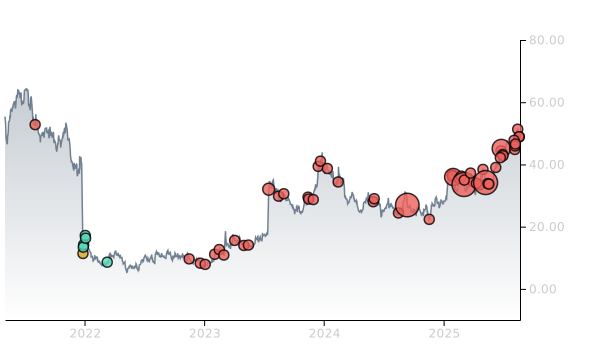
$BBIO insiders have traded $BBIO stock on the open market 86 times in the past 6 months. Of those trades, 0 have been purchases and 86 have been sales.
Here’s a breakdown of recent trading of $BBIO stock by insiders over the last 6 months:
- NEIL KUMAR (Chief Executive Officer) has made 0 purchases and 62 sales selling 484,220 shares for an estimated $33,031,706.
- FRANK MCCORMICK has made 0 purchases and 6 sales selling 200,000 shares for an estimated $13,313,192.
- ANDREW LO has made 0 purchases and 4 sales selling 95,599 shares for an estimated $6,319,662.
- ANDREA ELLIS sold 64,921 shares for an estimated $4,211,301
- RONALD J DANIELS sold 61,031 shares for an estimated $3,888,999
- THOMAS TRIMARCHI (President and CFO) has made 0 purchases and 4 sales selling 30,534 shares for an estimated $2,141,551.
- HANNAH VALANTINE sold 25,484 shares for an estimated $1,683,727
- RANDAL W. SCOTT has made 0 purchases and 5 sales selling 20,000 shares for an estimated $1,421,021.
- MARICEL APULI (Chief Accounting Officer) has made 0 purchases and 2 sales selling 2,510 shares for an estimated $186,418.
To track insider transactions, check out Quiver Quantitative's insider trading dashboard.
$BBIO Congressional Stock Trading
Members of Congress have traded $BBIO stock 1 times in the past 6 months. Of those trades, 1 have been purchases and 0 have been sales.
Here’s a breakdown of recent trading of $BBIO stock by members of Congress over the last 6 months:
- REPRESENTATIVE GILBERT RAY CISNEROS, JR. purchased up to $15,000 on 09/22.
To track congressional stock trading, check out Quiver Quantitative's congressional trading dashboard.
$BBIO Hedge Fund Activity
We have seen 242 institutional investors add shares of $BBIO stock to their portfolio, and 222 decrease their positions in their most recent quarter.
Here are some of the largest recent moves:
- PRICE T ROWE ASSOCIATES INC /MD/ added 2,261,181 shares (+144.2%) to their portfolio in Q4 2025, for an estimated $172,957,734
- JANUS HENDERSON GROUP PLC added 2,259,378 shares (+25.8%) to their portfolio in Q4 2025, for an estimated $172,819,823
- MACQUARIE GROUP LTD removed 1,933,096 shares (-100.0%) from their portfolio in Q4 2025, for an estimated $147,862,513
- UBS AM, A DISTINCT BUSINESS UNIT OF UBS ASSET MANAGEMENT AMERICAS LLC removed 1,602,036 shares (-78.0%) from their portfolio in Q4 2025, for an estimated $122,539,733
- VIKING GLOBAL INVESTORS LP removed 1,583,915 shares (-9.9%) from their portfolio in Q4 2025, for an estimated $121,153,658
- WELLINGTON MANAGEMENT GROUP LLP added 1,329,537 shares (+130.4%) to their portfolio in Q4 2025, for an estimated $101,696,285
- T. ROWE PRICE INVESTMENT MANAGEMENT, INC. removed 1,051,679 shares (-100.0%) from their portfolio in Q4 2025, for an estimated $80,442,926
To track hedge funds' stock portfolios, check out Quiver Quantitative's institutional holdings dashboard.
$BBIO Analyst Ratings
Wall Street analysts have issued reports on $BBIO in the last several months. We have seen 11 firms issue buy ratings on the stock, and 0 firms issue sell ratings.
Here are some recent analyst ratings:
- William Blair issued a "Outperform" rating on 03/10/2026
- Barclays issued a "Overweight" rating on 01/28/2026
- Truist Securities issued a "Buy" rating on 01/08/2026
- Morgan Stanley issued a "Overweight" rating on 01/06/2026
- JP Morgan issued a "Overweight" rating on 11/07/2025
- HC Wainwright & Co. issued a "Buy" rating on 11/03/2025
- Goldman Sachs issued a "Buy" rating on 10/31/2025
To track analyst ratings and price targets for $BBIO, check out Quiver Quantitative's $BBIO forecast page.
$BBIO Price Targets
Multiple analysts have issued price targets for $BBIO recently. We have seen 15 analysts offer price targets for $BBIO in the last 6 months, with a median target of $95.0.
Here are some recent targets:
- Anupam Rama from JP Morgan set a target price of $94.0 on 03/10/2026
- Sean Laaman from Morgan Stanley set a target price of $98.0 on 02/25/2026
- Trevor Allred from Oppenheimer set a target price of $81.0 on 02/25/2026
- Danielle Brill from Truist Securities set a target price of $95.0 on 02/25/2026
- Cory Kasimov from Evercore ISI Group set a target price of $125.0 on 02/25/2026
- Raghuram Selvaraju from HC Wainwright & Co. set a target price of $100.0 on 02/17/2026
- Derek Archila from Wells Fargo set a target price of $98.0 on 02/13/2026
Full Release
- Phase 3 FORTIFY interim analysis results presented in a late-breaking oral presentation at MDA highlight the broad and consistent efficacy of BBP-418 across key clinical endpoints and prespecified subgroups
- Early separation from placebo observed in 100MTT, with improvements in ambulation evident as early as three months following initiation of BBP-418 treatment
- Based on the positive interim analysis results, BridgeBio intends to submit an NDA to the FDA for traditional approval in the first half of 2026 with a U.S. launch anticipated in late 2026/early 2027
- If successful, BBP-418 could be the first approved therapy for individuals living with LGMD2I/R9, potentially representing the first approval of a therapy for any form of LGMD
PALO ALTO, Calif., March 11, 2026 (GLOBE NEWSWIRE) -- BridgeBio Pharma, Inc. (Nasdaq: BBIO) (“BridgeBio” or the “Company”), a biopharmaceutical company focused on developing medicines for genetic conditions, today presented additional positive data from the interim analysis of FORTIFY, the Phase 3 clinical trial of oral BBP-418, in individuals with limb-girdle muscular dystrophy type 2I/R9 (LGMD2I/R9). These data were presented at the MDA Clinical and Scientific Conference in a late-breaking oral presentation by Katherine Mathews, M.D., Professor of Pediatrics and Neurology at the University of Iowa’s Roy J. and Lucille A. Carver College of Medicine.
“People living with LGMD2I/R9 face a real unmet medical need. There is currently no specific treatment, the disease often has an early age of onset, and it is relentlessly progressive, leading to irreversible loss of motor function,” said Dr. Mathews. “The early separation from placebo on 100MTT is especially encouraging. In a progressive muscle disease where time matters, seeing early improvements in ambulation suggests a rapid onset of action of BBP-418. The improved motor and pulmonary functions seen in this interim analysis, together with a favorable safety profile, are exciting and suggest this will be a treatment with meaningful clinical impact.”
New efficacy findings presented from the interim analysis include the following:
- Demographics, baseline characteristics, and baseline values across key endpoints were generally well balanced between the BBP-418 and placebo arms
- Treatment with BBP-418 resulted in a rapid and sustained reduction in serum creatine kinase (CK), with decreases observed as early as three months and maintained through 12 months. Among individuals treated with BBP-418 for 12 months, 59.6% achieved CK levels within 2x the Upper Limit of Normal (ULN), and 38.3% achieved normalization of CK levels. The ULN is the highest value within the normal range for serum CK
- BBP-418 demonstrated a rapid time to separation on the 100-meter timed test (100MTT), with improvements in ambulation showing separation from placebo as early as three months post treatment. At 12 months, individuals treated with BBP-418 completed the 100MTT approximately 31 seconds faster than those receiving placebo
- On another measure of ambulation, the 10-meter walk test (10MWT), BBP-418-treated participants improved from baseline by 0.13 m/s, compared to a decline of 0.10 m/s in the placebo arm
-
Consistent treatment effect observed across all prospectively defined subgroups, including genotype, age, and baseline forced vital capacity (FVC), with point estimates favoring BBP-418 for alpha-dystroglycan (αDG), CK, 100MTT, and FVC
New safety findings presented from the interim analysis include the following:
- BBP-418 was generally well tolerated, with a safety profile comparable to placebo. Treatment-emergent adverse events (TEAEs) were reported in 93.2% of individuals receiving BBP-418 and 100% of individuals receiving placebo. Grade ≥3 TEAEs occurred at similar rates between groups (5.4% for BBP-418 vs. 5.3% for placebo)
- Serious TEAEs were reported in 5.4% of BBP-418-treated individuals compared to 7.9% of those receiving placebo. No treatment-related serious TEAEs were reported in either arm, and no deaths occurred during the study
- The most common treatment-emergent adverse events (≥10% in the BBP-418 arm) were diarrhea (39.2% vs. 52.6% for placebo), procedural pain (20.3% vs. 10.5%), fall (18.9% vs. 26.3%), nasopharyngitis (17.6% vs. 21.1%), nausea (16.2% vs. 7.9%), arthralgia (14.9% vs. 10.5%), headache and COVID-19 (10.8% vs. 13.2%), and influenza (10.8% vs. 7.9%)
- All events of diarrhea were mild to moderate (Grade 1–2) and no serious TEAEs related to diarrhea were reported
-
No new or unexpected safety findings, relative to prior clinical experience, with BBP-418 were observed. There was no laboratory pattern suggestive of hepatic, renal, cardiac, hematologic, or metabolic toxicity, and no clinically meaningful changes were observed in ECG or echocardiographic parameters
In addition to the late-breaking oral presentation at the MDA and Clinical Scientific Conference, one additional oral presentation and four posters were also shared, which focused on advancing the understanding of BBP-418 and LGMD2I/R9. These findings included:
-
A High-Throughput Assay for Measuring Ribitol Response Across FKRP Variants,
presented by Yujiao Yang, Ph.D., Postdoctoral Associate in the Laboratory of Monkol Lek at Yale School of Medicine
- This high-throughput, cell-based assay provides a scalable framework for systematically evaluating therapeutic responsiveness across the full spectrum of possible FKRP variants in LGMD2I/R9.
-
Systematic Literature Review of Clinical Outcomes and Disease Burden in LGMD2I/R9,
presented by Karen Bartley, Ph.D., MPH, Senior Director of Value and Health Economics at BridgeBio
- Findings from this systematic literature review highlight the substantial impact on health due to LGMD2I/R9 and identify key evidence gaps, including limited data on economic and caregiver burden
-
Real-World Insights into LGMD, Including Subtype 2I/R9: Treatment Patterns, Health Care Resource Utilization, and Costs,
presented by Karen Bartley, Ph.D., MPH, Senior Director of Value and Health Economics at BridgeBio
- Limited data exist on healthcare resource utilization (HCRU) in LGMD2I/R9. Results from this analysis demonstrate substantial clinical burden, elevated comorbidity, and significantly higher HCRU and medical costs among individuals with LGMD2I/R9. Introduction of the specific ICD-10-CM code for LGMD2I/R9, G71.036, should improve identification and enable more robust research in this population
-
Long-Term Survival, Quality-Adjusted Life-Years, and Economic Burden in LGMD2I/R9: A Health Outcomes Model,
presented by Karen Bartley, Ph.D., MPH, Senior Director of Value and Health Economics at BridgeBio
- LGMD2I/R9 was associated with reduced life years and quality-adjusted life years, driven primarily by cardiomyopathy and loss of ambulation, with outcomes and lifetime burden varying by genotype. Findings from this health outcomes model are consistent with patterns observed in other muscular dystrophies and underscore the substantial burden of LGMD2I/R9
-
The Journey of BBP-418: From LGMD2I/R9 Disease Pathophysiology to Registrational Clinical Trials,
presented by Canan Bilgin, M.D., Senior Director of Clinical Development at BridgeBio
-
Over a decade of foundational research has elucidated the pathophysiology of LGMD2I/R9, identified a potential disease-modifying therapy, and enabled both functional and biomarker-driven clinical evaluation of BBP-418 in LGMD2I/R9
-
Over a decade of foundational research has elucidated the pathophysiology of LGMD2I/R9, identified a potential disease-modifying therapy, and enabled both functional and biomarker-driven clinical evaluation of BBP-418 in LGMD2I/R9
BridgeBio intends to submit an NDA to the FDA for traditional approval in the first half of 2026 with a U.S. launch anticipated in late 2026/early 2027. The Company is also engaging regulatory agencies to identify an expedited path to approval for BBP-418 in Europe. If successful, BBP-418 could be the first approved therapy for individuals living with LGMD2I/R9, potentially representing the first approval of a therapy for any form of LGMD. BridgeBio intends to initiate clinical studies of BBP-418 in LGMD2I/R9 for individuals less than 12 years of age and in LGMD2M/2U in the near future.
About BridgeBio
BridgeBio exists to develop transformative medicines for genetic conditions. Millions of people worldwide living with genetic conditions lack treatment options, often because drug development for small patient populations can be commercially challenging. We aim to bridge the gap between advancements in genetic science and meaningful medicines for underserved patient populations. Our decentralized, hub-and-spoke model is designed for speed, precision, and scalability. Autonomous and empowered teams focus on individual conditions, while a central hub provides the clinical, regulatory, and commercial capabilities needed to bring innovation to market. For more information, visit
bridgebio.com
and follow us on
LinkedIn
,
X
,
Facebook
,
Instagram
,
YouTube
, and
TikTok
.
BridgeBio Forward-Looking Statements
This press release contains forward-looking statements. Statements in this press release may include statements that are not historical facts and are considered forward-looking within the meaning of Section 27A of the Securities Act of 1933, as amended (the Securities Act), and Section 21E of the Securities Exchange Act of 1934, as amended (the Exchange Act), which are usually identified by the use of words such as “anticipates,” “believes,” “estimates,” “expects,” “hopes,” “intends,” “may,” “plans,” “projects,” “remains,” “seeks,” “should,” “continue,” “will,” and variations of such words or similar expressions, or the negative of these terms or other comparable terminology are intended to identify forward-looking statements, though not all forward-looking statements necessarily contain these identifying words. We intend these forward-looking statements to be covered by the safe harbor provisions for forward-looking statements contained in Section 27A of the Securities Act and Section 21E of the Exchange Act. These forward-looking statements, including express and implied statements relating to the Phase 3 FORTIFY interim analysis results for BBP-418 in LGMD21/R9, including with respect to the efficacy, safety and the clinical, therapeutic and market potential of BBP-418; our plans to submit a NDA for BBP-418 to the FDA in the first half of 2026; our anticipation of the U.S. launch of BBP-418, if approved, in late 2026/early 2027; the potential clinical impact of BBP-418 for people living with LGMD21/R9 in the quote of Dr. Mathews; our expected interactions with regulatory authorities to identify an expedited path to approval for BBP-418 in Europe; and our plans to initiate clinical studies of BBP-418 in LGMD21/R9 for individuals less than 12 years of age and in LGMD2M/2U, reflect our current views about our plans, intentions, expectations and strategies, which are based on the information currently available to us and on assumptions we have made. Although we believe that our plans, intentions, expectations, and strategies as reflected in or suggested by those forward-looking statements are reasonable, we can give no assurance that the plans, intentions, expectations, or strategies will be attained or achieved. Furthermore, actual results may differ materially from those described in the forward-looking statements and will be affected by a number of risks, uncertainties and assumptions, including, but not limited to, initial and ongoing data from our preclinical studies and clinical trials not being indicative of final data, the potential size of the target patient populations our product candidates are designed to treat not being as large as anticipated, the design and success of ongoing and planned clinical trials, difficulties with enrollment in our clinical trials, adverse events that may be encountered in our clinical trials, future regulatory filings, approvals and/or sales, despite having ongoing and future interactions with the FDA or other regulatory agencies to discuss potential paths to registration for our product candidates, the FDA or such other regulatory agencies not agreeing with our regulatory approval strategies, components of our filings, such as clinical trial designs, conduct and methodologies, or the sufficiency of data submitted, the continuing success of our collaborations, our ability to obtain additional funding, potential volatility in our share price, the impacts of current macroeconomic and geopolitical events, increasing rates of inflation and changing interest rates, on our overall business operations and expectations, as well as those risks set forth in the Risk Factors section of our most recent Annual Report on Form 10-K and our other filings with the U.S. Securities and Exchange Commission. Except as required by applicable law, we assume no obligation to update publicly any forward-looking statements, whether as a result of new information, future events or otherwise.
BridgeBio Media Contact:
Bubba Murarka, Executive Vice President, Corporate Development
[email protected]
(650)-789-8220
BridgeBio Investor Contact:
Chinmay Shukla, Senior Vice President, Strategic Finance
[email protected]