


Envudeucitinib shows significant efficacy and safety in treating moderate-to-severe plaque psoriasis in recent clinical trials.
Quiver AI Summary
Alumis Inc. has announced promising results from its Phase 3 clinical trials, ONWARD1 and ONWARD2, for envudeucitinib, a selective TYK2 inhibitor for moderate-to-severe plaque psoriasis, which were presented at the 2026 American Academy of Dermatology Annual Meeting. By Week 16, envudeucitinib showed robust skin clearance with significant improvements in the Psoriasis Area and Severity Index (PASI) scores, achieving PASI 90 and PASI 100 responses that continued to increase by Week 24. Patients also experienced early quality-of-life improvements and itch relief, demonstrating the treatment's broad clinical benefits. The drug was generally well tolerated, with a safety profile similar to previous studies and no significant adverse effects noted. The company plans to submit a New Drug Application to the FDA later this year and is continuing to assess envudeucitinib's long-term efficacy and safety.
Potential Positives
- Envudeucitinib demonstrated robust PASI responses by Week 16 and continued improvements by Week 24, indicating its efficacy in treating moderate-to-severe plaque psoriasis.
- Quality-of-life improvements and significant itch relief were observed early in the treatment process, highlighting envudeucitinib's broad clinical benefits.
- The drug exhibited a favorable safety and tolerability profile, with no new safety signals reported, which is crucial for patient acceptance and long-term use.
- The successful presentation of results at a prestigious medical conference enhances the visibility and credibility of both the drug and Alumis in the biopharmaceutical community.
Potential Negatives
- Envudeucitinib's potential approval is contingent on gaining regulatory acceptance and demonstrating safety and efficacy, which poses uncertainty for the company's future.
- Despite promising clinical data, the reliance on future trials and NDA submission raises concerns about the company's ability to effectively commercialize the drug.
- The AWARD program indicates that risks remain regarding long-term efficacy and safety, necessitating ongoing evaluation and potentially impacting market confidence.
FAQ
What are the key findings regarding envudeucitinib's efficacy in treating psoriasis?
Envudeucitinib demonstrated significant PASI responses by Week 16, with continued improvements by Week 24, including high rates of PASI 90 and PASI 100.
How quickly can patients expect symptom relief with envudeucitinib?
Patients experienced quality-of-life and itch relief as early as Week 2, with symptom improvements deepening through Week 24.
What safety profile does envudeucitinib exhibit?
Envudeucitinib showed a favorable safety and tolerability profile, with mostly mild adverse events and no significant safety signals detected.
When will Alumis present further data on envudeucitinib?
Alumis will host a conference call and webcast on March 29, 2026, to review the Phase 3 ONWARD results.
What is the status of envudeucitinib's regulatory submission?
Alumis plans to submit a New Drug Application to the FDA in the second half of 2026 for envudeucitinib.
Disclaimer: This is an AI-generated summary of a press release distributed by GlobeNewswire. The model used to summarize this release may make mistakes. See the full release here.
$ALMS Insider Trading Activity
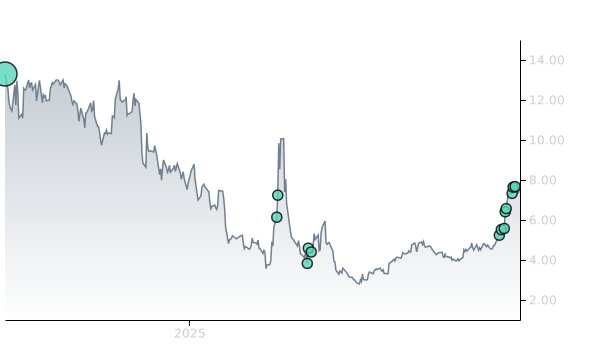
$ALMS insiders have traded $ALMS stock on the open market 33 times in the past 6 months. Of those trades, 33 have been purchases and 0 have been sales.
Here’s a breakdown of recent trading of $ALMS stock by insiders over the last 6 months:
- SRINIVAS AKKARAJU has made 15 purchases buying 1,853,488 shares for an estimated $19,069,487 and 0 sales.
- JAMES B. TANANBAUM has made 6 purchases buying 919,638 shares for an estimated $10,094,713 and 0 sales.
- CAPITAL MANAGEMENT VI LLC FORESITE has made 6 purchases buying 919,638 shares for an estimated $10,094,713 and 0 sales.
- LABS, LLC FORESITE has made 6 purchases buying 919,638 shares for an estimated $10,094,713 and 0 sales.
To track insider transactions, check out Quiver Quantitative's insider trading dashboard.
$ALMS Hedge Fund Activity
We have seen 77 institutional investors add shares of $ALMS stock to their portfolio, and 72 decrease their positions in their most recent quarter.
Here are some of the largest recent moves:
- SATURN V CAPITAL MANAGEMENT LP added 3,135,953 shares (+inf%) to their portfolio in Q4 2025, for an estimated $30,606,901
- OCTAGON CAPITAL ADVISORS LP added 2,530,700 shares (+inf%) to their portfolio in Q4 2025, for an estimated $24,699,632
- MPM BIOIMPACT LLC added 2,401,992 shares (+inf%) to their portfolio in Q4 2025, for an estimated $23,443,441
- TRIUM CAPITAL LLP removed 2,229,004 shares (-71.4%) from their portfolio in Q4 2025, for an estimated $21,755,079
- WOODLINE PARTNERS LP removed 1,751,150 shares (-100.0%) from their portfolio in Q4 2025, for an estimated $17,091,224
- CORMORANT ASSET MANAGEMENT, LP added 1,488,200 shares (+69.3%) to their portfolio in Q4 2025, for an estimated $14,524,832
- GENERAL ATLANTIC, L.P. removed 1,297,530 shares (-100.0%) from their portfolio in Q4 2025, for an estimated $12,663,892
To track hedge funds' stock portfolios, check out Quiver Quantitative's institutional holdings dashboard.
$ALMS Analyst Ratings
Wall Street analysts have issued reports on $ALMS in the last several months. We have seen 3 firms issue buy ratings on the stock, and 0 firms issue sell ratings.
Here are some recent analyst ratings:
- Chardan Capital issued a "Buy" rating on 01/21/2026
- HC Wainwright & Co. issued a "Buy" rating on 01/09/2026
- Wells Fargo issued a "Overweight" rating on 01/06/2026
To track analyst ratings and price targets for $ALMS, check out Quiver Quantitative's $ALMS forecast page.
$ALMS Price Targets
Multiple analysts have issued price targets for $ALMS recently. We have seen 8 analysts offer price targets for $ALMS in the last 6 months, with a median target of $38.5.
Here are some recent targets:
- Terence Flynn from Morgan Stanley set a target price of $38.0 on 03/20/2026
- Janani Sundararajan from Chardan Capital set a target price of $38.0 on 03/20/2026
- Christopher Raymond from Raymond James set a target price of $46.0 on 03/11/2026
- Alex Thompson from Stifel set a target price of $44.0 on 02/25/2026
- Mitchell S. Kapoor from HC Wainwright & Co. set a target price of $40.0 on 01/09/2026
- Thomas Smith from Leerink Partners set a target price of $32.0 on 01/07/2026
- Yatin Suneja from Guggenheim set a target price of $32.0 on 01/07/2026
Full Release
-
Envudeucitinib achieved robust PASI responses by Week 16, with significant continued improvements by Week 24 in PASI 90 (68.0%, 62.1%) and PASI 100 (41.0%, 39.5%)
-
Quality‑of‑life improvements and itch relief emerged ahead of PASI 90 skin clearance, and clear or almost clear scalp psoriasis emerged by Week 4, highlighting envudeucitinib’s early onset and broad clinical benefit
-
Envudeucitinib demonstrated a favorable safety and tolerability profile consistent with the Phase 2 program
-
Results presented as a late-breaking oral presentation at the 2026 American Academy of Dermatology (AAD) Annual Meeting
- Conference call and webcast scheduled for March 29, 2026, at 5:00 pm MDT / 7:00 pm EDT
SOUTH SAN FRANCISCO, Calif., March 28, 2026 (GLOBE NEWSWIRE) -- Alumis Inc. (Nasdaq: ALMS), a late-stage biopharmaceutical company developing next-generation targeted therapies for patients with immune-mediated diseases, today announced new data from its Phase 3 ONWARD1 and ONWARD2 clinical trials evaluating envudeucitinib, a next-generation, highly selective oral tyrosine kinase 2 (TYK2) inhibitor for moderate-to-severe plaque psoriasis. The data were presented in a late-breaking oral session at the 2026 AAD Annual Meeting.
Envudeucitinib demonstrated robust skin clearance, achieving high thresholds of clinical response at Week 16 that continued to deepen through Week 24 in both trials. Psoriasis Area and Severity Index (PASI) 90 responses, which emerged as early as Week 4, were achieved by 59.9% and 53.1% of envudeucitinib patients at Week 16 (and by 4.8% and 4.3% of placebo patients), increasing to 68.0% and 62.1% at Week 24. PASI 100 responses followed a similar trajectory, with 29.4% and 27.7% of envudeucitinib patients achieving complete skin clearance at Week 16 (as compared to 0.9% and 0.9% of placebo patients), rising to 41.0% and 39.5% at Week 24.
Envudeucitinib also demonstrated improvements in scalp psoriasis, a high-impact, difficult-to-treat area marked by profound effects on quality of life. At Week 24, approximately three out of four envudeucitinib patients 1 achieved clear or almost clear scalp psoriasis, measured by the Scalp Specific Physician’s Global Assessment (ss‑PGA 0/1), with over 30% responding as early as Week 4.
Broad and meaningful clinical benefits emerged early. Notably, quality-of-life and itch improvements appeared before PASI 90 skin clearance responses and continued to deepen through Week 24 across both trials.
- By Week 12, approximately 50% of envudeucitinib patients 2 achieved Dermatology Life Quality Index (DLQI) 0/1, demonstrating minimal to no impact of disease on quality of life.
- By Week 16, envudeucitinib patients achieved an average improvement of more than 4 points from baseline on the 0–10 Worst Pruritus Numeric Rating Scale (NRS), with clinically meaningful itch relief as early as Week 2—one of the most burdensome symptoms of psoriasis.
“What stands out with envudeucitinib in these trials is how quickly patients begin to feel relief from symptoms, and how deeply those improvements continue to build,” said leading dermatologist and psoriasis expert Dr. Andrew Blauvelt. “For people living with the daily burden of plaque psoriasis, this degree of skin clearance and symptom improvement from an oral investigational drug is impressive, especially when high‑impact sites are involved.”
Treatment with envudeucitinib was generally well tolerated through Week 24 in both trials, with a safety profile consistent with the Phase 2 program, including its long-term extension study. No clinically significant laboratory abnormalities or cases of tuberculosis reactivation were observed. Treatment-emergent adverse events were mostly mild, transient, self-limited, or responding to standard therapy, with the most common being headache, nasopharyngitis, upper respiratory tract infection, and acne. No new safety signals were observed.
“Envudeucitinib delivered the level of skin clearance, symptom relief, and safety in Phase 3 that the TYK2 mechanism has long promised but that has not been fully realized—until now—with sustained, maximal 24-hour inhibition of the IL-23 / IL-17 pathways,” said Dr. Jörn Drappa, Chief Medical Officer of Alumis. “The depth of clinical response, together with the favorable safety profile observed, underscores a differentiated clinical profile among marketed and investigational oral options and supports envudeucitinib’s potential to play a leading role in the treatment of patients with moderate‑to‑severe plaque psoriasis.”
Alumis is continuing to evaluate the long-term efficacy and safety of envudeucitinib in the ONWARD3 long-term extension trial and plans to submit a New Drug Application to the U.S. Food and Drug Administration in the second half of this year.
_______________
1
Based on patients with baseline ss‑PGA ≥3
2
Based on patients with baseline DLQI ≥2
Conference Call, Presentation and Webcast Details
Alumis will host a webcast for the investment community to review the Phase 3 ONWARD results presented at AAD which will begin at 5:00 pm MDT / 7:00 pm
EDT
on Sunday, March 29, 2026. The live webcast can be accessed via this
link
or on the
Events
tab on the Investors section of the Company’s website. A replay of the webcast will be made available on the Company’s website following the call.
In addition, Alumis has posted the AAD presentation under the
Publications
section of the Company’s website.
About the Phase 3 ONWARD Clinical Program
The Phase 3 ONWARD clinical program includes two parallel global, multicenter, randomized, double-blind, placebo and active-comparator-controlled 24week trials—ONWARD1 (NCT06586112) and ONWARD2 (NCT06588738)—evaluating the efficacy and safety of envudeucitinib in adults with moderate-to-severe plaque psoriasis. More than 1,700 patients were enrolled and randomized 2:1:1 to receive envudeucitinib 40 mg twice daily, placebo, or apremilast. Co-primary endpoints at Week 16 were the proportion of patients achieving Psoriasis Area and Severity Index (PASI) 75 and static Physician’s Global Assessment (sPGA) 0/1 compared with placebo. Patients completing Week 24 were eligible to enter ONWARD3 (NCT06846541), an ongoing long-term extension study assessing durability, greater maintenance of response, and long-term safety. The ONWARD clinical trials did not have a fasting requirement.
About Envudeucitinib
Envudeucitinib is a next-generation, highly selective, oral allosteric inhibitor of tyrosine kinase 2 (TYK2) precision‑engineered for maximal 24‑hour TYK2 inhibition to correct immune dysregulation across a range of diseases driven by proinflammatory mediators, including IL-23, IL-17, and Type I interferon. It is the only TYK2 inhibitor shown to deliver maximal target inhibition over 24 hours in humans. Clinical data indicate its selective targeting delivered sustained, maximal 24-hour inhibition in patients with psoriasis while minimizing off-target binding and effects. Alumis is currently evaluating the long-term efficacy and safety of envudeucitinib in the Phase 3 ONWARD3 clinical program for moderate-to-severe plaque psoriasis. Envudeucitinib is also being evaluated in LUMUS, a potentially pivotal Phase 2b clinical trial in patients with systemic lupus erythematosus, with topline data expected in the third quarter of 2026.
About Plaque Psoriasis
Plaque psoriasis is a chronic, immune-mediated disease driven by dysregulated IL-23 and IL-17 pathways that cause painful, itchy, scaly patches. It affects more than 8 million adults in the U.S. and often involves high-impact areas such as the scalp, face, hands, feet, and nails, significantly disrupting daily life. According to the National Psoriasis Foundation, about one in four patients has moderate-to-severe disease, based on quality-of-life impact and body surface area involved. Many remain inadequately controlled on current oral and topical treatments, underscoring the need for more effective, safe, and durable oral options that address the full burden of disease.
About TYK2 in Immune-Mediated Disease
Tyrosine kinase 2 (TYK2) is a key immune-signaling enzyme that regulates pathways across innate and adaptive immunity, including the IL-23/IL-17 axis and Type I interferon signaling that drive many high-burden immune-mediated diseases. Selective TYK2 inhibition has been widely validated as an effective, safe, and well-tolerated therapeutic approach. Genomic analyses conducted by Alumis highlight TYK2’s broad therapeutic potential, showing that it contributes to the pathogenesis of roughly 20 immune-driven conditions—including psoriasis, lupus, psoriatic arthritis, rheumatoid arthritis, Crohn’s disease, and ulcerative colitis. Additional evidence supports a genetic rationale for TYK2 inhibition in neuroinflammatory and neurodegenerative diseases where targeting TYK2 may offer a novel approach to treatment.
About Alumis
Alumis is a late-stage biopharma company developing next-generation targeted therapies with the potential to significantly improve patient health and outcomes across a range of immune-mediated diseases. Leveraging its proprietary data analytics platform and precision approach, Alumis is developing a pipeline of oral tyrosine kinase 2 inhibitors, consisting of envudeucitinib for the treatment of systemic immune-mediated disorders, such as moderate-to-severe plaque psoriasis and systemic lupus erythematosus, and A-005 for the treatment of neuroinflammatory and neurodegenerative diseases. In addition, the pipeline includes lonigutamab, a subcutaneously delivered anti–insulin-like growth factor 1 receptor therapy for the treatment of thyroid eye disease, as well as several preclinical programs identified through this precision approach. For more information, visit
www.alumis.com
or follow us on
LinkedIn
or
X
.
Forward-Looking Statements
This press release contains forward-looking statements within the meaning of federal securities laws, including the “safe harbor” provisions of the Private Securities Litigation Reform Act of 1995. These statements may be identified by words such as "aims," "anticipates," "believes," "could," "estimates," "expects," "forecasts," "goal," "intends," "may," "plans," "possible," "potential," "seeks," "will" and variations of these words or similar expressions that are intended to identify forward-looking statements. All statements, other than statements of historical facts, including without limitation those regarding Alumis’ plans to submit an NDA in the second half of 2026, the potential for envudeucitinib to play a leading role in the treatment of patients with moderate‑to‑severe plaque psoriasis, the timing of Alumis’ topline readout in its LUMUS Phase 2b program and statements regarding Alumis’ future plans and prospects, including development of its clinical pipeline; and any assumptions underlying any of the foregoing, are forward-looking statements. Any forward-looking statements in this press release are based on Alumis’ current expectations, estimates and projections only as of the date of this release and are subject to a number of risks and uncertainties that could cause actual results to differ materially and adversely from those set forth in or implied by such forward-looking statements. Readers are cautioned that actual results, levels of activity, safety, efficacy, performance or events and circumstances could differ materially from those expressed or implied in Alumis’ forward-looking statements due to a variety of risks and uncertainties, which include, without limitation, risks and uncertainties related to whether regulatory authorities determine that envudeucitinib in moderate-to-severe plaque psoriasis is sufficiently safe and efficacious and grant regulatory approval; whether regulatory authorities accept for filing Alumis’ planned NDA submission; Alumis’ ability to obtain regulatory approval of and ultimately commercialize Alumis’ clinical candidates, the timing and results of preclinical and clinical trials, Alumis’ ability to fund development activities and achieve development goals, and Alumis’ ability to protect its intellectual property
.
Additional information on the above risks and uncertainties and additional risks, uncertainties and factors that could cause actual results to differ materially from those in the forward-looking statements are contained in Alumis’ filings and reports with the Securities and Exchange Commission (SEC) under the heading “Risk Factors” and elsewhere in such filings and reports, including any future reports Alumis may file with the SEC from time to time. Alumis explicitly disclaims any obligation to update any forward-looking statements except to the extent required by law.