


Verekitug showed significant improvements in nasal polyp score and key secondary endpoints in a Phase 2 trial for CRSwNP.
Quiver AI Summary
Upstream Bio, Inc. announced positive results from the Phase 2 VIBRANT trial of its drug verekitug for treating chronic rhinosinusitis with nasal polyps (CRSwNP). Presented at the EAACI Congress 2026, the trial showed that approximately 80% of participants experienced significant improvements in nasal polyp scores after receiving verekitug every three months. Key secondary endpoints also demonstrated notable benefits, with 72% of participants seeing reductions in nasal congestion and 83% in total symptom scores. The study is significant considering many participants were inadequately controlled with standard treatments. Upstream Bio plans to initiate Phase 3 trials in CRSwNP and severe asthma in early 2027, reinforcing the potential of verekitug as a promising treatment option.
Potential Positives
- Verekitug showed clinically meaningful improvements in nasal polyp score (NPS) in approximately 80% of participants, indicating strong efficacy in treating chronic rhinosinusitis with nasal polyps (CRSwNP).
- The majority of verekitug-treated participants achieved significant improvements in key secondary endpoints, including 72% in nasal congestion and 83% in total symptom score, enhancing its potential attractiveness as a treatment option.
- The positive results and the planned initiation of Phase 3 trials for verekitug indicate that Upstream Bio is advancing its portfolio towards crucial development stages, which may lead to further market opportunities.
Potential Negatives
- There are significant risks and uncertainties highlighted regarding Upstream Bio's ability to advance verekitug through clinical development and obtain regulatory approval, which could impact their commercialization timeline.
- While the trial results are promising, they do not guarantee future success; the press release notes that results from preclinical or clinical studies may not predict future outcomes.
- Upstream Bio’s need for substantial additional funds to complete development activities may raise concerns about its financial viability and ability to execute its plans.
FAQ
What are the main results of the VIBRANT trial for verekitug?
The VIBRANT trial showed that approximately 80% of participants experienced clinically meaningful improvements in nasal polyp scores after taking verekitug.
How often is verekitug administered?
Verekitug is administered once every three months, providing a convenient dosing schedule for participants.
What secondary endpoints showed improvement with verekitug?
Key secondary endpoints showed 72% improvement in nasal congestion and 83% in total symptom scores among verekitug-treated participants.
What is chronic rhinosinusitis with nasal polyps (CRSwNP)?
CRSwNP is a chronic inflammatory disease affecting the upper airway, marked by nasal polyp growth and significant respiratory symptoms.
What does verekitug target in the body?
Verekitug targets and inhibits the thymic stromal lymphopoietin (TSLP) receptor, reducing pro-inflammatory signaling in diseases like asthma.
Disclaimer: This is an AI-generated summary of a press release distributed by GlobeNewswire. The model used to summarize this release may make mistakes. See the full release here.
$UPB Insider Trading Activity
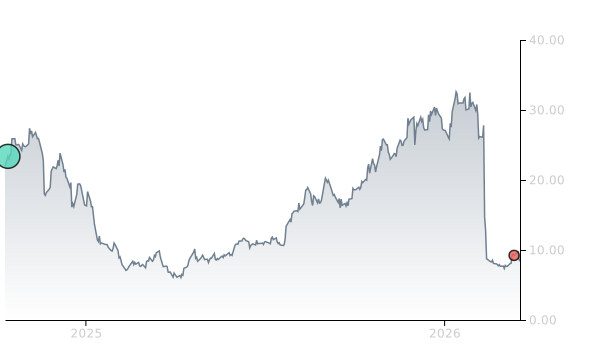
$UPB insiders have traded $UPB stock on the open market 2 times in the past 6 months. Of those trades, 0 have been purchases and 2 have been sales.
Here’s a breakdown of recent trading of $UPB stock by insiders over the last 6 months:
- AARON DEYKIN (Chief Medical Officer) sold 894 shares for an estimated $8,305
- MICHAEL GRAY (CFO and COO) sold 852 shares for an estimated $7,915
To track insider transactions, check out Quiver Quantitative's insider trading dashboard. You can access data on insider stock transactions through the Quiver Quantitative API insider transaction endpoint.
$UPB Hedge Fund Activity
We have seen 89 institutional investors add shares of $UPB stock to their portfolio, and 75 decrease their positions in their most recent quarter.
Here are some of the largest recent moves:
- NORGES BANK added 1,912,731 shares (+197.2%) to their portfolio in Q4 2025, for an estimated $51,930,646
- UBS GROUP AG removed 1,574,989 shares (-87.2%) from their portfolio in Q1 2026, for an estimated $14,174,901
- JANUS HENDERSON GROUP PLC added 1,527,958 shares (+inf%) to their portfolio in Q4 2025, for an estimated $41,484,059
- OMEGA FUND MANAGEMENT, LLC removed 1,326,293 shares (-100.0%) from their portfolio in Q1 2026, for an estimated $11,936,637
- FEDERATED HERMES, INC. added 979,276 shares (+203169.3%) to their portfolio in Q1 2026, for an estimated $8,813,484
- ALTSHULER SHAHAM LTD removed 961,479 shares (-71.7%) from their portfolio in Q1 2026, for an estimated $8,653,311
- Y-INTERCEPT (HONG KONG) LTD added 954,072 shares (+2049.2%) to their portfolio in Q1 2026, for an estimated $8,586,648
To track hedge funds' stock portfolios, check out Quiver Quantitative's institutional holdings dashboard. You can access data on hedge funds moves and 13F filings through the Quiver Quantitative API 13F endpoint.
$UPB Analyst Ratings
Wall Street analysts have issued reports on $UPB in the last several months. We have seen 1 firms issue buy ratings on the stock, and 0 firms issue sell ratings.
Here are some recent analyst ratings:
- Mizuho issued a "Outperform" rating on 12/18/2025
To track analyst ratings and price targets for $UPB, check out Quiver Quantitative's $UPB forecast page.
$UPB Price Targets
Multiple analysts have issued price targets for $UPB recently. We have seen 4 analysts offer price targets for $UPB in the last 6 months, with a median target of $25.5.
Here are some recent targets:
- Tessa Romero from JP Morgan set a target price of $8.0 on 06/12/2026
- Matthew Caufield from HC Wainwright & Co. set a target price of $36.0 on 06/03/2026
- Joseph Catanzaro from Mizuho set a target price of $50.0 on 05/14/2026
- Cory Kasimov from Evercore ISI Group set a target price of $15.0 on 03/27/2026
Full Release
– Verekitug, administered once every three months, led to clinically meaningful improvements in nasal polyp score (NPS) in approximately 80% of participants –
– Majority of verekitug-treated participants experienced clinically meaningful improvements across key secondary endpoints, including 72% in nasal congestion and 83% in CRSwNP total symptom score –
WALTHAM, Mass., June 14, 2026 (GLOBE NEWSWIRE) -- Upstream Bio, Inc. (Nasdaq: UPB), a clinical-stage company developing treatments for inflammatory diseases, with an initial focus on severe respiratory disorders, today presented new responder analyses from the Phase 2 VIBRANT trial of verekitug in participants with chronic rhinosinusitis with nasal polyps (CRSwNP). The findings were presented during an oral session at the European Academy of Allergy and Clinical Immunology (EAACI) 2026 Congress in Istanbul, Turkey.
As previously reported, verekitug administered every three months achieved a placebo-adjusted reduction in NPS of -1.95 (p<0.0001) at Week 24, after adjustment for concomitant rescue therapy with systemic corticosteroids. This improvement is nearly double the 1.0 point reduction generally considered clinically meaningful.
The new post-hoc responder analyses further demonstrated that the significant majority of verekitug-treated participants achieved clinically meaningful improvements in NPS, the primary endpoint, and across key secondary endpoints in the Phase 2 VIBRANT trial.
“These data underscore the depth and consistency of verekitug’s clinical benefit, with significant improvements in nasal polyp burden, congestion, sense of smell and other key symptoms observed in the overwhelming majority of participants with inadequately controlled, severe CRSwNP,” said Aaron Deykin, Chief Medical Officer and Head of Research & Development at Upstream Bio. “The compelling new analyses add to the increasing and comprehensive body of evidence supporting verekitug’s potential, as the only known antibody targeting the TSLP receptor in clinical development, to deliver differentiated and durable efficacy among biologic therapies for serious respiratory diseases. Together with the convenience of quarterly dosing, we believe this profile could meaningfully advance the standard of biologic treatment. We are excited to be rapidly progressing toward the initiation of Phase 3 trials in both CRSwNP and severe asthma in the first quarter of 2027.”
“For people living with CRSwNP and the physicians who help manage their disease, the goals of treatment extend beyond reducing disease burden to achieving meaningful improvements in nasal congestion, breathing, and sense of smell,” said Joaquim Mullol, MD, PhD, Professor of Research and Head of the Laboratory of Clinical and Experimental Respiratory Immunoallergy at the August Pi Sunyer Biomedical Research Institute, Barcelona, Spain, and a VIBRANT trial investigator. “These findings demonstrate that most participants in the VIBRANT trial achieved clinically meaningful improvements across these important measures. The results support every three-month administration of verekitug as a potentially effective treatment option for patients whose CRSwNP remain inadequately controlled despite standard intranasal corticosteroid therapy.”
About the VIBRANT Trial Responder Analyses
VIBRANT (NCT06164704) was a Phase 2, global, randomized, double-blind, placebo-controlled, parallel group clinical trial that evaluated the efficacy and safety of verekitug over 24 weeks in 81 adults with severe, inadequately controlled CRSwNP, despite treatment with standard-of-care intranasal steroids. The VIBRANT trial demonstrated the efficacy of verekitug administered every 12 weeks in participants with uncontrolled, severe CRSwNP, in improving NPS, sinonasal symptoms, and sinus disease. The new responder analyses evaluated the proportion of participants who achieved predefined thresholds for clinically meaningful improvements across efficacy endpoints at Week 24.
Key findings included:
- Nasal Polyp Score (Primary endpoint): 79% of verekitug-treated participants, or approximately four in five treated, achieved clinically meaningful improvements in NPS at week 24, compared to 24% in the placebo group (odds ratio [95% CI], 12.06 [4.09–35.53] p <0.0001).
- Nasal Congestion Score: 72% of verekitug-treated participants demonstrated at least one point of improvement in nasal congestion, a key secondary endpoint, compared to 39% in the placebo group (odds ratio [95% CI]: 3.99 [1.50–10.59]; p=0.0046).
- Total Symptom Score: 83% of verekitug-treated participants demonstrated at least four points of improvement in total symptom score, a key secondary endpoint, compared to 37% in the placebo group (odds ratio [95% CI]: 8.57 [2.86–25.67]; p<0.0001).
- Difficulty with sense of smell (Loss of smell): 69% of verekitug-treated participants demonstrated at least one point of improvement in sense of smell, a key secondary endpoint, compared to 21% in the placebo group (odds ratio [95% CI]: 8.52 [2.97–24.45]; p<0.0001).
-
Lund-Mackay score
:
78% of verekitug-treated participants demonstrated at least five points of improvement in the Lund-Mackay score, a key secondary endpoint measuring extent of sinus disease by CT scan, compared to 12% in the placebo group (odds ratio [95% CI]: 25.38 [6.86–93.83]; p<0.0001).
As previously reported, verekitug demonstrated significant and clinically meaningful improvements in key secondary endpoints, including 76% (p=0.03) reduction in the need for surgery or systemic corticosteroids compared with placebo. Verekitug was generally well tolerated, demonstrating a favorable safety profile consistent with previous studies, with no serious adverse events observed during the trial.
Upstream Bio designed the VIBRANT trial using endpoints that, pending interactions with regulatory authorities, could produce data to support submissions for product approval. The Company plans to initiate dosing in Phase 3 registrational trials in both CRSwNP and severe asthma in the first quarter of 2027.
A digital version of the presentation can be found on the Publications section of the Upstream Bio website.
About CRSwNP
CRSwNP is a chronic inflammatory disease of the upper airway, marked by inflammation in the nose and sinuses and the presence of nasal polyps. CRSwNP has four main symptoms: runny nose or postnasal drip, nasal congestion, facial pressure and/or pain, and loss of smell and/or taste. Despite available treatments such as corticosteroids, surgery and, more recently, biologics, quality-of-life studies and post-surgical recurrence rates clearly show that many people with CRSwNP have uncontrolled symptoms that impact their daily life and that current treatments are not meeting their needs. It is estimated that CRSwNP affects up to 4% of the general population, of whom 40% have uncontrolled disease.
Nasal polyps are associated with significant disease burden and debilitating symptoms. It is estimated that over 40% of people with severe asthma also have CRSwNP, and that up to 70% of people with CRSwNP also have asthma, demonstrating a strong association between the two conditions.
About the Phase 2 VIBRANT Trial
The Phase 2 VIBRANT trial (NCT06164704) was a global, randomized, placebo-controlled, parallel group clinical trial, which was designed to assess the efficacy and safety of verekitug in adults with CRSwNP who were receiving concurrent intranasal corticosteroid therapy. Participants received either 100 mg of verekitug or placebo subcutaneously every 12 weeks for 24 weeks. The primary endpoint was change in endoscopic nasal polyp score at Week 24, a primary endpoint that has been used in several registrational trials for other biologic treatments for CRSwNP. Secondary endpoints included: nasal congestion score, sinus opacification, difficulty with sense of smell, total symptom score, percentage of participants requiring systemic corticosteroids or nasal polyp surgery, and time to first such interventions up to Week 24.
About Verekitug
Verekitug is a novel recombinant fully human immunoglobulin G1 (IgG1) monoclonal antibody that binds to the thymic stromal lymphopoietin (TSLP) receptor and inhibits proinflammatory signaling initiated by TSLP. It is the only known antagonist currently in clinical development that targets and inhibits the TSLP receptor.
TSLP is a cytokine that is a key driver of the inflammatory response in major allergic and inflammatory diseases, such as asthma, where disruption of TSLP signaling has been clinically validated as an effective therapeutic strategy. TSLP activation is one of the first events in the inflammatory cascade stimulated by allergens, viruses and other triggers, initiating the activation of downstream targets such as IL-4, IL-5, IL-13, IL-17 and IgE. Because TSLP is a target upstream in the inflammatory cascade, blocking the TSLP receptor presents an opportunity for a single treatment to impact the drivers of multiple pathological inflammatory processes across a broad set of diseases.
Verekitug has advanced into three separate global, placebo-controlled, randomized Phase 2 clinical trials, including the positive VIBRANT trial (NCT06164704) in patients with CRSwNP and the positive VALIANT trial (NCT06196879) in patients with severe asthma. The VENTURE trial (NCT06981078) in patients with moderate-to-severe chronic obstructive pulmonary disease (COPD) is ongoing. Additionally, in May 2025, Upstream Bio initiated the VALOUR trial (NCT06966479), a long-term extension study in eligible participants with severe asthma who completed the VALIANT Phase 2 clinical trial.
About Upstream Bio
Upstream Bio is a clinical-stage biotechnology company developing treatments for inflammatory diseases, with an initial focus on severe respiratory disorders. The Company is developing verekitug, the only known antagonist currently in clinical development that targets and inhibits the receptor for thymic stromal lymphopoietin (TSLP), a cytokine which is a clinically validated driver of inflammatory response positioned upstream of multiple signaling cascades that affect a variety of immune-mediated diseases. The Company has advanced this highly potent monoclonal antibody into separate Phase 2 trials for the treatment of chronic rhinosinusitis with nasal polyps (CRSwNP), severe asthma, and chronic obstructive pulmonary disease (COPD). Upstream Bio’s team is committed to maximizing verekitug’s unique attributes to address the substantial unmet needs for patients underserved by today’s standard of care. To learn more, please visit
www.upstreambio.com
.
Forward-Looking Statements
This press release contains “forward-looking statements” within the meaning of Section 27A of the Securities Act of 1933 and Section 21E of the Securities Exchange Act of 1934, each as amended. These statements may be identified by words such as “aims,” “anticipates,” “believes,” “continue,” “could,” “estimates,” “expects,” “forecasts,” “goal,” “intends,” “may,” “plans,” “possible,” “potential,” “predict,” “project,” “seeks,” “should,” “target,” “will” and variations of these words or similar expressions. Any statements in this press release that are not statements of historical fact may be deemed to be forward-looking statements. These forward-looking statements include, without limitation, express or implied statements regarding: the clinical development of verekitug for the treatment of severe asthma, CRSwNP and COPD, including the initiation, timing, progress and results of ongoing and planned clinical trials; expectations regarding the planned regulatory interactions with the U.S. Food and Drug Administration on the data from the Phase 2 VALIANT and VIBRANT trials and the outcomes of any such interactions; expectations regarding the timing of Phase 3 initiation in CRSwNP and severe asthma, including the expected initiation of dosing in the first quarter of 2027; expectations for future discussions with regulatory authorities and the potential of the endpoints of the Company’s clinical trials to produce data that could support submissions for product approval; the potential for verekitug to provide clinical benefit and deliver best-in-class efficacy with quarterly dosing convenience; expectations regarding the differentiation, safety, efficacy, tolerability, and/or extended dosing interval of verekitug; and expectations for the size and growth potential of the market for verekitug and the Company’s ability to serve that market. Any forward-looking statements in this press release are based on the Company’s current expectations, estimates and projections only as of the date of this release and are subject to a number of risks and uncertainties that could cause actual results to differ materially and adversely from those set forth in or implied by such forward-looking statements. Readers are cautioned that actual results, levels of activity, safety, efficacy, performance or events and circumstances could differ materially from those expressed or implied in the Company’s forward-looking statements due to a variety of risks and uncertainties, which include, without limitation, risks and uncertainties related to: Upstream Bio’s ability to advance verekitug through clinical development, and to obtain regulatory approval of and ultimately commercialize verekitug on the expected timeline, if at all; the results of preclinical studies or clinical studies not being predictive of future results in connection with future studies; the initiation, timing, progress and results of clinical trials; Upstream Bio’s ability to fund its development activities and achieve development goals; Upstream Bio’s dependence on third parties to conduct clinical trials and manufacture verekitug, and commercialize verekitug, if approved; Upstream Bio’s ability to attract, hire and retain key personnel, and protect its intellectual property; Upstream Bio’s financial condition and need for substantial additional funds in order to complete development activities and commercialize verekitug, if approved; regulatory developments and approval processes of the U.S. Food and Drug Administration and comparable foreign regulatory authorities; Upstream Bio’s competitors and industry; and other risks and uncertainties described in greater detail under the caption “Risk Factors” in Upstream Bio’s most recent Annual Report on Form 10-K and Quarterly Report on Form 10-Q, as well as any subsequent filings with the SEC. Any forward-looking statements represent Upstream Bio’s views only as of today and should not be relied upon as representing its views as of any subsequent date. Upstream Bio explicitly disclaims any obligation or undertaking to update any forward-looking statements contained herein to reflect any change in its expectations or any changes in events, conditions or circumstances on which any such statement is based except to the extent required by law, and claims the protection of the safe harbor for forward-looking statements contained in the Private Securities Litigation Reform Act of 1995.
Investor and Media Contact
Meggan Buckwell
Director, Corporate Communications and Investor Relations
[email protected]