


Revolution Medicines reports significant survival benefits for daraxonrasib in Phase 3 trial for metastatic pancreatic cancer.
Quiver AI Summary
Revolution Medicines, Inc. announced the positive results of its Phase 3 RASolute 302 trial for daraxonrasib, an oral RAS(ON) multi-selective inhibitor, in patients with previously treated metastatic pancreatic ductal adenocarcinoma (PDAC). The trial demonstrated significant improvements in overall survival and progression-free survival compared to standard chemotherapy, with a 60% reduction in the risk of death and median overall survival extending over one year. Daraxonrasib also showed a favorable safety profile, with patients reporting better quality of life during treatment. These findings, which will be presented at the ASCO Annual Meeting and published in The New England Journal of Medicine, suggest daraxonrasib could redefine treatment standards for this aggressive cancer, leading Revolution Medicines to seek regulatory approval for its use.
Potential Positives
- Revolution Medicines announced significant results from the Phase 3 RASolute 302 trial, demonstrating daraxonrasib's ability to reduce the risk of death by 60% in patients with previously treated metastatic pancreatic cancer.
- Daraxonrasib significantly improved overall survival and progression-free survival compared to standard chemotherapy, establishing it as a potential new standard of care for treating this aggressive cancer.
- The drug displayed a manageable safety profile, with fewer severe treatment-related adverse events leading to treatment discontinuation compared to chemotherapy.
- The trial results are set to be submitted to global regulatory authorities, including the FDA, potentially accelerating daraxonrasib's path to market approval.
Potential Negatives
- The press release emphasizes the positive outcomes of the daraxonrasib trial, yet it does not mention if there were any significant adverse events or long-term effects observed in patients who received the treatment, which could raise concerns about its comprehensive safety profile.
- While the results are encouraging, the drug is still in the investigational phase and not yet approved, indicating uncertainty about its future availability and potential market acceptance.
- Despite the trial's successes, it does not provide clear information on how quickly Revolution Medicines will be able to bring daraxonrasib to market, which may lead to skepticism among investors regarding the company's timeline for financial returns.
FAQ
What is daraxonrasib and its significance in pancreatic cancer treatment?
Daraxonrasib is an oral RAS(ON) multi-selective inhibitor demonstrating significant improvements in overall and progression-free survival in metastatic pancreatic cancer.
How did daraxonrasib perform in the Phase 3 RASolute 302 trial?
Daraxonrasib reduced the risk of death by 60% and achieved median overall survival of over one year, outperforming standard chemotherapy.
What were the key findings of the RASolute 302 clinical trial?
The trial met all primary endpoints, showing improved survival rates and quality of life for patients treated with daraxonrasib compared to chemotherapy.
What are the next steps for Revolution Medicines regarding daraxonrasib?
Revolution Medicines plans to submit data to regulatory authorities, including the FDA, for daraxonrasib's approval as a new treatment for pancreatic cancer.
How does daraxonrasib compare to traditional chemotherapy?
Patients on daraxonrasib reported less severe side effects and improved quality of life measures compared to those on traditional chemotherapy regimens.
Disclaimer: This is an AI-generated summary of a press release distributed by GlobeNewswire. The model used to summarize this release may make mistakes. See the full release here.
$RVMD Insider Trading Activity
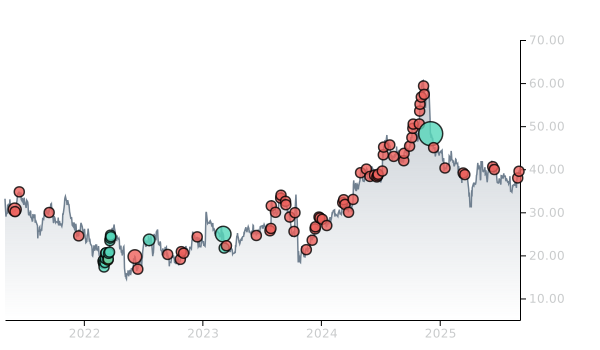
$RVMD insiders have traded $RVMD stock on the open market 43 times in the past 6 months. Of those trades, 0 have been purchases and 43 have been sales.
Here’s a breakdown of recent trading of $RVMD stock by insiders over the last 6 months:
- MARK A GOLDSMITH (See Remarks) has made 0 purchases and 16 sales selling 184,265 shares for an estimated $24,117,779.
- MARGARET A HORN (Chief Operating Officer) has made 0 purchases and 5 sales selling 84,430 shares for an estimated $8,370,274.
- ANTHONY MANCINI (See Remarks) has made 0 purchases and 11 sales selling 43,691 shares for an estimated $4,472,560.
- JACK ANDERS (Chief Financial Officer) has made 0 purchases and 3 sales selling 15,857 shares for an estimated $1,493,158.
- STEPHEN MICHAEL KELSEY (See Remarks) has made 0 purchases and 2 sales selling 9,749 shares for an estimated $846,387.
- JEFF CISLINI (General Counsel) has made 0 purchases and 4 sales selling 6,554 shares for an estimated $603,338.
- LIN WEI (Chief Medical Officer) sold 2,073 shares for an estimated $206,222
- XIAOLIN WANG (See Remarks) sold 2,010 shares for an estimated $199,955
To track insider transactions, check out Quiver Quantitative's insider trading dashboard. You can access data on insider stock transactions through the Quiver Quantitative API insider transaction endpoint.
$RVMD Hedge Fund Activity
We have seen 315 institutional investors add shares of $RVMD stock to their portfolio, and 184 decrease their positions in their most recent quarter.
Here are some of the largest recent moves:
- ADAGE CAPITAL PARTNERS GP, L.L.C. added 4,733,211 shares (+637.6%) to their portfolio in Q1 2026, for an estimated $460,304,769
- T. ROWE PRICE INVESTMENT MANAGEMENT, INC. removed 3,482,061 shares (-72.8%) from their portfolio in Q4 2025, for an estimated $277,346,158
- BELLEVUE GROUP AG removed 3,461,263 shares (-69.1%) from their portfolio in Q1 2026, for an estimated $336,607,826
- BLACKROCK, INC. added 2,286,050 shares (+25.6%) to their portfolio in Q1 2026, for an estimated $222,318,362
- DARWIN GLOBAL MANAGEMENT, LTD. added 2,211,018 shares (+inf%) to their portfolio in Q1 2026, for an estimated $215,021,500
- GENERAL ATLANTIC, L.P. removed 2,105,137 shares (-74.8%) from their portfolio in Q1 2026, for an estimated $204,724,573
- VESTAL POINT CAPITAL, LP added 2,080,000 shares (+705.1%) to their portfolio in Q1 2026, for an estimated $202,280,000
To track hedge funds' stock portfolios, check out Quiver Quantitative's institutional holdings dashboard. You can access data on hedge funds moves and 13F filings through the Quiver Quantitative API 13F endpoint.
$RVMD Analyst Ratings
Wall Street analysts have issued reports on $RVMD in the last several months. We have seen 1 firms issue buy ratings on the stock, and 0 firms issue sell ratings.
Here are some recent analyst ratings:
- Guggenheim issued a "Buy" rating on 01/20/2026
To track analyst ratings and price targets for $RVMD, check out Quiver Quantitative's $RVMD forecast page.
$RVMD Price Targets
Multiple analysts have issued price targets for $RVMD recently. We have seen 16 analysts offer price targets for $RVMD in the last 6 months, with a median target of $168.0.
Here are some recent targets:
- Jeffrey Walch from Bernstein set a target price of $151.0 on 05/22/2026
- Gregory Renza from Truist Securities set a target price of $179.0 on 05/18/2026
- Ami Fadia from Needham set a target price of $183.0 on 05/07/2026
- Kelsey Goodwin from Piper Sandler set a target price of $172.0 on 05/07/2026
- Robert Driscoll from Wedbush set a target price of $165.0 on 05/07/2026
- Leonid Timashev from RBC Capital set a target price of $165.0 on 05/07/2026
- Robert Burns from HC Wainwright & Co. set a target price of $169.0 on 04/22/2026
Full Release
REDWOOD CITY, Calif., May 31, 2026 (GLOBE NEWSWIRE) -- Revolution Medicines, Inc. (Nasdaq: RVMD), a late-stage clinical oncology company developing targeted therapies for patients with RAS-addicted cancers, today announced detailed results from the global, randomized Phase 3 RASolute 302 clinical trial evaluating daraxonrasib, an oral RAS(ON) multi-selective inhibitor, in patients with previously treated metastatic pancreatic ductal adenocarcinoma (PDAC). The results will be presented during a late-breaking Plenary Session (LBA5) at the 2026 American Society of Clinical Oncology (ASCO) Annual Meeting at 3:21 p.m. CDT today and were published today in The New England Journal of Medicine .
RAS, a key growth control switch in human cells, is the primary oncogenic driver of PDAC, a disease that is typically characterized by excessive RAS(ON) signaling in tumors with or without a mutant allele of RAS. Daraxonrasib is the first investigational agent in a novel class of RAS(ON) multi-selective inhibitors designed to address a diverse and broad spectrum of RAS variants. In the randomized Phase 3 RASolute 302 trial, once-daily oral daraxonrasib demonstrated unprecedented improvements in overall survival (OS) and progression-free survival (PFS) compared to standard of care cytotoxic chemotherapy in patients with previously treated metastatic PDAC, with or without an identified tumor RAS mutation. All primary and key secondary endpoints of the trial were met. Daraxonrasib exhibited a manageable safety profile and patients treated with daraxonrasib reported significantly delayed deterioration in cancer-related pain, overall global health status and quality of life, compared to those treated with chemotherapy.
“Revolution Medicines has been singularly focused on developing bold new targeted medicines for treating patients with RAS-driven cancers, which are some of the most aggressive and difficult-to-treat diseases in oncology. The data from the Phase 3 RASolute 302 trial clearly validate our pioneering, science-driven approach and add to the growing body of evidence underscoring the broad potential of RAS(ON) inhibition that we are testing across pancreatic cancer and other RAS-driven cancers,” said Mark A. Goldsmith, M.D., Ph.D., chief executive officer and chairman of Revolution Medicines.
“Daraxonrasib significantly elevates the survival bar in the treatment of one of the deadliest human cancers, while better preserving quality of life compared to chemotherapy. In this trial, daraxonrasib redefined treatment expectations in previously treated metastatic pancreatic cancer by reducing the risk of death by 60% and increasing median overall survival to more than one year, a result not previously reported in any Phase 3 clinical trial in any line of therapy for this disease. These striking results firmly support daraxonrasib as the new standard of care for patients with previously treated metastatic pancreatic cancer, and usher in a new era of RAS-targeted therapy for patients living with this disease,” added Dr. Goldsmith.
"These results from the Phase 3 RASolute 302 trial of daraxonrasib represent a major milestone for patients facing metastatic pancreatic cancer,” said Brian M. Wolpin, M.D., M.P.H., director of the Hale Family Center for Pancreatic Cancer Research at Dana-Farber Cancer Institute, professor of medicine at Harvard Medical School, and principal investigator for the RASolute 302 trial. “For many patients, second line chemotherapy provides modest benefits, and new treatments delivering more durable tumor control have been urgently needed. In this global randomized trial, daraxonrasib, an oral RAS(ON) inhibitor, doubled median overall survival compared to standard of care chemotherapy for patients with previously treated metastatic pancreatic cancer. Importantly, this survival benefit was achieved with a generally manageable safety profile, highlighted by the low rate of treatment discontinuation due to treatment-related side effects. These results will change how scientists, clinicians, and patients think about treatment for pancreatic cancer, and support a new paradigm where RAS(ON) inhibition enters standard of care for patients with previously treated metastatic pancreatic adenocarcinoma."
Summary of Phase 3 RASolute 302 Clinical Trial Results
The trial enrolled 500 patients with previously treated metastatic PDAC, randomized to receive once-daily oral daraxonrasib (n=248) or investigator’s choice of four different cytotoxic chemotherapy regimens (n=252), which represent standard of care across the globe. At the February 10, 2026 data cutoff, median follow-up was 8.5 months (range, 3.2–15.9). The trial met all primary and key secondary endpoints, demonstrating statistically significant and clinically meaningful improvements versus chemotherapy in both the RAS G12 mutant population (daraxonrasib n=228; chemotherapy n=231) and the overall, or intent-to-treat (ITT), population, which included patients with or without an identified tumor RAS mutation.
Daraxonrasib resulted in a 60% reduction in the risk of death in both the RAS G12 and ITT populations. In the RAS G12 population, daraxonrasib demonstrated a hazard ratio (HR) of 0.40 (95% confidence interval [CI]: 0.30–0.54; p<0.0001), with a median OS of 13.2 months (95% CI: 10.0–not estimable [NE]) compared to 6.6 months (95% CI: 5.4–8.2) for chemotherapy. Consistent results were observed in the ITT population, which showed an HR of 0.40 (95% CI: 0.30–0.53; p<0.0001), with a median OS of 13.2 months (95% CI: 10.0–NE) for daraxonrasib compared to 6.7 months (95% CI: 5.8–8.0) for chemotherapy. Patients on daraxonrasib also showed significant improvements in PFS as assessed by a blinded independent central review. In the RAS G12 population, the HR for PFS was 0.45 (95% CI: 0.34–0.59; p<0.0001), with a median PFS of 7.3 months (95% CI: 6.3–8.1) for daraxonrasib compared to 3.5 months (95% CI: 2.9–3.8) for chemotherapy. Similarly, in the ITT population, the HR for PFS was 0.49 (95% CI: 0.38–0.64; p<0.0001), with a median PFS of 7.2 months (95% CI: 5.7–7.5) for daraxonrasib versus 3.6 months (95% CI: 2.9–4.2) for chemotherapy. Objective response rates were 33.2% with daraxonrasib compared to 11.8% with chemotherapy in the RAS G12 population, and 31.6% with daraxonrasib compared to 11.2% with chemotherapy in the ITT population.
Daraxonrasib was generally well tolerated with a manageable safety profile and no unexpected safety findings. Grade 3 or higher treatment-related adverse events (TRAEs) occurred in 43.6% of patients receiving daraxonrasib versus 57.5% of patients receiving chemotherapy. The most frequent Grade 3 or higher TRAEs occurring in at least 10% of patients who received daraxonrasib were rash (14%) and stomatitis (12%). In patients who received chemotherapy, the most common Grade 3 or higher TRAEs were neutropenia (28%), anemia (16%), and thrombocytopenia (10%). Treatment-related serious adverse events occurred in 10.8% of patients receiving daraxonrasib versus 18.7% receiving chemotherapy. One Grade 5 TRAE of pneumonitis was reported in the daraxonrasib arm (0.4%), and no Grade 5 TRAEs were reported in the chemotherapy arm. Discontinuation of therapy due to TRAEs occurred in 1.2% of patients receiving daraxonrasib, compared with 11.2% on chemotherapy. The median dose intensity for daraxonrasib was 93.1% and across chemotherapy regimens it was 65.3-95.0%.
The RASolute 302 trial also evaluated patient-reported outcomes as an important secondary outcome, given the high symptom burden that patients with metastatic PDAC experience. Daraxonrasib demonstrated a statistically significant and clinically meaningful delay in the time to deterioration in pain, global health status and quality of life when compared to standard of care chemotherapy. In the ITT population, the HR for time to deterioration in pain was 0.51 (95% CI: 0.37–0.71; p<0.0001), and the HR for global health status and quality of life was 0.60 (95% CI: 0.46–0.79; p=0.0002).
Revolution Medicines intends to submit these data to global regulatory authorities, including to the U.S. Food and Drug Administration (FDA) as part of a New Drug Application under a Commissioner’s National Priority Voucher. In addition, the U.S. FDA recently authorized the company to initiate an expanded access treatment protocol (EAP) for daraxonrasib for eligible patients. Additional details on the daraxonrasib EAP are available here .
Company Webcast
Revolution Medicines will host a webcast on May 31, 2026, at 6:00 p.m. Central Time (7:00 p.m. Eastern Time). To listen to the live webcast, or access the archived webcast, please visit: https://ir.revmed.com/events-and-presentations . Following the live webcast, a replay will be available on the company’s website for at least 14 days.
About the RASolute 302 Clinical Trial
RASolute 302 ( NCT06625320 ) is a global, randomized Phase 3 registrational clinical trial designed to evaluate the efficacy and safety of daraxonrasib as a monotherapy in patients with previously treated metastatic pancreatic ductal adenocarcinoma (PDAC). In the trial, patients were randomized to receive either an oral dose of 300 mg daraxonrasib once daily or investigator’s choice of four different cytotoxic chemotherapy regimens, which represent standard of care across the globe. The trial enrolled patients with metastatic PDAC harboring a wide range of RAS variants, including those with RAS G12 mutations (such as G12D, G12V, and G12R), as well as patients without an identified tumor RAS mutation (wild type).
The primary endpoints of the RASolute 302 trial were progression-free survival (PFS), as assessed by a Blinded Independent Central Review according to RECIST 1.1, and overall survival (OS) in patients with tumors harboring RAS G12 mutations. Secondary endpoints included PFS and OS in all enrolled patients (the intent-to-treat population) encompassing patients with and without identified tumor RAS mutations, as well as objective response rate, duration of response, and patient-reported quality of life.
About Daraxonrasib
Daraxonrasib is an investigational, oral RAS(ON) multi-selective, non-covalent inhibitor that is not approved by any regulatory authority, including in the United States or Europe. The U.S. Food and Drug Administration (FDA) granted daraxonrasib Breakthrough Therapy Designation and Orphan Drug Designation for the treatment of patients with previously treated metastatic pancreatic ductal adenocarcinoma (PDAC) harboring G12 mutations. In addition, daraxonrasib was selected for the FDA Commissioner’s National Priority Voucher pilot program, which is intended to accelerate the development and review of therapies aligned with U.S. national health priorities.
Daraxonrasib is designed to target cancers driven by a broad range of common RAS genotypes, including PDAC, non-small cell lung cancer (NSCLC), and colorectal cancer. In addition to the RASolute 302 trial, daraxonrasib is being evaluated in three other global Phase 3 registrational trials, including in patients with PDAC and metastatic RAS mutant NSCLC.
Daraxonrasib works by suppressing RAS signaling through inhibition of the interaction between both wild-type and mutant RAS(ON) proteins and their downstream effectors.
About Pancreatic Cancer and Pancreatic Ductal Adenocarcinoma
Pancreatic cancer is one of the most lethal malignancies, characterized by its typically late-stage diagnosis, resistance to standard chemotherapy, and high mortality rate. In the U.S., recent estimates indicate that annually approximately 60,000 people will be diagnosed with pancreatic cancer, and about 50,000 people will die from this aggressive disease. 1
Due to the lack of early symptoms and detection methods, approximately 80% of patients are diagnosed with PDAC at an advanced or metastatic stage. It is the most commonly RAS-addicted of all major cancers, and more than 90% of patients have tumors that harbor RAS mutations. 2 Metastatic PDAC remains one of the most common causes of cancer-related deaths in the U.S., with a five-year survival rate of approximately 3%. 3,4
About Revolution Medicines, Inc.
Revolution Medicines is a late-stage clinical oncology company developing novel targeted therapies for patients with RAS-addicted cancers. The company’s R&D pipeline comprises RAS(ON) inhibitors designed to suppress diverse oncogenic variants of RAS proteins. The company’s RAS(ON) inhibitors daraxonrasib (RMC-6236), a RAS(ON) multi-selective inhibitor; elironrasib (RMC-6291), a RAS(ON) G12C-selective inhibitor; zoldonrasib (RMC-9805), a RAS(ON) G12D-selective inhibitor; and RMC-5127, a RAS(ON) G12V-selective inhibitor, are currently in clinical development. Additional development opportunities in the company’s pipeline focus on RAS(ON) mutant-selective inhibitors, including RMC-0708 (Q61H) and RMC-8839 (G13C). For more information, please visit www.revmed.com and follow us on LinkedIn .
Forward-Looking Statements
This press release contains forward-looking statements within the meaning of the U.S. Private Securities Litigation Reform Act of 1995. Any statements in this press release that are not historical facts may be considered “forward-looking statements,” including without limitation statements regarding the
broad potential of RAS(ON) inhibition; daraxonrasib becoming a standard of care; treatment practices for pancreatic cancer;
and progression of clinical studies and findings from these studies, including the tolerability, safety, and potential efficacy of the company’s candidates being studied.
Forward-looking statements are typically, but not always, identified by the use of words such as “aims,” “anticipate,” "believe," "estimate," "expect," "plan," “potential,” “project,” “up to,” "will" and other similar terminology indicating future results. Such forward-looking statements are subject to substantial risks and uncertainties that could cause the company’s development programs, future results, performance, or achievements to differ materially from those anticipated in the forward-looking statements. Such risks and uncertainties include without limitation risks and uncertainties inherent in the drug development process, including the company’s programs’ development stages, the process of designing and conducting preclinical and clinical trials, the regulatory approval processes, the timing of regulatory filings, the challenges associated with manufacturing drug products, the company’s ability to successfully establish, protect and defend its intellectual property, other matters that could affect the sufficiency of the company’s capital resources to fund operations, reliance on third parties for manufacturing and development efforts, changes in the competitive landscape, and the effects on the company’s business of the global events, such as international conflicts or global pandemics. For a further description of the risks and uncertainties that could cause actual results to differ from those anticipated in these forward-looking statements, as well as risks relating to the business of Revolution Medicines in general, see Revolution Medicines’ Annual Report on Form 10-Q filed with the Securities and Exchange Commission (the “SEC”) on May 6, 2026, and its future periodic reports to be filed with the SEC. Except as required by law, Revolution Medicines undertakes no obligation to update any forward-looking statements to reflect new information, events, or circumstances, or to reflect the occurrence of unanticipated events.
Revolution Medicines Media & Investor Contact:
[email protected]
[email protected]
References
1
Siegel RL, Giaquinto AN, Jemal A. Cancer statistics, 2024.
CA Cancer J Clin.
2024;74(1):12-49. doi:10.3322/caac.21820
2
Lee JK, Sivakumar S, Schrock AB, et al. Comprehensive pan-cancer genomic landscape of KRAS altered cancers and real-world outcomes in solid tumors.
NPJ Precis Oncol.
2022;6(1);91. doi:10.1038/s41698-022-00334-z.
3
Halbrook CJ, Lyssiotis CA, Pasca di Magliano M, Maitra A. Pancreatic cancer: Advances and challenges.
Cell.
2023;186(8):1729-1754. doi:10.1016/j.cell.2023.02.014
4
American Cancer Society. Survival Rates for Pancreatic Cancer. Available at:
https://www.cancer.org/cancer/types/pancreatic-cancer/detection-diagnosis-staging/survival-rates.html
. Accessed May 2026.