

We have received text from S. 4743: AI Bubble Transparency Act. This bill was received on 2026-06-10, and currently has 1 cosponsor.
Here is a short summary of the bill:
This bill would require federal financial regulators to collect information about how much banks and other financial companies are exposed to the artificial intelligence sector through loans, debt, and equity investments .
What data would be collected
Within 180 days of enactment, the Director of the Office of Financial Research would have to order financial companies to report data on their exposure to AI-related businesses, including companies involved in:
- AI hardware and physical infrastructure
- Chip makers and data centers
- Large cloud providers and newer cloud providers
- Companies that create AI models
- Data infrastructure
The reporting would include details such as:
- For debt : the type of debt, size of the exposure, the borrower, interest rate, term, collateral, and characteristics of the borrower such as revenue, net income, market value, and total liabilities.
- For equity : the type of equity investment, size of the exposure, and similar company information such as business subsector, revenue, net income, market value, and liabilities.
- Any other information the Director thinks is needed to assess the risk.
Who could be exempted
The Director could exempt:
- Small financial companies, including banks with less than $10 billion in assets
- Financial companies with less than $500 million of exposure to the AI-related instruments covered by the bill
Enforcement
If a financial company does not provide the required data, the Director could use existing authority to compel the information.
Reports to Congress and the public
Within 1 year, the Chair of the Financial Stability Oversight Council would have to publish a report on:
- The size and structure of the financial system’s exposure to AI-related debt and equity
- How a major drop in the value of AI-related investments could affect the stability of the U.S. financial system
- How financial companies may be indirectly exposed through deals with other financial companies
The Council would also have to make policy recommendations to federal agencies and Congress on how to reduce any financial stability risks tied to financing AI development.
Submission to Congress
Within 1 year, the Office of Financial Research would have to submit the collected data, unredacted, to the Senate Banking Committee and the House Financial Services Committee.
Relevant Companies
- NVDA — Likely affected through reporting and analysis of financing tied to AI chips and hardware.
- AMD — Could be included in AI hardware exposure data as a chip maker.
- INTC — Could be included if financial firms have exposure to AI-related semiconductor financing.
- MSFT — Could be affected as a large cloud provider and AI developer.
- AMZN — Could be affected as a hyperscale cloud provider with AI infrastructure exposure.
- GOOGL — Could be affected as a cloud and AI model developer with financing exposure data reported.
- ORCL — Could be affected as a cloud/data infrastructure provider involved in AI-related financing and investment analysis.
- CRWV — Could be affected if newer cloud providers are covered in exposure reporting.
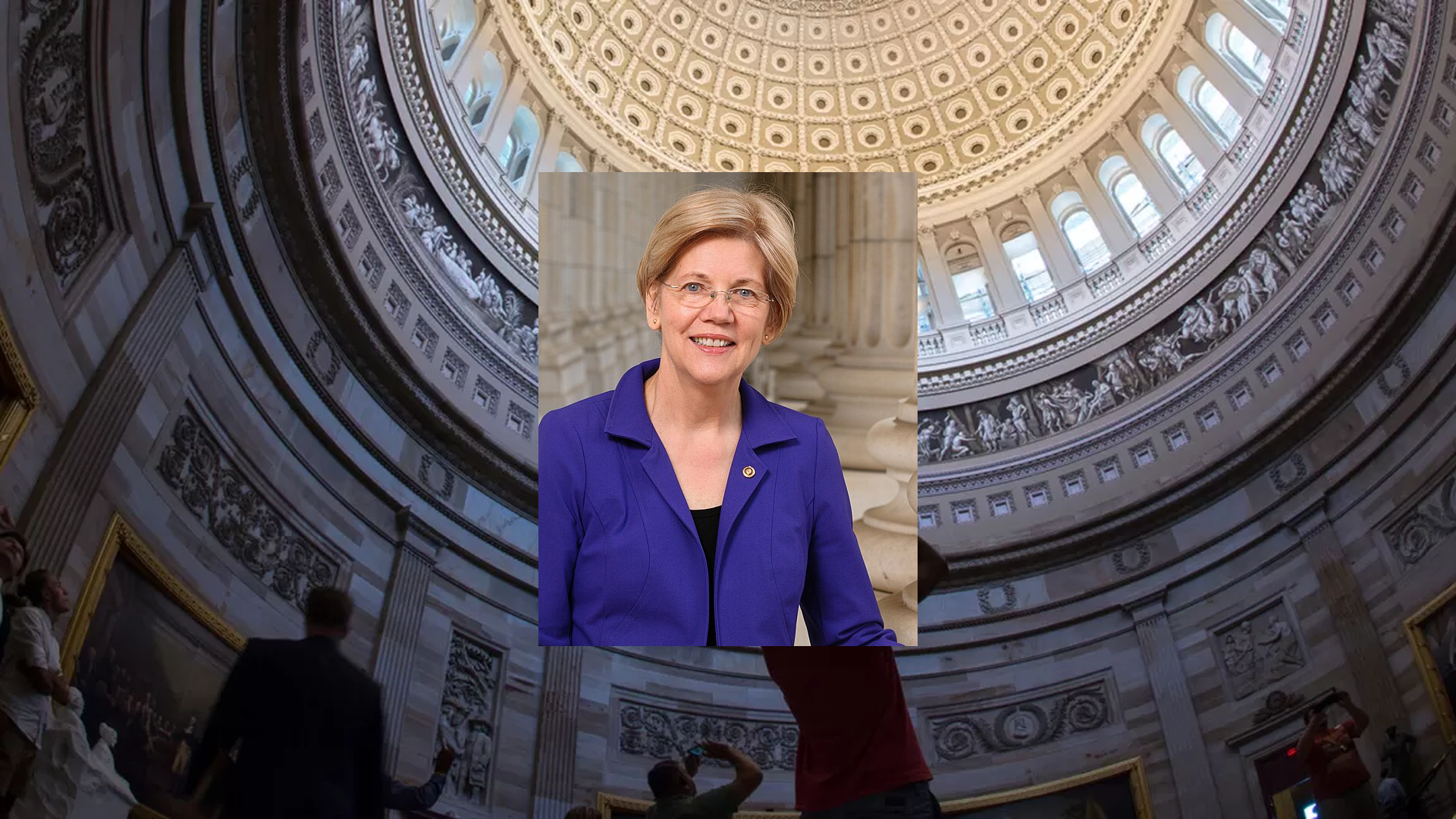
Senator Elizabeth Warren Bill Proposals
Here are some bills which have recently been proposed by Senator Elizabeth Warren:
- S.4743: A bill to require the Office of Financial Research to compel data relating to the financing of artificial intelligence development, provide that data to Congress, and issue recommendations to financial regulatory agencies and Congress to mitigate financial stability risk, and for other purposes.
- S.4734: A bill to require a review of acquisitions by investment companies involving acquisition of controlling interest of major defense suppliers, and for other purposes.
- S.4718: Restore Military Families’ Voices Act
- S.4684: Protecting American Consumers Act
- S.4648: A bill to improve transparency with respect to foreign influence on Department of Defense contractors.
- S.4550: Maternal Health Pandemic Response Act
You can track bills proposed by Senator Elizabeth Warren on Quiver Quantitative's politician page for Warren.
Senator Elizabeth Warren Net Worth
Quiver Quantitative estimates that Senator Elizabeth Warren is worth $7.1M, as of June 24th, 2026. This is the 138th highest net worth in Congress, per our live estimates.
Warren has approximately $0 invested in publicly traded assets which Quiver is able to track live.
You can track Senator Elizabeth Warren's net worth on Quiver Quantitative's politician page for Warren.
2030 Massachusetts US Senate Election
There has been approximately $24,618,729 of spending in Massachusetts US Senate elections over the last two years, per our estimates.
Approximately $6,277,963 of this has been from outside spending by PACs and Super PACs. Some of the groups who are spending money in this race include:
- COMMONWEALTH UNITY FUND ($4,162,550)
- ADVANCE PROGRESS ($1,482,274)
- COMMONWEALTH TOGETHER PAC ($630,000)
- CHINESE PROGRESSIVE POLITICAL ACTION INC. ($1,610)
- UNITED DEMOCRATS FUND ($1,180)
The rating for this race is currently "Solid D".
You can track this election on our matchup page for the 2030 Massachusetts US Senate election.
This article is not financial advice. See Quiver Quantitative's disclaimers for more information.