


Jade Biosciences presented JADE101 data for treating IgAN at ASN Kidney Week 2025, highlighting safety and pharmacokinetic profiles.
Quiver AI Summary
Jade Biosciences, Inc., a clinical-stage biotechnology company, announced the presentation of two posters at the American Society of Nephrology Kidney Week 2025 for its investigational monoclonal antibody, JADE101, aimed at treating immunoglobulin A nephropathy (IgAN). JADE101 selectively inhibits APRIL, a significant factor in IgA production involved in IgAN, which can lead to severe kidney disease. The antibody has been developed for patient-friendly subcutaneous dosing and demonstrates a favorable safety profile, showing minimal toxicity in non-human primates. Currently undergoing a Phase 1 trial in healthy volunteers, interim biomarker data is expected in early 2026 to help determine dosing for future IgAN patient studies. Jade Biosciences believes that JADE101 could establish a foundational treatment approach for IgAN and emphasizes that early biomarker responses may predict improved patient outcomes.
Potential Positives
- Jade Biosciences presented two posters on JADE101 at the American Society of Nephrology Kidney Week 2025, showcasing significant progress in their investigational therapy for immunoglobulin A nephropathy (IgAN).
- JADE101 demonstrates a favorable safety profile in preclinical studies, with no observed adverse effects at the highest doses tested, indicating a low toxicity risk for future clinical trials.
- The positive preclinical results support the potential for JADE101 to be a best-in-class treatment for IgAN, with anticipations for its therapeutic efficacy based on biomarker responses in healthy volunteers and preclinical models.
- The differentiated pharmacokinetic profile of JADE101 allows for potentially convenient subcutaneous dosing, which could improve patient compliance and overall treatment outcomes for those diagnosed with IgAN.
Potential Negatives
- The press release emphasizes the ongoing Phase 1 trial of JADE101, yet does not provide any interim results, which could raise concerns about the lack of immediate insight into the drug's efficacy or safety.
- Forward-looking statements highlight inherent risks and uncertainties related to the clinical trials, suggesting that delays or failures in demonstrating efficacy are possible, which may negatively impact investor confidence.
- Despite presenting positive data, the release acknowledges that the potential for JADE101 and other product candidates to succeed commercially is uncertain, which can lead to skepticism about the company's future prospects.
FAQ
What is JADE101?
JADE101 is an investigational anti-APRIL monoclonal antibody aimed at treating immunoglobulin A nephropathy (IgAN).
What autoimmune disease does JADE101 target?
JADE101 targets immunoglobulin A nephropathy (IgAN), a progressive autoimmune disease affecting kidney function.
What were the results of the preclinical studies for JADE101?
Preclinical studies showed that JADE101 exhibited a favorable safety profile and effective IgA suppression in non-human primates.
When can we expect interim data from the Phase 1 trial of JADE101?
Interim data from the Phase 1 trial of JADE101 are anticipated in the first half of 2026.
How does JADE101 improve patient dosing experience?
JADE101 is designed for subcutaneous dosing, offering a patient-friendly administration method with potentially infrequent dosing.
Disclaimer: This is an AI-generated summary of a press release distributed by GlobeNewswire. The model used to summarize this release may make mistakes. See the full release here.
$JBIO Insider Trading Activity
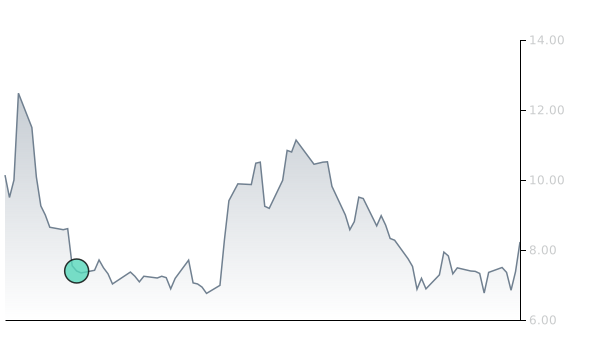
$JBIO insiders have traded $JBIO stock on the open market 1 times in the past 6 months. Of those trades, 1 have been purchases and 0 have been sales.
Here’s a breakdown of recent trading of $JBIO stock by insiders over the last 6 months:
- TOM FROHLICH (Chief Executive Officer) purchased 6,000 shares for an estimated $44,400
To track insider transactions, check out Quiver Quantitative's insider trading dashboard.
$JBIO Hedge Fund Activity
We have seen 5 institutional investors add shares of $JBIO stock to their portfolio, and 6 decrease their positions in their most recent quarter.
Here are some of the largest recent moves:
- VANGUARD GROUP INC removed 80,838 shares (-4.5%) from their portfolio in Q3 2025, for an estimated $697,631
- NEW YORK STATE COMMON RETIREMENT FUND added 5,100 shares (+4180.3%) to their portfolio in Q3 2025, for an estimated $44,013
- STRS OHIO removed 4,000 shares (-81.6%) from their portfolio in Q3 2025, for an estimated $34,520
- BANK OF NEW YORK MELLON CORP added 3,958 shares (+5.0%) to their portfolio in Q3 2025, for an estimated $34,157
- JPMORGAN CHASE & CO removed 2,169 shares (-14.1%) from their portfolio in Q3 2025, for an estimated $18,718
- RHUMBLINE ADVISERS removed 1,786 shares (-4.0%) from their portfolio in Q3 2025, for an estimated $15,413
- PNC FINANCIAL SERVICES GROUP, INC. removed 256 shares (-75.5%) from their portfolio in Q3 2025, for an estimated $2,209
To track hedge funds' stock portfolios, check out Quiver Quantitative's institutional holdings dashboard.
$JBIO Analyst Ratings
Wall Street analysts have issued reports on $JBIO in the last several months. We have seen 3 firms issue buy ratings on the stock, and 0 firms issue sell ratings.
Here are some recent analyst ratings:
- BTIG issued a "Buy" rating on 10/09/2025
- Wedbush issued a "Outperform" rating on 08/14/2025
- Guggenheim issued a "Buy" rating on 06/16/2025
To track analyst ratings and price targets for $JBIO, check out Quiver Quantitative's $JBIO forecast page.
$JBIO Price Targets
Multiple analysts have issued price targets for $JBIO recently. We have seen 3 analysts offer price targets for $JBIO in the last 6 months, with a median target of $18.0.
Here are some recent targets:
- Julian Harrison from BTIG set a target price of $28.0 on 10/09/2025
- Laura Chico from Wedbush set a target price of $18.0 on 08/14/2025
- Vamil Divan from Guggenheim set a target price of $14.0 on 06/16/2025
Full Release
SAN FRANCISCO and VANCOUVER, British Columbia, Nov. 08, 2025 (GLOBE NEWSWIRE) -- Jade Biosciences, Inc. (“the Company” or “Jade”), (Nasdaq: JBIO), a clinical-stage biotechnology company focused on developing best-in-class therapies for autoimmune diseases, today presented two posters for JADE101, its investigational anti-A PRoliferation-Inducing Ligand (APRIL) monoclonal antibody for the treatment of immunoglobulin A nephropathy (IgAN), at the American Society of Nephrology (ASN) Kidney Week 2025.
JADE101 is designed to selectively inhibit APRIL, a key driver of pathogenic IgA production in IgAN, a progressive autoimmune disease that frequently leads to end-stage kidney disease over a patient’s lifetime. Jade has engineered JADE101 with properties intended to capture the full efficacy of APRIL pathway inhibition while enabling patient-friendly subcutaneous dosing, supported by a differentiated pharmacokinetic and pharmacodynamic profile demonstrated in non-human primates (NHPs). JADE101 is currently being evaluated in a Phase 1 healthy volunteer trial, with interim data expected in the first half of 2026 that is anticipated to define the dose and dose interval for future studies in IgAN patients.
“We believe the selective anti-APRIL class will represent the foundational therapeutic approach for treatment of IgAN, and JADE101 has been specifically engineered to deliver the full potential of this mechanism,” said Andrew King, Ph.D., Chief Scientific Officer and Head of R&D at Jade Biosciences. “These new preclinical data in NHPs demonstrate that JADE101 is highly selective, is well tolerated at toxicological doses, and is not broadly immunosuppressive. Additionally, our translational modeling builds further confidence that biomarker responses observed in healthy volunteers are expected to translate into meaningful outcomes for patients with IgAN. Interim biomarker data from our ongoing Phase 1 healthy volunteer study are anticipated to define the dose and dosing interval selection for JADE101, with the goal of supporting rapid advancement into IgAN patient trials with a potentially best-in-class therapy.”
Nonclinical Safety Profile of JADE101 (Poster #SA-PO0255)
New preclinical safety data highlight JADE101’s favorable safety profile and support its potential as a selective, disease-modifying treatment with low risk of toxicity:
- JADE101 was well tolerated in NHPs at all doses tested preclinically, including the highest dose evaluated in GLP toxicology studies, which was established as the no observed adverse effect level (NOAEL). These results provide wide safety margins that support the first-in-human doses being evaluated in the ongoing Phase 1 healthy volunteer trial.
- Across studies, JADE101 showed no off-target binding in a panel of more than 6,000 human proteins, no human tissue cross-reactivity, and no cytokine release in human whole blood assays.
- In NHPs, JADE101 treatment resulted in reversible reductions in serum immunoglobulins consistent with its mechanism of action, including IgA and IgM reductions of approximately 55–68% and 62–75%, respectively, and a more modest IgG reduction of 35–48%, all of which returned toward baseline following JADE101 clearance.
- Despite reductions in circulating immunoglobulins, JADE101-treated NHPs generated antibody responses to a test immunization (KLH) that were comparable to untreated controls, consistent with the preserved vaccination response observed in healthy volunteers following administration of a previous anti-APRIL monoclonal antibody.
-
JADE101 administration in NHPs did not impact serum concentrations of BAFF or inflammatory cytokines, resulted in no histological changes in tissues, and had no effect on circulating immune cell populations, including B, T, or NK cells - supporting its potential as a well-tolerated treatment, devoid of broad immune suppression.
Translational Modeling of Biomarker Responses to APRIL Inhibition (Poster #SA-PO0272)
A second presentation described a translational assessment of the consistency of biomarker responses to APRIL inhibition across NHPs, healthy volunteers and IgAN patients, and the associations between these biomarkers and clinical responses in IgAN. Biomarker responses to JADE101 in the ongoing healthy volunteer study are anticipated to define dose and dose interval selection for future clinical trials in IgAN patients:
- Analyses demonstrated that in vitro APRIL binding affinity is predictive of in vivo IgA-lowering potency across NHP and human data sets, supporting that high APRIL binding affinity results in potent IgA reduction in vivo in NHPs and humans.
- Clinical observations from healthy volunteers further demonstrate that high APRIL binding affinity is a key determinant of the magnitude and duration of free APRIL and IgA reduction at a given anti-APRIL dose level.
- Pharmacokinetic and free APRIL suppression profiles of anti-APRIL monoclonal antibodies were consistent between healthy volunteers and patients with IgAN, supporting the use of healthy volunteer PK and biomarker results for dose selection in IgAN patients.
- Trial level analyses indicate the kinetics and magnitude of IgA reduction is highly consistent between healthy volunteers and IgAN patients (r = 0.93), and that the reduction of Gd-IgA1 measured in IgAN patients is highly consistent with the reductions in total IgA (r = 0.96). Furthermore, the early IgA reduction observed in IgAN patients is predictive of subsequent proteinuria reduction (r = 0.89).
-
The largest reductions in proteinuria and the highest rates of clinical remission (proteinuria < 0.3 g/day) in IgAN patients were observed with the highest levels of APRIL suppression.
These analyses suggest that pharmacokinetic and biomarker responses observed in healthy volunteers are informative of anticipated therapeutic responses in IgAN patients. The analysis also highlights that the depth and duration of APRIL suppression can be linked to anticipated reductions in total IgA, Gd-IgA1, and proteinuria that are ultimately associated with preserving kidney function and delivering disease-modifying clinical outcomes for patients with IgAN. Based on JADE101’s differentiated NHP pharmacokinetic profile, the Company anticipates the potential for convenient, infrequent, subcutaneous dosing.
About JADE101
JADE101 is a novel, fully human monoclonal antibody that selectively blocks APRIL with ultra-high binding affinity and is engineered for half-life extension. Preclinical studies demonstrated potent, sustained IgA suppression after a single dose in non-human primates, with a serum half-life of approximately 27 days. JADE101 was designed to avoid formation of high molecular weight immune complexes, with the goal of supporting predictable pharmacokinetics and reduced immunogenicity risk. Its differentiated pharmacokinetic and pharmacodynamic profile supports the potential for infrequent and convenient subcutaneous dosing, an important consideration for a condition often diagnosed in young adulthood and potentially requiring life-long treatment.
A Phase 1 randomized, double-blind, placebo-controlled clinical trial evaluating single ascending subcutaneous doses of JADE101 in healthy adult volunteers is ongoing. The Company expects data from the Phase 1 trial to define dose and dosing interval selection for later-stage studies, based on biomarker responses associated with optimal clinical activity in IgAN patients. More information on the JADE101 Phase 1 trial is available on ClinicalTrials.gov.
About Jade Biosciences, Inc.
Jade Biosciences is a clinical-stage biotechnology company focused on developing best-in-class therapies that address critical unmet needs in autoimmune diseases. Jade’s lead candidate, JADE101, targets the cytokine APRIL, and is currently being evaluated in a Phase 1 clinical trial for the treatment of immunoglobulin A nephropathy. Jade’s pipeline also includes JADE201, an afucosylated anti-BAFF-R monoclonal antibody, as well as JADE-003, an undisclosed antibody discovery program, both currently in preclinical development. Jade was launched based on assets licensed from Paragon Therapeutics, an antibody discovery engine founded by Fairmount. For more information, visit
JadeBiosciences.com
and follow the Company on
LinkedIn
.
Forward-Looking Statements
Certain statements in this communication, other than purely historical information, may constitute “forward-looking statements” within the meaning of the federal securities laws, including for purposes of the “safe harbor” provisions under the Private Securities Litigation Reform Act of 1995. These forward-looking statements include, but are not limited to, express or implied statements relating to Jade’s expectations, hopes, beliefs, intentions or strategies regarding the future of its pipeline and business including, without limitation, the expected timeline for interim data from the Phase 1 clinical trial of JADE101, plans for future clinical trials, the potential for the anti-APRIL class to become the foundational therapeutic approach for treatment of patients with IgAN, the potential of JADE101 and Jade’s other product candidates to become best-in-class therapies and their potential therapeutic uses, efficacy, safety profiles and dosing. The words “opportunity,” “potential,” “milestones,” “pipeline,” “can,” “goal,” “strategy,” “target,” “anticipate,” “achieve,” “believe,” “contemplate,” “continue,” “could,” “estimate,” “expect,” “intends,” “may,” “plan,” “possible,” “project,” “should,” “will,” “would” and similar expressions (including the negatives of these terms or variations of them) may identify forward-looking statements, but the absence of these words does not mean that a statement is not forward-looking. These forward-looking statements are based on current expectations and beliefs concerning future developments and their potential effects. There can be no assurance that future developments affecting Jade will be those that have been anticipated. These forward-looking statements involve a number of risks, uncertainties (some of which are beyond Jade’s control) or other assumptions that may cause actual results or performance to be materially different from those expressed or implied by these forward-looking statements. These risks and uncertainties include, but are not limited to, the risks that the Phase 1 clinical trial of JADE101 and any future clinical trials may be delayed or may not demonstrate desirable efficacy; adverse events or safety signals may occur; Jade may experience unanticipated difficulties or delays in the product development process; Jade’s product candidates may fail in development, may not receive required regulatory approvals, or may be delayed to a point where they are not commercially viable; enrollment or regulatory challenges; risks associated with Jade’s dependence on third-parties for the development, manufacture and supply of its product candidates; and the other risks, uncertainties and factors more fully described in Jade’s most recent filings with the Securities and Exchange Commission (including the Quarterly Report on Form 10-Q for the quarter ended June 30, 2025). Should one or more of these risks or uncertainties materialize, or should any of Jade’s assumptions prove incorrect, actual results may vary in material respects from those projected in these forward-looking statements. You should not place undue reliance on forward-looking statements in this communication, which speak only as of the date they are made and are qualified in their entirety by reference to the cautionary statements herein. Jade does not undertake or accept any duty to release publicly any updates or revisions to any forward-looking statements. This communication does not purport to summarize all of the conditions, risks and other attributes of an investment in Jade.
Jade Biosciences Contact
Priyanka Shah
[email protected]
[email protected]
908-447-6134