
Hooker Furnishings sold Pulaski and Samuel Lawrence Furniture brands to Magnussen Home for about $6.1 million, enhancing profitability.
Quiver AI Summary
Hooker Furnishings Corporation has announced the completion of the sale of its Pulaski Furniture and Samuel Lawrence Furniture brands to Magnussen Home Furnishings for approximately $6.1 million, which is subject to post-closing adjustments. This transaction is seen as a key step towards increasing profitability, with CEO Jeremy Hoff expressing satisfaction in achieving a better price than initially estimated. The company reports a modest improvement in sales and margins for its other branded products, and it is optimistic about future opportunities, particularly with its Margaritaville licensed collection. Additionally, the sale includes the assumption of $4.8 million in showroom lease liabilities by Magnussen. The company, which has been in business for over a century, focuses on various home furnishings markets and is positioned for growth as it implements a new share repurchase program and a more focused business strategy moving forward.
Potential Positives
- Hooker Furnishings completed the sale of its Pulaski Furniture and Samuel Lawrence Furniture brands for approximately $6.1 million, exceeding initial price estimates, which signifies a strategic move towards enhanced profitability.
- The transaction allows the company to shed about $4.8 million in showroom lease liabilities, improving its financial position and operational efficiency.
- Hooker Furnishings is experiencing positive momentum with modest improvements in sales and margins, positioning the company favorably for future growth, particularly with its Margaritaville licensed collection.
- The company plans to repurchase shares as part of a new share repurchase program, indicating confidence in its financial health and commitment to creating value for shareholders.
Potential Negatives
- Completion of the sale of two brands for $6.1 million may indicate challenges in maintaining brand value and profitability, raising concerns about the company's ability to innovate and compete in the market.
- The transaction involves a holdback of 10% of the purchase price for 210 days for indemnification and adjustments, which may reflect underlying uncertainties or risks associated with the sale.
- Forward-looking statements highlight significant risks, including potential impacts from tariffs, general economic conditions, and reliance on a few large customers, suggesting vulnerabilities in the company's business model.
FAQ
What brands did Hooker Furnishings sell?
Hooker Furnishings sold the Pulaski Furniture and Samuel Lawrence Furniture casegoods brands to Magnussen Home Furnishings.
What was the sale price for the brands?
The sale price for the brands was approximately $6.1 million, subject to final adjustments.
Who was involved in advising the sale transaction?
Stump & Company acted as the financial advisor, while McGuireWoods LLP served as the legal advisor for the sale.
How will this sale impact Hooker Furnishings' profitability?
This sale is seen as a significant milestone toward enhancing profitability for Hooker Furnishings.
What are Hooker Furnishings' future plans following the sale?
Hooker Furnishings plans to focus on its Margaritaville licensed collection and execute a new share repurchase program.
Disclaimer: This is an AI-generated summary of a press release distributed by GlobeNewswire. The model used to summarize this release may make mistakes. See the full release here.
$HOFT Insider Trading Activity
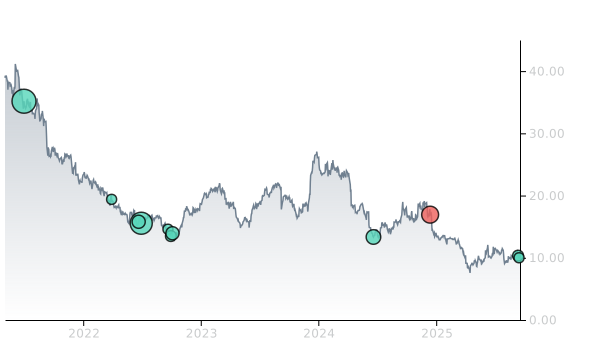
$HOFT insiders have traded $HOFT stock on the open market 2 times in the past 6 months. Of those trades, 2 have been purchases and 0 have been sales.
Here’s a breakdown of recent trading of $HOFT stock by insiders over the last 6 months:
- JEREMY R HOFF (Chief Executive Officer) purchased 1,000 shares for an estimated $9,890
- CECIL EARL III ARMSTRONG (Chief Financial Officer) purchased 500 shares for an estimated $4,900
To track insider transactions, check out Quiver Quantitative's insider trading dashboard.
$HOFT Revenue
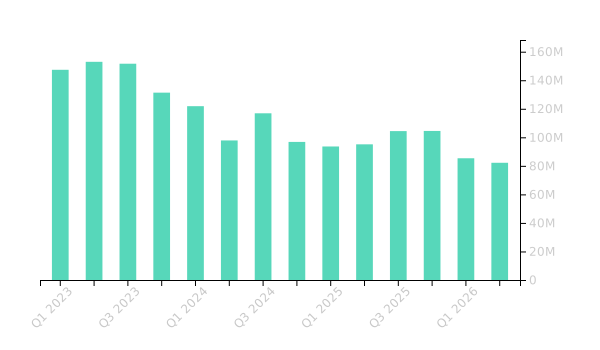
$HOFT had revenues of $82.1M in Q2 2026. This is a decrease of -13.6% from the same period in the prior year.
You can track HOFT financials on Quiver Quantitative's HOFT stock page.
$HOFT Hedge Fund Activity
We have seen 29 institutional investors add shares of $HOFT stock to their portfolio, and 67 decrease their positions in their most recent quarter.
Here are some of the largest recent moves:
- AZARIAS CAPITAL MANAGEMENT, L.P. added 118,989 shares (+33.6%) to their portfolio in Q3 2025, for an estimated $1,207,738
- CSM ADVISORS, LLC removed 110,760 shares (-100.0%) from their portfolio in Q3 2025, for an estimated $1,124,214
- CHARLES SCHWAB INVESTMENT MANAGEMENT INC added 95,057 shares (+53.8%) to their portfolio in Q3 2025, for an estimated $964,828
- BLACKROCK, INC. removed 73,972 shares (-21.6%) from their portfolio in Q3 2025, for an estimated $750,815
- BRIDGEWAY CAPITAL MANAGEMENT, LLC removed 67,613 shares (-61.3%) from their portfolio in Q3 2025, for an estimated $686,271
- PZENA INVESTMENT MANAGEMENT LLC added 57,276 shares (+4.2%) to their portfolio in Q3 2025, for an estimated $581,351
- MILLENNIUM MANAGEMENT LLC removed 48,430 shares (-63.0%) from their portfolio in Q3 2025, for an estimated $491,564
To track hedge funds' stock portfolios, check out Quiver Quantitative's institutional holdings dashboard.
Full Release
MARTINSVILLE, Va., Dec. 15, 2025 (GLOBE NEWSWIRE) -- Hooker Furnishings Corporation (NASDAQ-GS: HOFT) (“Hooker” or the “Company”), a global leader in home furnishings, today announced it has completed the sale of the Pulaski Furniture and Samuel Lawrence Furniture casegoods brands to Magnussen Home Furnishings, Inc. for approximately $6.1 million, subject to certain final customary post-closing adjustments.
“Completing this transaction marks a significant milestone in our journey toward enhanced profitability, and we are pleased to complete the transaction at a higher price than initially estimated,” said Jeremy Hoff, CEO of Hooker Furnishings. “We are moving ahead with positive momentum after delivering a modest improvement in sales and margins within Hooker Branded and Domestic Upholstery for the fiscal third quarter, and we are excited for the significant opportunity ahead with our Margaritaville licensed collection. We look forward to creating value for shareholders, including through the opportunistic repurchase of shares in connection with our new share repurchase program, and to capturing the potential of our more focused business as we move into the next calendar year.”
As previously announced ten percent of the purchase price is subject to a holdback for 210 days for customary indemnification and final purchase price adjustments. The Company also shed approximately $4.8 million in HMI showroom lease liabilities and related expenses, as Magnussen assumes the lease of HMI’s High Point showroom.
Stump & Company served as financial advisor to the Company and McGuireWoods LLP served as legal advisor to the Company in connection with the sale transaction.
About Hooker Furnishings
Hooker Furnishings Corporation, in its 101st year of business, is a designer, marketer and importer of casegoods (wooden and metal furniture), leather furniture, fabric-upholstered furniture, lighting, accessories, and home décor for the residential, hospitality and contract markets. The Company also domestically manufactures premium residential custom leather and custom fabric-upholstered furniture and outdoor furniture. Major casegoods product categories include home entertainment, home office, accent, dining, and bedroom furniture in the upper-medium price points sold under the Hooker Furniture brand. Hooker’s residential upholstered seating product lines include Bradington-Young, a specialist in upscale motion and stationary leather furniture, HF Custom (formerly Sam Moore), a specialist in fashion forward custom upholstery offering a selection of chairs, sofas, sectionals, recliners and a variety of accent upholstery pieces, Hooker Upholstery, imported upholstered furniture targeted at the upper-medium price-range and Shenandoah Furniture, an upscale upholstered furniture company specializing in private label sectionals, modulars, sofas, chairs, ottomans, benches, beds and dining chairs in the upper-medium price points for lifestyle specialty retailers. The H Contract product line supplies upholstered seating and casegoods to upscale senior living facilities. The Sunset West division is a designer and manufacturer of comfortable, stylish and high-quality outdoor furniture. Hooker Furnishings Corporation’s corporate offices and upholstery manufacturing facilities are located in Virginia, North Carolina and California, with showrooms in High Point, NC, Las Vegas, NV, Atlanta, GA and Ho Chi Minh City, Vietnam. The company operates distribution centers in Virginia, North Carolina, and Vietnam. Please visit our websites at hookerfurnishings.com, hookerfurniture.com, bradington-young.com, hfcustomfurniture.com, hcontractfurniture.com, and sunsetwestusa.com.
For more information, contact:
C. Earl Armstrong III Senior Vice President-Finance and CFO
Hooker Furnishings Corporation, 276.666.3969
Forward Looking Statements
Certain statements made in this release, other than those based on historical facts, may be forward-looking statements. Forward-looking statements reflect our reasonable judgment with respect to future events and typically can be identified by the use of forward-looking terminology such as “believes,” “expects,” “projects,” “intends,” “plans,” “may,” “will,” “should,” “would,” “could” or “anticipates,” or the negative thereof, or other variations thereon, or comparable terminology, or by discussions of strategy. Forward-looking statements are subject to risks and uncertainties that could cause actual results to differ materially from those in the forward-looking statements. Those risks and uncertainties include but are not limited to: (1) adverse political acts or developments in, or affecting, the international markets from which we import products and some components used in our Domestic Upholstery segment, including duties or tariffs imposed on those products or product components by foreign governments or the U.S. government, such as the current twenty percent tariff, potential additional higher reciprocal tariffs on imports from key sourcing countries, U.S. Department of Commerce’s Section 232 investigation into timber, lumber, and their derivative products, including furniture, affecting the countries from which we source imported home furnishings and components, including the possible adverse effects on our sales, earnings, and liquidity; (2) general economic or business conditions, both domestically and internationally, including the current macroeconomic uncertainties and challenges to the retail environment for home furnishings along with instability in the financial and credit markets, in part due to fluctuating interest rates and housing market volatility, which can affect consumer spending patterns, existing home sales, and demand for home furnishings, including their potential impact on (i) our sales and operating costs and access to financing, (ii) customers, and (iii) suppliers and their ability to obtain financing or generate the cash necessary to conduct their respective businesses; (3) the impairment of our long-lived assets, which can result in reduced earnings and net worth; (4) the cyclical nature of the furniture industry, which is particularly sensitive to changes in consumer confidence, the amount of consumers’ income available for discretionary purchases, and the availability and terms of consumer credit; (5) future actions by activist stockholders that could divert management attention, create uncertainty around our strategic direction, disrupt relationships with key shareholders, increase our costs, drive stock price volatility, and otherwise materially impact our business, financial condition, results of operations, and cash flows; (6) risks associated with the ultimate outcome of our cost reduction plans, including the amounts and timing of savings realized and the ability to scale the business appropriately as customer demand increases or decreases based on the macroeconomic environment, including due to tariff uncertainties; (7) risks associated with our new warehouse facility in Vietnam, including our ability to execute the planned shift of inventories from domestic facilities to Vietnam without increasing overall inventories and adversely affecting working capital levels and start-up risks including technology-related risks or disruption in our offshore suppliers or the transportation and handling industries, including labor stoppages, strikes, or slowdowns, and the ability to timely fulfill customer orders; (8) the risks specifically related to the concentrations of a material part of our sales and accounts receivable in only a few customers, including the loss of several large customers through business consolidations, failures or other reasons, or the loss of significant sales programs with major customers; (9) risks associated with our reliance on offshore sourcing and the cost of imported goods, including fluctuation in the prices of purchased finished goods, customs issues, freight costs, including the price and availability of shipping containers, ocean vessels, domestic trucking, and warehousing costs and the risk that a disruption in our supply chain or the transportation and handling industries, including labor stoppages, strikes, or slowdowns, could adversely affect our ability to timely fulfill customer orders; (10) interruption, inadequacy, security breaches or integration failure of our information systems or information technology infrastructure, related service providers or the internet or other related issues including unauthorized disclosures of confidential information, hacking or other cybersecurity threats or inadequate levels of cyber insurance or risks not covered by cyber insurance; (11) difficulties in forecasting demand for our imported products and raw materials used in our domestic operations; (12) our inability to collect amounts owed to us or significant delays in collecting such amounts; (13) the risks associated with our Amended and Restated Loan Agreement, including the fact that our asset-based lending facility is secured by substantially all of our assets and contains provisions which limit the amount of our future borrowings under the facility, as well as financial and negative covenants that, among other things, may limit our ability to incur additional indebtedness; (14) risks associated with domestic manufacturing operations, including fluctuations in capacity utilization and the prices and availability of key raw materials, as well as changes in transportation, warehousing and domestic labor costs, availability of skilled labor, and environmental compliance and remediation costs; (15) risks associated with our self-insured healthcare and workers compensation plans, which utilize stop-loss insurance for aggregate claims above specified thresholds and can be impacted by higher healthcare inflation and expenditures, all of which may cause our healthcare and workers compensation costs to rise unexpectedly, adversely affecting our earnings, financial condition, and liquidity; (16) disruptions and damage (including those due to weather) affecting our Virginia or North Carolina warehouses, our Virginia, North Carolina or California administrative and manufacturing facilities, our High Point, Las Vegas, and Atlanta showrooms or our representative office or warehouse in Vietnam; (17) changes in U.S. and foreign government regulations and in the political, social and economic climates of the countries from which we source our products; (18) risks associated with product defects, including higher than expected costs associated with product quality and safety, regulatory compliance costs related to the sale of consumer products and costs related to defective or non-compliant products, product liability claims and costs to recall defective products and the adverse effects of negative media coverage; (19) the direct and indirect costs and time spent by our associates related to the implementation of our Enterprise Resource Planning system (“ERP”), including costs resulting from unanticipated disruptions to our business; (20) achieving and managing growth and change, and the risks associated with new business lines, acquisitions, including the selection of suitable acquisition targets, restructurings, strategic alliances and international operations; (21) risks associated with distribution through third-party retailers, such as non-binding dealership arrangements; (22) changes in domestic and international monetary policies and fluctuations in foreign currency exchange rates affecting the price of our imported products and raw materials; (23) price competition in the furniture industry; (24) changes in consumer preferences, including increased demand for lower-priced furniture, especially in light of recently imposed tariffs on imported furniture; (25) decisions concerning the allocation of capital including the extent to which we repurchase shares of our common stock which will affect shares outstanding and EPS; and (26) other risks and uncertainties described under Part I, Item 1A. "Risk Factors" in the Company’s Annual Report on Form 10-K for the fiscal year ended February 2, 2025 and other filings with the SEC. Any forward-looking statement that we make speaks only as of the date of that statement, and we undertake no obligation, except as required by law, to update any forward-looking statements whether as a result of new information, future events or otherwise and you should not expect us to do so.