


Geron's study shows RYTELO's safety and efficacy in lower-risk MDS patients, consistent with Phase 3 trial findings.
Quiver AI Summary
Geron Corporation announced a real-world evidence study of its drug RYTELO® (imetelstat) for treating lower-risk myelodysplastic syndromes (LR-MDS) which will be presented at the EHA 2026 Congress. Conducted at the Moffitt Cancer Center, the investigator-sponsored study showed that imetelstat is safe and effective for heavily transfusion-dependent patients with LR-MDS, including those who had failed prior treatments. The retrospective study involved 40 patients and reported a 37.5% rate of red blood cell transfusion independence lasting at least eight weeks. The results were generally consistent with findings from the Phase 3 IMerge trial. Geron also plans to present additional data related to its myelofibrosis and acute myeloid leukemia clinical programs at EHA and ASCO 2026, emphasizing the growing evidence supporting imetelstat's use in routine clinical practice.
Potential Positives
- Investigator-sponsored study at Moffitt Cancer Center demonstrates safety and efficacy of RYTELO (imetelstat) consistent with previous Phase 3 IMerge trial results.
- First real-world evidence study of imetelstat in lower-risk myelodysplastic syndromes (LR-MDS) presents significant findings for treatment options in heavily transfusion dependent patients.
- Imetelstat shows a 37.5% red blood cell transfusion independence rate lasting at least eight weeks in advanced LR-MDS patients, expanding its clinical utility.
- Geron Corporation is scheduled to present additional significant data at major oncology conferences, including the EHA 2026 and ASCO 2026, demonstrating ongoing commitment to research and development in blood cancer treatment.
Potential Negatives
- Investigator-sponsored research may lack rigorous oversight, raising concerns about the reliability and validity of findings, which could impact investor confidence.
- The reported safety profile raises significant concerns, with high rates of severe adverse effects, including thrombocytopenia (65%) and neutropenia (72%), which may deter potential usage and acceptance of RYTELO.
- The dependency on investigator-sponsored research introduces uncertainty regarding Geron's control over the study outcomes, potentially complicating future clinical development and market approval of RYTELO.
FAQ
What is the focus of the study presented at EHA 2026?
The study focuses on the safety and efficacy of RYTELO® (imetelstat) in patients with lower-risk myelodysplastic syndromes (LR-MDS).
Where was the study on imetelstat conducted?
The study was conducted at the Moffitt Cancer Center.
What significant results were reported from the study?
The study reported a 37.5% red blood cell transfusion independence rate lasting at least eight weeks in the patient population.
What upcoming presentations will Geron Corporation have?
Geron will present additional data at EHA 2026 and ASCO 2026 related to ongoing myelofibrosis and AML clinical programs.
What is the primary indication for RYTELO (imetelstat)?
RYTELO is approved for treating adult patients with LR-MDS experiencing transfusion-dependent anemia who have not responded to prior therapies.
Disclaimer: This is an AI-generated summary of a press release distributed by GlobeNewswire. The model used to summarize this release may make mistakes. See the full release here.
$GERN Insider Trading Activity
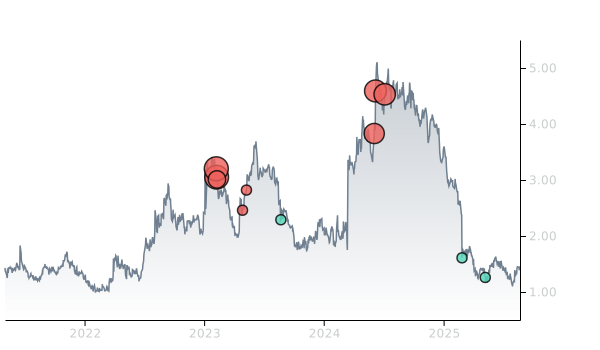
$GERN insiders have traded $GERN stock on the open market 1 times in the past 6 months. Of those trades, 0 have been purchases and 1 have been sales.
Here’s a breakdown of recent trading of $GERN stock by insiders over the last 6 months:
- MICHELLE ROBERTSON (EVP, CHIEF FINANCIAL OFFICER) sold 9,855 shares for an estimated $19,118
To track insider transactions, check out Quiver Quantitative's insider trading dashboard. You can access data on insider stock transactions through the Quiver Quantitative API insider transaction endpoint.
$GERN Hedge Fund Activity
We have seen 98 institutional investors add shares of $GERN stock to their portfolio, and 122 decrease their positions in their most recent quarter.
Here are some of the largest recent moves:
- ABERDEEN GROUP PLC removed 9,527,083 shares (-100.0%) from their portfolio in Q1 2026, for an estimated $14,195,353
- DEEP TRACK CAPITAL, LP removed 8,585,251 shares (-20.9%) from their portfolio in Q4 2025, for an estimated $11,332,531
- MILLENNIUM MANAGEMENT LLC removed 6,764,113 shares (-59.5%) from their portfolio in Q4 2025, for an estimated $8,928,629
- SOLEUS CAPITAL MANAGEMENT, L.P. added 6,000,000 shares (+34.7%) to their portfolio in Q4 2025, for an estimated $7,920,000
- VESTAL POINT CAPITAL, LP removed 5,905,000 shares (-34.3%) from their portfolio in Q4 2025, for an estimated $7,794,600
- CITADEL ADVISORS LLC removed 5,779,282 shares (-36.8%) from their portfolio in Q4 2025, for an estimated $7,628,652
- EVERSEPT PARTNERS, LP added 5,060,981 shares (+40.2%) to their portfolio in Q4 2025, for an estimated $6,680,494
To track hedge funds' stock portfolios, check out Quiver Quantitative's institutional holdings dashboard. You can access data on hedge funds moves and 13F filings through the Quiver Quantitative API 13F endpoint.
Full Release
Investigator-sponsored study, conducted at the Moffitt Cancer Center, demonstrates safety and efficacy consistent with the Phase 3 IMerge trial in a broader patient population
Additional presentations at EHA 2026 and ASCO 2026 include abstracts related to ongoing myelofibrosis and AML clinical programs
FOSTER CITY, Calif., May 12, 2026 (GLOBE NEWSWIRE) -- Geron Corporation (Nasdaq: GERN), a commercial-stage biopharmaceutical company aiming to change lives by changing the course of blood cancer, today announced that the first real-world evidence study of RYTELO ® (imetelstat) in patients with lower-risk myelodysplastic syndromes (LR-MDS) will be presented at the European Hematology Association (EHA) 2026 Congress. The retrospective and prospective investigator-sponsored study, conducted at the Moffitt Cancer Center, reported safety and clinical efficacy of imetelstat in advanced, heavily transfusion dependent patients with LR-MDS, including patients with extensive prior therapies and after luspatercept failure. Data from the retrospective portion of the study will be presented at the EHA 2026 Congress.
“Imetelstat has become an important treatment option for patients with lower-risk myelodysplastic syndromes experiencing anemia and red blood cell transfusion burden, particularly in patients previously treated with ESAs or other therapies,” said David A. Sallman, M.D., Associate Member, Malignant Hematology Department, Moffitt Cancer Center. “As treatment sequencing has emerged as an increasing area of focus in LR-MDS, real-world analyses such as this study can help provide additional context on how therapies are being used in routine clinical practice and across more diverse patient populations. We look forward to presenting these data at EHA 2026.”
“This is the first real-world study evaluating imetelstat in lower-risk MDS, and we are encouraged that the efficacy, safety and tolerability observed were generally consistent with findings from the Phase 3 IMerge trial in a broader patient population with a trend towards more optimal management of cytopenias,” said Joseph E. Eid, M.D., Executive Vice President, Research and Development and Chief Medical Officer of Geron. “These findings add to the growing body of evidence supporting the use of imetelstat as a preferred treatment option following prior therapy for patients with lower-risk MDS and significant transfusion burden. We look forward to presenting data from the prospective portion of this study later this year.”
The data, from the retrospective portion of the investigator-sponsored study, evaluated imetelstat in 40 patients with lower-risk MDS treated at the Moffitt Cancer Center in a real-world setting following U.S. Food and Drug Administration (FDA) approval. Patients included in the analysis had advanced, heavily transfusion-dependent disease and extensive prior treatment exposure, including prior luspatercept, erythropoiesis-stimulating agents (ESAs), hypomethylating agents and lenalidomide. With 14-month follow-up, the analysis reported a red blood cell (RBC) transfusion independence rate of 37.5% lasting at least eight weeks (RBC-TI > 8 weeks) with several responses ongoing at the time of analysis and identified potential predictors of response. The safety profile observed in the study was generally consistent with the known safety profile of imetelstat. Cytopenias were reported as the most common Grade 3/4 adverse event. Exploratory analyses also suggested a trend toward improved responses when imetelstat was used within the first three lines of therapy.
Geron will also have additional presentations at the EHA 2026 Congress and the American Society of Clinical Oncology (ASCO) 2026 Annual Meeting, including abstracts related to its ongoing myelofibrosis clinical programs. This includes an updated overall survival analysis in patients with myelofibrosis treated with imetelstat in the Phase 2 IMbark trial compared with real-world data.
Additional Presentations EHA and ASCO include:
EHA 2026 Presentations
| Presentation Title | Author | Abstract Number | Presentation Details |
| Real-world Outcomes of Imetelstat: Interrogating Safety, Efficacy and Predictors of Response in Heavily Pretreated Lower-Risk MDS Patients* | David A. Sallman, M.D. | #PF670 | Poster, Jun 12, 18:45-19:45 CEST |
| Updated Analysis of Overall Survival with Imetelstat in Patients with Relapsed or Refractory Myelofibrosis From IMBark Versus Real-world Data, and Assessment of Real-world Treatment Patterns | Andrew T. Kuykendall, M.D. | #PB3419 | Publication-only |
| Phase 1/1B Trial of Imetelstat and Azacitadine with or without Venetoclax in Relapsed Acute Myeloid Leukemia (IMAGINE Trial)* | Douglas A. Tremblay, M.D. | #PB2719 | Publication-only |
*Investigator-sponsored Research (ISR)
ASCO 2026 Presentations
| Presentation Title | Author | Abstract Number | Presentation Details |
| Updated analysis of overall survival with imetelstat in relapsed/refractory myelofibrosis versus real-world data, and assessment of real-world treatment patterns | Andrew T. Kuykendall, M.D. | #366 | Poster, Mon. June 1, 9:00 am -12:00 pm CDT |
| Updated protocol: IMproveMF, a Phase 1b trial of imetelstat + ruxolitinib in patients with intermediate-1/2 or high-risk myelofibrosis | John O. Mascarenhas, M.D. | #394b |
Poster, Mon. June 1, 9:00 am -12:00 pm CDT
|
Please see the full presentations for important qualifications and limitations.
About RYTELO (imetelstat)
RYTELO is an oligonucleotide telomerase inhibitor approved in the U.S. for the treatment of adult patients with LR-MDS with transfusion-dependent anemia requiring four or more red blood cell units over eight weeks who have not responded to or have lost response to or are ineligible for erythropoiesis-stimulating agents (ESAs). It is indicated to be administered as an intravenous infusion over two hours every four weeks.
In addition, RYTELO is approved in the European Union as a monotherapy for the treatment of adult patients with transfusion-dependent anemia due to very low, low or intermediate risk myelodysplastic syndromes without an isolated deletion 5q cytogenetic (non-del 5q) abnormality and who had an unsatisfactory response to or are ineligible for erythropoietin-based therapy.
RYTELO is a first-in-class treatment that works by inhibiting telomerase enzymatic activity. Telomeres are protective caps at the end of chromosomes that naturally shorten each time a cell divides. In LR-MDS, abnormal bone marrow cells often express the enzyme telomerase, which rebuilds those telomeres, allowing for uncontrolled cell division. Developed and exclusively owned by Geron, RYTELO is the first and only telomerase inhibitor approved by the U.S. Food and Drug Administration and the European Commission.
About Geron
Geron is a commercial-stage biopharmaceutical company aiming to change lives by changing the course of blood cancer. Our first-in-class telomerase inhibitor RYTELO (imetelstat) is approved in the United States and the European Union for the treatment of certain adult patients with LR-MDS with transfusion-dependent anemia. We are also conducting a pivotal Phase 3 clinical trial of imetelstat in JAK-inhibitor R/R MF, as well as studies in other hematologic malignancies. Inhibiting telomerase activity, which is increased in malignant stem and progenitor cells in the bone marrow, aims to potentially reduce proliferation and induce death of malignant cells. To learn more, visit
www.geron.com
or
LinkedIn
.
US IMPORTANT SAFETY INFORMATION ABOUT RYTELO
®
WARNINGS AND PRECAUTIONS
Thrombocytopenia
RYTELO can cause thrombocytopenia based on laboratory values. In the clinical trial, new or worsening Grade 3 or 4 decreased platelets occurred in 65% of patients with MDS treated with RYTELO.
Monitor patients with thrombocytopenia for bleeding. Monitor complete blood cell counts prior to initiation of RYTELO, weekly for the first two cycles, prior to each cycle thereafter, and as clinically indicated. Administer platelet transfusions as appropriate. Delay the next cycle and resume at the same or reduced dose, or discontinue as recommended.
Neutropenia
RYTELO can cause neutropenia based on laboratory values. In the clinical trial, new or worsening Grade 3 or 4 decreased neutrophils occurred in 72% of patients with MDS treated with RYTELO.
Monitor patients with Grade 3 or 4 neutropenia for infections, including sepsis. Monitor complete blood cell counts prior to initiation of RYTELO, weekly for the first two cycles, prior to each cycle thereafter, and as clinically indicated. Administer growth factors and anti-infective therapies for treatment or prophylaxis as appropriate. Delay the next cycle and resume at the same or reduced dose, or discontinue as recommended.
Infusion-Related Reactions
RYTELO can cause infusion-related reactions. In the clinical trial, infusion-related reactions occurred in 8% of patients with MDS treated with RYTELO; Grade 3 or 4 infusion-related reactions occurred in 1.7%, including hypertensive crisis (0.8%). The most common infusion-related reaction was headache (4.2%). Infusion-related reactions usually occur during or shortly after the end of the infusion.
Premedicate patients at least 30 minutes prior to infusion with diphenhydramine and hydrocortisone as recommended and monitor patients for at least one hour following the infusion as recommended. Manage symptoms of infusion-related reactions with supportive care and infusion interruptions, decrease infusion rate, or permanently discontinue as recommended.
Embryo-Fetal Toxicity
Based on animal findings, RYTELO can cause embryo-fetal harm when administered to a pregnant woman. Advise pregnant women of the potential risk to a fetus. Advise females of reproductive potential to use effective contraception during treatment with RYTELO and for 1 week after the last dose.
ADVERSE REACTIONS
Serious adverse reactions occurred in 32% of patients who received RYTELO. Serious adverse reactions in >2% of patients included sepsis (4.2%) and fracture (3.4%), cardiac failure (2.5%), and hemorrhage (2.5%). Fatal adverse reactions occurred in 0.8% of patients who received RYTELO, including sepsis (0.8%).
Most common adverse reactions (≥10% with a difference between arms of >5% compared to placebo), including laboratory abnormalities, were decreased platelets, decreased white blood cells, decreased neutrophils, increased AST, increased alkaline phosphatase, increased ALT, fatigue, prolonged partial thromboplastin time, arthralgia/myalgia, COVID-19 infections, and headache.
Please see RYTELO (imetelstat) full Prescribing Information, including Medication Guide, available at https://pi.geron.com/products/US/pi/rytelo_pi.pdf .
The Summary of Product Characteristics (SmPC) for RYTELO in the EU is available at
https://pi.geron.com/products/rytelo/eu/rytelo_smpc_eu.pdf
Use of Forward-Looking Statements
Except for the historical information contained herein, this press release contains forward-looking statements made pursuant to the “safe harbor” provisions of the Private Securities Litigation Reform Act of 1995. Investors are cautioned that such statements, include, without limitation, those regarding: (i) the potential of real-world analyses to provide additional context on how therapies such as RYTELO are being used in routine clinical practice and across more diverse patient populations; (ii) Geron’s efforts to expand its understanding of RYTELO in clinical practice; (iii) Geron’s expectations for multiple analyses emerging from investigator-sponsored research which will complement clinical trial data and help inform treatment decisions for people living with LR-MDS; (iv) the potential for telomerase inhibition to reduce proliferation and induce death of malignant cells; and (v) other statements that are not historical facts, constitute forward-looking statements. These forward-looking statements involve risks and uncertainties that can cause actual results to differ materially from those in such forward-looking statements. These risks and uncertainties, include, without limitation, risks and uncertainties related to: (a) Geron’s future opportunities and plans, including the uncertainty of the nature of, and the timing and reporting of data emerging from, investigator-sponsored and real-world evidence trials of RYTELO; (b) whether Geron overcomes potential delays and other adverse impacts that may be caused by enrollment, clinical, safety, efficacy, technical, scientific, intellectual property, manufacturing, supply chain, pricing, coverage and reimbursement, market penetration, regulatory and healthcare challenges in order to obtain and maintain the financial resources for and meet expected timelines and planned milestones, including the financial resources necessary to support investigator-sponsored research of RYTELO; (c) Geron’s reliance on investigator-sponsored research, including risks related to Geron’s lack of control over such investigator-sponsored research of RYTELO and the risk that investigator-led clinical trials over which Geron has no control could show marginal efficacy and/or clinically relevant safety concerns that could delay, limit or preclude the further clinical development, marketing approval and/or commercialization of RYTELO in any indication; (d) whether regulatory authorities permit the further development of imetelstat on a timely basis, or at all, without any clinical holds; (e) whether any future safety or efficacy results of RYTELO treatment cause its benefit-risk profile to become unacceptable; (f) whether imetelstat actually demonstrates disease-modifying activity in patients, including transfusion independence in LR-MDS, and the ability to target the malignant stem and progenitor cells of the underlying disease; (g) whether Geron meets its post-marketing requirements and commitments for RYTELO; and (h) whether there are failures or delays in manufacturing or supplying sufficient quantities of RYTELO (imetelstat) or other clinical trial materials that negatively impact the conduct and timing of clinical trials. Additional information on the above risks and uncertainties and additional risks, uncertainties and factors that could cause actual results to differ materially from those in the forward-looking statements are contained in Geron’s filings and periodic reports filed with the Securities and Exchange Commission under the heading “Risk Factors” and elsewhere in such filings and reports, including Geron’s quarterly report on Form 10-Q for the quarter ended March 31, 2026, and subsequent filings and reports by Geron. Undue reliance should not be placed on forward-looking statements, which speak only as of the date they are made, and the facts and assumptions underlying the forward-looking statements may change. Except as required by law, Geron disclaims any obligation to update these forward-looking statements to reflect future information, events, or circumstances.
Investor and Media:
Dawn Schottlandt
Senior Vice President, Investor Relations and Corporate Affairs
[email protected]