


Phase 1 data for CTX310® shows significant reductions in ANGPTL3, triglycerides, and LDL with good safety profile.
Quiver AI Summary
CRISPR Therapeutics announced promising Phase 1 clinical trial results for CTX310®, a CRISPR/Cas9 gene-editing therapy targeting ANGPTL3, at the American Heart Association's Scientific Sessions 2025. The trial showed significant dose-dependent reductions in circulating ANGPTL3, triglycerides, and low-density lipoprotein cholesterol, with a mean decrease of 73%, 55%, and 49% respectively at the highest dose. Participants with elevated triglycerides saw a mean reduction of 60% at therapeutic doses. CTX310 was well tolerated with no serious adverse events reported. These findings, published in The New England Journal of Medicine, suggest that a single course of CTX310 could provide a transformative treatment for patients with severe dyslipidemia, addressing a significant unmet medical need in cardiovascular health. The company plans to advance CTX310 into Phase 1b trials.
Potential Positives
- Presentation of Phase 1 clinical data at the prestigious American Heart Association (AHA) Scientific Sessions highlights the company's commitment to advancing gene-editing therapies.
- CTX310® demonstrated robust, dose-dependent reductions in circulating ANGPTL3, triglycerides, and low-density lipoprotein (LDL), indicating significant efficacy in lipid management.
- Clinical trial results indicate that CTX310 was well tolerated with no serious adverse events, supporting its safety profile for potential future use.
- The concurrent publication of findings in The New England Journal of Medicine underscores the scientific validity and potential impact of CRISPR Therapeutics' advancements in gene editing.
Potential Negatives
- Even though CTX310 showed promising results in the Phase 1 trial, it is still in the early stages of development, meaning there are significant uncertainties regarding its effectiveness and safety in larger populations.
- The single-course treatment's long-term effects and efficacy remain to be confirmed in larger and more comprehensive clinical trials, leaving potential investors and stakeholders with concerns about the viability of the therapy.
- The release contains forward-looking statements that highlight risks and uncertainties associated with clinical development, which may raise concerns among investors regarding the future success of the company’s pipeline products.
FAQ
What are the main findings of the CTX310 Phase 1 trial?
The trial showed robust reductions in ANGPTL3, triglycerides, and LDL cholesterol after a single-course treatment.
How was CTX310 administered in the clinical trial?
CTX310 was delivered intravenously in a single course to participants with elevated lipid levels.
What was the safety profile of CTX310 in the trial?
CTX310 was well tolerated with no serious adverse events or significant liver enzyme changes reported.
What is the significance of the reductions in triglycerides and LDL?
Reductions indicate the potential for CTX310 to manage severe dyslipidemia and prevent cardiovascular disease.
What are the next steps for the development of CTX310?
CRISPR Therapeutics plans to advance CTX310 into Phase 1b clinical trials focusing on severe hypertriglyceridemia.
Disclaimer: This is an AI-generated summary of a press release distributed by GlobeNewswire. The model used to summarize this release may make mistakes. See the full release here.
$CRSP Insider Trading Activity
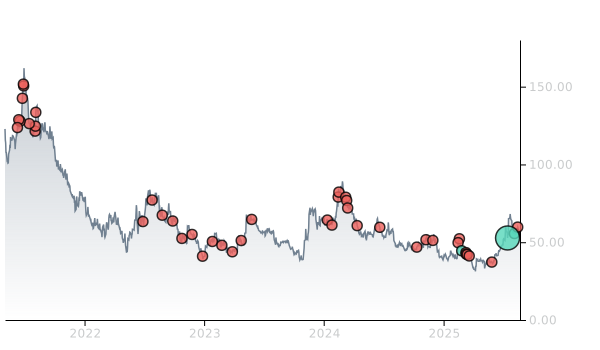
$CRSP insiders have traded $CRSP stock on the open market 9 times in the past 6 months. Of those trades, 4 have been purchases and 5 have been sales.
Here’s a breakdown of recent trading of $CRSP stock by insiders over the last 6 months:
- SIMEON GEORGE has made 3 purchases buying 989,812 shares for an estimated $51,499,918 and 0 sales.
- SAMARTH KULKARNI (Chief Executive Officer) has made 0 purchases and 3 sales selling 68,218 shares for an estimated $4,499,456.
- DOUGLAS A TRECO purchased 20,000 shares for an estimated $1,140,600
- NAIMISH PATEL (Chief Medical Officer) sold 3,932 shares for an estimated $141,316
- JAMES R. KASINGER (General Counsel and Secretary) sold 1,076 shares for an estimated $71,661
To track insider transactions, check out Quiver Quantitative's insider trading dashboard.
$CRSP Hedge Fund Activity
We have seen 204 institutional investors add shares of $CRSP stock to their portfolio, and 193 decrease their positions in their most recent quarter.
Here are some of the largest recent moves:
- BLACKROCK, INC. added 3,452,819 shares (+132.1%) to their portfolio in Q2 2025, for an estimated $167,945,116
- ORBIS ALLAN GRAY LTD added 1,201,600 shares (+76.9%) to their portfolio in Q2 2025, for an estimated $58,445,824
- GEODE CAPITAL MANAGEMENT, LLC added 1,025,979 shares (+98.1%) to their portfolio in Q2 2025, for an estimated $49,903,618
- UBS AM, A DISTINCT BUSINESS UNIT OF UBS ASSET MANAGEMENT AMERICAS LLC removed 988,061 shares (-50.6%) from their portfolio in Q2 2025, for an estimated $48,059,287
- STATE STREET CORP added 859,334 shares (+35.6%) to their portfolio in Q2 2025, for an estimated $41,798,005
- MORGAN STANLEY removed 788,602 shares (-60.7%) from their portfolio in Q2 2025, for an estimated $38,357,601
- UBS GROUP AG added 771,685 shares (+37.2%) to their portfolio in Q2 2025, for an estimated $37,534,758
To track hedge funds' stock portfolios, check out Quiver Quantitative's institutional holdings dashboard.
$CRSP Analyst Ratings
Wall Street analysts have issued reports on $CRSP in the last several months. We have seen 7 firms issue buy ratings on the stock, and 0 firms issue sell ratings.
Here are some recent analyst ratings:
- B of A Securities issued a "Buy" rating on 10/17/2025
- Needham issued a "Buy" rating on 10/10/2025
- HC Wainwright & Co. issued a "Buy" rating on 09/23/2025
- JP Morgan issued a "Overweight" rating on 09/18/2025
- Chardan Capital issued a "Buy" rating on 08/05/2025
- Piper Sandler issued a "Overweight" rating on 06/27/2025
- JMP Securities issued a "Market Outperform" rating on 06/27/2025
To track analyst ratings and price targets for $CRSP, check out Quiver Quantitative's $CRSP forecast page.
$CRSP Price Targets
Multiple analysts have issued price targets for $CRSP recently. We have seen 11 analysts offer price targets for $CRSP in the last 6 months, with a median target of $80.0.
Here are some recent targets:
- Geoff Meacham from B of A Securities set a target price of $93.0 on 10/17/2025
- Gil Blum from Needham set a target price of $81.0 on 10/10/2025
- Mitchell S. Kapoor from HC Wainwright & Co. set a target price of $80.0 on 09/23/2025
- Brian Cheng from JP Morgan set a target price of $70.0 on 09/18/2025
- Gena Wang from Barclays set a target price of $56.0 on 08/06/2025
- Geulah Livshits from Chardan Capital set a target price of $82.0 on 08/05/2025
- Luca Issi from RBC Capital set a target price of $42.0 on 08/05/2025
Full Release
-Data presented in a late-breaking presentation at the American Heart Association (AHA) Scientific Sessions 2025-
-Phase 1 clinical data for CTX310® demonstrate robust, dose-dependent reductions in circulating ANGPTL3 with a mean reduction from baseline of -73% (maximum -89%), a mean reduction in triglycerides (TG) of -55% (maximum -84%), and a mean reduction of low-density lipoprotein (LDL) of -49% (maximum -87%) at the highest dose-
-Among participants with elevated baseline TG (>150 mg/dL), a mean reduction of 60% in TG were observed at therapeutic doses-
-CTX310 was well tolerated with no treatment-related serious adverse events and no ≥Grade 3 changes in liver transaminases-
-Findings simultaneously published in
The New England Journal of Medicine
entitled “First-in-Human Phase 1 Trial of CRISPR-Cas9 Gene Editing Targeting ANGPTL3”-
ZUG, Switzerland and BOSTON, Nov. 08, 2025 (GLOBE NEWSWIRE) -- CRISPR Therapeutics (Nasdaq: CRSP), a biopharmaceutical company focused on creating transformative gene-based medicines for serious diseases, today announced positive Phase 1 data from its ongoing clinical trial evaluating CTX310®, an investigational, in vivo CRISPR/Cas9 gene-editing therapy targeting ANGPTL3. A single-course treatment with CTX310 produced dose-dependent, durable reductions in circulating ANGPTL3 with a mean reduction from baseline of -73% (maximum -89%), a mean reduction in triglycerides (TG) of -55% (maximum -84%) and a mean reduction of low-density lipoprotein (LDL) of -49% (maximum -87%) at the highest dose. These data demonstrate the potential of CTX310 to deliver meaningful and sustained lipid lowering following a single-course intravenous (IV) infusion.
These data were presented today during a late-breaking session at the American Heart Association (AHA) Scientific Sessions and published simultaneously in The New England Journal of Medicine (NEJM) in a peer-reviewed article entitled “Phase 1 Trial of CRISPR-Cas9 Gene Editing Targeting ANGPTL3.”
"The publication and presentation of these Phase 1 results mark an important milestone for CRISPR Therapeutics and for the field of in vivo gene editing,” said Naimish Patel, M.D., Chief Medical Officer of CRISPR Therapeutics. “For the first time, we’ve shown that a single-course in vivo CRISPR treatment can safely and durably lower ANGPTL3, leading to clinically meaningful reductions in triglycerides and LDL. These data provide strong support for continued advancement of CTX310 and our broader cardiovascular gene-editing portfolio.”
“Seeing a single-course treatment safely lower both LDL cholesterol and triglycerides is truly unprecedented,” said Stephen J. Nicholls, lead study investigator and director of the Victorian Heart Institute at Monash University. “If these findings are confirmed in larger studies, a one-time therapy could redefine how we manage lifelong lipid disorders and help prevent cardiovascular disease.”
“Adherence to cholesterol-lowering therapy remains a major challenge in treating patients with heart disease,” said Steven E. Nissen, M.D., senior author of the study and Chief Academic Officer at the Cleveland Clinic Heart, Vascular and Thoracic Institute. “Many patients discontinue therapy within the first year. The prospect of a one-time treatment with durable effects would be a major advance in cardiovascular prevention.”
CTX310
CTX310 is an investigational, lipid nanoparticle (LNP) delivered CRISPR/Cas9 therapy designed to precisely edit the ANGPTL3 gene in hepatocytes following a single-course IV administration. ANGPTL3 encodes a key protein that regulates TG and LDL levels, both well-established risk factors for atherosclerotic cardiovascular disease (ASCVD). Individuals with naturally occurring loss-of-function mutations in ANGPLT3 have lower TG, lower LDL and a reduced lifetime risk of cardiovascular disease compared to those without such mutations. By reducing ANGPTL3 expression, CTX310 has the potential to durably lower TG and LDL cholesterol in patients with severe or refractory dyslipidemia. More than 40 million people in the United States have elevated TG, elevated LDL, or both, underscoring the significant unmet medical need. CTX310 is initially being developed for patients at highest cardiovascular risk who have limited effective treatment options despite current lipid-lowering therapies.
Phase 1 Clinical Trial Design
The Phase 1, open label, dose-escalation trial evaluated single-course IV doses of CTX310 ranging from 0.1 to 0.8 mg/kg (lean body weight) targeting ANGPTL3 in four patient groups: homozygous familial hypercholesterolemia (HoFH), severe hypertriglyceridemia (sHTG), heterozygous familial hypercholesterolemia (HeFH), or mixed dyslipidemias (elevated TG and LDL). Eligible participants had uncontrolled TG levels >150 mg/dL and/or LDL cholesterol >100 mg/dL (or >70 mg/dL for those with established ASCVD) despite background standard of care per local guidelines.
The majority of participants were receiving statins and/or ezetimibe, while 40% were taking PCSK9 inhibitors. The trial was designed to evaluate safety and tolerability as primary endpoints, with changes in circulating ANGPTL3 protein, TG, and LDL as secondary endpoints.
Safety and Tolerability
Single-course ascending doses of CTX310 were administered to 15 participants across sequential cohorts, and all participants completed at least 28 days of follow-up as of the data cutoff. CTX310 was generally well tolerated, and no dose-limiting toxicities or serious adverse events related to treatment.
Adverse events were generally mild to moderate. One participant experienced an allergic reaction that resolved the following day with supportive care. Infusion-related reactions occurred in three participants (two at 0.6 mg/kg and one at 0.8 mg/kg dose), all Grade 2. All events resolved, and all participants completed their infusions. One participant with elevated transaminases level at baseline had a Grade 2 elevation of transaminases that peaked by Day 4 and resolved completely by Day 14 without any rise in bilirubin.
Overall, CTX310 demonstrated a well-tolerated safety and tolerability profile that supports continued advancement of the program.
Efficacy Highlights
These new results build upon previously disclosed top-line data from 12 participants across the first four sequential cohorts, corresponding to lean body weight-based doses of DL1 [0.1 mg/kg], DL2 [0.3 mg/kg], DL3 [0.6 mg/kg] and DL4 [0.8 mg/kg]. All participants had at least 30 days of follow-up.
-
Dose-dependent reductions in circulating ANGPTL3 protein: Mean (range) among participants treated with 0.1, 0.3, 0.6, 0.7, and 0.8 mg/kg doses were 10% (-22 to 71), 9% (-25 to 64), -33% (-51 to -19), -80% (-87 to -73), and -73% (-89 to -67), respectively, at Day 30 following CTX310 infusion.
-
Among participants treated at 0.8 mg/kg, TG reductions of up to 84% were observed, with a mean reduction of 55% at Day 60 following CTX310 infusion.
-
In participants with elevated TG (>150 mg/dL) at baseline, mean reductions of 60% were observed at the therapeutic dose levels at Day 60 following CTX310 infusion.
-
Among participants treated at 0.8 mg/kg, LDL reductions of up to 87% were observed, with a mean reduction of 49% at Day 60 following CTX310 infusion.
-
Two participants on background PCSK9 inhibitors achieved >80% reduction in LDL from baseline.
Next Steps
Results from the Phase 1 clinical trial highlight the potential of CTX310 to safely and durably lower both TG and LDL following a single-course IV administration. These findings underscore its promise as a potentially transformative treatment approach for patients with severe or refractory dyslipidemia. CRISPR Therapeutics is advancing CTX310 into Phase 1b clinical trials, prioritizing development in sHTG and mixed dyslipidemia.
About
In Vivo
Programs
CRISPR Therapeutics has established a proprietary lipid nanoparticle (LNP) delivery platform to enable gene editing in the liver using both CRISPR/Cas9 and its novel, proprietary SyNTase™ editing technologies. The Company’s
in vivo
portfolio includes its lead investigational programs, CTX310 (directed towards angiopoietin-related protein 3 (
ANGPTL3
)) and CTX320™ (directed towards
LPA
, the gene encoding apolipoprotein(a) (apo(a)), a major component of lipoprotein(a) [Lp(a)]). Both are validated therapeutic targets for cardiovascular disease. CTX310 and CTX320 are in ongoing clinical trials in patients with heterozygous familial hypercholesterolemia, homozygous familial hypercholesterolemia, mixed dyslipidemias, or severe hypertriglyceridemia, and in patients with elevated lipoprotein(a), respectively. In addition, the Company’s research and preclinical development candidates include: CTX460™, targeting SERPINA1 for the treatment of alpha-1 antitrypsin deficiency (AATD); CTX340™, targeting AGT for the treatment of refractory hypertension; and CTX450™, targeting ALAS1 for the treatment of acute hepatic porphyria (AHP).
About CRISPR Therapeutics
Founded over a decade ago, CRISPR Therapeutics is a leading gene editing company focused on developing transformative medicines for serious diseases. The Company has evolved from a pioneering research-stage organization into an industry leader, marking a historic milestone with the approval of CASGEVY® (exagamglogene autotemcel [exa-cel]), the world’s first CRISPR-based therapy, approved for eligible patients with sickle cell disease and transfusion-dependent beta thalassemia. CRISPR Therapeutics is advancing a broad and diversified pipeline across hemoglobinopathies, oncology, regenerative medicine, cardiovascular and autoimmune, and rare diseases. The Company continues to expand its leadership in gene editing through the development of SyNTase™ editing, a novel and proprietary gene-editing platform designed to enable precise, efficient, and scalable gene correction. To accelerate and expand its impact, CRISPR Therapeutics has established strategic collaborations with leading biopharmaceutical partners, including Vertex Pharmaceuticals. CRISPR Therapeutics AG is headquartered in Zug, Switzerland, with its wholly-owned U.S. subsidiary, CRISPR Therapeutics, Inc., and R&D operations based in Boston, Massachusetts and San Francisco, California. To learn more, visit
www.crisprtx.com
.
CRISPR THERAPEUTICS ® standard character mark and design logo, SyNTase™, CTX310®, CTX320™, CTX340™, CTX450™ and CTX460™ are trademarks and registered trademarks of CRISPR Therapeutics AG. CASGEVY ® and the CASGEVY logo are registered trademarks of Vertex Pharmaceuticals Incorporated. All other trademarks and registered trademarks are the property of their respective owners.
CRISPR Therapeutics Forward-Looking Statement
Statements contained in this press release regarding matters that are not historical facts are “forward-looking statements” within the meaning of the Private Securities Litigation Reform Act of 1995. Because such statements are subject to risks and uncertainties, actual results may differ materially from those expressed or implied by such forward-looking statements. Such statements include, but are not limited to, statements made by Drs. Nicholls, Nissen and Patel in this press release as well as statements regarding any or all of the following: (i) CRISPR Therapeutics preclinical studies, clinical trials and pipeline products and programs, including, without limitation, manufacturing capabilities, status of such studies and trials, potential expansion into new indications and expectations regarding data, safety and efficacy generally; (ii) data included in the above-described oral presentation and any associated abstracts or posters, data included in the above-described article in The New England Journal of Medicine as well as the ability to use data from ongoing and planned clinical trials for the design and initiation of further clinical trials; and (iii) the therapeutic value, development, and commercial potential of gene editing technologies and therapies, including CRISPR/Cas9 and SyNTase, as well as other technologies. Risks that contribute to the uncertain nature of the forward-looking statements include, without limitation, the risks and uncertainties discussed under the heading “Risk Factors” in CRISPR Therapeutics most recent annual report on Form 10-K and in any other subsequent filings made by CRISPR Therapeutics with the U.S. Securities and Exchange Commission. Existing and prospective investors are cautioned not to place undue reliance on these forward-looking statements, which speak only as of the date they are made. We disclaim any obligation or undertaking to update or revise any forward-looking statements contained in this press release, other than to the extent required by law.
Investor Contact:
+1-617-307-7503
[email protected]
Media Contact:
+1-617-315-4493
[email protected]