


Acoramidis significantly reduces all-cause mortality in variant ATTR-CM patients, presenting vital clinical benefits for high-risk populations.
Quiver AI Summary
BridgeBio Pharma, Inc. announced promising results from the ATTRibute-CM study, showing that acoramidis significantly reduces all-cause mortality (ACM) in patients with the variant form of transthyretin amyloid cardiomyopathy (ATTR-CM), particularly those carrying the p.Val142Ile (V142I, V122I) genetic variant. The study, which presented data in moderation at the American Heart Association Scientific Sessions 2025 and was published in JAMA Cardiology, reported a 59% risk reduction in ACM at Month 42 in the overall variant population and a 69% risk reduction through Month 30 and Month 42 in the specific V142I cohort compared to placebo. These findings mark a significant clinical advancement for a high-risk patient group, with accompanying improvements in functional capacity and quality of life. Acoramidis, a TTR stabilizer approved in the U.S. and Europe, offers hope to patients with limited treatment options, particularly among those of Western African ancestry who are more likely to carry the V142I variant.
Potential Positives
- Acoramidis demonstrated a statistically significant 69% risk reduction in all-cause mortality in patients with the p.Val142Ile variant, highlighting its potential as a vital treatment option in a high-risk population with significant unmet needs.
- The data presented represents the first report of clinical benefit of this magnitude for the variant ATTR-CM population, underscoring advancements in precision medicine and equity in cardiovascular care.
- The study results are consistent with previously presented findings in other patient populations, suggesting the broad efficacy of acoramidis across different subgroups, which may strengthen its market position.
- Acoramidis is already approved in multiple markets, including the U.S. and Europe, which may facilitate faster patient access and bolster the company's commercial strategy.
Potential Negatives
- The report highlights significant demographic disparities in treatment initiation and outcomes for ATTR-CM, particularly showing that Black women have the worst clinical outcomes, which raises concerns about equity in care and could reflect poorly on the company's commitment to address these issues.
- Adverse reactions, including diarrhea and upper abdominal pain, were noted in patients treated with acoramidis, which could raise concerns regarding the safety profile of the product.
- The company's forward-looking statements indicate potential uncertainties in achieving planned clinical and commercial benefits for acoramidis, emphasizing risks that could impact future performance and investor confidence.
FAQ
What is acoramidis and its clinical significance?
Acoramidis is a transthyretin stabilizer that significantly reduces all-cause mortality in patients with variant ATTR-CM, demonstrating strong clinical benefits.
How effective is acoramidis for the V142I genetic variant?
Acoramidis showed a 69% reduction in all-cause mortality for patients with the p.Val142Ile variant through Month 42.
Where were the ATTRibute-CM study results published?
The results were published in JAMA Cardiology and presented at the American Heart Association (AHA) Scientific Sessions 2025.
What are the side effects of acoramidis?
Common side effects include diarrhea and upper abdominal pain, but most cases are mild and resolve without discontinuation.
What are the implications of this study for patients?
This study highlights a significant breakthrough in treating a high-risk population with limited access to care, promoting equity in cardiovascular treatment.
Disclaimer: This is an AI-generated summary of a press release distributed by GlobeNewswire. The model used to summarize this release may make mistakes. See the full release here.
$BBIO Congressional Stock Trading
Members of Congress have traded $BBIO stock 2 times in the past 6 months. Of those trades, 2 have been purchases and 0 have been sales.
Here’s a breakdown of recent trading of $BBIO stock by members of Congress over the last 6 months:
- REPRESENTATIVE GILBERT RAY CISNEROS, JR. has traded it 2 times. They made 2 purchases worth up to $30,000 on 09/22, 08/08 and 0 sales.
To track congressional stock trading, check out Quiver Quantitative's congressional trading dashboard.
$BBIO Insider Trading Activity
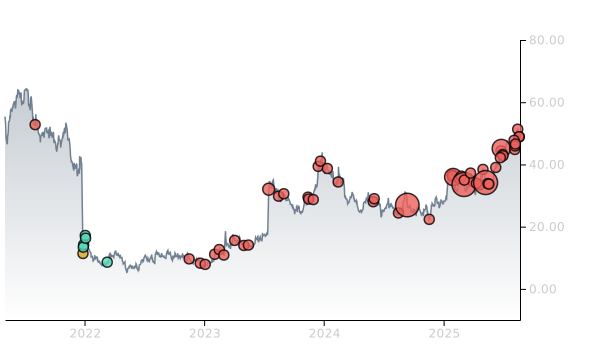
$BBIO insiders have traded $BBIO stock on the open market 59 times in the past 6 months. Of those trades, 0 have been purchases and 59 have been sales.
Here’s a breakdown of recent trading of $BBIO stock by insiders over the last 6 months:
- GENETIC DISORDER L.P. KKR sold 6,000,000 shares for an estimated $205,200,000
- GLOBAL INVESTORS LP VIKING sold 3,500,000 shares for an estimated $154,000,000
- FRANK MCCORMICK has made 0 purchases and 8 sales selling 374,000 shares for an estimated $21,669,536.
- NEIL KUMAR (Chief Executive Officer) has made 0 purchases and 35 sales selling 447,312 shares for an estimated $20,290,345.
- CHARLES J HOMCY has made 0 purchases and 3 sales selling 300,000 shares for an estimated $13,912,442.
- RONALD J DANIELS sold 61,031 shares for an estimated $3,888,999
- THOMAS TRIMARCHI (President and CFO) has made 0 purchases and 3 sales selling 59,590 shares for an estimated $2,961,803.
- ANDREA ELLIS sold 17,167 shares for an estimated $841,183
- HANNAH VALANTINE has made 0 purchases and 5 sales selling 8,999 shares for an estimated $379,007.
- MARICEL APULI (Chief Accounting Officer) sold 1,000 shares for an estimated $45,440
To track insider transactions, check out Quiver Quantitative's insider trading dashboard.
$BBIO Hedge Fund Activity
We have seen 208 institutional investors add shares of $BBIO stock to their portfolio, and 159 decrease their positions in their most recent quarter.
Here are some of the largest recent moves:
- KOHLBERG KRAVIS ROBERTS & CO. L.P. removed 6,000,000 shares (-31.2%) from their portfolio in Q2 2025, for an estimated $259,080,000
- VIKING GLOBAL INVESTORS LP removed 3,500,000 shares (-15.9%) from their portfolio in Q2 2025, for an estimated $151,130,000
- CITADEL ADVISORS LLC removed 2,598,708 shares (-88.7%) from their portfolio in Q2 2025, for an estimated $112,212,211
- FARALLON CAPITAL MANAGEMENT LLC added 2,169,000 shares (+37.8%) to their portfolio in Q2 2025, for an estimated $93,657,420
- JANUS HENDERSON GROUP PLC added 2,105,133 shares (+29.4%) to their portfolio in Q2 2025, for an estimated $90,899,642
- MACQUARIE GROUP LTD added 2,003,713 shares (+2189.3%) to their portfolio in Q2 2025, for an estimated $86,520,327
- D. E. SHAW & CO., INC. added 1,998,104 shares (+2403.0%) to their portfolio in Q2 2025, for an estimated $86,278,130
To track hedge funds' stock portfolios, check out Quiver Quantitative's institutional holdings dashboard.
$BBIO Analyst Ratings
Wall Street analysts have issued reports on $BBIO in the last several months. We have seen 15 firms issue buy ratings on the stock, and 0 firms issue sell ratings.
Here are some recent analyst ratings:
- JP Morgan issued a "Overweight" rating on 11/07/2025
- HC Wainwright & Co. issued a "Buy" rating on 11/03/2025
- Goldman Sachs issued a "Buy" rating on 10/31/2025
- Raymond James issued a "Outperform" rating on 10/30/2025
- Truist Securities issued a "Buy" rating on 10/30/2025
- Piper Sandler issued a "Overweight" rating on 10/30/2025
- Cantor Fitzgerald issued a "Overweight" rating on 10/30/2025
To track analyst ratings and price targets for $BBIO, check out Quiver Quantitative's $BBIO forecast page.
$BBIO Price Targets
Multiple analysts have issued price targets for $BBIO recently. We have seen 16 analysts offer price targets for $BBIO in the last 6 months, with a median target of $76.5.
Here are some recent targets:
- Anupam Rama from JP Morgan set a target price of $77.0 on 11/07/2025
- Raghuram Selvaraju from HC Wainwright & Co. set a target price of $90.0 on 11/03/2025
- Paul Choi from Goldman Sachs set a target price of $100.0 on 10/31/2025
- Josh Schimmer from Cantor Fitzgerald set a target price of $110.0 on 10/30/2025
- Tyler Van Buren from TD Cowen set a target price of $95.0 on 10/30/2025
- Biren Amin from Piper Sandler set a target price of $98.0 on 10/30/2025
- Danielle Brill from Truist Securities set a target price of $80.0 on 10/30/2025
Full Release
- Simultaneously published in JAMA Cardiology along with moderated posters at AHA, acoramidis demonstrated:
- 59% risk reduction in ACM in the ATTR-CM variant population at Month 42 (p=0.032) compared to patients initially randomized to placebo in the ATTRibute-CM study
- 69% risk reduction in ACM/ first CVH through Month 30 compared to placebo (p=0.016) and a 69% risk reduction in ACM through Month 42 (p=0.045) in ATTR-CM participants with the genetic variant p.Val142Ile (V142I, V122I) compared to patients initially randomized to placebo in the ATTRibute-CM study
- This is the first report of clinical benefit of this magnitude observed in this high-risk population with significant unmet need
PALO ALTO, Calif., Nov. 08, 2025 (GLOBE NEWSWIRE) -- BridgeBio Pharma, Inc. (Nasdaq: BBIO) (“BridgeBio” or the “Company”), a new type of biopharmaceutical company focused on genetic diseases, presented data from the ATTRibute-CM study, showing that acoramidis significantly reduces all-cause mortality (ACM) through Month 42 in the overall variant ATTR-CM population, and specifically in the p.Val142Ile (V142I, V122I) subpopulation. The V142I variant disproportionately affects individuals of Western African ancestry, with a carrier frequency of 3-4% in the U.S. Black population. These data were presented in two moderated digital posters at the American Heart Association (AHA) Scientific Sessions 2025 and were simultaneously published in JAMA Cardiology . These results in the variant and V142I subpopulations are consistent with the statistically significant results previously presented from the ATTRibute-CM study in the wild-type population, and the ATTR-CM population overall. Acoramidis is a selective, small molecule, orally administered, near-complete (≥90%) transthyretin (TTR) stabilizer.
“These data represent an important finding for patients with the V142I variant of ATTR-CM, a population that has historically had limited access to early diagnosis and treatment,” said Kevin Alexander, M.D., of Stanford University School of Medicine, U.S., and first author of the JAMA Cardiology manuscript. “The 69% reduction in all-cause mortality observed with acoramidis is clinically meaningful, with sustained and statistically significant benefits in survival, functional capacity, and quality of life. These results are encouraging for individuals with variant ATTR-CM and reflect progress in advancing precision medicine and promoting equity in cardiovascular care."
Details from the JAMA Cardiology manuscript, Efficacy of Acoramidis in Wild-Type and Variant Transthyretin Amyloid Cardiomyopathy: Results from ATTRibute-CM and its Open-Label Extension , include:
- Building upon previously presented data, which showed a 59% reduction in the risk of ACM or first cardiovascular-related hospitalization (CVH) versus placebo in the overall variant population through Month 30, this analysis observed an even greater 69% reduction in the risk of ACM or first CVH in the V142I population through Month 30
- There was also a consistent benefit to V142I patients through Month 42, with a 69% reduction in the risk of ACM for acoramidis patients compared to patients initially randomized to placebo
-
The manuscript also summarizes the 59% risk reduction in ACM previously reported in variant patients through Month 42, as well as the meaningful benefits in functional capacity and quality of life measurements for variant patients, which is the first report of clinical benefit of this magnitude observed in this high-risk population with significant unmet need. This data includes:
- 6-minute walk distance with a least-squares mean difference of 87 meters ( p = 0.0048) in favor of acoramidis through Month 30
- Kansas City Cardiomyopathy Questionnaire Overall Summary score, a patient-reported outcome measure that assesses the health status of individuals with heart failure, with a least-squares mean difference between of 20 points ( p = 0.0019) in favor of acoramidis through Month 30
- This data was also shared in two moderated digital posters at the AHA Scientific Sessions 2025 titled, Acoramidis Effect on All-Cause Mortality in Patients with p.V142I (V122I) Variant ATTR-CM: Findings from the ATTRibute-CM Study , presented by Marianna Fontana, M.D., Ph.D. of University College London, UK and Acoramidis Reduces All-Cause Mortality and First Cardiovascular Hospitalization in Patients with Variant Transthyretin Amyloid Cardiomyopathy: Results from the ATTRibute-CM Study , presented by Prem Soman, M.D., Ph.D. of University of Pittsburgh School of Medicine, U.S.
“There was a time when I couldn’t understand why I was losing my strength – why simple things that used to come easily suddenly felt so hard. Living with ATTR-CM means facing a disease that quietly steals pieces of your life,” said Mike Lane, Founder, Amyloidosis Army, an advocacy group focused on serving the variant ATTR-CM community. “That’s why every bit of progress in this field matters so much. When I see new results and real advances, especially data like this in the variant population, I feel something I haven’t felt in a long time: hope. Hope that change is possible. Hope that science is finally catching up to the urgency of our lives.”
In addition to these moderated digital posters on the variant population, eight other digital posters were shared on the open-label extension data from ATTRibute-CM and real-world evidence. These findings included:
-
Acoramidis Reduces All-Cause Mortality and Cardiovascular-Related Hospitalizations Through Month 42 in Transthyretin Amyloid Cardiomyopathy Across All Pre-specified Patient Subgroups
, presented by Lily Stern, M.D. of Cedars-Sinai Heart Institute, U.S.
- The long-term benefit of acoramidis was consistently shown in patients initially randomized to acoramidis treatment compared with placebo to acoramidis switch after 30 months across multiple clinically relevant subgroups, underscoring the importance of early initiation of acoramidis to reduce the long-term risk of ACM or CVH
-
Acoramidis Lowers NT-proBNP in a Larger Proportion of ATTRibute-CM Study Participants with Transthyretin Amyloid Cardiomyopathy Compared with Placebo, Independent of Atrial Fibrillation Status
, presented by Mathew Maurer, M.D. of Columbia University Irving Medical Center, U.S.
- In ATTRibute-CM, the proportion of participants with improved N-terminal Pro-Brain Natriuretic Peptide (NT-proBNP) at Month 30 was consistently around 15 percentage points higher with acoramidis than placebo, regardless of atrial fibrillation (AF)/atrial flutter (AFL) status at baseline or during the study. The ongoing open-label extension study may offer insights into the durability of this effect and its long-term clinical consequences
-
Geographic Disparities in Transthyretin Amyloid Cardiomyopathy Prevalence in United States Veterans,
presented by Sandesh Dev, M.D. of Southern Arizona VA Health Care System, U.S.
- The documented prevalence of ATTR-CM increased over time in U.S. veterans, though geographic disparities exist at the state level that appear to correlate with access to amyloidosis centers. For regions with lower-than-expected prevalence, strategies are needed to address regional disparities in disease awareness, diagnosis, and access to care
-
Demographic Disparities in Tafamidis Treatment and Clinical Outcomes Across the United States,
presented by Nicole Cyrille-Superville, M.D. of Atrium Health Sanger Heart & Vascular Institute Kenilworth, Charlotte, NC, U.S.
- This large-scale analysis of a U.S. cohort suggests existing gender and racial disparities in tafamidis treatment initiation and outcomes in ATTR-CM. White women had the lowest rates of tafamidis initiation, while Black women had the worst clinical outcomes, highlighting a compounded disparity in treatment and survival by gender and race. These findings underscore the urgent need to address demographic-based disparities and ensure equitable care for all patients with ATTR-CM
-
Serum Transthyretin Levels at Day 28 are Associated with Cardiovascular Outcomes: Insights from the ATTRibute-CM Study
, presented by Nitasha Sarswat, M.D. of UChicago Medicine, U.S.
- Across treatment groups, serum TTR levels above normal range (≥20 mg/dL) at Day 28 were associated with a lower risk of cardiovascular outcomes at Month 30, when compared with serum TTR levels below normal range (<20 mg/dL). Thus, these observations demonstrate that higher serum TTR levels over time may have the potential for clinical benefits in both CVM and CVH
-
Acoramidis Improved Clinical Outcomes, Function, Quality of Life and NT-proBNP in Patients with Transthyretin Amyloid Cardiomyopathy Regardless of Atrial Fibrillation Status at Baseline
, presented by Richard Cheng, M.D. of University of Washington, Seattle, WA, U.S.
- Acoramidis improved clinical outcomes (ACM, CVH), functional status, quality of life, and NT-proBNP levels relative to placebo in participants with ATTR-CM, regardless of AF/AFL diagnosis at baseline
-
Acoramidis Reduces the Risk of All-Cause Mortality and Cardiovascular-Related Hospitalization Compared with Placebo in Participants with Transthyretin Amyloid Cardiomyopathy and Early-Stage Heart Failure Regardless of Atrial Fibrillation History: Insights from ATTRibute-CM
, presented by Ronald Witteles, M.D. of Stanford University School of Medicine, U.S.
- Lower risk of clinical outcomes (ACM and CVH) was observed with acoramidis in patients with early-stage heart failure, regardless of the presence or absence of an AF/AFL diagnosis at baseline
-
Vutrisiran Healthcare Resource Utilization, Costs, Discontinuation, and Mortality: A Retrospective Database Analysis
, presented by Nicole Bart, M.D., Ph.D. of St. Vincent's Hospital Sydney, AU
- One-third to half of pts presented to the hospital within 1.5 y of vutrisiran treatment (before ATTR-CM approval); within 12 months, roughly 1 in 4 died or discontinued therapy for ≥90 d past the 90-day administration schedule, with many switching to other ATTR treatments. This suggests that vutrisiran-treated patients continue to experience significant HCRU and costs related to disease progression despite treatment. A need remains for new therapies to further reduce burden and costs
Acoramidis is approved as Attruby® by the U.S. FDA and is approved as BEYONTTRA® by the European Medicines Agency (EMA) , Japanese Pharmaceuticals and Medical Devices Agency, and the UK Medicines and Healthcare Products Regulatory Agency with all labels specifying near-complete stabilization of TTR.
More data on the benefit of Attruby for ATTR-CM patients is planned for future medical meetings.
About
Attruby™ (acoramidis)
INDICATION
Attruby is a transthyretin stabilizer indicated for the treatment of the cardiomyopathy of wild-type or variant transthyretin-mediated amyloidosis (ATTR-CM) in adults to reduce cardiovascular death and cardiovascular-related hospitalization.
IMPORTANT SAFETY INFORMATION
Adverse Reactions
Diarrhea (11.6% vs 7.6%) and upper abdominal pain (5.5% vs 1.4%) were reported in patients treated with Attruby versus placebo, respectively. The majority of these adverse reactions were mild and resolved without drug discontinuation. Discontinuation rates due to adverse events were similar between patients treated with Attruby versus placebo (9.3% and 8.5%, respectively).
About BridgeBio
BridgeBio Pharma (BridgeBio; NASDAQ:BBIO) is a new type of biopharmaceutical company founded to discover, create, test, and deliver transformative medicines to treat patients who suffer from genetic diseases. BridgeBio’s pipeline of development programs ranges from early science to advanced clinical trials. BridgeBio was founded in 2015 and its team of experienced drug discoverers, developers and innovators are committed to applying advances in genetic medicine to help patients as quickly as possible. For more information visit
bridgebio.com
and follow us on
LinkedIn
,
Twitter
,
Facebook
,
Instagram
, and
YouTube
.
BridgeBio Forward-Looking Statements
This press release contains forward-looking statements. Statements in this press release may include statements that are not historical facts and are considered forward-looking within the meaning of Section 27A of the Securities Act of 1933, as amended (the “Securities Act”), and Section 21E of the Securities Exchange Act of 1934, as amended (the “Exchange Act”), which are usually identified by the use of words such as “anticipates,” “believes,” “continues,” “estimates,” “expects,” “hopes,” “intends,” “may,” “plans,” “projects,” “remains,” “seeks,” “should,” “will,” and variations of such words or similar expressions, or the negative of these terms or other comparable terminology. These words are intended to identify forward-looking statements, though not all forward-looking statements necessarily contain these identifying words. BridgeBio intends these forward-looking statements to be covered by the safe harbor provisions for forward-looking statements contained in Section 27A of the Securities Act and Section 21E of the Exchange Act. These forward-looking statements, including statements regarding the potential clinical and commercial benefits of acoramidis, its observed impact on all-cause mortality and cardiovascular-related hospitalizations in patients with variant transthyretin amyloid cardiomyopathy (ATTR-CM), the potential implications of these findings for broader patient populations, future data disclosures, regulatory discussions, and BridgeBio’s ongoing and future development programs, reflect BridgeBio’s current views about its plans, intentions, expectations, and strategies, which are based on the information currently available to BridgeBio and on assumptions BridgeBio has made. Although BridgeBio believes that its plans, intentions, expectations, and strategies as reflected in or suggested by these forward-looking statements are reasonable, BridgeBio can give no assurance that such plans, intentions, expectations, or strategies will be attained or achieved. Furthermore, actual results may differ materially from those described in the forward-looking statements and will be affected by a number of risks, uncertainties, and assumptions, including, but not limited to, risks associated with the continued development and commercialization of acoramidis; the occurrence of adverse safety events; the ability to maintain regulatory approvals; the need for additional clinical data or analyses requested by regulatory authorities; whether future results will be consistent with prior clinical findings; and the impacts of current macroeconomic and geopolitical events, including changing conditions from hostilities in Ukraine and in Israel and the Gaza Strip, and increasing rates of inflation and changing interest rates, on BridgeBio’s business operations and expectations. Additional risks are set forth in the “Risk Factors” section of BridgeBio’s most recent Annual Report on Form 10-K and other subsequent filings with the U.S. Securities and Exchange Commission. Except as required by applicable law, BridgeBio assumes no obligation to publicly update any forward-looking statements, whether as a result of new information, future events, or otherwise.
BridgeBio Media Contact:
Bubba Murarka, Executive Vice President, Corporate Development
[email protected]
(650)-789-8220
BridgeBio Investor Contact:
Chinmay Shukla, Senior Vice President, Strategic Finance
[email protected]