
Updated data shows risto-cel effectively increases hemoglobin F and decreases hemoglobin S in sickle cell disease patients.
Quiver AI Summary
Beam Therapeutics has released updated data from the BEACON Phase 1/2 clinical trial of risto-cel, a gene therapy for sickle cell disease (SCD), indicating significant improvements in patient outcomes. In a cohort of 31 adult and adolescent patients, risto-cel treatment led to a mean increase in fetal hemoglobin (HbF) levels of over 60% and a reduction of sickle hemoglobin (HbS) to under 40%, with sustained resolution of anemia for up to 20 months. Patients required a median of just one cell collection cycle with rapid engraftment of neutrophils and platelets. The therapy demonstrated a safety profile consistent with existing treatments, with no severe vaso-occlusive crises reported post-treatment. These results highlight the potential of risto-cel as a transformative therapy for SCD patients, prompting Beam Therapeutics to expedite dosing for remaining trial participants and prepare for future regulatory submissions.
Potential Positives
- Updated data from the BEACON Phase 1/2 clinical trial show that risto-cel achieves a mean Hemoglobin F (HbF) induction of over 60% and reduces Hemoglobin S (HbS) to below 40%, indicating significant therapeutic potential for patients with sickle cell disease (SCD).
- The treatment showcased a rapid engraftment profile, with a median time to neutrophil engraftment of 17.5 days, potentially leading to improved patient experiences and reduced hospital stays.
- No severe vaso-occlusive crises were reported in patients post-engraftment, highlighting the safety of risto-cel as a treatment option.
- The data emphasize the durability and high efficiency of the base editing approach used in risto-cel, reinforcing the company’s commitment to advancing precision genetic medicines.
Potential Negatives
- One patient experienced a treatment-related death four months after risto-cel infusion, raising concerns about the long-term safety of the therapy.
- The press release emphasizes "significant improvement" and "transformative difference," which could lead to high expectations that may not be met as the therapy undergoes further testing and regulatory scrutiny.
- The company faces inherent risks and uncertainties related to the development and approval of its product candidates, which could impact its market performance and shareholder confidence.
FAQ
What are the main findings from the risto-cel clinical trial?
The trial showed over 60% mean HbF induction, HbS reduction to below 40%, and durable resolution of anemia for up to 20 months.
How many patients were involved in the risto-cel study?
A total of 31 adult and adolescent patients with severe SCD participated in the BEACON Phase 1/2 trial.
What is the safety profile of risto-cel?
The safety profile is consistent with busulfan conditioning and autologous stem cell transplantation, with common adverse events similar to those treatments.
How quickly do patients experience engraftment after risto-cel treatment?
Patients typically achieved neutrophil engraftment within 17.5 days and platelet engraftment within 19 days post-treatment.
What is the mechanism of action for risto-cel?
Risto-cel utilizes base editing to modify hematopoietic stem cells, aiming to increase protective HbF production while reducing sickling hemoglobin levels.
Disclaimer: This is an AI-generated summary of a press release distributed by GlobeNewswire. The model used to summarize this release may make mistakes. See the full release here.
$BEAM Insider Trading Activity
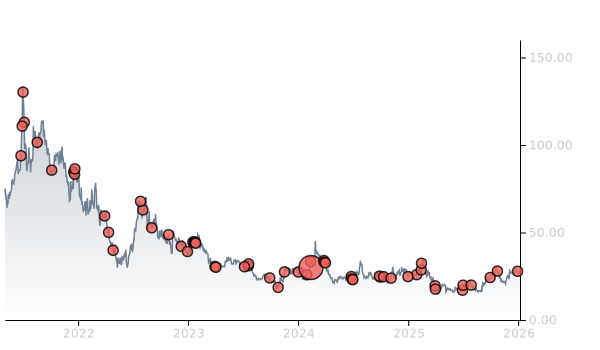
$BEAM insiders have traded $BEAM stock on the open market 5 times in the past 6 months. Of those trades, 0 have been purchases and 5 have been sales.
Here’s a breakdown of recent trading of $BEAM stock by insiders over the last 6 months:
- LLC FMR has made 0 purchases and 2 sales selling 48,833 shares for an estimated $1,003,913.
- AMY SIMON (Chief Medical Officer) has made 0 purchases and 2 sales selling 1,250 shares for an estimated $23,961.
- CHRISTINE BELLON (Chief Legal Officer) sold 373 shares for an estimated $9,149
To track insider transactions, check out Quiver Quantitative's insider trading dashboard.
$BEAM Hedge Fund Activity
We have seen 113 institutional investors add shares of $BEAM stock to their portfolio, and 148 decrease their positions in their most recent quarter.
Here are some of the largest recent moves:
- UBS AM, A DISTINCT BUSINESS UNIT OF UBS ASSET MANAGEMENT AMERICAS LLC added 2,837,362 shares (+575.1%) to their portfolio in Q3 2025, for an estimated $68,862,775
- CITADEL ADVISORS LLC removed 2,337,517 shares (-100.0%) from their portfolio in Q3 2025, for an estimated $56,731,537
- ARK INVESTMENT MANAGEMENT LLC added 2,190,993 shares (+24.8%) to their portfolio in Q3 2025, for an estimated $53,175,400
- TEMASEK HOLDINGS (PRIVATE) LTD removed 1,812,972 shares (-100.0%) from their portfolio in Q2 2025, for an estimated $30,838,653
- CONTRARIUS GROUP HOLDINGS LTD added 1,533,269 shares (+inf%) to their portfolio in Q3 2025, for an estimated $37,212,438
- FMR LLC removed 1,268,606 shares (-9.8%) from their portfolio in Q3 2025, for an estimated $30,789,067
- MORGAN STANLEY removed 662,396 shares (-50.7%) from their portfolio in Q3 2025, for an estimated $16,076,350
To track hedge funds' stock portfolios, check out Quiver Quantitative's institutional holdings dashboard.
$BEAM Analyst Ratings
Wall Street analysts have issued reports on $BEAM in the last several months. We have seen 2 firms issue buy ratings on the stock, and 0 firms issue sell ratings.
Here are some recent analyst ratings:
- Evercore ISI Group issued a "Outperform" rating on 11/24/2025
- HC Wainwright & Co. issued a "Buy" rating on 10/10/2025
To track analyst ratings and price targets for $BEAM, check out Quiver Quantitative's $BEAM forecast page.
$BEAM Price Targets
Multiple analysts have issued price targets for $BEAM recently. We have seen 3 analysts offer price targets for $BEAM in the last 6 months, with a median target of $35.0.
Here are some recent targets:
- Cory Kasimov from Evercore ISI Group set a target price of $35.0 on 11/24/2025
- Patrick R. Trucchio from HC Wainwright & Co. set a target price of $80.0 on 10/10/2025
- Gena Wang from Barclays set a target price of $21.0 on 08/06/2025
Full Release
Updated Data from 31 Adult and Adolescent SCD Patients Treated with risto-cel (Formerly BEAM-101) Show Mean He moglobin F (HbF) Induction of >60%, Hemoglobin S (HbS) Reduction to <40%, and Resolution of Anemia Durable for up to 20 Months
Patients Required a Median of One Cell Collection Cycle and Experienced Rapid Neutrophil and Platelet Engraftment
Safety Profile Remained Consistent with Busulfan Conditioning, Autologous Hematopoietic Stem Cell Transplantation and Underlying SCD
CAMBRIDGE, Mass., Dec. 06, 2025 (GLOBE NEWSWIRE) -- Beam Therapeutics Inc. (Nasdaq: BEAM), a biotechnology company developing precision genetic medicines through base editing, today announced new safety and efficacy data from its BEACON Phase 1/2 clinical trial of ristoglogene autogetemcel (risto-cel), formerly known as BEAM-101, an investigational genetically modified ex vivo base editing cell therapy, in patients with sickle cell disease (SCD) with severe vaso-occlusive crises (VOCs). The data will be shared today at the 67th American Society of Hematology (ASH) Annual Meeting and Exposition in Orlando.
“With a growing dataset and longer follow up, these updated data continue to underscore the potential of risto-cel to make a transformative difference in the lives of patients with SCD,” said Ashish Gupta, M.D., MPH, University of Minnesota. “Given the cumbersome nature of the transplant process, it is encouraging that patients receiving risto-cel are on average experiencing a low number of cell collection cycles, rapid neutrophil and platelet engraftment, and low neutropenic days post-risto-cel treatment. Each of these factors contributes to fewer days in the hospital, potentially improving the overall patient experience.”
“Risto-cel continues to demonstrate how base editing can fulfill its promise as a next-generation precision genetic medicine that could significantly improve the treatment process and outcomes for patients with SCD,” said John Evans, chief executive officer of Beam Therapeutics. “The strength of these updated data from the BEACON trial reinforce the potential of risto-cel to deliver durable clinical benefit through efficient, more precise editing, and optimized cell collection and manufacturing processes. Given the rapid clinical execution of the BEACON trial, we’re on track to efficiently dose the remaining patients enrolled in the study and advance toward a regulatory filing.”
As of an August 6, 2025, data cut-off, a total of 31 patients with severe SCD were treated with risto-cel in the BEACON Phase 1/2 trial and are included in the safety and efficacy analysis. Follow-up ranged from 0.3 to 20.4 months. Data from an earlier cut-off date were previously reported at the European Hematology Association 2025 Congress (EHA2025) in Milan in June 2025.
Key highlights include the following, consistent with previously presented data:
- Efficient and Predictable Cell Collection, Manufacturing, and Release: Risto-cel’s efficient cell collection and manufacturing processes combined with high, predictable yields from base editing resulted in patients requiring few stem cell collection cycles and total collection days to manufacture risto-cel. Patients required a median of 1 (range: 1-5) stem cell collection cycle, comprising a median of 3 (range: 1–13) total collection days for the risto-cel manufacturing process and back-up cell collection. An oral presentation on the optimized cell mobilization and collection process will be presented at ASH on Monday, December 8, 2025.
- Rapid Engraftment: Patients achieved rapid and robust bone marrow reconstitution post-risto-cel treatment. The median time to neutrophil engraftment was 17.5 days (range: 12-30), with a median duration of severe neutropenia of 7 days (range: 1-17). The median time to platelet engraftment was 19 days (range: 11-53). In addition, 29% of patients did not require any platelet transfusions following risto-cel treatment.
- N o Severe VOCs Reported : No patients experienced any investigator-reported severe VOCs post-engraftment.
- Durable, High Editing Efficiency: Durable, high editing efficiency was observed in peripheral blood and bone marrow following treatment with risto-cel. Mean peripheral blood editing was 67.4% at Month 6 and 72.8% by Month 12.
- Rapid and Sustained Increases in Protective Hemoglobin F (HbF) and Reductions in Pathologic Hemoglobin S (HbS): Consistent with data presented at EHA2025, patients achieved mean HbF levels above 60% and a mean durable reduction in corresponding HbS below 40%. A pancellular distribution of HbF, reflecting expression across most of the circulating red blood cells, was observed, with mean per-cell HbF levels maintained above the sickling threshold throughout follow-up.
- Improvement or Normalization of Anemia, Hemolysis Markers, Erythropoietin Levels, and Sickling Parameters: Total Hb levels increased rapidly with all patients experiencing resolution of anemia after elimination of the transfused blood. Key markers of hemolysis, including indirect bilirubin, haptoglobin, lactate dehydrogenase, and reticulocytes, normalized or improved in all patients following risto-cel treatment. Erythropoietin levels also trended toward normal, indicating significant improvement in oxygen delivery to tissues. Sickling parameters all decreased in the blood following risto-cel treatment to levels comparable to that seen in individuals with sickle cell trait.
-
Safety Profile Consistent with Busulfan and Autologous Hematopoietic Stem Cell Transplantation (HSCT):
The safety profile of risto-cel was consistent with busulfan conditioning, autologous HSCT and underlying SCD. The most common treatment-emergent adverse events were consistent with busulfan conditioning, including stomatitis, febrile neutropenia, and decreased appetite. As previously reported, one patient died four months after risto-cel infusion due to respiratory failure that was determined by the investigator to be likely related to busulfan conditioning and deemed unrelated to risto-cel.
In addition, Beam is presenting an oral presentation on Monday, December 8, 2025, (Abstract #2532) showing that a tiered fixed-dose plerixafor mobilization regimen led to higher CD34+ cell yields, faster collection, and fewer collection cycles compared to traditional weight-based dosing. The safety profile was generally comparable between fixed-dose and weight-based regimens, with four days of collection being well-tolerated, and a fixed dose regimen demonstrating greater efficiency in stem cell collection, supporting its use for manufacturing risto-cel in SCD.
About ristoglogene autogetemcel (risto-cel, formerly known as BEAM-101)
Risto-cel is an investigational genetically modified cell therapy for the treatment of sickle cell disease (SCD). The one-time therapy consists of autologous CD34+ hematopoietic stem and progenitor cells (HSPCs) that have been base-edited in the promoter regions of the
HBG1/2
genes and are administered via a hematopoietic stem cell transplant procedure. The risto-cel edit is designed to inhibit the transcriptional repressor BCL11A from binding to the promoter without disrupting BCL11A expression, leading to increased production of non-sickling and anti-sickling fetal hemoglobin (HbF) and thus mimicking the effects of naturally occurring variants seen in hereditary persistence of fetal hemoglobin. HbF is the predominant hemoglobin variant during development and early life. The safety and efficacy of risto-cel is being evaluated in the ongoing BEACON Phase 1/2 study, an open-label, single-arm, multicenter trial in patients with SCD with severe vaso-occlusive crises (VOCs).
About Sickle Cell Disease
Sickle cell disease (SCD), a severe inherited blood disease, is caused by a single point mutation, E6V, in the beta globin gene. This mutation causes the mutated form of sickle hemoglobin (HbS) to aggregate into long, rigid molecules that bend red blood cells into a sickle shape under conditions of low oxygen. Sickled cells obstruct blood vessels and die prematurely, ultimately resulting in anemia, severe pain (crises), infections, stroke, organ failure and early death. SCD is the most common inherited blood disorder in the United States (U.S.), affecting an estimated 100,000 individuals within the U.S. and approximately eight million people worldwide.
About Beam Therapeutics
Beam Therapeutics (Nasdaq: BEAM) is a biotechnology company committed to establishing the leading, fully integrated platform for precision genetic medicines. To achieve this vision, Beam has assembled a platform with integrated gene editing, delivery and internal manufacturing capabilities. Beam’s suite of gene editing technologies is anchored by base editing, a proprietary technology that is designed to enable precise, predictable and efficient single base changes, at targeted genomic sequences, without making double-stranded breaks in the DNA. This has the potential to enable a wide range of therapeutic editing strategies that Beam is using to advance a diversified portfolio of base editing programs. Beam is a values-driven organization committed to its people, cutting-edge science, and a vision of providing life-long cures to patients suffering from serious diseases.
Cautionary Note Regarding Forward-Looking Statements
This press release contains forward-looking statements within the meaning of the Private Securities Litigation Reform Act of 1995. Investors are cautioned not to place undue reliance on these forward-looking statements, including, but not limited to, statements related to: the therapeutic applications and potential of our technology, including with respect to the therapeutic potential of, and clinical and regulatory expectations for risto-cel; our plans to present data at the 2025 ASH Annual Meeting; and our ability to develop life-long, curative, precision genetic medicines for patients through base editing. Each forward-looking statement is subject to important risks and uncertainties that could cause actual results to differ materially from those expressed or implied in such statement, including, without limitation, risks and uncertainties related to: our ability to develop, obtain regulatory approval for, and commercialize our product candidates, which may take longer or cost more than planned; our ability to raise additional funding, which may not be available; our ability to obtain, maintain and enforce patent and other intellectual property protection for our product candidates; the uncertainty that our product candidates will receive regulatory approval necessary to advance human clinical trials; that preclinical testing of our product candidates and preliminary or interim data from preclinical studies and clinical trials may not be predictive of the results or success of ongoing or later clinical trials; that initiation and enrollment of, and anticipated timing to advance, our clinical trials may take longer than expected; that our product candidates or the delivery modalities we rely on to administer them may cause serious adverse events; that our product candidates may experience manufacturing or supply interruptions or failures; risks related to competitive products; and the other risks and uncertainties identified under the headings “Risk Factors Summary” and “Risk Factors” in our Annual Report on Form 10-K for the year ended December 31, 2024, our Quarterly Reports on Form 10-Q, and in any subsequent filings with the Securities and Exchange Commission. These forward-looking statements speak only as of the date of this press release. Factors or events that could cause our actual results to differ may emerge from time to time, and it is not possible for us to predict all of them. We undertake no obligation to update any forward-looking statement, whether as a result of new information, future developments or otherwise, except as may be required by applicable law.
Contacts:
Investors:
Holly Manning
Beam Therapeutics
[email protected]
Media:
Josie Butler
1AB
[email protected]