


Cema-cel shows significant MRD improvement over observation with excellent safety profile in Phase 2 ALPHA3 trial for LBCL.
Quiver AI Summary
Allogene Therapeutics has reported interim results from its Phase 2 ALPHA3 trial evaluating cemacabtagene ansegedleucel (cema-cel) for first-line treatment of large B-cell lymphoma (LBCL). The data showed that 58.3% of patients in the cema-cel arm achieved minimal residual disease (MRD) negativity after treatment, compared to 16.7% in the observation arm, demonstrating a significant 41.6% absolute difference. Additionally, plasma ctDNA levels decreased by a median of 97.7% in the cema-cel group by Day 45, indicating rapid disease response. The treatment was well-tolerated, with no serious adverse events or hospitalization related to cema-cel, and about 33% of screenings and infusions occurred at community cancer centers. The study aims to enroll approximately 220 patients by the end of 2027, with future analyses on event-free survival anticipated in mid-2027 and mid-2028. This could position cema-cel as an effective outpatient therapy for high-risk LBCL patients.
Potential Positives
- 41.6% absolute difference in minimal residual disease (MRD) clearance between cema-cel and the observation arm, surpassing the clinically meaningful benchmark of 25-30% based on literature.
- Rapid decrease in plasma ctDNA levels by a median of 97.7% in the cema-cel arm at Day 45, indicating effective treatment response compared to a median increase in the observation arm.
- Favorable safety profile of cema-cel, with no serious adverse treatment-related events such as cytokine release syndrome (CRS), immune effector cell-associated neurotoxicity syndrome (ICANS), or graft-versus-host disease (GvHD).
- Community cancer centers accounted for approximately 33% of screening and infusion activity, highlighting the feasibility and potential for broader adoption of cema-cel treatment in diverse clinical settings.
Potential Negatives
- High-risk patient characteristics in the cema-cel arm may raise concerns about the generalizability of results, as this arm had a numerically greater number of patients with more aggressive disease features compared to the observation arm.
- The small sample size of 24 patients might limit the reliability of the interim results, as early data may not predict later outcomes in a larger population.
- Enrollment for the pivotal trial is expected to complete by the end of 2027, suggesting a lengthy timeline before any potential product approval or commercialization, which could impact investor sentiment and market positioning.
FAQ
What were the main findings of the ALPHA3 trial interim analysis?
The ALPHA3 trial showed a 41.6% absolute difference in MRD clearance favoring the cema-cel arm compared to the observation arm.
How did cema-cel treatment affect plasma ctDNA levels?
Patients treated with cema-cel experienced a median decrease of 97.7% in plasma ctDNA levels at Day 45.
What safety profile was observed for cema-cel?
Cema-cel treatment was well-tolerated, with no cases of serious adverse events related to treatment.
What is the significance of MRD negativity in LBCL?
MRD negativity post-treatment is a strong predictor of relapse, highlighting the potential of early intervention.
When will the ALPHA3 trial's enrollment be completed?
The enrollment for the ALPHA3 trial is expected to complete by the end of 2027.
Disclaimer: This is an AI-generated summary of a press release distributed by GlobeNewswire. The model used to summarize this release may make mistakes. See the full release here.
$ALLO Insider Trading Activity
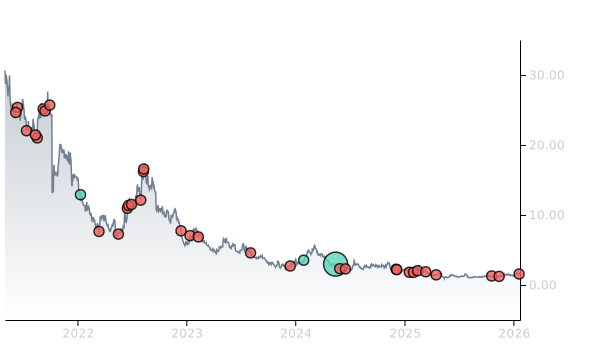
$ALLO insiders have traded $ALLO stock on the open market 12 times in the past 6 months. Of those trades, 0 have been purchases and 12 have been sales.
Here’s a breakdown of recent trading of $ALLO stock by insiders over the last 6 months:
- DAVID D CHANG (President and CEO) has made 0 purchases and 2 sales selling 143,032 shares for an estimated $289,458.
- ZACHARY ROBERTS (EVP of R&D) has made 0 purchases and 2 sales selling 61,969 shares for an estimated $104,168.
- GEOFFREY M. PARKER (CHIEF FINANCIAL OFFICER) has made 0 purchases and 2 sales selling 60,745 shares for an estimated $88,410.
- BENJAMIN MACHINAS BENESKI (SVP, Chief Technical Officer) has made 0 purchases and 4 sales selling 20,302 shares for an estimated $44,504.
- EARL MARTIN DOUGLAS (SVP, General Counsel) sold 22,900 shares for an estimated $40,304
- ANNIE YOSHIYAMA (SVP, Finance) sold 4,167 shares for an estimated $7,167
To track insider transactions, check out Quiver Quantitative's insider trading dashboard.
$ALLO Hedge Fund Activity
We have seen 77 institutional investors add shares of $ALLO stock to their portfolio, and 69 decrease their positions in their most recent quarter.
Here are some of the largest recent moves:
- CANDRIAM S.C.A. added 2,305,644 shares (+inf%) to their portfolio in Q4 2025, for an estimated $3,158,732
- UBS GROUP AG removed 2,181,564 shares (-61.1%) from their portfolio in Q4 2025, for an estimated $2,988,742
- PATIENT SQUARE CAPITAL LP added 1,982,360 shares (+66.5%) to their portfolio in Q4 2025, for an estimated $2,715,833
- CITADEL ADVISORS LLC removed 1,860,137 shares (-13.3%) from their portfolio in Q4 2025, for an estimated $2,548,387
- MILLENNIUM MANAGEMENT LLC removed 1,548,719 shares (-45.7%) from their portfolio in Q4 2025, for an estimated $2,121,745
- DIMENSIONAL FUND ADVISORS LP removed 1,132,937 shares (-54.2%) from their portfolio in Q4 2025, for an estimated $1,552,123
- PRIMECAP MANAGEMENT CO/CA/ added 1,060,532 shares (+15.0%) to their portfolio in Q4 2025, for an estimated $1,452,928
To track hedge funds' stock portfolios, check out Quiver Quantitative's institutional holdings dashboard.
$ALLO Price Targets
Multiple analysts have issued price targets for $ALLO recently. We have seen 4 analysts offer price targets for $ALLO in the last 6 months, with a median target of $8.0.
Here are some recent targets:
- John Newman from Canaccord Genuity set a target price of $14.0 on 03/13/2026
- Biren Amin from Piper Sandler set a target price of $8.0 on 03/13/2026
- Reni Benjamin from Citizens set a target price of $5.0 on 01/09/2026
- Michael Yee from UBS set a target price of $8.0 on 01/07/2026
Full Release
- 41.6% Absolute Difference in the Cema-Cel Arm Over the Observation Arm Exceeded Clinically Meaningful Benchmark Based on Literature of 25-30%
- MRD Reduction Occurred Rapidly Following Cema-Cel Treatment with a 97.7% Median Decrease in Plasma ctDNA at Day 45 Compared to a 26.6% Median Increase in the Observation Arm
-
Cema-Cel Treatment Well-Tolerated with Most Patients Managed Outpatient
- No Cases of CRS, ICANS, GvHD, or Treatment-Related Serious Adverse Events
- No Hospitalizations for Treatment-Related Adverse Events
- Community Cancer Centers, Including Sites New to CAR T Therapy, Accounted for Approximately 33% of Screening Activity and Cema-Cel Infusions
- Enrollment Expected to Complete by Year-End 2027, with an Interim Event-Free Survival (EFS) Analysis Anticipated in Mid-2027 and Primary EFS in Mid-2028
- Conference Call and Webcast Scheduled for Today at 5:30 AM PT/8:30 AM ET
SOUTH SAN FRANCISCO, Calif., April 13, 2026 (GLOBE NEWSWIRE) -- Allogene Therapeutics, Inc. (Nasdaq: ALLO), a clinical-stage biotechnology company pioneering the development of allogeneic CAR T (AlloCAR T) products for cancer and autoimmune disease, today reported data from the planned interim futility analysis of its pivotal, randomized Phase 2 ALPHA3 trial in first-line (1L) consolidation large B-cell lymphoma (LBCL).
At the protocol-defined data cutoff, which was triggered when the 24th patient completed Day 45 MRD assessment, 58.3% (7/12) of patients in the cemacabtagene ansegedleucel (cema-cel) arm achieved minimal residual disease (MRD) negativity compared to 16.7% (2/12) in the observation arm. This represents a 41.6% absolute difference in MRD clearance between the two arms. Based on literature, 1 2 3 a difference in percentage points of 25-30% in the MRD clearance could translate into meaningful clinical benefit at study completion. In addition, at the first MRD assessment (Day 45), plasma ctDNA levels decreased from baseline by a median of 97.7% in the cema-cel arm compared to a 26.6% median increase in the observation arm. The Company believes these interim data provide initial support for cema-cel’s potential as a novel strategy for treating high-risk patients at the end of first-line treatment.
MRD status post-treatment has emerged as a strong predictor of relapse in LBCL, creating a potential opportunity to intervene earlier in the course of disease, when disease burden is low, but the risk of progression remains high. 4 5 The ALPHA3 trial is the first randomized study in LBCL designed to assess whether MRD-guided intervention before relapse can eliminate residual disease and potentially prevent recurrence. The study identifies high-risk patients using Natera’s CLARITY™ MRD assay which is powered by its phased variant MRD technology. Patients with LBCL who have completed curative-intent treatment in both front-line and later line settings, including autologous CAR T therapy, and who achieve MRD negative status by technology have demonstrated improved progression-free survival (PFS) and EFS compared to those who do not attain MRD-negative status. 6 7
“Early MRD clearance in this setting is encouraging and supports the potential for cema-cel to change how we approach high-risk LBCL at the end of first-line therapy,” said Zachary Roberts, M.D., Ph.D., EVP, Research and Development and Chief Medical Officer of Allogene. “These interim data suggest that an off-the-shelf CAR T may be able to intervene during that important window before clinical relapse to eliminate residual disease and make earlier intervention feasible in routine clinical practice. We look forward to the next study milestones as the trial continues to further define the potential of cema-cel.”
“Our goal has always been to move CAR T from a bespoke procedure available at a limited number of centers to a scalable therapy that can reach patients more broadly,” said David Chang, M.D., Ph.D., President, Chief Executive Officer and Co-Founder of Allogene. “Although still early, the ALPHA3 results show encouraging MRD clearance and a favorable safety profile. Combined with the advantages of an off-the-shelf CAR T platform—rapid availability, operational simplicity, and potential for outpatient use—cema-cel, if approved, could leapfrog existing options and enable earlier intervention in the disease course.”
SAFETY & HOSPITALIZATION
Cema-cel has been generally well-tolerated as of the data cutoff with no serious adverse events related to treatment. There were no cases of cytokine release syndrome (CRS), immune effector cell-associated neurotoxicity syndrome (ICANS) or graft-versus-host disease (GvHD) in the Treatment Emergent Adverse Events (TEAEs) of Special Interest category, which captures adverse events associated with CAR T.
| TEAEs of Special Interest |
Cema-cel Arm (N=12)
n (%) |
Observation Arm (N=12)
n (%) |
| CRS (Any Grade) | 0 | - |
| ICANS (Any Grade) | 0 | - |
| GvHD (Any Grade) | 0 | - |
| Infection* | 2 (16.7%) | 2 (16.7%) |
| Infection (Grade ≥3) | 0 | 0 |
| Other Neurologic Events** | 6 (50.0%) | 1 (8.3%) |
| Other Neurologic Events (Grade ≥3) | 0 | 0 |
*
Infection events were low grade and limited to urinary tract infection, subcutaneous abscess, COVID19, and skin infection
**
Other neurologic
events were low grade and limited to headache, dizziness, numbness or tingling in the hands or feet, and altered taste
No Hospitalizations for Treatment Related Adverse Events: Ten of 12 patients who received cema-cel were managed entirely outpatient post-infusion. The remaining two patients were briefly hospitalized for events deemed unrelated to cema-cel treatment (atrial fibrillation and non-cardiac chest pain). One patient in the observation arm was hospitalized for febrile neutropenia. This contrasts with the broader CAR T experience where hospitalization for toxicity management remains common, even in outpatient programs, with approximately 70–90% of patients requiring admission and roughly 75% hospitalized for adverse events within 30 days. 8
“The early safety profile, characterized by an absence of CRS and ICANS, is encouraging given its potential to enable safe outpatient management,” said Nancy L. Bartlett, M.D., Professor of Medicine, Division of Oncology, Washington University School of Medicine in St. Louis and a Siteman Cancer Center physician. “When considered alongside the availability of an off-the-shelf product, these findings suggest the possibility of overcoming key logistical barriers that have historically limited broader use of CAR T, particularly in earlier lines of therapy. Coupled with the encouraging MRD clearance data, this approach may represent an important step toward improving outcomes while expanding patient access.”
REAL-WORLD FEASIBILITY AND COMMUNITY USE
At the time of the interim futility analysis, community cancer centers accounted for approximately 33% of screening activity and cema-cel infusions, including several sites with little to no prior CAR T experience. Participation from these centers, where most patients receive care, underscores the feasibility of offering cema-cel in these settings and supports potential for broader adoption.
“In busy community practices, the goal is simple: bring the therapy to the patient, not the patient to the therapy,” said Jeff Sharman, M.D., Chair, Lymphoma Research Executive Committees, SCRI at Willamette Valley Cancer Institute & Research Center. “Historically, CAR T has largely been out of reach for community practices. The ability to deliver an off-the-shelf CAR T safely in the community setting, potentially outpatient, could address far more patients and extend treatment reach across the communities we serve.”
PATIENT CHARACTERISTICS
Both study arms consisted of patients with high-risk, aggressive lymphomas. Although limited by the small sample size, baseline characteristics show that a numerically greater number of patients in the cema-cel arm had more aggressive disease features, specifically stage III-IV disease and higher IPI scores, compared to the observation arm.
| At Original Diagnosis |
Cema-cel Arm (N=12)
n (%) |
Observation Arm (N=12)
n (%) |
| History of Bone Marrow Involvement | 4 (33.3%) | 3 (25.0%) |
| Disease Stage | ||
| I - II | 0 | 2 (16.7%) |
| III - IV | 12 (100%) | 10 (83.3%) |
| IPI Score | ||
| 0 to 1 | 0 | 4 (33.3%) |
| 2 to 3 | 7 (58.3%) | 5 (41.7%) |
| 4 to 5 | 5 (41.7%) | 2 (16.7%) |
| Unknown | 0 | 1 (8.3%) |
| Gene Alterations/Over Expression | ||
| Double Hit | 6 (50.0%) | 2 (16.7%) |
| Triple Hit | 0 | 2 (16.7%) |
| Double Expressor | 2 (16.7%) | 0 |
First-Line Regimens and PET/CT Response to the 1L Regimen:
A high-intensity variant of R-CHOP, DA-EPOCH-R, was the most commonly administered 1L therapy across both arms, with a slightly higher proportion of patients in the cema-cel arm receiving this first line treatment regimen (58.3% vs. 41.7%). Twenty-five percent of patients in each arm entered the study after achieving a partial remission to 1L therapy.
|
Cema-cel Arm (N=12)
n (%) |
Observation Arm (N=12)
n (%) |
|
| First-Line Treatment | ||
| R-CHOP | 2 (16.7%) | 3 (25.0%) |
| R-Pola-CHP | 2 (16.7%) | 2 (16.7%) |
| DA-EPOCH-R | 7 (58.3%) | 5 (41.7%) |
| R-miniCHOP | 1 ( 8.3%) | 2 (16.7%) |
| Most Recent PET/CT Response Before Randomization | ||
| CR | 9 (75.0%) | 9 (75.0%) |
| PR | 3 (25.0%) | 3 (25.0%) |
ALPHA3 TRIAL AND TIMELINE
This interim futility analysis was based on the first 24 patients randomized (12 in the cema-cel arm and 12 in the observation arm) and followed for post-treatment MRD assessment. MRD is assessed on Day 45, Month 3, and every 3 months during the first year of follow-up. The primary endpoint of EFS, along with key secondary endpoints of PFS and overall survival (OS), remains blinded. The study is enrolling across more than 60 sites, with additional sites coming online, and is expected to enroll approximately 220 patients. Study accrual is anticipated to be complete by the end of 2027. The study is powered to detect a 50% reduction in the risk of EFS events. EFS events include the initiation of new anti-lymphoma therapy, disease progression, or death. The Company anticipates an interim EFS analysis in mid-2027 and the primary EFS analysis in mid-2028. If positive, these results could support a Biologics License Application (BLA) submission.
Conference Call and Webcast Details
Allogene will host a live conference call and webcast today at 5:30 a.m. PT / 8:30 a.m. ET to discuss the interim futility analysis. If you would like the option to ask a question on the conference call, please use
this link
to register. Upon registering for the conference call, you will receive a personal PIN to access the call, which will identify you as the participant and allow you the option to ask a question. Please use this
link
to register for the listen-only webcast. The webcast will be made available on the Company's website at
www.allogene.com
under the Investors tab in the News and Events section. Following the live audio webcast, a replay will be available on the Company's website for approximately 30 days.
About Allogene Therapeutics
Allogene Therapeutics, with headquarters in South San Francisco, is a clinical-stage biotechnology company pioneering the development of allogeneic chimeric antigen receptor T cell (AlloCAR T) products for cancer and autoimmune disease. Led by cell therapy veterans applying proven CAR T experience, Allogene is developing a pipeline of off-the-shelf CAR T cell product candidates with the goal of delivering readily available cell therapy on-demand, more reliably, and at greater scale to more patients. For more information, please visit
www.allogene.com
, and follow Allogene Therapeutics on X and LinkedIn.
Cautionary Note on Forward-Looking Statements
This press release contains forward-looking statements within the meaning of the Private Securities Litigation Reform Act of 1995. Forward-looking statements are based on management’s current expectations and assumptions and involve risks and uncertainties that could cause actual results to differ materially from those expressed or implied by such statements. In some cases, forward-looking statements may be identified by words such as “anticipate,” “expect,” “believe,” “aim,” “plan,” “goal,” “intend,” “seek,” “estimate,” “target,” “potential,” “may,” “could,” “will,” “would,” “should,” “designed to,” “suggest,” “possible,” and similar expressions. Forward-looking statements in this press release include, but are not limited to, statements regarding the ongoing Phase 2 ALPHA3 trial of cema-cel, including expected enrollment and the completion thereof and the timing for data announcements; the potential clinical benefits, safety, tolerability, durability, and efficacy of cema-cel, including its potential to enable earlier intervention in LBCL; its favorable safety profile, including as compared to other CAR T therapies, its potential to leapfrog existing options and its potential for rapid availability, operational simplicity and outpatient use; the interim futility analysis data providing initial support to suggest that cema-cel may offer a new strategy to treat high-risk patients at the end of first-line treatment and a fundamentally different approach to CAR T delivery; the potential for MRD-guided first-line consolidation to improve outcomes in LBCL, including the potential to eliminate residual disease, make earlier intervention feasible in routine clinical practice and potentially prevent recurrence; the participation from community cancer centers in the Phase 2 ALPHA3 trial underscoring the ability to offer cema-cel in the community settings and supporting the potential for broader adoption; the potential BLA submission for cema-cel; and Allogene’s ability to develop and deliver readily available allogeneic CAR T products for the treatment of cancer and autoimmune disease on-demand, more reliably, and at greater scale to more patients. Actual results may differ materially from those indicated by these forward-looking statements as a result of various important factors, including, but not limited to, risks and uncertainties inherent in clinical development (including that interim or early data may not be predictive of later or final results and data from a small sample size may not be indicative of results that may be observed in a larger group), patient enrollment and trial execution risks, uncertainties related to MRD testing and its clinical significance and reliability, including whether MRD clearance improvements translate to meaningful clinical benefits, the occurrence of adverse safety events, regulatory risks and uncertainties, manufacturing and CMC risks, reliance on third parties and licensors, competitive developments, intellectual property and contractual risks, and financial risks, including the need for additional capital. These and other risks and uncertainties are described more fully in Allogene’s filings with the Securities and Exchange Commission (SEC), including under the heading “Risk Factors” in its most recent Annual Report on Form 10-K for the year ended December 31, 2025, filed with the SEC on March 12, 2026, and other filings that Allogene may make from time to time with the SEC. All forward-looking statements in this press release speak only as of the date of this press release, and Allogene undertakes no obligation to update or revise any forward-looking statements, whether as a result of new information, future events, or otherwise, except as required by law.
Allogene’s investigational AlloCAR T oncology products utilize Cellectis technologies. Cemacabtagene ansegedleucel (cema-cel) was developed based on an exclusive license granted by Cellectis to Servier. Servier has granted Allogene exclusive rights to cema-cel in the U.S., all EU Member States and the United Kingdom.
Allogene Media/Investor Contact:
Christine Cassiano
EVP, Chief Corporate Affairs & Brand Strategy Officer
[email protected]
1
Tilly, H., et al. (2022).
Polatuzumab
vedotin in previously untreated diffuse large B-cell lymphoma
. New England Journal of Medicine, 386(4), 351–363. https://doi.org/10.1056/NEJMoa2115304
2
Kite Pharma, Inc. (2023). Yescarta (axicabtagene ciloleucel) US prescribing information. Gilead Sciences, Inc.
3
Powles, T., et al. (2025).
ctDNA-guided adjuvant atezolizumab in muscle-invasive bladder cancer
. New England Journal of Medicine, 393, 2395–2408. https://doi.org/10.1056/NEJMoa2511885
4
Kurtz, et.al.
Circulating Tumor DNA Measurements as Early Outcome Predictors in Diffuse Large B-Cell Lymphoma
, JCO 2018
5
Alig, et.al.,
Short Diagnosis-to-Treatment Interval Is Associated with Higher Circulating Tumor DNA Levels in Diffuse Large B-Cell Lymphoma
,
JCO 2021
6
Roschewski M, Kurtz D M, Westin J R, et al:
Remission Assessment by Circulating Tumor DNA in Large B-Cell Lymphoma
. J Clin Oncol 10.1200/JCO-25-01534
7
Stepan, L., et al. (2024).
Circulating tumor DNA (ctDNA) as an early outcome predictor in patients with second-line large B-cell lymphoma after
lisocabtagene
maraleucel
versus standard of care treatment from the phase 3 TRANSFORM study.
Blood, 144(Suppl. 1), Abstract 72. Presented at the American Society of Hematology Annual Meeting. https://doi.org/10.1182/blood-2024-199813
8
Majhail NS, Cox T, Larson S, et al.
Outpatient administration of chimeric antigen receptor T-cell therapy using remote patient monitoring
. JCO Oncology Practice
.
2025;21(11):1601-1608. doi:10.1200/OP-25-00062