
H.R. 9334: Workforce for AI Trust Act
This bill would expand federal efforts to train people for jobs related to artificial intelligence, with a focus on trustworthy AI. It would amend the National Artificial Intelligence Initiative Act and related laws to give the National Science Foundation (NSF) and the National Institute of Standards and Technology (NIST) new or expanded responsibilities in AI education, workforce development, and workforce planning.
What the NSF changes would do
The bill would allow NSF to fund more interdisciplinary AI fellowships for graduate students and postdoctoral researchers. These fellowships could include people from fields such as social sciences and the humanities, not just traditional computer science or engineering areas.
- Graduate fellowships could cover tuition, fees, and stipends for up to three academic years.
- Postdoctoral fellowships could cover salaries, benefits, relocation, travel, and research costs for up to three years.
- Recipients would need to be U.S. citizens, nationals, or lawful permanent residents, and show interest in research that supports trustworthy AI.
The bill would also let NSF support temporary AI-related placements at places like federal or state agencies, national laboratories, private companies, colleges, or other relevant organizations, if NSF thinks that would be appropriate.
In addition, NSF would be directed to encourage AI training across all STEM fields it supports. That could include:
- training and certifications for students and postdoctoral researchers,
- workshops on using trustworthy AI in research and development, and
- supplements to existing research grants so researchers can gain experience applying AI to their work.
The bill would also allow NSF to fund workshops that help build multidisciplinary teams working on trustworthy AI. When NSF uses peer review panels to evaluate AI-related proposals, it would be encouraged to include reviewers from multiple fields, such as social science, ethics, law, and linguistics.
What the NIST changes would do
The bill would give NIST a larger role in defining and organizing the AI workforce. NIST, working with agencies such as the Department of Labor, NSF, and the Office of Personnel Management, would develop reference materials that describe AI-related jobs and help identify workforce gaps.
NIST would be required to create and update an AI workforce framework that includes:
- a common set of terms for AI jobs and work roles,
- descriptions of the skills, tasks, and knowledge needed for AI work,
- guidance on how schools and training programs can use the framework, and
- support for outside use of the framework, such as best practices and outreach to education programs.
The bill would also direct NIST to consult with a broad range of stakeholders, including federal, state, local, Tribal, and territorial governments; industry; universities; national laboratories; labor organizations; and nonprofits.
NIST would be asked to use this framework to help NSF identify qualified institutions for the Federal AI Scholarship-for-Service Program and to help OPM align federal job roles and skills with AI-related government work.
Within one year after completing the framework, NIST would have to submit it to Congress and post it publicly on its website.
Other provisions
The bill adds definitions for terms such as “national laboratory,” “artificial intelligence system,” “labor organization,” “non-profit organization,” “technical standard,” and “workforce framework.” It also makes clerical updates to the existing law’s table of contents.
Relevant Companies
None found
This is an AI-generated summary of the bill text. There may be mistakes.
Sponsors
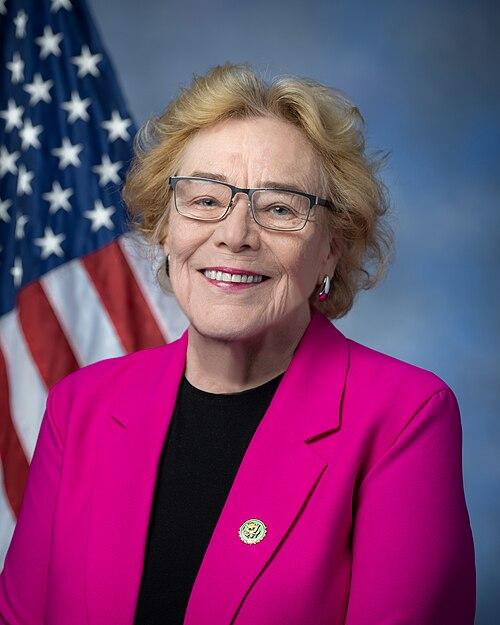
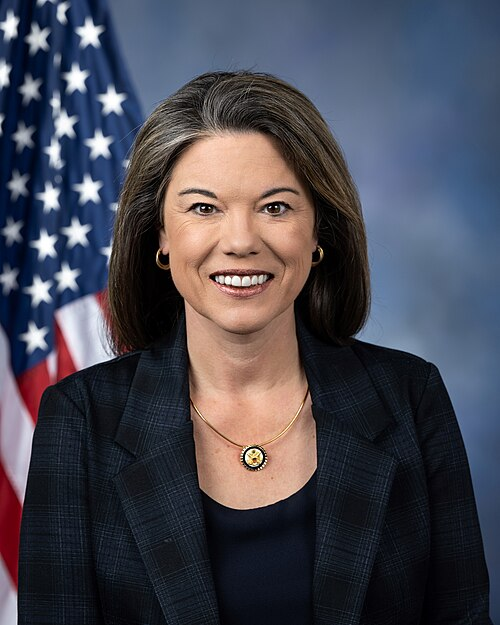
3 bill sponsors

Actions
4 actions
| Date | Action |
|---|---|
| Jun. 25, 2026 | Committee Consideration and Mark-up Session Held |
| Jun. 25, 2026 | Ordered to be Reported in the Nature of a Substitute (Amended) by the Yeas and Nays: 35 - 0. |
| Jun. 18, 2026 | Introduced in House |
| Jun. 18, 2026 | Referred to the House Committee on Science, Space, and Technology. |
Corporate Lobbying
0 companies lobbying
None found.
* Note that there can be significant delays in lobbying disclosures, and our data may be incomplete.
Potentially Relevant Congressional Stock Trades
No relevant congressional stock trades found.