
H.R. 8219: Barring Leverage and Obstruction that Contributes to Kremlin Profits Undermining Transatlantic Interests and NATO Act
This bill, formally titled the "Barring Leverage and Obstruction that Contributes to Kremlin Profits Undermining Transatlantic Interests and NATO Act" or "BLOCK PUTIN Act," seeks to address Hungary's energy dependency on Russia and its actions that may hinder support for Ukraine. Below is a summary of its key components:
Purpose
The bill aims to:
- Encourage Hungary to reduce its dependence on Russian energy sources such as oil and gas.
- Hold Hungary accountable for any actions that obstruct financial or military assistance to Ukraine.
Background Findings
The bill includes findings highlighting the concerns related to:
- The significant energy dependence of European countries on Russia, particularly noted during the Russian invasion of Ukraine.
- The response of the U.S. and EU in imposing sanctions on Russia to limit its energy revenue.
- The REPowerEU initiative introduced by the European Commission, aiming to phase out reliance on Russian energy before 2028.
- The increasing reliance of Hungary on Russian energy, estimated at 30 percent since the invasion.
- Hungary's efforts that obstruct EU assistance to Ukraine.
Policy Statements
The Congress expresses a sense that:
- It is in the U.S. national security interests to promote diversification from Russian energy.
- EU member states should support Ukraine financially.
Sanctions Provisions
The bill mandates that:
- The U.S. President must impose sanctions on senior officials from the Hungarian government who:
- Block or delay assistance to Ukraine.
- Facilitate oil or gas imports from Russia.
- Sanctions can include blocking property and assets in the U.S., and ineligibility for U.S. visas.
Exceptions to Sanctions
Sanctions will not apply if Hungary:
- Implements a plan to reduce its dependency on Russian energy by 2028.
- Ceases actions to block assistance to Ukraine for at least 180 days.
Reporting Requirements
Within 30 days of the bill's enactment, the Secretary of the Treasury and the Secretary of State must report on any U.S. government actions that facilitate Hungary's purchases of Russian energy.
Duration and Review of Sanctions
The sanctions imposed will be reviewed every 180 days, with the possibility for the President to waive them under certain national security conditions.
Definitions and Committees
The bill includes specific definitions and clarifies the relevant congressional committees that will oversee the implementation and review of the bill's provisions.
Relevant Companies
- GAZP: Gazprom, a Russian state-controlled energy company, may be significantly impacted by any sanctions on oil and gas imports affecting Hungary.
- ROSN: Rosneft, another major oil company in Russia, may also face consequences from sanctions targeting its revenues through European imports.
- LUKOY: Lukoil could be affected similarly through sanctions related to its dealings with Hungary for Russian oil.
This is an AI-generated summary of the bill text. There may be mistakes.
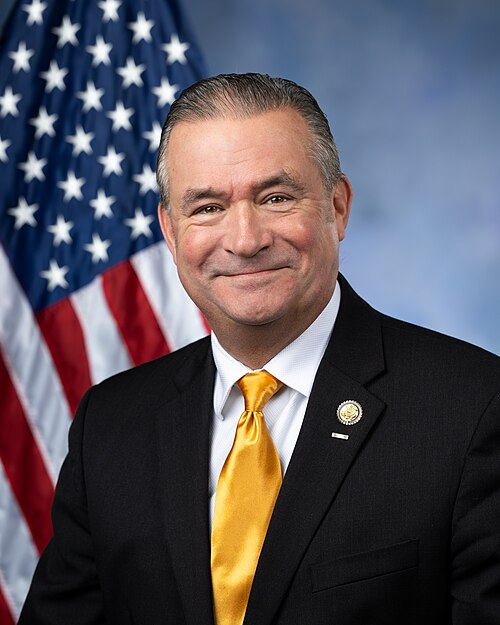
Sponsors
3 bill sponsors


Actions
3 actions
| Date | Action |
|---|---|
| Apr. 20, 2026 | Sponsor introductory remarks on measure. (CR H2984) |
| Apr. 09, 2026 | Introduced in House |
| Apr. 09, 2026 | Referred to the Committee on Foreign Affairs, and in addition to the Committee on the Judiciary, for a period to be subsequently determined by the Speaker, in each case for consideration of such provisions as fall within the jurisdiction of the committee concerned. |
Corporate Lobbying
0 companies lobbying
None found.
* Note that there can be significant delays in lobbying disclosures, and our data may be incomplete.
Potentially Relevant Congressional Stock Trades
No relevant congressional stock trades found.