H.R. 6409: Foreign Emissions and Nonattainment Clarification for Economic Stability Act
This bill, known as the Foreign Emissions and Nonattainment Clarification for Economic Stability Act (FENCES Act), aims to amend the Clean Air Act to address how emissions from outside the United States are treated with respect to air quality standards. Here are the main components of the bill:
Clarification of Emissions
The bill specifies that emissions coming from outside the U.S. will be considered when assessing air quality standards. Specifically, the language added clarifies that it does not matter whether these emissions are a result of human activity or not. This is reflected in the amendments to Section 179B of the Clean Air Act.
Designations of Nonattainment Areas
The bill proposes that a state cannot declare an area as a "nonattainment area"—which is a term used to indicate areas that do not meet national air quality standards—if the state can successfully demonstrate that the nonattainment status is primarily due to emissions from outside the U.S. This means that if an area would meet air quality standards but for foreign emissions, it wouldn't be penalized as nonattainment.
Applicability of Sanctions and Fees
The bill also introduces specific conditions under which states would not face sanctions or fees. Under the new provisions, if a state identifies that it would have met certain air quality standards except for emissions coming from outside its borders, the state can avoid penalties for failing to meet those standards. This applies particularly to areas classified as Severe or Extreme for ozone or Serious for particulate matter.
Conditions for Avoiding Penalties
For a state to demonstrate the applicability of these new rules, the following conditions must be met:
- Emissions from outside the nonattainment area.
- Emissions due to exceptional events as defined by relevant regulations.
- Emissions from mobile sources that are beyond the control of the state, provided that the state is actively taking measures to control emissions from these sources.
Obligations for States
While the bill allows states some leeway regarding nonattainment penalties, it does not absolve them of the responsibility to take measures to meet air quality standards. States must continue to establish and implement plans to improve air quality.
Renewal of Demonstration
States will need to renew their demonstrations—showing that emissions from outside the U.S. are impacting air quality—at least once every five years to maintain their status under the provisions of this bill.
Relevant Companies
- None found
This is an AI-generated summary of the bill text. There may be mistakes.
Sponsors
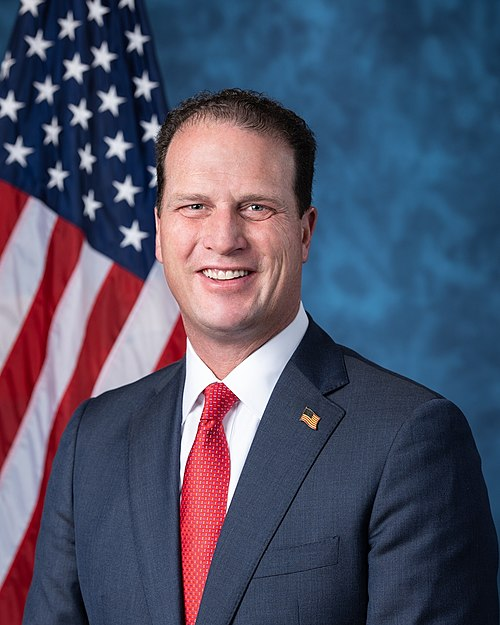
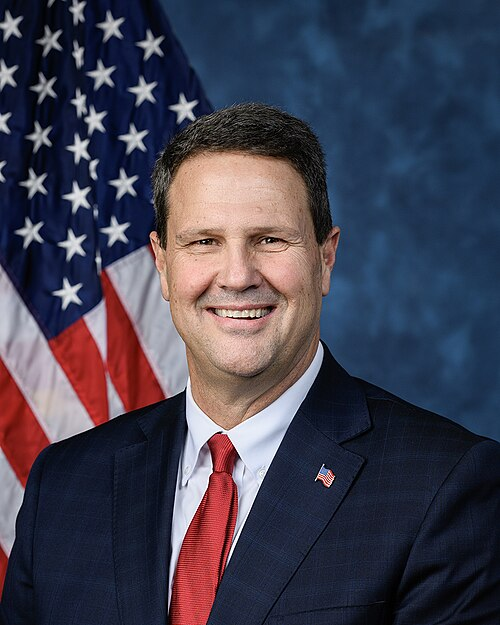
3 bill sponsors

Actions
24 actions
| Date | Action |
|---|---|
| Apr. 17, 2026 | Received in the Senate and Read twice and referred to the Committee on Environment and Public Works. |
| Apr. 16, 2026 | Considered as unfinished business. (consideration: CR H2937-2938) |
| Apr. 16, 2026 | Motion to reconsider laid on the table Agreed to without objection. |
| Apr. 16, 2026 | On motion to recommit Failed by the Yeas and Nays: 213 - 215 (Roll no. 115). |
| Apr. 16, 2026 | On passage Passed by the Yeas and Nays: 220 - 208 (Roll no. 116). |
| Apr. 16, 2026 | Passed/agreed to in House: On passage Passed by the Yeas and Nays: 220 - 208 (Roll no. 116). |
| Apr. 15, 2026 | Considered under the provisions of rule H. Res. 1174. (consideration: CR H2902-2909; text: CR H2902-2903) |
| Apr. 15, 2026 | DEBATE - The House proceeded with one hour of debate on H.R. 6409. |
| Apr. 15, 2026 | Mr. Min moved to recommit to the Committee on Energy and Commerce. (text: CR H2908-2909) |
| Apr. 15, 2026 | POSTPONED PROCEEDINGS - At the conclusion of debate on H.R. 6409, the Chair put the question on motion to recommit, and by voice vote, announced that the noes had prevailed. Mr. Min demanded the yeas and nays and the Chair postponed further proceedings until a time to be announced. |
| Apr. 15, 2026 | Rule provides for consideration of H.R. 6387, H.R. 6398, H.R. 6409 and H. Res. 1156. The resolution provides for consideration of each measure under a closed rule with one hour of general debate on each measure. The resolution also provides one motion to recommit on H.R. 6387, H.R. 6398, and H.R. 6409. |
| Apr. 15, 2026 | Rules Committee Resolution H. Res. 1174 Reported to House. Rule provides for consideration of H.R. 6387, H.R. 6398, H.R. 6409 and H. Res. 1156. The resolution provides for consideration of each measure under a closed rule with one hour of general debate on each measure. The resolution also provides one motion to recommit on H.R. 6387, H.R. 6398, and H.R. 6409. |
| Apr. 15, 2026 | The previous question on the motion to recommit was ordered pursuant to clause 2(b) of rule XIX. |
| Apr. 15, 2026 | The previous question was ordered pursuant to the rule. |
| Apr. 14, 2026 | Supplemental report filed by the Committee on Energy and Commerce, H. Rept. 119-594, Part II. |
| Apr. 09, 2026 | Placed on the Union Calendar, Calendar No. 514. |
| Apr. 09, 2026 | Reported by the Committee on Energy and Commerce. H. Rept. 119-594. |
| Jan. 21, 2026 | Committee Consideration and Mark-up Session Held |
| Jan. 21, 2026 | Ordered to be Reported by the Yeas and Nays: 25 - 22. |
| Dec. 10, 2025 | Forwarded by Subcommittee to Full Committee by the Yeas and Nays: 14 - 11. |
| Dec. 10, 2025 | Subcommittee Consideration and Mark-up Session Held |
| Dec. 03, 2025 | Introduced in House |
| Dec. 03, 2025 | Referred to the House Committee on Energy and Commerce. |
| Dec. 03, 2025 | Referred to the Subcommittee on Environment. |