H.R. 5565: Make Federal Architecture Beautiful Again Act
This bill, known as the Make Federal Architecture Beautiful Again Act, aims to reshape how architectural styles are chosen for federal public buildings in the United States. Key provisions include:
Goals of the Legislation
The legislation proposes that the architecture used for federal public buildings should:
- Uplift and beautify public spaces.
- Inspire the human spirit and enhance national dignity.
- Be visually identifiable as civic buildings.
- Reflect regional architectural heritage where appropriate.
Preferred Architectural Styles
The bill establishes a preference for classical and traditional architecture in federal public buildings, outlining that:
- Classical architecture, characterized by forms and principles from Greek and Roman traditions, will be the primary style encouraged.
- Other historical styles, such as Gothic, Romanesque, and Spanish Colonial, will also be considered under "traditional architecture."
- In the District of Columbia, classical architecture is to be the default unless exceptional circumstances justify another style.
- When designs diverge from the preferred architecture, careful consideration must be given to how well the designs command respect and convey the dignity of the U.S. government.
Community Involvement
The bill emphasizes the importance of community input in the design process. It states that:
- Local communities should have substantial input in selecting designs for applicable federal buildings.
- Where appropriate, design competitions will be held, encouraging participation from architects trained in classical and traditional design.
Guiding Principles for GSA
The General Services Administration (GSA) is tasked with adhering to specific guiding principles that prioritize architectural excellence, reflect American dignity, and consider regional styles.
- Architects involved in federal building projects must have formal training in classical or traditional architecture.
- A senior advisor for architectural design with expertise in classical architecture will be appointed to assist in policy development and evaluation processes.
Protocols for Non-Preferred Designs
If a design diverges from the preferred styles established by the bill, the Administrator of the GSA must:
- Notify the President and provide a detailed justification for why a non-preferred design is chosen.
- Include projected costs and a comparison of how the chosen design fulfills the aesthetic and functional expectations set forth in the bill.
Costs and Feasibility
The bill addresses the need to evaluate the feasibility and expenses associated with redesigning existing federal buildings that do not align with the preferred architectural styles when undergoing renovations or expansions.
Future Considerations
Overall, the bill sets out to ensure that federal buildings are constructed or renovated in a way that aligns with a vision of beauty and respectability, fostering civic pride and reflecting the nation’s heritage through its architectural choices.
Relevant Companies
- None found
This is an AI-generated summary of the bill text. There may be mistakes.
Sponsors
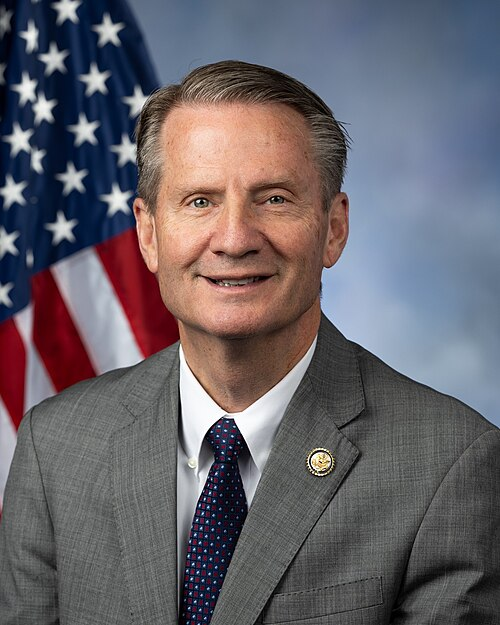
1 sponsor
Actions
3 actions
| Date | Action |
|---|---|
| Dec. 01, 2025 | Referred to the Subcommittee on Economic Development, Public Buildings, and Emergency Management. |
| Sep. 26, 2025 | Introduced in House |
| Sep. 26, 2025 | Referred to the House Committee on Transportation and Infrastructure. |
Corporate Lobbying
0 companies lobbying
None found.
* Note that there can be significant delays in lobbying disclosures, and our data may be incomplete.
Potentially Relevant Congressional Stock Trades
No relevant congressional stock trades found.