

vTv Therapeutics highlights hypoglycemia challenges for type 1 diabetes patients using automated insulin delivery systems.
Quiver AI Summary
vTv Therapeutics Inc. announced the presentation of research on the hypoglycemia-related burdens faced by adults with type 1 diabetes (T1D) using automated insulin delivery (AID) systems at the Breakthrough T1D Clinical & Research Congress in Philadelphia. The study, conducted by dQ&A Market Research, found that 54% of adults using AID systems experience significant hypoglycemia-related issues, despite technological advancements. Specifically, 24% reported frequent Level 2 hypoglycemia, and many indicated that the risk of hypoglycemia affected their blood glucose management. vTv is advancing cadisegliatin, a novel oral therapy for T1D intended to improve glucose control alongside insulin, which has received Breakthrough Therapy designation from the FDA. The findings underscore the ongoing need for additional treatment options to help manage hypoglycemia burdens in T1D patients.
Potential Positives
- vTv Therapeutics presented significant findings at a major diabetes congress, highlighting the ongoing challenges of hypoglycemia faced by adults with type 1 diabetes (T1D) using automated insulin delivery systems.
- Cadisegliatin has received Breakthrough Therapy designation from the U.S. FDA, indicating its potential to address unmet medical needs in the treatment of T1D.
- The study suggests a substantial market opportunity, as over half of adults using automated insulin delivery systems continue to experience clinically meaningful hypoglycemia-related burdens, emphasizing the need for additional therapeutic options.
Potential Negatives
- The data presented from the research indicates a significant prevalence of hypoglycemia-related burdens among users of automated insulin delivery systems, suggesting limitations of current treatments and potentially reflecting negatively on the efficacy of the company's offerings.
- Despite advancements in insulin delivery technology, a notable percentage (over 50%) of adults with T1D reported experiencing clinically meaningful hypoglycemia-related burdens, raising concerns about the effectiveness of the treatment landscape for this patient group.
FAQ
What is cadisegliatin?
Cadisegliatin is a novel oral therapy being evaluated as an adjunct to insulin for managing type 1 diabetes.
Who presented research on T1D at the CRC 2026?
Dr. Thomas Strack, Chief Medical Officer of vTv Therapeutics, presented the research on T1D at the inaugural CRC 2026.
What were the key findings regarding hypoglycemia in T1D adults?
The research found that 54% of adults with T1D using AID systems experienced at least one hypoglycemia-related burden.
What is the significance of Breakthrough Therapy designation for cadisegliatin?
This designation by the FDA highlights the potential of cadisegliatin as a significant new treatment option for type 1 diabetes.
How does vTv Therapeutics aim to help T1D patients?
vTv Therapeutics focuses on developing innovative oral therapies like cadisegliatin to improve diabetes management alongside existing treatment options.
Disclaimer: This is an AI-generated summary of a press release distributed by GlobeNewswire. The model used to summarize this release may make mistakes. See the full release here.
$VTVT Revenue
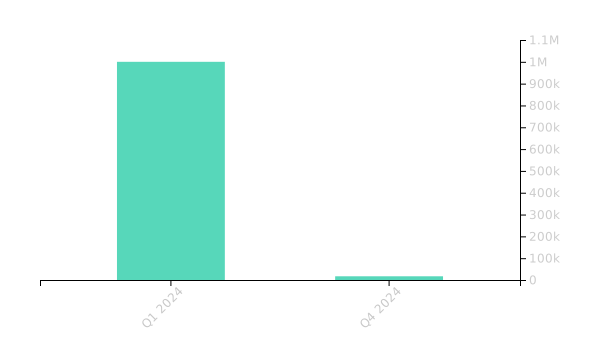
$VTVT had revenues of $36.8M in Q1 2026.
You can track VTVT financials on Quiver Quantitative's VTVT stock page.
You can access data on VTVT stock through the Quiver Quantitative API.
$VTVT Hedge Fund Activity
We have seen 20 institutional investors add shares of $VTVT stock to their portfolio, and 13 decrease their positions in their most recent quarter.
Here are some of the largest recent moves:
- TRAILS EDGE CAPITAL PARTNERS, LP removed 145,808 shares (-63.1%) from their portfolio in Q2 2026, for an estimated $5,489,671
- MILLENNIUM MANAGEMENT LLC added 63,586 shares (+30.8%) to their portfolio in Q2 2026, for an estimated $2,394,012
- AISLING CAPITAL MANAGEMENT LP added 50,000 shares (+inf%) to their portfolio in Q2 2026, for an estimated $1,882,500
- MARSHALL WACE, LLP added 26,171 shares (+195.5%) to their portfolio in Q2 2026, for an estimated $985,338
- RENAISSANCE TECHNOLOGIES LLC added 17,454 shares (+inf%) to their portfolio in Q2 2026, for an estimated $657,143
- 683 CAPITAL MANAGEMENT, LLC removed 16,000 shares (-100.0%) from their portfolio in Q2 2026, for an estimated $602,400
- JANE STREET GROUP, LLC added 13,703 shares (+inf%) to their portfolio in Q2 2026, for an estimated $515,917
To track hedge funds' stock portfolios, check out Quiver Quantitative's institutional holdings dashboard. You can access data on hedge funds moves and 13F filings through the Quiver Quantitative API 13F endpoint.
Full Release
HIGH POINT, N.C., Oct. 10, 2026 (GLOBE NEWSWIRE) --
vTv Therapeutics Inc.
(Nasdaq: VTVT), a late-stage biopharmaceutical company advancing cadisegliatin, a novel oral investigational therapy for type 1 diabetes (T1D), today announced that Chief Medical Officer Thomas Strack, M.D., Ph.D., presented research spotlighting hypoglycemia-related burdens among adults with T1D using automated insulin delivery (AID) systems at the inaugural
Breakthrough T1D Clinical & Research Congress
(CRC 2026) in Philadelphia, PA. Cadisegliatin is a potential first-in-class, liver-selective glucokinase activator (GKA) being evaluated as an oral adjunctive therapy to insulin for the treatment of T1D.
“
A Cumulative Population View of Hypoglycemia-Related Burdens in T1D Adults Using AID Systems,"
a quantitative online research initiative commissioned by vTv Therapeutics and conducted by dQ&A Market Research, Inc., examined the prevalence of clinically meaningful hypoglycemia-related burdens among 674 adults with T1D of whom 429 were using AID systems. Among adult AID system users, 24% reported experiencing frequent Level 2 hypoglycemia, defined as daily, almost daily, or a few moderate hypoglycemic events (<54 mg/dL) in a typical week. 12% reported a Level 3 event in the past 12 months, and 17% reported impaired awareness of hypoglycemia, defined as never or rarely noticing or feeling the symptoms of hypoglycemia. Among those with A1C >7%, 49% strongly agreed that they often keep their blood glucose higher to avoid hypoglycemia or that they would target lower glucose levels if not for the risk of hypoglycemia.
Respondents were then segmented using a mutually exclusive framework across the above four hypoglycemia-related burden dimensions. After accounting for overlap across segments and weighting for A1C, approximately 54% of adults with T1D using an AID system were estimated to experience at least one of the four dimensions of hypoglycemia-related burden.
“These findings reinforce that, despite meaningful advances in insulin delivery technology, insulin has its limitations and hypoglycemia continues to shape daily glucose management for many people with type 1 diabetes,” said Paul Sekhri, Chairman, President, and Chief Executive Officer of vTv Therapeutics. “The fact that more than half of adults using AID systems still experience clinically meaningful hypoglycemia-related burdens underscores the need for additional treatment options that can work alongside insulin and existing technologies to help address this burden.”
"Our mission at dQ&A is to serve as the voice of people living with diabetes. These findings highlight the challenges that many people with T1D continue to experience with hypoglycemia, including those using technologies such as AID,” said Richard Wood, Chief Executive Officer of dQ&A Market Research, Inc. “We are excited by the prospect of new therapies that could complement existing technologies and further alleviate this burden to give people greater confidence and freedom in their everyday lives.”
About Cadisegliatin
Cadisegliatin (TTP399) is a novel, oral small-molecule, glucokinase activator being investigated in the U.S. as a potential first-in-class adjunctive treatment for T1D. In nonclinical studies, cadisegliatin acted selectively on the liver and increased the activity of glucokinase independently of insulin. These studies support clinical investigation of whether cadisegliatin can improve glycemic control through hepatic glucose uptake and glycogen storage. Cadisegliatin has been granted Breakthrough Therapy designation by the U.S. Food and Drug Administration (FDA).
Cadisegliatin is under investigation, and its safety and efficacy have not been established. There is no guarantee that this product will receive health authority approval or become commercially available for the use being investigated.
About
vTv
Therapeutics
vTv Therapeutics is a late-stage biopharmaceutical company focused on developing oral, small molecule drug candidates intended to help treat people living with diabetes and other chronic diseases. vTv’s clinical pipeline is led by cadisegliatin, a potential first-in-class oral glucokinase activator being investigated in a U.S. Phase 3 study for the treatment of T1D. vTv and its development partners are investigating multiple molecules across different indications for chronic diseases. Learn more at
vtvtherapeutics.com
or follow the company on
LinkedIn
.
About dQ&A Market Research, Inc.
Founded in 2009, dQ&A Market Research is a leading diabetes-focused research firm dedicated to understanding the real-world experiences of people living with diabetes and those who care for them. Through our proprietary panels of thousands of patients and caregivers across the United States, Canada, and Europe, we conduct ongoing surveys and in-depth qualitative and quantitative research that capture the evolving needs, preferences, and challenges of the diabetes community. Our team includes seasoned researchers, data scientists, and consultants, many with a personal connection to diabetes, focused on delivering impactful and unbiased insights to the diabetes industry, government organizations, and medical associations. For more information, please visit
www.d-qa.com
or email
[email protected]
.
Forward-Looking Statements
This release contains forward-looking statements, which involve risks and uncertainties. These forward-looking statements can be identified by the use of forward-looking terminology, including the terms “anticipate,” “believe,” “could,” “estimate,” “expect,” “intend,” “may,” “plan,” “potential,” “predict,” “project,” “should,” “target,” “will,” “would” and, in each case, their negative or other variations or comparable terminology. All statements other than statements of historical facts contained in this release, including statements regarding the timing of our clinical trials, the anticipated effect of Phase 3 topline data on the Company, the benefits of cadisegliatin to people living with T1D, our strategy, future operations, future financial position, future revenue, projected costs, prospects, plans, objectives of management and expected market growth are forward-looking statements. These statements involve known and unknown risks, uncertainties and other important factors that may cause our actual results, performance, or achievements to be materially different from any future results, performance or achievements expressed or implied by the forward-looking statements. Important factors that could cause our results to vary from expectations include those described under the heading “Risk Factors” in our Annual Report on Form 10-K, subsequent Quarterly Reports on Form 10-Q and our other filings with the SEC. These forward-looking statements reflect our views with respect to future events as of the date of this release and are based on assumptions and subject to risks and uncertainties. Given these uncertainties, you should not place undue reliance on these forward-looking statements. These forward-looking statements represent our estimates and assumptions only as of the date of this release and, except as required by law, we undertake no obligation to update or review publicly any forward-looking statements, whether as a result of new information, future events or otherwise after the date of this release. We anticipate that subsequent events and developments will cause our views to change. Our forward-looking statements do not reflect the potential impact of any future acquisitions, mergers, dispositions, joint ventures, or investments we may undertake. We qualify all our forward-looking statements by these cautionary statements.
Investor Contact
John Fraunces
LifeSci Advisors, LLC
[email protected]
Media Contact
Caren Begun
TellMed Strategies
201-396-8551
[email protected]