


U.S. employers face rising healthcare costs and plan significant changes according to WTW's 2026 Best Practices in Healthcare Survey.
Quiver AI Summary
A recent WTW survey highlights that high-cost claimants and rising pharmacy spending are major healthcare cost challenges for U.S. employers, with 86% and 83% of employers identifying these as top pressures, respectively. Projected healthcare costs are expected to rise 11.1% in 2027, with changes to healthcare plans still resulting in a 9.7% increase. Consequently, nearly half of employers anticipate making significant adjustments to their healthcare programs within three years. Pharmacy costs are forecasted to grow 11.5% in 2026, prompting concerns about drug coverage and vendor performance, as employers increasingly scrutinize the value provided by health vendors. The survey also reveals a trend towards shifting healthcare costs to employees, with many employers considering higher premiums and out-of-pocket expenses. Despite these cost concerns, the majority of employers prefer long-term strategies over immediate savings, advocating for a multi-year approach to effectively manage healthcare expenses and vendor accountability.
Potential Positives
- WTW's survey highlights the significant cost pressures U.S. employers face, showcasing the company's strong role in understanding and addressing healthcare trends.
- The report indicates a shift in employer strategies, with 49% planning significant changes to their healthcare programs within three years, illustrating WTW's relevance in guiding organizations through these transitions.
- With 84% of employers considering taking health plans or vendors out to bid by 2028, WTW's advisory role is essential as organizations seek to optimize healthcare spending and vendor effectiveness.
Potential Negatives
- Employers expect healthcare costs to rise significantly, with a projected increase of 11.1% in 2027, indicating a challenging financial environment for the company’s client base.
- The decline in GLP-1 coverage and the intent of many employers to reduce drug coverage suggests growing dissatisfaction with healthcare spending, which could impact WTW’s reputation and client relationships.
- The steep drop in the Net Promoter Score for pharmacy benefit managers (PBMs) from -10 to -25 indicates a serious trust issue in a critical area of service, which may reflect back on WTW's advisory role.
FAQ
What are the main healthcare cost pressures for U.S. employers?
High-cost claimants and pharmacy spending are the leading healthcare cost pressures, cited by 86% and 83% of employers, respectively.
How much do U.S. employers expect healthcare costs to rise in 2027?
Employers project healthcare costs will rise by 11.1% in 2027 before plan changes are implemented.
What percentage of employers plan to change their healthcare programs?
Nearly half of employers (49%) expect significant changes to their healthcare programs within the next three years.
How are pharmacy costs expected to change in 2026?
Pharmacy costs are expected to increase by 11.5% in 2026, up from 9% in 2025.
What changes are employers considering regarding PBM relationships?
About 64% of employers are taking, or considering, action on their pharmacy benefit manager relationships due to rising costs.
Disclaimer: This is an AI-generated summary of a press release distributed by GlobeNewswire. The model used to summarize this release may make mistakes. See the full release here.
$WTW Insider Trading Activity
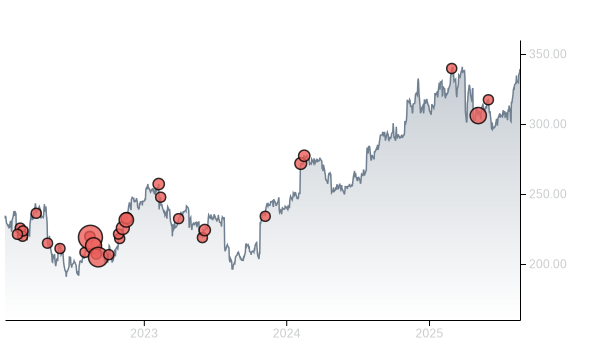
$WTW insiders have traded $WTW stock on the open market 2 times in the past 6 months. Of those trades, 1 have been purchases and 1 have been sales.
Here’s a breakdown of recent trading of $WTW stock by insiders over the last 6 months:
- LUCY CLARKE (President of Risk & Broking) purchased 1,896 shares for an estimated $499,340
- ALEXIS FABER (Chief Operating Officer) sold 730 shares for an estimated $250,171
To track insider transactions, check out Quiver Quantitative's insider trading dashboard. You can access data on insider stock transactions through the Quiver Quantitative API insider transaction endpoint.
$WTW Revenue
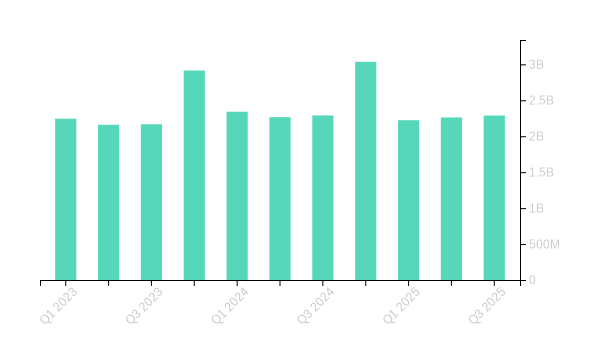
$WTW had revenues of $2.5B in Q2 2026. This is an increase of 9.07% from the same period in the prior year.
You can track WTW financials on Quiver Quantitative's WTW stock page.
You can access data on WTW stock through the Quiver Quantitative API.
$WTW Hedge Fund Activity
We have seen 317 institutional investors add shares of $WTW stock to their portfolio, and 347 decrease their positions in their most recent quarter.
Here are some of the largest recent moves:
- ARTISAN PARTNERS LIMITED PARTNERSHIP added 1,754,431 shares (+46.3%) to their portfolio in Q2 2026, for an estimated $458,555,630
- T. ROWE PRICE INVESTMENT MANAGEMENT, INC. removed 1,699,589 shares (-71.9%) from their portfolio in Q2 2026, for an estimated $444,221,576
- VICTORY CAPITAL MANAGEMENT INC removed 924,207 shares (-73.2%) from their portfolio in Q2 2026, for an estimated $241,559,983
- BAUPOST GROUP LLC/MA removed 893,126 shares (-100.0%) from their portfolio in Q2 2026, for an estimated $233,436,342
- UBS AM, A DISTINCT BUSINESS UNIT OF UBS ASSET MANAGEMENT AMERICAS LLC removed 865,571 shares (-99.4%) from their portfolio in Q2 2026, for an estimated $226,234,292
- PRICE T ROWE ASSOCIATES INC /MD/ added 711,250 shares (+70.4%) to their portfolio in Q2 2026, for an estimated $185,899,412
- ARROWSTREET CAPITAL, LIMITED PARTNERSHIP added 706,103 shares (+223.3%) to their portfolio in Q2 2026, for an estimated $184,554,141
To track hedge funds' stock portfolios, check out Quiver Quantitative's institutional holdings dashboard. You can access data on hedge funds moves and 13F filings through the Quiver Quantitative API 13F endpoint.
$WTW Price Targets
Multiple analysts have issued price targets for $WTW recently. We have seen 7 analysts offer price targets for $WTW in the last 6 months, with a median target of $344.0.
Here are some recent targets:
- Yaron Kinar from Mizuho set a target price of $361.0 on 07/09/2026
- Ryan Tunis from Cantor Fitzgerald set a target price of $344.0 on 07/09/2026
- Elyse Greenspan from Wells Fargo set a target price of $341.0 on 07/09/2026
- Meyer Shields from Keefe, Bruyette & Woods set a target price of $381.0 on 07/08/2026
- Brian Meredith from UBS set a target price of $382.0 on 07/08/2026
- Alex Scott from Barclays set a target price of $303.0 on 07/07/2026
- Matthew Heimermann from Citigroup set a target price of $300.0 on 05/06/2026
Full Release
NEW YORK, Oct. 28, 2026 (GLOBE NEWSWIRE) -- High-cost claimants and pharmacy spending are the leading healthcare cost pressures facing U.S. employers, cited by 86% and 83%, respectively, according to the 2026 Best Practices in Healthcare Survey from WTW (NASDAQ: WTW), a leading global advisory, broking and solutions company. As those pressures intensify, employers are increasingly preparing for significant changes across their healthcare programs, including plan design, pharmacy strategy, vendor performance and overall healthcare spending.
The pressure extends across healthcare spending. U.S. employers project healthcare costs will rise 11.1% in 2027 before plan changes. Even after those changes, costs are still expected to rise 9.7%, only 1.4 percentage points lower. That is the highest rate since the early 2000s and nearly three times the pace of wage growth. With cost growth still near double digits, employers expect to take bolder action over the next few years.
Pharmacy costs are expected to increase 11.5% in 2026, up from 9% in 2025. When drugs paid through medical benefits are included, WTW estimates pharmacy accounts for approximately 36% of total healthcare claims.
Nearly half of employers (49%) now say significant changes to their healthcare programs will be necessary within three years, up sharply from 34% last year. Controlling costs and financial risk is the leading healthcare priority for 78% of employers, and 37% expect finance to take a larger role in managing healthcare costs over the next two years.
“Pharmacy has moved from a line item to the center of the healthcare cost conversation,” said Jeff Levin-Scherz, Population Health Leader, North America, WTW. “GLP-1s, specialty drugs and gene therapies can change patients’ lives, but the costs of these advances are hard to sustain. Removing coverage outright tends to fall hardest on the employees with the most to gain. Before making coverage changes, employers should consider clinical programs, risk protection such as stop-loss and lower-cost purchasing channels.”
The findings show employers are also rethinking both drug coverage and the vendors that manage it:
- GLP-1 coverage for weight loss declined for the first time in three years, from 57% of employers to 53%. Of those who still cover them, 30% are considering eliminating coverage. Among employers that have dropped or are weighing dropping coverage, 91% cite cost as a reason.
-
The Net Promoter Score for pharmacy benefit managers (PBMs) fell from -10 in 2024 to -25 in 2026. Nearly two thirds of employers (64%) have taken, are planning or are considering action on their PBM relationships, such as taking services out to bid or using an alternative PBM.
Employees are likely to pay more.
Employers expect to ask employees to shoulder a larger share of healthcare costs over the next two years. Among U.S. employers surveyed:
- 85% are planning or considering shifting costs through employee premium contributions by 2028, nearly double the 44% doing so today.
- 71% are planning or considering shifting costs through out-of-pocket expenses, up from 30%.
-
41% are planning or considering eliminating some generous coverage provisions, almost four times the 11% doing so today.
At the same time, employers remain cautious about changes that could disrupt employees. Six in ten (61%) say they are unwilling to tolerate significant complexity and member pushback to reduce costs. Employees share that caution: in WTW’s 2026 Global Benefits Attitudes Survey , 58% of U.S. employees said they would rather pay higher out-of-pocket costs than accept a plan with more restrictions.
Employers are weighing bigger changes.
Most employers prefer a measured approach, with 80% favoring long-term, multiyear solutions over immediate savings. At the same time, employers are considering changes to plan design and coverage. By 2028:
- 22% are planning or considering restricting eligibility, up from 13% today.
-
63% are planning or considering lower out-of-pocket costs for using high value providers, those with higher quality and lower costs, triple the 21% doing so today.
Healthcare vendors and programs can expect scrutiny and will need to prove their value.
With costs remaining elevated, employers are increasingly examining whether existing programs and vendors are delivering sufficient value. Looking ahead to 2028:
- 84% are planning or considering taking health plans or vendors out to bid, up from 39% today.
- 55% are planning or considering evaluating fraud, waste and abuse, up from 23%.
-
38% are planning or considering cutting back the number of vendors they use, up from 14%.
The average employer now works with 13 health and wellbeing vendors, up from 11 in 2022. Yet only a third of employers (34%) evaluate the clinical impact of their point solutions, and 42% evaluate the financial impact.
“Plan design tweaking and cost-shifting can’t meet the objective,” said Courtney Stubblefield, Strategy & Specialty Leader, Health & Benefits, WTW. “Employers need a multi-year strategy with finance at the table that delivers a proactive plan for pharmacy and other high-cost risks and holds vendors accountable for results. Employers should start by asking whether they are getting enough value from the money already being spent.”
The complete findings are available in the WTW 2026 Best Practices in Healthcare report .
About the survey
The WTW Best Practices in Healthcare Survey, now in its 30th year, was conducted between June 22 and August 7, 2026. The 2026 survey is based on responses from 471 U.S. employers with at least 100 employees, together employing 7 million people. Healthcare trend figures are medians. Employee figures cited are from the WTW 2026 Global Benefits Attitudes Survey, based on responses from 6,000 full-time U.S. employees collected between February and May 2026.
About WTW
At WTW (NASDAQ: WTW), we provide data-driven, insight-led solutions in the areas of people, risk and capital. Leveraging the global view and local expertise of our colleagues serving 140 countries and markets, we help organizations sharpen their strategy, enhance organizational resilience, motivate their workforce and maximize performance. Working shoulder to shoulder with our clients, we uncover opportunities for sustainable success, and provide perspective that moves you. Learn more at wtwco.com.
Media contacts
Abby Cosenza, Pierpont,
[email protected]
, 214.998.0658
Ileana Feoli:
[email protected]
, 212.309.5504